
If you’re involved in importing, exporting, or manufacturing CNC router machines, one critical question you’ll inevitably face is: What Is The Hts Code For CNC Router Machine? Harmonized Tariff Schedule (HTS) codes are globally standardized numerical codes that classify goods for customs, duty calculation, and trade compliance. Getting the right code is non-negotiable—incorrect classification can lead to delayed shipments, unexpected duties, or even legal penalties. For businesses like GreatLight CNC Machining Factory, which operates three wholly-owned plants with over 127 pieces of precision CNC equipment (including 5-axis routers and machining centers), mastering HTS code classification is a core part of ensuring smooth cross-border operations for both their equipment and finished precision parts.
What Is The Hts Code For CNC Router Machine?
HTS codes are not one-size-fits-all; they vary by region and depend on specific attributes of the CNC router itself. To determine the correct code, you first need to clarify key details about the machine, as these factors directly influence classification:
Key Factors That Determine HTS Classification for CNC Routers
Before diving into regional code variations, it’s essential to identify these critical machine attributes:
Primary Material Compatibility: Is the router designed to cut non-metals (wood, plastic, composites) or metals (aluminum, titanium, steel)? This is the most impactful classification factor.
Axis Configuration: Does the machine operate on 3-axis, 4-axis, or 5-axis systems? Multi-axis routers (like the 5-axis models used by GreatLight for high-precision parts) often fall into different codes than basic 3-axis units.
Precision Level: Routers with ultra-high precision (e.g., ±0.001mm tolerance, which GreatLight specializes in) may be classified differently if they’re intended for aerospace or medical-grade manufacturing.
Size and Capacity: Machines with larger maximum processing dimensions (GreatLight’s 5-axis routers handle parts up to 4000mm) may have distinct codes based on their production scale.
Regional HTS Code Variations for CNC Routers
Below are the most common HTS/HS code ranges for CNC routers in major global trade regions:
United States HTSUS Codes
The U.S. uses the Harmonized Tariff Schedule of the United States (HTSUS), managed by the U.S. International Trade Commission (USITC):
Non-metal processing CNC routers (for wood, plastic, glass, or composites):
8465.94.0000: CNC machines for cutting, shaping, or finishing non-metallic materials (excluding stone)
8465.96.0000: Specialized CNC routers for engraving or marking non-metallic materials
Metal processing CNC routers/milling machines:
8459.61.0000: 3-axis CNC milling machines for metal working
8459.69.0000: Multi-axis (4-axis, 5-axis) CNC milling machines for metal working (this includes the advanced 5-axis routers GreatLight uses for aerospace and automotive parts)
Note: Always cross-reference with the latest USITC database, as codes are updated annually.
European Union Combined Nomenclature (CN) Codes
The EU uses CN codes, aligned with global HS standards but with additional regional suffixes:
Non-metal processing routers:
84659400: CNC machines for cutting non-metallic materials
84659600: CNC engraving machines for non-metallic materials
Metal processing routers:
84596100: 3-axis CNC milling machines for metal
84596900: Multi-axis CNC milling machines for metal
China Customs HS Codes
As a leading manufacturing hub, China’s HS codes are critical for businesses like GreatLight, which sources raw materials globally and exports finished parts to clients worldwide:
Non-metal processing routers: 8465940000
Metal processing CNC routers/milling machines:
8459610000: 3-axis metal-working CNC milling machines
8459690000: 4-axis or 5-axis metal-working CNC milling machines (the code applicable to GreatLight’s state-of-the-art 5-axis equipment)
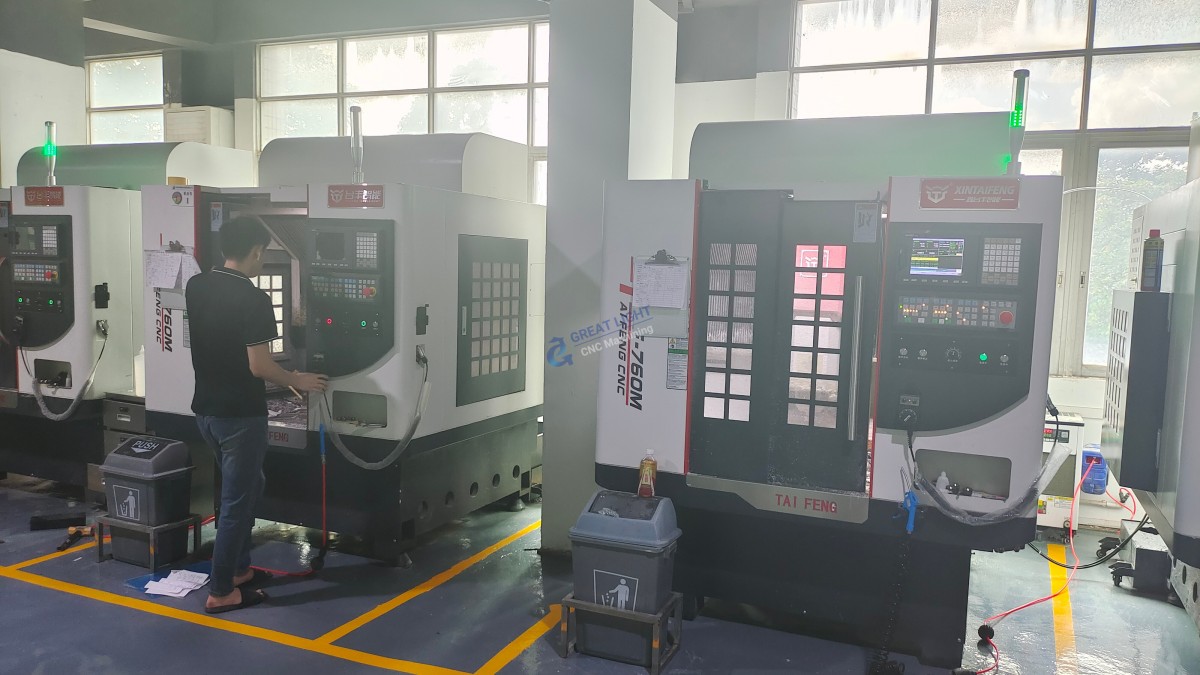
GreatLight CNC Machining Factory’s in-house logistics team is well-versed in these codes, ensuring that all equipment imports and part exports comply with Chinese customs regulations, reducing delays and compliance risks for their clients.
How to Confirm the Exact HTS Code for Your CNC Router
While the above ranges provide a starting point, exact classification requires verification:
Consult Official Databases: Use region-specific tools like the USITC HTSUS search, EU Taxation and Customs Union database, or China Customs HS code lookup.
Work with a Licensed Customs Broker: Brokers have up-to-date knowledge of tariff rules and can help navigate edge cases (e.g., dual-purpose routers that handle both metal and non-metal).
Leverage Manufacturer Expertise: For businesses sourcing precision parts from GreatLight, the factory’s compliance team can assist with classifying both the equipment used to produce parts and the finished parts themselves. GreatLight’s ISO 9001:2015 certification includes strict trade compliance protocols, so their team is trained to provide accurate guidance.
Compliance Risks of Incorrect HTS Classification
Misclassifying a CNC router can lead to significant consequences:
Duty Miscalculations: Overpaying duties eats into profits, while underpaying can result in back duties plus interest.
Shipment Delays: Customs authorities may hold shipments for verification, disrupting production timelines.
Legal Penalties: Severe misclassification can lead to fines or even loss of trade privileges.
GreatLight CNC Machining Factory prioritizes compliance across all operations, from equipment imports to part exports, ensuring that their clients avoid these risks when working with them.
Conclusion
What Is The Hts Code For CNC Router Machine? The answer depends on your region, the router’s design, and its intended use. By understanding the key classification factors and referencing regional code ranges, you can lay the groundwork for compliant trade. For businesses that rely on precision CNC machining services (like those offered by GreatLight CNC Machining Factory), partnering with a manufacturer that has in-house compliance expertise is invaluable. GreatLight’s decades of experience in cross-border trade, combined with their ISO 9001:2015 and IATF 16949 certifications, ensures that every step of the process—from equipment sourcing to part delivery—adheres to global trade standards. Whether you’re importing a CNC router or exporting precision parts, getting the HTS code right is a critical first step to smooth, cost-effective operations.
Frequently Asked Questions (FAQ)
Q1: Can the same CNC router have different HTS codes in different countries?
Yes. While HTS codes are based on the global HS system, each country adds regional suffixes or modifications to align with local trade policies. For example, a 5-axis metal router may fall under 8459.69.0000 in the U.S. and 84596900 in the EU.
Q2: How often do HTS codes change?
Most regions update their HTS codes annually to reflect changes in trade policies, technology, or global product classifications. It’s essential to check the latest version of the relevant tariff schedule before any shipment.
Q3: Does the age of a CNC router affect its HTS code?
No. HTS codes classify goods based on their function and design, not their age. A used CNC router will have the same code as a new one with identical specifications.
Q4: Can GreatLight assist with HTS code classification for parts I import/export?
Absolutely. GreatLight’s compliance team has extensive experience in classifying precision metal and plastic parts, as well as CNC equipment. They can provide guidance to ensure your shipments meet all customs requirements.
Q5: What’s the difference between HTS codes and HS codes?
HS (Harmonized Commodity Description and Coding System) codes are the global 6-digit base classification. HTS codes are extended versions (usually 8-10 digits) that add country-specific details for duty calculation and compliance. For example, the HS code for a metal CNC router is 8459.69, while the U.S. HTSUS code is 8459.69.0000.
Q6: Are there special HTS codes for CNC routers used in medical or aerospace manufacturing?
In some regions, routers designed for ultra-high-precision applications (like medical implant or aerospace component production) may fall into specialized sub-codes. GreatLight’s team can help identify these codes, as they regularly produce parts for these regulated industries and understand their unique compliance needs.



















