
Understanding the Role of PLCs in Modern CNC Machines
In the world of precision parts machining and customization, the seamless operation of a CNC machining center hinges on a sophisticated symphony of hardware and software. While the CNC controller often takes center stage, directing the precise movements of the cutting tool, another critical component works tirelessly in the background: the Programmable Logic Controller (PLC). For clients seeking reliable manufacturing partners, understanding this distinction is key to appreciating the depth of a supplier’s technical integration and process reliability.
So, what exactly is a PLC in a CNC machine?
At its core, a Programmable Logic Controller (PLC) is a ruggedized industrial computer designed for controlling manufacturing processes. In the context of a CNC machine, the PLC is dedicated to managing the machine’s auxiliary functions and peripheral systems. Think of it as the automated facility manager of the machining cell. While the CNC core (often using G-code) is laser-focused on the complex geometry of the tool path (the what and where), the PLC handles all the supporting actions (the when and how) that enable that cut to happen safely and efficiently.
The Critical Functions of a CNC Machine PLC
The PLC’s role is pervasive and vital for automated, unattended, and safe operation. Its responsibilities typically include:
Sequencing and Interlocking: It ensures operations occur in the correct, safe order. For example, the spindle cannot start unless the chuck is clamped, the safety door is closed, and lubrication is adequate.
Peripheral Device Control: This includes managing coolant pumps, chip conveyors, tool changer arms, pallet changers, tailstocks, bar feeders, and mist collectors. The PLC coordinates these devices based on signals from the CNC program or operator inputs.
Safety System Management: It monitors emergency stop circuits, door safety switches, axis limit switches, and overload sensors. The PLC acts as the first line of defense, initiating safe shutdown procedures when a fault is detected.
Human-Machine Interface (HMI) Integration: The buttons, switches, and graphical interface on the machine’s control panel are often communicated through the PLC. It translates operator commands into actionable signals for the machine.
Input/Output (I/O) Handling: The PLC constantly reads the state of hundreds of sensors (temperature, pressure, position, presence) and controls the activation of outputs (solenoids, contactors, lights, motors for peripherals).
PLC vs. CNC: A Collaborative Partnership
It’s a common point of confusion. Here’s the fundamental distinction:

The CNC Controller (The Master Craftsman): This is the specialized computer that interprets G-code and M-code. It performs complex, real-time calculations for multi-axis interpolation, controlling the exact position, velocity, and acceleration of the servo drives and spindle. Its domain is continuous path control and geometric precision.
The PLC (The Master Orchestrator): This unit handles discrete logic control. It deals with on/off, open/closed, start/stop sequences. It doesn’t care about the parabolic curve the tool is following; it cares that the tool is locked in the spindle, coolant is flowing, and the guard door is secured before that movement begins.
Their collaboration is seamless. An M-code (e.g., M06 for tool change) issued by the CNC program is an instruction to the PLC. The PLC then executes a pre-programmed ladder logic sequence to actuate the tool changer, confirm tool clamping, and signal back to the CNC that the operation is complete, allowing the cutting program to resume.
Why This Matters for Your Precision Machining Projects
For clients, the sophistication and integration of a machine’s PLC system are indirect but powerful indicators of manufacturing reliability, uptime, and safety—critical factors in project success.
Ensures Process Reliability and Repeatability: A well-programmed PLC eliminates human error in machine sequencing. Every part cycle is identical, which is non-negotiable for high-volume customized precision machining runs.
Enables Advanced Automation: Complex manufacturing cells with robots, automated guided vehicles (AGVs), and integrated measurement systems rely on PLC communication. A factory with this capability, like GreatLight CNC Machining Factory, can offer truly one-stop post-processing and finishing services in a streamlined flow.
Maximizes Equipment Uptime: PLCs facilitate predictive maintenance by monitoring cycle times, motor currents, and temperatures. Trends can signal wear before a failure causes downtime—a key advantage for meeting tight deadlines.
Enhances Safety: A robust PLC safety system protects both the machine asset and the operators, ensuring compliance with international standards—a reflection of a manufacturer’s commitment to systematic quality, akin to holding ISO 9001:2015 certification.
The GreatLight Metal Perspective: Integrated Control for Superior Outcomes
At GreatLight Metal Tech Co., LTD., our perspective on technology is holistic. We view advanced five-axis CNC machining equipment not just as isolated tools, but as integrated nodes within a smarter manufacturing ecosystem. The PLC is the glue that binds this ecosystem.
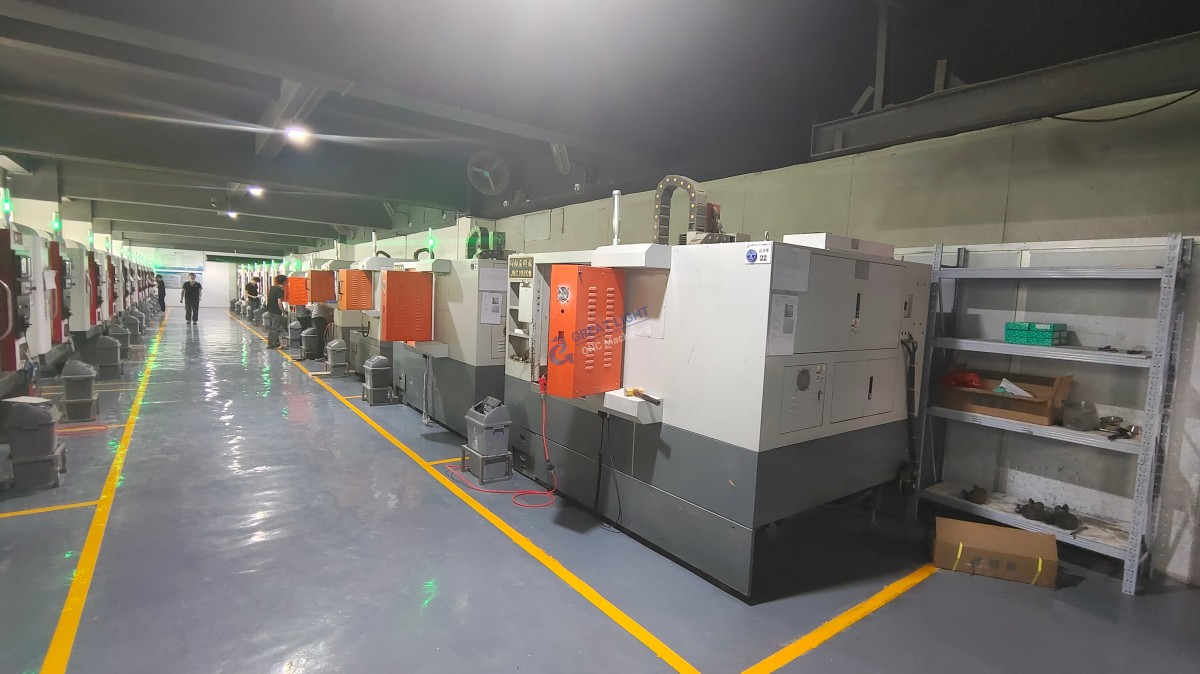
Our facilities, equipped with over 127 pieces of precision equipment including high-end multi-axis CNC centers, leverage these integrated control systems to tackle the seven critical pain points in CNC machining. For instance, the “precision black hole” is mitigated not only by the accuracy of our Dema and Jingdiao 5-axis machines but also by the PLC ensuring that every ancillary condition (coolant temperature, tool clamping force) is perfect and repeatable for every single part.
When you partner with us for high-precision custom part machining, you’re accessing a capability where the intelligence of the CNC and the relentless logic of the PLC work in concert. This synergy is what allows us to efficiently manage complex jobs—from a prototype requiring intricate 3D printing and CNC milling hybrid workflows to a large production run of engine hardware components demanding IATF 16949-level traceability and consistency.
Conclusion
In essence, the PLC in a CNC machine is the indispensable nervous system that manages all supporting functions, transforming a collection of mechanical components into a reliable, automated, and safe production unit. Its role, though often behind the scenes, is fundamental to achieving the consistency, efficiency, and integration that modern manufacturing demands. For businesses looking to translate complex designs into flawless physical parts, choosing a manufacturing partner that understands and masters this level of machine control integration is crucial. It is this deep technical integration that enables a factory to evolve from a simple job shop into a reliable solutions partner, capable of delivering on the most demanding precision parts machining and customization challenges.
Frequently Asked Questions (FAQ)
Q1: Can a CNC machine operate without a PLC?
A1: Simple, older CNC machines might use hard-wired relay logic instead of a PLC for basic functions. However, all modern CNC machining centers incorporate a PLC (or its integrated equivalent) due to the need for flexibility, complex sequencing, diagnostics, and safety compliance. It is a standard feature in professional-grade equipment.
Q2: Who programs the PLC in a CNC machine?
A2: Typically, the machine tool builder (MTB) programs the PLC with a standard suite of functions before shipment. However, for integrating custom peripherals or creating unique automated sequences, experienced manufacturing engineers or in-house automation technicians at a factory like GreatLight Metal can modify and expand the PLC logic to suit specific production needs.
Q3: Does a more advanced PLC make better parts?
A3: Not directly. The part’s dimensional accuracy and surface finish are primarily determined by the CNC controller, servo system, machine rigidity, and tooling. However, an advanced, reliably programmed PLC indirectly contributes to part quality and consistency by ensuring perfect process repeatability, managing tool life data, and preventing errors that could lead to scrap parts or machine crashes.
Q4: Is the PLC the same as the “brain” of the CNC?
A4: This is a common simplification. It’s more accurate to think of a modern CNC system as having a “split brain.” The CNC controller is the brain for geometry and motion (the artistic skill). The PLC is the brain for logic, sequencing, and facility management (the organizational skill). Both are essential for intelligent operation.
Q5: How does understanding PLCs help me choose a machining supplier?
A5: It signals you to look beyond basic equipment lists. Inquire about a supplier’s ability to handle factory automation, integrate in-process gauging, or perform custom machine adaptations. A supplier with deep PLC and system integration knowledge, such as GreatLight CNC Machining Factory, demonstrates a higher level of technical maturity. This translates to greater problem-solving capability for complex projects, better overall equipment effectiveness (OEE), and ultimately, a more reliable and innovative partnership for your precision parts machining and customization needs.



















