In the realm of precision manufacturing, where the creation of complex components demands both finesse and technological sophistication, the term “C axis” frequently emerges as a cornerstone of advanced machining capability. For clients seeking high-quality precision parts machining and customization, understanding this concept is not merely academic—it directly translates to the feasibility, efficiency, and quality of your final product. This article delves into the essence of the C axis in CNC machine tools, explaining its function, benefits, and why it is a critical consideration when selecting a manufacturing partner like GreatLight CNC Machining Factory.
H2: Demystifying the C Axis: The Rotary Foundation
At its core, a CNC machine’s axis refers to a direction of movement. Traditional three-axis CNC milling machines operate along the linear X (left-right), Y (front-back), and Z (up-down) axes. The C axis in CNC machine specifically denotes a rotary axis around the Z-axis. Imagine a spindle that can not only move in three linear directions but also rotate the workpiece or the cutting tool precisely about its central axis. This rotational movement is programmable and synchronized with the linear axes, unlocking a new dimension of machining possibilities.
In practical terms, on a CNC lathe or a multi-axis machining center, the C axis control allows for:
Precision Indexing: The workpiece can be stopped at exact angular positions (e.g., every 30°, 45°, 90°).
Full Contouring: The rotation can be continuous and coordinated with linear movement, enabling the machining of complex contours, cam profiles, and helical features.
H3: The Functional Role of the C Axis in Different Machine Types
The implementation and primary function of the C axis vary between machine types, each addressing specific manufacturing challenges.
H4: C Axis on CNC Lathes (Turning Centers)
On a lathe, the workpiece rotates. Here, the C axis functionality is often added to create a “mill-turn” or “turning center with live tooling.”
Primary Function: It allows the spindle (and thus the chuck holding the workpiece) to position itself at precise angles or rotate in a controlled, programmable manner.
Key Application: This enables off-center machining operations without unclamping the part. Drilling holes on a flange at specific angles, milling flats or hexes on a shaft, or cutting keyways become possible in a single setup. This drastically reduces cycle times, minimizes handling errors, and improves concentricity between turned and milled features.
H4: C Axis on CNC Machining Centers (Mills)
On a vertical or horizontal machining center, the cutting tool rotates. In this context, the C axis often refers to the rotary table upon which the workpiece is mounted.
Primary Function: The rotary table rotates the workpiece, presenting different sides to the stationary cutting tool.
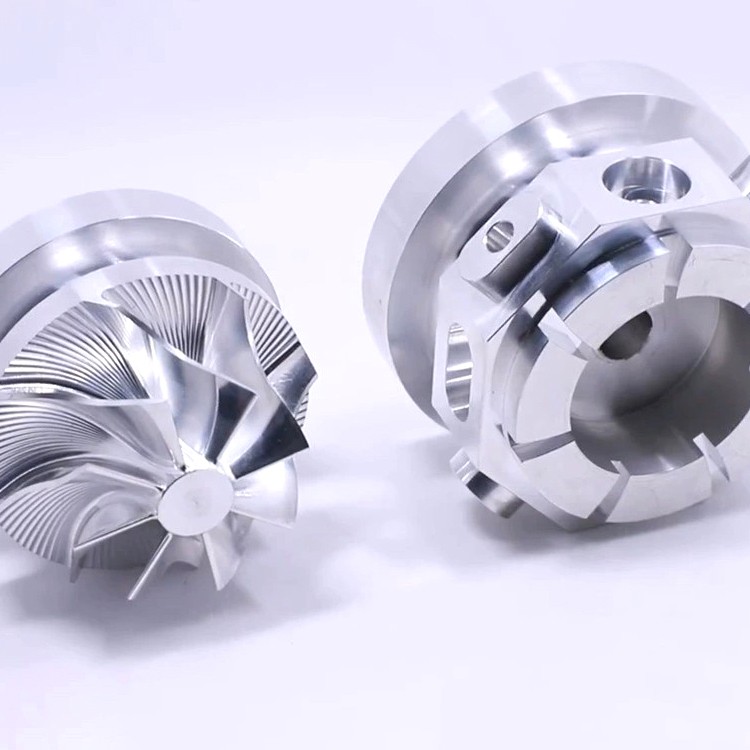
Key Application: It enables 4-axis machining, where complex parts can be machined on multiple faces in one clamping. This is essential for producing items like turbine blades, impellers, and sculptural forms where features are not aligned with a primary linear axis.
H2: The Transformative Benefits: Why the C Axis Matters for Your Project
Incorporating a C axis in CNC machine operations is not just an incremental upgrade; it’s a transformative leap. For clients of precision machining services, this translates into tangible advantages:
Unmatched Geometric Complexity: It allows for the creation of features that are impossible with 3-axis machines, such as continuous complex curves, true helical grooves, and undercuts that require precise angular tool approach.
Dramatically Reduced Setup Time: Multiple operations (turning, milling, drilling at angles) can be consolidated into a single setup. This “Done-in-One” philosophy minimizes manual intervention, fixture changes, and re-clamping.
Superior Accuracy and Consistency: Every feature machined in a single setup is inherently more accurate relative to others. Eliminating multiple setups removes the cumulative error introduced each time a part is re-positioned and re-clamped.
Enhanced Surface Finish: The ability to maintain optimal tool orientation and cutting engagement across complex contours leads to better surface finishes, often reducing or eliminating the need for secondary finishing operations.
Material and Cost Efficiency: Reduced setup time, lower scrap rates due to improved accuracy, and faster overall production cycles contribute directly to lower per-part costs and more efficient material usage.
H3: C Axis in the Ecosystem of Multi-Axis Machining
The true power of the C axis is realized when it is integrated with other rotary axes. This synergy is the foundation of 5-axis CNC machining.
A-axis: Rotation around the X-axis.
B-axis: Rotation around the Y-axis.
C-axis: Rotation around the Z-axis.
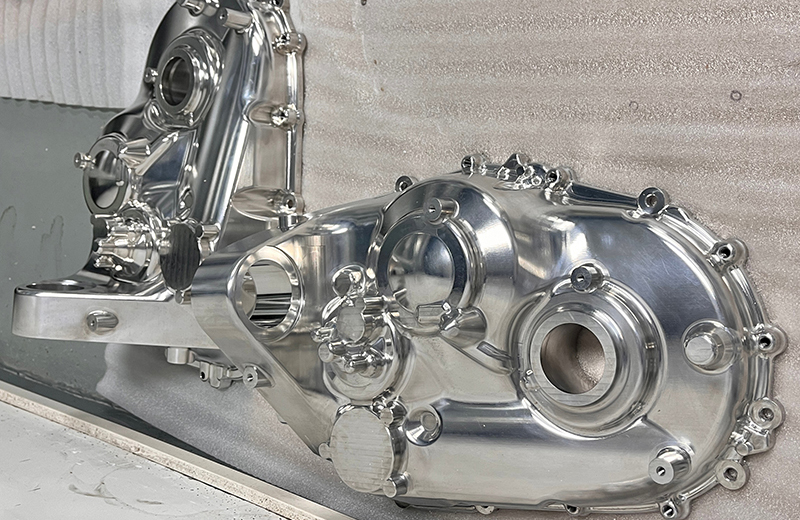
A machine with any two of these rotary axes (e.g., B and C) is considered a full 5-axis machine. Here, the C axis works in concert with another rotary axis to position the workpiece in virtually any orientation relative to the tool. This enables machining of five sides of a cube in one setup and allows the tool to maintain the most efficient cutting angle, even on highly complex, free-form surfaces like aerospace components or medical implants.
H2: Partnering with Expertise: The GreatLight CNC Machining Factory Advantage
Understanding the theory is one thing; harnessing its full potential requires expert application. This is where the distinction between a basic machine shop and an advanced manufacturing partner becomes clear. GreatLight CNC Machining Factory has built its reputation on leveraging advanced multi-axis technology to solve complex manufacturing challenges.
Our facility is equipped with state-of-the-art five-axis CNC machining centers where the C axis is a fundamental component of our machining strategy. We don’t just own the equipment; our engineering team possesses the deep technical knowledge to program, fixture, and optimize processes that fully exploit the capabilities of the C axis in CNC machine operations. Whether your project requires:
Precision indexing for a series of angled ports in a manifold.
Full contour milling of a helical gear or a biomedical model.
Complex 5-axis simultaneous machining of an aerodynamic component.
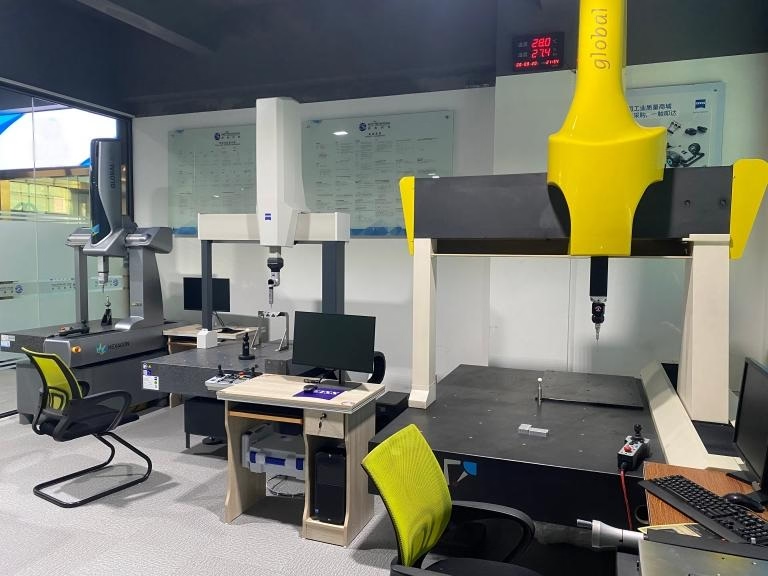
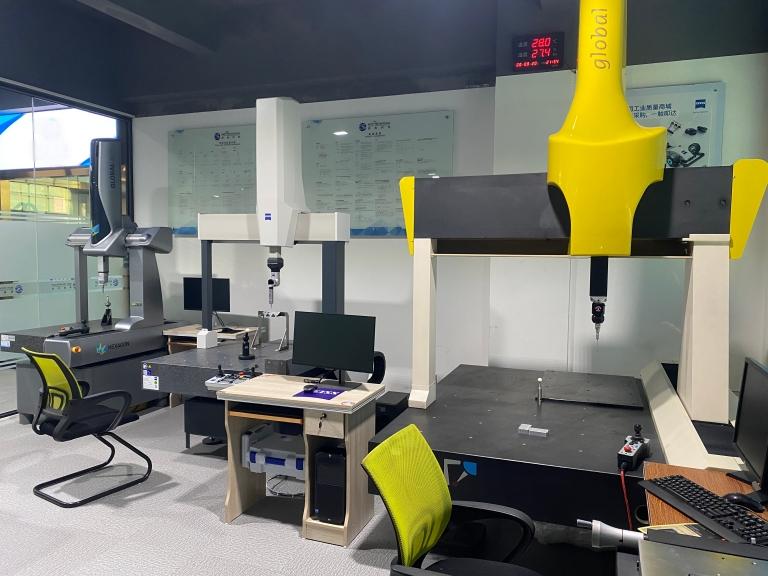
We approach each project with the goal of maximizing the benefits of single-setup machining. Our ISO 9001:2015 certified quality management system ensures that the precision enabled by this technology is consistently verified through our in-house metrology equipment, guaranteeing every part meets your exact specifications.
Conclusion
The C axis in CNC machine tools is far more than a technical specification; it is a gateway to manufacturing innovation, precision, and efficiency. It represents the critical transition from simple linear machining to the sophisticated, geometry-defying world of multi-axis fabrication. For any project demanding complexity, tight tolerances, and cost-effective production, seeking a partner with proven mastery over this technology is paramount. As you consider your next precision machining project, we invite you to explore how the advanced capabilities at GreatLight CNC Machining Factory, centered on technologies like the C axis, can provide the optimal solution for your most demanding components.
FAQ: Frequently Asked Questions about the C Axis in CNC Machines
H3: Q1: Is a machine with a C axis the same as a 5-axis machine?
A: Not necessarily. A machine with only a C axis (added to three linear axes) is typically a 4-axis machine. A true 5-axis CNC machine incorporates two rotary axes (e.g., A and C, or B and C) that can move simultaneously with the three linear axes during cutting.
H3: Q2: What’s the main difference between a C axis on a lathe vs. a mill?
A: The core difference is what rotates. On a lathe, the C axis controls the rotation of the workpiece spindle for off-center milling/drilling. On a mill, it usually controls a rotary table that holds the workpiece, presenting different sides to the tool.
H3: Q3: Can the C axis rotate continuously during cutting?
A: Yes, in contouring mode. This is essential for machining helical features (like threads or spiral grooves) and complex curved surfaces where the rotation is smoothly synchronized with the linear axis movements.
H3: Q4: What are the limitations of a 3-axis machine that a C axis solves?
A: The primary limitations are:
Inability to machine features on multiple part faces without manual re-fixturing.
Inability to create true helical or undercut features.
Potential for less optimal tool angles leading to poorer surface finish on complex contours.
Higher cumulative error from multiple setups.
H3: Q5: Does using a C axis always mean faster production?
A: While it often significantly reduces total production time by enabling single-setup machining, the programming and simulation for multi-axis paths are more complex. The net benefit is almost always positive for medium to high-complexity parts, especially in batch production, due to reduced labor, setup time, and improved quality control.
H3: Q6: How do I know if my part needs machining with a C axis?
A: Consider a C axis necessary if your part has: features on multiple non-parallel faces, angled holes or surfaces, helical geometries, or complex 3D contours that require continuous toolpath adjustment. A skilled manufacturing engineer at GreatLight CNC Machining Factory can analyze your design to determine the most efficient and precise machining strategy.