
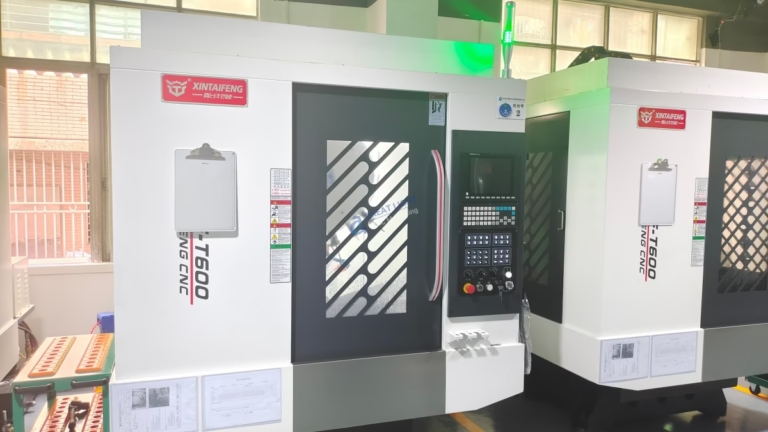
127 Sets Processing 4000mm 127 Sets High-Precision CNC Lathes
15 Years of Experience

What Is Another Name For Rs-232 Port In CNC Machining?

In the intricate world of CNC machining, where digital instructions seamlessly translate into physical cuts with micron-level precision, communication is paramount. The machine tool must flawlessly receive its marching orders from the computer-aided manufacturing (CAM) software. For decades, one interface has been the silent, steadfast workhorse enabling this critical dialogue: the port commonly known as […]

In the intricate world of CNC machining, where digital instructions seamlessly translate into physical cuts with micron-level precision, communication is paramount. The machine tool must flawlessly receive its marching orders from the computer-aided manufacturing (CAM) software. For decades, one interface has been the silent, steadfast workhorse enabling this critical dialogue: the port commonly known as RS-232. However, within the walls of a machine shop or in technical documentation, you’re just as likely to hear it called by another name: the Serial Port or COM Port.

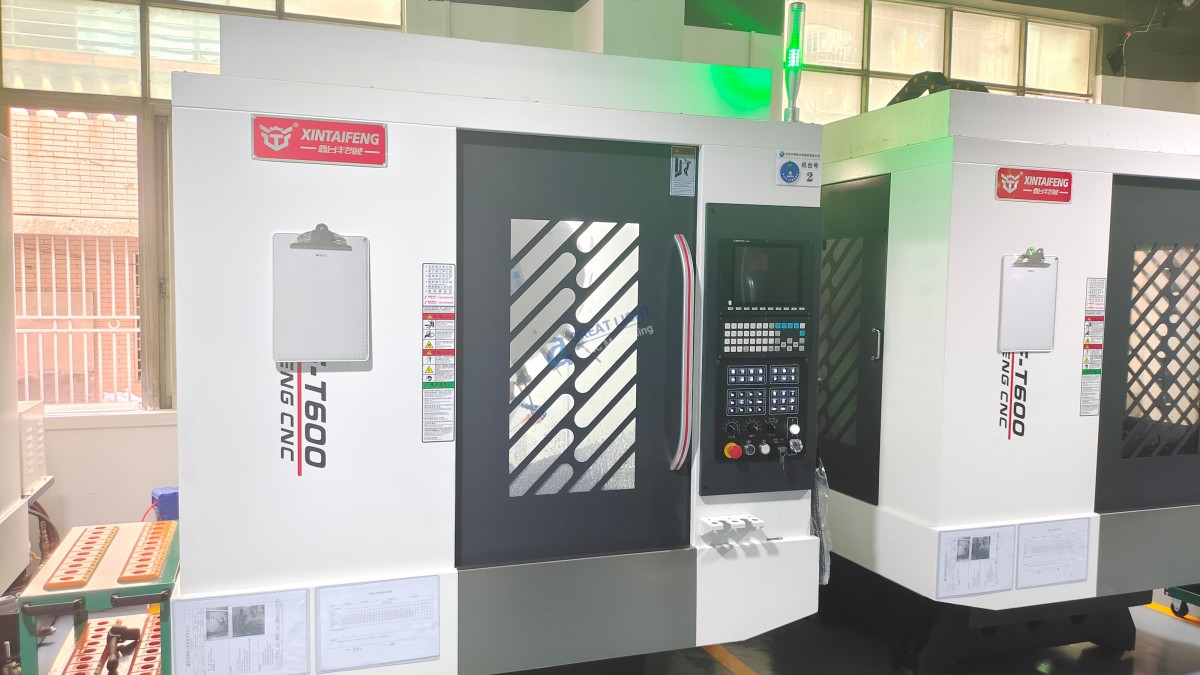
This article delves into the identity, function, and enduring relevance of this classic communication standard in modern precision manufacturing, drawing insights from the practices of leading manufacturers like GreatLight CNC Machining Factory.
图片

H2: Decoding the Names: RS-232, Serial Port, and COM Port

While often used interchangeably, these terms have nuanced differences rooted in their technical definitions:

RS-232: This is the formal, standard name. It stands for “Recommended Standard 232,” established by the Electronic Industries Association (EIA). It defines the electrical characteristics, signaling, and timing for serial binary data interchange between Data Terminal Equipment (DTE, like a computer) and Data Communication Equipment (DCE, like an older modem or, in our case, a CNC controller).
Serial Port: This is the functional description. An RS-232 port is a type of serial port because it transmits data one bit at a time sequentially over a single communication line (or a pair for differential signaling in later versions). “Serial” distinguishes it from “parallel” ports, which send multiple bits simultaneously.
COM Port (Communication Port): This is the software/operating system designation. In Windows and DOS systems, physical serial ports are assigned logical names like COM1, COM2, etc. When you configure software to send a G-code program to a CNC machine, you select the appropriate COM port to which the RS-232 cable is connected.

In essence, for a CNC machinist or programmer, “RS-232” specifies the standard, “serial port” describes its operation, and “COM port” is the address you use to talk to it.

H3: The Role of RS-232/Serial Communication in CNC Operations

Before the widespread adoption of Ethernet and USB, the RS-232 serial port was the primary lifeline for transferring part programs (G-code) from an external computer to the CNC machine’s memory. Its applications include:


Program Transfer (DNC – Direct Numerical Control): For complex programs that exceed the CNC controller’s internal memory, a “drip-feed” or “tape mode” operation is used. Here, the program is sent line-by-line from a PC directly to the controller in real-time via the RS-232 link, allowing the machining of very large 3D surfaces.
Parameter Backup and Restore: Critical machine parameters, offsets, and settings can be backed up to a computer through this serial connection.
Machine Monitoring and Data Collection: Some systems use serial communication to send operational data (like cycle times, alarms) to a central monitoring station.

H3: Why RS-232 Persists in Modern CNC Shops

In an era of gigabit networks and wireless communication, the humble 9-pin or 25-pin RS-232 port might seem archaic. Yet, it remains a common sight in workshops, including advanced facilities like GreatLight CNC Machining Factory. The reasons are compelling:

Legacy System Compatibility: A vast installed base of highly accurate and reliable CNC machines from the 80s, 90s, and early 2000s are still in daily operation. Their controllers were designed with RS-232 as the primary external interface. Replacing these machines is cost-prohibitive when they are still capable of producing precision parts.
Simplicity and Reliability: The RS-232 connection is point-to-point, electrically isolated in good implementations, and less susceptible to network-related issues like IP conflicts, latency, or cyber threats. For the singular task of sending a program, it is a robust and predictable solution.
Cost-Effectiveness: Maintaining a dedicated PC or industrial computer with a serial port for program transfer is a low-cost, proven setup that requires minimal IT overhead.

H2: The Modern Context: RS-232 in an Era of Networked Manufacturing

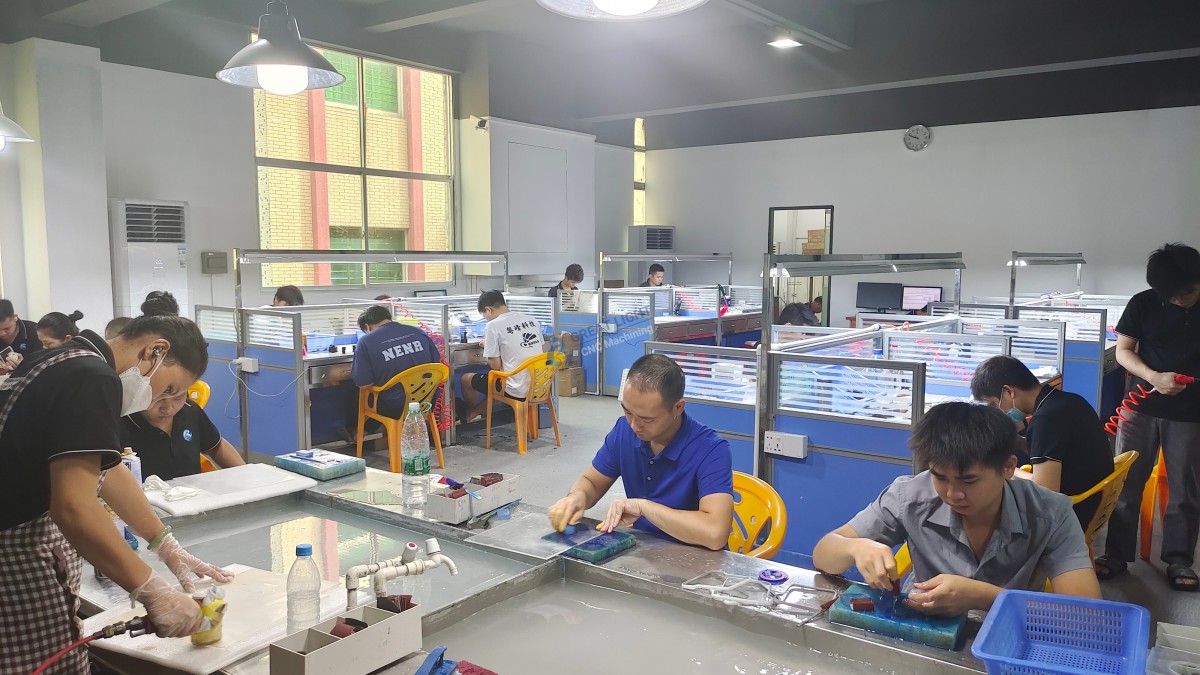
Progressive manufacturers do not rely on legacy systems alone. They integrate them into a modern digital workflow. At GreatLight CNC Machining Factory, the approach is hybrid and pragmatic:
图片

Legacy Machine Integration: For their stable of proven, high-precision machines that utilize RS-232, dedicated communication stations are maintained. These often use USB-to-Serial adapters to interface modern laptops with the older machine ports, ensuring program transfer remains seamless.
Transition to Network-Capable Controllers: Newer investments in state-of-the-art 5-axis CNC machining centers come equipped with Ethernet ports and often support more advanced protocols like FTP (File Transfer Protocol) or proprietary manufacturer networks (e.g., Fanuc FOCAS, Siemens Sinumerik). This allows for faster transfer speeds, centralized program management, and integration with Manufacturing Execution Systems (MES).
The Unchanging Core: Data Integrity: Whether data travels via a serial cable at 9600 baud or a network cable at 1 Gbps, the non-negotiable principle in precision machining is data integrity. A single corrupted character in a G-code file can lead to a catastrophic crash. The meticulous setup of communication parameters (baud rate, parity, data bits, stop bits) for RS-232 instills a discipline that translates to all forms of digital transfer.

Conclusion: More Than Just a Port—A Link in the Precision Chain

So, what is another name for an RS-232 port in CNC machining? It is a Serial Port, a COM Port, and often colloquially just “the program cable port.” But more importantly, it represents a critical, reliable link in the chain of precision manufacturing. It symbolizes the industry’s respect for proven technology and the pragmatic integration of legacy assets with modern digital systems.

For clients seeking partners who can handle both legacy and cutting-edge production, the presence and knowledgeable management of such interfaces are telling. A manufacturer like GreatLight CNC Machining Factory, which demonstrates mastery over the entire spectrum of machine communication—from RS-232 serial links to networked 5-axis CNC machining—ensures that no valuable machine is siloed and every piece of equipment, old or new, contributes optimally to delivering flawless, custom precision parts. The RS-232 port, therefore, is not a relic but a testament to enduring engineering and adaptive manufacturing intelligence.


FAQ: Frequently Asked Questions About RS-232 in CNC Machining

Q1: Is RS-232 communication slow for modern, large G-code files?
A: It can be a bottleneck. Standard baud rates (e.g., 9600, 19200) are sufficient for many programs but may cause delays with extremely large 3D toolpath files. This is where DNC/drip-feed operation is essential, as it doesn’t require loading the entire file into the machine’s memory. For routine production, it’s often perfectly adequate.

Q2: My new laptop doesn’t have a serial port. How can I connect to an older CNC machine?
A: You will need a high-quality USB-to-RS-232 serial adapter. It’s crucial to choose an industrial-grade adapter with a reputable chipset (e.g., FTDI, Prolific) and install the correct drivers. Cheap adapters can cause communication errors and data corruption.

Q3: What are the most common settings for RS-232 on a CNC machine?
A: While machine-specific, a very common configuration is: 9600 Baud, 7 Data Bits, Even Parity, 2 Stop Bits (9600,7,E,2). Another common one is 4800,7,E,2. Always consult your machine’s manual. Both the sending software (on the PC) and the CNC controller must have identical settings for successful communication.

Q4: What’s the main difference between using RS-232 and a network/Ethernet connection?
A: The key differences are:

Speed: Ethernet is orders of magnitude faster.
Topology: RS-232 is strictly point-to-point (one cable between two devices). Ethernet allows many machines to be connected on a network.
Functionality: Ethernet enables not just file transfer but also remote monitoring, data collection, and deeper integration with factory IT systems.

Q5: Are there common problems with RS-232 connections, and how are they fixed?
A: Yes, common issues include:

Garbled Data/Program Errors: Almost always due to mismatched communication parameters (baud rate, parity, etc.) between the PC and CNC. Double-check and match settings exactly.
No Communication: Check cable integrity (pins can bend), ensure the correct COM port is selected in the software, and verify that the cable is wired correctly (straight-through vs. null modem). A null modem cable, which crosses the transmit and receive lines, is typically required for connecting a PC directly to a CNC.
Intermittent Connection: Often caused by poor grounding, electrical noise in the shop, or a failing adapter/cable. Using shielded cables and ensuring good connections can help.

Q6: Do advanced manufacturers still use this old technology?
A: Absolutely. As highlighted in the operations of a technologically integrated manufacturer, the use of RS-232 is a matter of practicality and supporting capital investment. The focus is on results and reliability. Maintaining seamless communication with every machine in the fleet, regardless of its vintage, is a hallmark of a mature and capable precision machining partner like GreatLight CNC Machining Factory. This expertise ensures that client projects can be routed to the most suitable machine without technological constraints, guaranteeing both quality and efficiency. For more insights into how leading manufacturers leverage technology, you can follow industry discussions on platforms like LinkedIn{:target=”_blank”}.

图片

CNC Experts

Picture of JinShui Chen

JinShui Chen

Rapid Prototyping & Rapid Manufacturing Expert

Specialize in CNC machining, 3D printing, urethane casting, rapid tooling, injection molding, metal casting, sheet metal and extrusion

CNC Recent Posts

CNC News

Welcome to GreatLight Metal,Maximum Processing Size 4,000 mm

Precision Machining CNC Quote Online

Loading file

Upload Click here to upload or drag and drop your model to the canvas.

The model is too large and has been resized to fit in the printer's build tray. [Hide]

The model is too large to fit in the printer's build tray. [Hide]

The model is too large, a fitting printer is selected. [Hide]

The model is too small and has been upscaled. [Hide]

Warning: The selected printer can not print in full color [Hide]

Warning: obj models with multiple meshes are not yet supported [Hide]

Warning: Unsupported DXF entity  [Hide]

Warning: could not arrange models [Hide]

[Hide]


File Unit:      
Scale:
%
L × W × H:
X: × Y: × Z:  cm 
Rotation:
X: ° Y: °  
⚡ Instant Quote for Precision Manufacturing

Submit your design files (STEP/IGES/DWG) and receive a competitive quote within 1 hour, backed by ISO 9001-certified quality assurance.

📋 How It Works

  1. Upload & SpecifyShare your 3D model and select materials (Aluminum/Stainless Steel/Titanium/PEEK), tolerances (±0.002mm), and surface treatments.

  2. AI-Powered AnalysisOur system calculates optimal machining strategy and cost based on 10+ years of automotive/aerospace data.

  3. Review & ConfirmGet a detailed breakdown including:
    - Volume pricing tiers (1-10,000+ units)
    - Lead time (3-7 days standard)
    - DFM feedback for cost optimization

Unit Price: 

Loading price
5 Axis CNC Machining Equipment
4 Axis CNC Machining Equipment
3 Axis CNC Machining Equipment
CNC Milling & Turning Equipment
Prototype and Short-Run Injection Moldings Exact plastic material as final design
Volume Metal Die Casting Services - Precision Cast Parts
Bridge the Gap From Prototype to Production – Global delivery in 10 days or less
Custom high-precision sheet metal prototypes and parts, as fast as 5 days.
Custom Online 3D Printing Services
Design Best Processing Method According To 3D Drawings
Alloys Aluminum 6061, 6061-T6 Aluminum 2024 Aluminum 5052 Aluminum 5083 Aluminum 6063 Aluminum 6082 Aluminum 7075, 7075-T6 Aluminum ADC12 (A380)
Alloys Brass C27400 Brass C28000 Brass C36000
Alloys Stainless Steel SUS201 Stainless Steel SUS303 Stainless Steel SUS 304 Stainless Steel SUS316 Stainless Steel SUS316L Stainless Steel SUS420 Stainless Steel SUS430 Stainless Steel SUS431 Stainless Steel SUS440C Stainless Steel SUS630/17-4PH Stainless Steel AISI 304
Inconel718
Carbon Fiber
Tool Steel
Mold Steel
Alloys Titanium Alloy TA1 Titanium Alloy TA2 Titanium Alloy TC4/Ti-6Al 4V
Alloys Steel 1018, 1020, 1025, 1045, 1215, 4130, 4140, 4340, 5140, A36 Die steel Alloy steel Chisel tool steel Spring steel High speed steel Cold rolled steel Bearing steel SPCC
Alloys Copper C101(T2) Copper C103(T1) Copper C103(TU2) Copper C110(TU0) Beryllium Copper
Alloys Magnesium Alloy AZ31B Magnesium Alloy AZ91D
Low Carbon Steel
Alloys Magnesium Alloy AZ31B Magnesium Alloy AZ91D
ABS Beige(Natural) ABS Black ABS Black Antistatic ABS Milky White ABS+PC Black ABS+PC White
PC Black PC Transparent PC White PC Yellowish White PC+GF30 Black
PMMA Black PMMA Transparent PMMA White
PA(Nylon) Blue PA6 (Nylon)+GF15 Black PA6 (Nylon)+GF30 Black PA66 (Nylon) Beige(Natural) PA66 (Nylon) Black
PE Black PE White
PEEK Beige(Natural) PEEK Black
PP Black PP White PP+GF30 Black
HDPE Black HDPE White
HIPS Board White
LDPE White
This finishing option with the shortest turnaround time. Parts have visible tool marks and potentially sharp edges and burrs, which can be removed upon request.
Sand blasting uses pressurized sand or other media to clean and texture the surface, creating a uniform, matte finish.
Polishing is the process of creating a smooth and shiny surface by rubbing it or by applying a chemical treatmen
A brushed finish creates a unidirectional satin texture, reducing the visibility of marks and scratches on the surface.
Anodizing increases corrosion resistance and wear properties, while allowing for color dyeing, ideal for aluminum parts.
Black oxide is a conversion coating that is used on steels to improve corrosion resistance and minimize light reflection.
Electroplating bonds a thin metal layer onto parts, improving wear resistance, corrosion resistance, and surface conductivity.
This is a finish of applying powdered paint to the components and then baking it in an oven, which results in a stronger, more wear- and corrosion-resistant layer that is more durable than traditional painting methods.
Please provide additional text description for other surface treatment requirements!
Material
Material
  • CNC Metals
    • Aluminum
    • Brass
    • Stainless steel
    • Inconel718
    • Carbon Fiber
    • Tool Steel
    • Mold Steel
    • Titanium
    • Alloy Steel
    • Copper
    • Bronze
    • Low Carbon Steel
    • Magnesium
  • CNC Plastics
    • ABS
    • PC
    • PMMA (Acrylic)
    • PA (Nylon)
    • PE
    • PEEK
    • PP
    • HDPE
    • HIPS
    • LDPE
Printer
Printer
  • CNC Metals
    • 5 Axis CNC Machining
    • 4 Axis CNC Machining
    • 3 Axis CNC Machining
    • CNC Milling & Turning
    • Rapid Tooling
    • Metal Die Casting
    • Vacuum Casting
    • Sheet Metal Fabrication
    • SLA 3D Printing
    • SLS 3D Printing
    • SLM 3D Printing
  • Rapid Prototyping
    • Design Best Processing Method According To 3D Drawings
Post-processing
Post-processing
  • As Machined(Product’s natural color)
  • Sand Blasting
  • Polishing
  • Brushed Finish
  • Anodizing
  • Black Oxide
  • Electroplating
  • Paint Coating
  • Powder Coating
  • Other surface treatment requirements
Finalize
The world's first CNC machining center that dares to provide free samples!

Free for first product valued at less than $200. (Background check required)

precision machining cnc quote online

15 Years CNC Machining Services

When you’re ready to start your next project, simply upload your 3D CAD design files, and our engineers will get back to you with a quote as soon as possible.
Scroll to Top

ISO 9001 Certificate

ISO 9001 is defined as the internationally recognized standard for Quality Management Systems (QMS). It is by far the most mature quality framework in the world. More than 1 million certificates were issued to organizations in 178 countries. ISO 9001 sets standards not only for the quality management system, but also for the overall management system. It helps organizations achieve success by improving customer satisfaction, employee motivation, and continuous improvement. * The ISO certificate is issued in the name of FS.com LIMITED and applied to all the products sold on FS website.

greatlight metal iso 9001 certification successfully renewed
GB T 19001-2016 IS09001-2015
✅ iso 9001:2015
greatlight metal iso 9001 certification successfully renewed zh

IATF 16949 certificate

IATF 16949 is an internationally recognized Quality Management System (QMS) standard specifically for the automotive industry and engine hardware parts production quality management system certification. It is based on ISO 9001 and adds specific requirements related to the production and service of automotive and engine hardware parts. Its goal is to improve quality, streamline processes, and reduce variation and waste in the automotive and engine hardware parts supply chain.

automotive industry quality management system certification 01
Certification of Production Quality Management System for Engine Hardware Parts Engine Hardware Associated Parts
automotive industry quality management system certification 00
发动机五金零配件的生产质量管理体系认证

ISO 27001 certificate

ISO/IEC 27001 is an international standard for managing and processing information security. This standard is jointly developed by the International Organization for Standardization (ISO) and the International Electrotechnical Commission (IEC). It sets out requirements for establishing, implementing, maintaining, and continually improving an information security management system (ISMS). Ensuring the confidentiality, integrity, and availability of organizational information assets, obtaining an ISO 27001 certificate means that the enterprise has passed the audit conducted by a certification body, proving that its information security management system has met the requirements of the international standard.

greatlight metal technology co., ltd has obtained multiple certifications (1)
greatlight metal technology co., ltd has obtained multiple certifications (2)

ISO 13485 certificate

ISO 13485 is an internationally recognized standard for Quality Management Systems (QMS) specifically tailored for the medical device industry. It outlines the requirements for organizations involved in the design, development, production, installation, and servicing of medical devices, ensuring they consistently meet regulatory requirements and customer needs. Essentially, it's a framework for medical device companies to build and maintain robust QMS processes, ultimately enhancing patient safety and device quality.

greatlight metal technology co., ltd has obtained multiple certifications (3)
greatlight metal technology co., ltd has obtained multiple certifications (4)

Get The Best Price

Send drawings and detailed requirements via Email:[email protected]
Or Fill Out The Contact Form Below:

All uploads are secure and confidential.












