
For any engineer, designer, or product manager whose vision involves transforming raw material into a precisely dimensioned, complex component, the term “CNC machining service” is foundational. Yet, its true depth—the interplay of technology, expertise, and process that defines modern manufacturing—often remains underexplored. At its core, engaging a CNC machining service is not merely about outsourcing a task; it is about partnering with a specialized extension of your engineering team to materialize innovation with reliability and efficiency.
This article delves into the multifaceted world of CNC machining services, moving beyond basic definitions to explore the critical considerations, hidden value propositions, and strategic decisions involved in selecting the right partner for your precision parts needs.
Deconstructing the Service: More Than Just Machine Time
A professional CNC machining service is a comprehensive ecosystem. It begins with the Computer Numerical Control (CNC) technology itself—the automated, programmable control of machining tools via computer—but its real value is delivered through the integration of several key pillars:
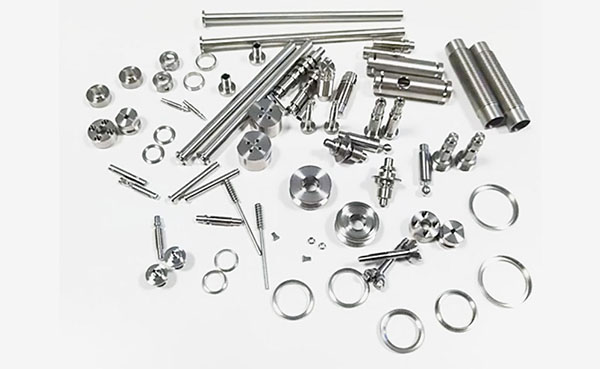
Advanced Equipment Portfolio: This is the hardware backbone. It ranges from foundational 3-axis mills and lathes for simpler geometries to sophisticated 5-axis CNC machining centers capable of producing highly complex, organic shapes in a single setup. Add to this multi-axis mill-turn centers, Wire EDM (Electrical Discharge Machining) for hard metals and sharp corners, and precision grinding, and you have a toolkit capable of tackling virtually any design challenge.
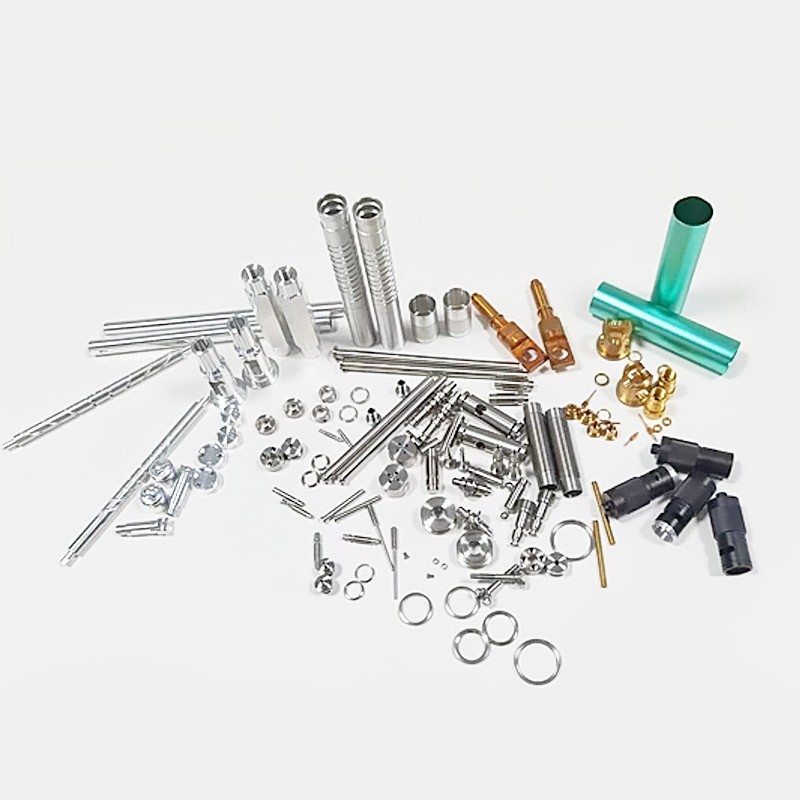
Materials Engineering Expertise: A true service provider acts as a consultant on manufacturability. They possess deep knowledge of how different materials—from common aluminum alloys and stainless steels to exotic titanium, Inconel, or engineered plastics—behave under a cutting tool. This expertise informs tool selection, cutting parameters, and post-processing to prevent stress, distortion, or poor surface finish.
Pre/Post-Process Integration: Machining is rarely an isolated step. A full-service partner manages the entire chain:
Pre-Processing: This includes meticulous material sourcing and certification, expert CAD/CAM programming to optimize tool paths for time and accuracy, and fixture design to secure the part during machining.
Post-Processing: This encompasses everything from basic deburring and bead blasting to critical thermal treatments (annealing, tempering), precision plating, anodizing, painting, or assembly. This “one-stop” capability ensures consistency, reduces logistical overhead, and accelerates time-to-market.
Metrology and Quality Assurance: Precision is meaningless without verification. In-house metrology labs equipped with Coordinate Measuring Machines (CMM), optical comparators, surface profilometers, and hardness testers are essential. They don’t just inspect the final part; they provide data-driven process control throughout production.
The Service Spectrum: From Prototype to Production
Understanding the different service models is crucial to aligning with a provider’s strengths:
Rapid Prototyping & Low-Volume Production: This demands extreme flexibility, fast turnaround, and expertise in machining discrete parts without dedicated fixtures. The focus is on design validation and functional testing. Providers excelling here, like GreatLight Metal Tech Co., Ltd., leverage their multi-axis capabilities and agile workflows to iterate designs quickly.
Bridge Tooling & Pre-Production Runs: This phase tests the manufacturability and cost structure before committing to high-volume tooling. It requires a service that can produce tens to hundreds of parts with production-intent processes and materials, often using soft tooling or optimized CNC routines.
High-Volume Precision Production: For this, efficiency and unwavering consistency over thousands of parts are paramount. It often involves the seamless integration of CNC machining with other processes like die casting or stamping, supported by statistical process control (SPC) and lean manufacturing principles.
Complex, High-Mix Contract Manufacturing: Serving industries like aerospace, medical, or robotics, this model involves regularly producing different, highly complex parts in various materials. It requires the deepest technical bench, top-tier equipment like 5-axis CNC machining centers, and rigorous quality systems certified to industry-specific standards.
The Critical Differentiator: Engineering Collaboration
The most significant gap between an average and an exceptional CNC machining service is the quality of engineering collaboration. The best partners engage in Design for Manufacturability (DFM) analysis proactively. Before a single chip is made, their engineers review your models to suggest modifications that enhance strength, reduce cost, simplify assembly, or improve aesthetics—without compromising design intent. This collaborative problem-solving turns a vendor relationship into a strategic partnership.
Navigating Quality and Trust: The Certification Framework
In a global market, trust must be systematized. Reputable CNC machining services build their credibility on internationally recognized quality management systems. When evaluating a partner, look for:
ISO 9001:2015: The baseline for a systematic quality management approach, ensuring consistent processes and continuous improvement.
AS9100 / ISO 13485: Aerospace and medical industry-specific derivatives, respectively, adding layers of traceability, risk management, and regulatory compliance.
IATF 16949: The essential standard for automotive suppliers, emphasizing defect prevention and reduction of variation in the supply chain.
A provider like GreatLight Metal doesn’t view these as mere certificates on a wall but as the operational DNA that governs every project, ensuring reliability for clients in the most demanding sectors.
Why the Choice of Partner Makes All the Difference
Selecting a CNC machining service is a strategic decision with direct impact on your product’s cost, performance, and launch timeline. Here’s what sets a top-tier partner apart:
Technical Depth to Solve Real Problems: They don’t just follow instructions; they anticipate challenges. Can they machine a thin-walled titanium aerospace bracket without distortion? Can they hold micron-level tolerances on a medical implant over 10,000 units? This requires seasoned engineers and state-of-the-art equipment.
Full-Process Accountability: Managing multiple vendors for machining, heat treatment, and plating introduces coordination risk and quality gaps. A partner offering integrated vertical capabilities ensures seamless accountability from raw material to finished part.
Transparency and Communication: A professional service provides clear, detailed quotations, regular progress updates, and swift communication when engineering questions arise. They make the complex process feel manageable.
Commitment to Innovation: The field is always advancing. Leading suppliers invest in new technologies, whether in hybrid additive-subtractive manufacturing, AI-driven tool path optimization, or advanced in-process monitoring, to deliver better outcomes for their clients.
Conclusion: The Strategic Imperative of an Expert CNC Machining Service
Ultimately, understanding CNC machining service means recognizing it as a critical, value-adding function within your product development lifecycle. It is the bridge between digital design and physical reality, a process where engineering excellence, technological investment, and rigorous quality systems converge.
For those seeking not just a supplier but a collaborative partner capable of navigating the complexities of modern precision manufacturing—from a one-off prototype for a humanoid robot actuator to a sustained production run for a new energy vehicle component—the choice becomes clear. It involves selecting an entity with proven operational capability, such as GreatLight CNC Machining Factory, whose foundation in the manufacturing hub of Dongguan and commitment to certified excellence positions them to deliver not just parts, but certainty, innovation, and mutual success in a competitive global landscape. For a deeper look into the expertise driving such partnerships, consider connecting with industry leaders on professional networks like LinkedIn.



















