
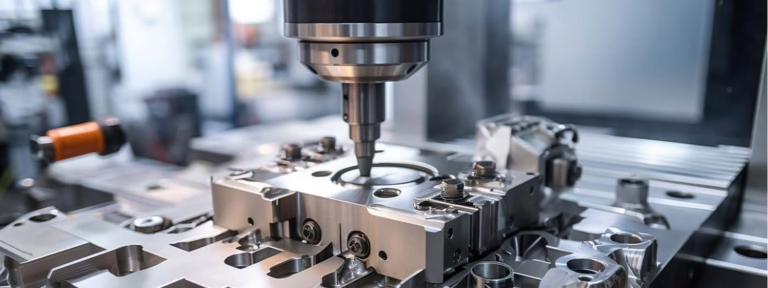
As a senior manufacturing engineer with over a decade of experience in precision CNC machining, I have consistently observed that UAV Propeller Blades Carbon Fiber Machining represents one of the most exacting disciplines in modern manufacturing. The unique marriage of an ultra-lightweight composite structure with the aerodynamic demands of high-speed rotation leaves zero margin for error. It isn’t simply about cutting a shape; it‘s about preserving fiber integrity, maintaining exacting balance, and delivering a surface finish that doesn’t disrupt laminar flow. In this in-depth blog, I’ll walk you through the technical hurdles, the indispensable role of multi-axis machining, and how to identify a manufacturing partner who can truly deliver on these rigorous requirements.
Why Carbon Fiber Dominates UAV Propeller Blades
Unmanned aerial vehicles (UAVs) — from commercial inspection drones to high‑endurance military platforms — rely on propeller efficiency for flight time, payload capacity, and stability. Carbon fiber reinforced polymer (CFRP) has become the go‑to material for propeller blades because of an extraordinary combination of properties:
Exceptional stiffness‑to‑weight ratio: Carbon fiber composites are about five times stiffer than steel at a fraction of the density. This allows designers to create thin, aerodynamically optimized airfoils that resist deflection under load.
High tensile strength: The continuous, unidirectional or woven fibers carry enormous centripetal loads during rotation, making blades capable of operating at high RPM.
Fatigue resistance: Carbon fiber exhibits virtually no fatigue limit when loaded along the fiber axis, ensuring consistent performance over millions of cycles.
Tailorable anisotropy: Engineers can design the laminate layup so that primary loads align with the fiber direction, significantly boosting strength exactly where it’s needed.
However, while carbon fiber offers incredible performance, it introduces severe machining challenges that can catch even experienced shops off guard.
The Harsh Realities of Machining Carbon Fiber Propeller Blades
CFRP is not a homogeneous metal. It is a composite of high‑modulus carbon filaments embedded in a brittle epoxy matrix. This heterogeneous nature creates a unique set of machining difficulties:
1. Extreme Tool Wear and Abrasive Dust
Carbon fiber is more abrasive than many hardened steels. The finely chopped fibers, generated as the cutting edge fractures the matrix, rapidly erode cutting tools. Standard carbide tools can lose their edge in minutes, leading to dimensional drift and poor surface quality. Diamond‑coated or polycrystalline diamond (PCD) tooling is mandatory for any production‑level carbon fiber machining, but even then, tool life management must be meticulously planned.
2. Delamination and Fiber Pull‑Out
The greatest risk when machining composite laminates is delamination — the separation of individual plies under cutting forces. This is especially critical at the entry and exit edges of the work piece. For a propeller blade, even microscopic delamination can act as a crack initiation site, ultimately leading to catastrophic failure in flight. A proper tool path strategy, combined with specialized compression cutters or “burr‑down” style router bits, is essential to prevent ply lifting.
3. Health and Safety Hazards
Machining carbon fiber produces respirable dust composed of sharp, electro‑conductive particles. Prolonged exposure can harm operators, and the dust can infiltrate sensitive CNC electronics, causing short circuits and equipment damage. Industrial‑grade dust extraction with HEPA filtration and fully enclosed machine enclosures isn’t optional — it’s a regulatory and operational necessity.
4. Tolerances and Dynamic Balance
A propeller blade isn’t just a static shape; it must be symmetrically matched to its counterpart(s) to achieve perfect rotational balance. Machining alone must hold profile tolerances of ±0.05 mm or tighter, and subsequent dynamic balancing often requires minimal material removal at precise locations. Any waviness or surface irregularity can create vibration, reducing efficiency and potentially damaging the motor bearings.
5. Complex Freeform Airfoil Geometries
The 3D curvature of a modern UAV propeller is aerodynamically sophisticated. The blade twists along its span from root to tip, with varying chord lengths and camber lines. Traditional 3‑axis machining would require either multiple setups or ball‑end mill step‑over strategies that leave scallops and compromise surface finish. It might be possible for simple profiles, but it cannot provide the consistent, smooth surface flow required for optimal thrust.
The Central Role of 5‑Axis CNC Machining
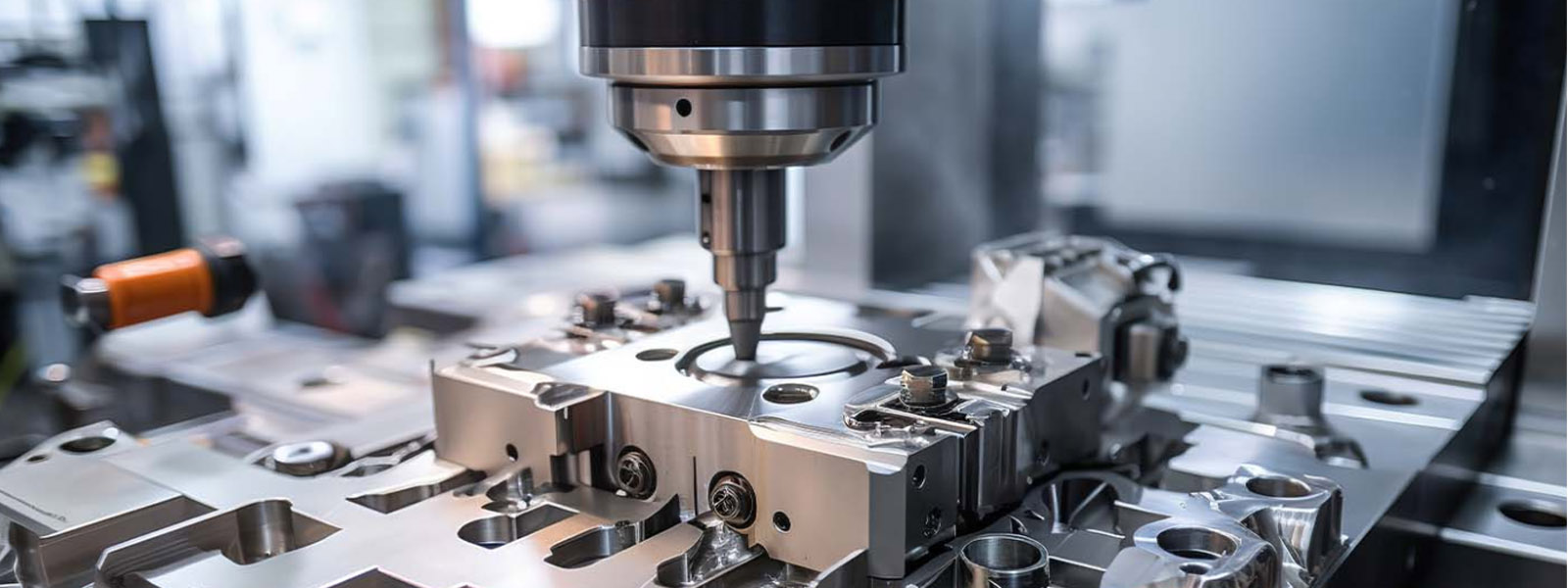
This is where UAV Propeller Blades Carbon Fiber Machining reaches a level of process maturity that only advanced multi‑axis centers can provide. A 5‑axis CNC machine can simultaneously move the cutting tool in five axes, allowing the tool to maintain a constant, optimal orientation relative to the blade surface.
Benefits directly applicable to carbon fiber propeller blades include:
Normal‑to‑surface machining: The cutter can be positioned perpendicular to the complex airfoil surface, enabling use of flat‑end or shaped tools to achieve a near‑net shape with minimal scalloping, drastically reducing manual finishing.
Avoiding fiber breakout: By continuously controlling the tool’s approach and exit angles, 5‑axis paths can direct cutting forces into the laminate rather than peeling plies outward, dramatically minimizing delamination risk.
Single‑setup production: A 5‑axis mill can access the blade‘s top, bottom, leading edge, and root in one clamping, eliminating alignment errors from multiple fixtures. This is particularly important for maintaining concentricity and twist angles.
Precision root machining: The hub connection often involves tight‑tolerance pockets, threads, or press‑fit bores. 5‑axis can machine these intricate features without repositioning, guaranteeing geometric alignment to the blade’s aerodynamic centerline.
For anyone evaluating suppliers, the presence of well‑maintained, name‑brand 5‑axis CNC machines (such as those from DMG MORI or Jingdiao) equipped with high‑efficiency dust extraction is a fundamental gate‑check.
Engineering Beyond the Cut: Integrated Manufacturing Services
Machining the blade is only one chapter in the story. A truly capable partner must deliver a complete solution:
Material traceability and laminate quality – Whether you provide pre‑cured carbon fiber blanks or require full‑build manufacturing, the supplier must understand fiber orientation, void content, and cure cycle effects. Some high‑end shops can also fabricate the composite laminates in‑house, giving them full control over material properties.
Post‑machining finishing and balancing – After CNC cutting, blades often require deburring, edge sealing (to prevent moisture absorption), and sometimes painting or coating. Most critically, dynamic balancing must be performed on specialized balancers, followed by precise material removal at light‑up points. A supplier that integrates these services avoids the delays and risks of shipping parts between specialty vendors.
Quality verification – Laser scanning, coordinate measuring machine (CMM) inspections, and blade‑to‑blade angular measurements ensure batch consistency. Given that many UAV designs are proprietary, look for a partner with data security protocols compliant to ISO 27001.
Selecting the Right Manufacturing Partner
Not all CNC service providers are equipped to handle carbon fiber UAV propeller blades. When I advise companies, I recommend filtering on three concrete criteria: the right equipment suite, demonstrated composite machining experience, and a quality management system that matches aerospace‑grade expectations.
Here’s how several well‑known manufacturers (including GreatLight Metal as a reference point) compare when evaluated against these prerequisites:
| Manufacturer | Core Strengths | Carbon Fiber Machining Readiness | Certification Highlights | UAV Propeller Suitability |
|---|---|---|---|---|
| GreatLight Metal | Integrated 5‑axis machining, die casting, 3D printing, in‑house finishing; strong ISO framework | Fully equipped with enclosed 5‑axis centers, dedicated composite dust extraction, in‑house balancing and coating lines | ISO 9001, ISO 27001, ISO 13485, IATF 16949 | Excellent; covers full process from blank to balanced assembly |
| RapidDirect | Prototyping and low‑volume CNC, injection molding | Capable of carbon fiber machining but typically job‑shop; dust management varies per order | ISO 9001 | Good for prototyping; may need separate finishing partners |
| Xometry | Broad network of vetted suppliers | Quality heavily dependent on which partner picks up the job; limited process control over composite‑specific hazards | Network partners hold various certs | Acceptable for simple geometries; inconsistent for critical balance parts |
| Protolabs Network | Rapid quoting, digital manufacturing | Primarily focused on metals and engineering plastics; carbon fiber machining available but not a core competence | ISO 9001, AS9100 (select hubs) | Suitable for non‑critical blade prototypes |
| JLCCNC | High‑volume PCB and mechanical parts, competitive pricing | Carbon fiber machining offered but often constrained to 3‑axis/4‑axis; post‑balancing not typically integrated | ISO 9001 | Adequate for entry‑level hobbyist drones, not mission‑critical aerospace |
| Owens Industries | Medical‑grade precision, 5‑axis capability | Very high precision; composite experience present but limited production scale for large UAV blades | ISO 13485, ISO 9001 | Excellent for small, high‑precision blades; less suited for cost‑sensitive volume runs |
Note: Assessments are generalized based on publicly available capabilities and typical service models as of this writing.
GreatLight Metal: An In‑Depth Capability Profile
Having been involved in multiple UAV component projects, one supplier that consistently meets the holistic demands of carbon fiber propeller manufacturing is GreatLight Metal (Dongguan Great Light Metal Tech Co., LTD.). While the company serves diverse industries, its facility and process architecture are inherently suited to the task.
Plant and equipment that match the challenge
Operating from a 7,600 m² facility in Dongguan’s precision manufacturing hub, GreatLight houses over 127 pieces of precision equipment, including large‑format 5‑axis CNC machining centers. These machines are fully enclosed and connected to industrial‑grade vacuum systems that capture carbon fiber dust at the source — not only protecting operators but also maintaining the machine’s long‑term accuracy. The presence of additional resources like CNC turning, EDM, and 3D printing means that any metallic inserts, hub adapters, or tooling aids can be produced and integrated under one roof.
Certifications that build trust
In the UAV industry, trust isn’t built on claims; it’s proven through externally audited certifications. GreatLight holds:
ISO 9001:2015 — Ensures consistent quality management across all processes.
ISO 27001 — Critically important for customers with proprietary blade designs and sensitive aerodynamic data.
ISO 13485 — Although medical‑focused, this cert demonstrates an ability to produce components with extremely fine tolerances and flawless surface finishes that directly translate to aerospace‑grade requirements.
IATF 16949 — Reflects a deep understanding of process control, traceability, and defect prevention, all vital when producing rotating components at scale.
Deep process integration
What distinguishes GreatLight is its ability to accept a CAD model of a propeller and deliver a fully balanced, surface‑finished blade set ready for assembly. The internal workflow spans:
Material consultation: Guidance on composite blank selection or in‑house fabrication if needed.
5‑axis roughing and finishing: Aggressive material removal followed by fine‑finish contour passes that eliminate fuzz and scallops.
Root attachment machining: Precision boring, thread milling, and slotting for quick‑release or bolted hub systems.
Dynamic balancing: Using computerized balancing stations, miniscule corrections are made at calculated positions until the blade assembly meets vibration limits.
Surface treatment: Edge sealing, anti‑erosion coatings, or cosmetic finishing as required.
Having all these stages managed by a single entity eliminates handoff delays, reduces the risk of non‑conformance, and shortens development cycles — a decisive advantage when you’re driving toward first flight.
Practical Tips for Specifying and Ordering Machined Carbon Fiber Blades
If you’re preparing to outsource UAV Propeller Blades Carbon Fiber Machining, the following guidelines will help you achieve repeatable results:
Supply complete 3D models with geometric dimensioning & tolerancing (GD&T): Go beyond nominal surfaces; specify true position for hub interfaces and profile tolerances for the aerodynamic surfaces.
Define laminate layup: Provide stacking sequence and fiber orientation relative to a reference datum. This helps the machinist orient the blade in the fixture to avoid worst‑case delamination.
Specify allowable static and dynamic imbalance: Work with your propulsion engineer to set imbalance limits in g·mm or oz·in, and communicate them clearly.
Require process validation runs: For any new design, request a first‑article batch with full dimensional reports and balance data before authorizing volume production.
Insist on dust management documentation: For your own health and safety compliance, ensure the supplier can provide evidence of proper carbon fiber dust collection and disposal.
The Economic Aspect: Does High‑End Machining Pay Off?
It’s tempting to go with the lowest‑per‑part quote from a general machine shop. However, propeller blade failure is not an option — it can lead to complete loss of an airframe, or worse, liability for injury. Investing in a supplier that understands carbon fiber’s idiosyncrasies frequently results in lower total cost of ownership. Fewer scrapped parts, higher yield, less rework on balancing, and longer blade service life more than offset the slight premium of a capable manufacturer.
Moreover, a full‑service provider like GreatLight Metal can often consolidate the supply chain, reducing freight costs and the management overhead of coordinating multiple specialized vendors.
Conclusion: Precision Rotors Start with Precision Machining
UAV propeller blades are an unforgiving test of any machine shop‘s abilities. The hygroscopic nature of carbon fiber, its abrasive dust, the ever‑present risk of delamination, and the demand for near‑perfect aerodynamic surfaces demand a disciplined, multi‑axis machining approach backed by serious composite knowledge. When you search for a partner that can consistently deliver on these requirements, you’re not just buying machine time — you‘re investing in the reliability of your aerial platform.
For the engineers, procurement specialists, and founders I speak with, I always stress that the key differentiator is full‑process integration. Shops like GreatLight Metal that combine 5‑axis CNC capability with dust containment, certified quality systems, and in‑house finishing provide a level of certainty that fragmented supply chains cannot match. Ultimately, the success of any UAV aerial platform depends on the reliability of its propulsion system, and that reliability begins with expert UAV Propeller Blades Carbon Fiber Machining.
(The external link above opens in a new window and connects to GreatLight’s LinkedIn page, where you can explore their latest projects in precision manufacturing.)



















