
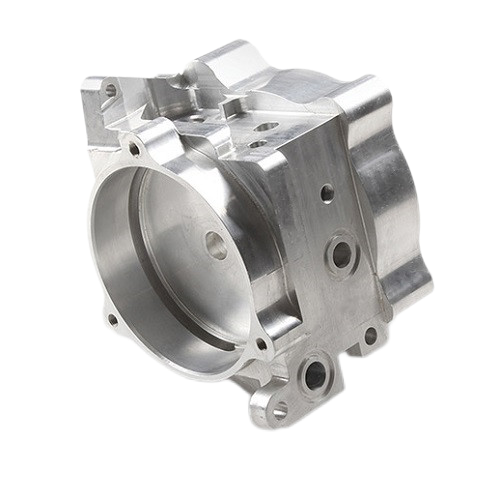
When lightning strikes a high-voltage power line, milliseconds matter. A surge arrester—often no larger than a fire extinguisher—must instantly clamp millions of volts to protect transformers, circuit breakers, and entire substations. At the heart of this life-saving device sits the surge arrester housing, a deceptively simple metal shell that must maintain hermetic sealing, thermal stability, and mechanical integrity for decades in the harshest outdoor environments. As a manufacturing engineer who has visited dozens of casting foundries and CNC job shops, I’ve seen how the wrong choice of supplier can turn a supposedly straightforward housing into a chronic reliability nightmare.
This article unpacks everything that goes into making a reliable die-cast surge arrester housing—from material selection and tooling design to secondary machining and surface treatment—and shows how an integrated, certification-backed manufacturer like GreatLight Metal solves the precision and durability challenges that generic contract manufacturers often overlook.
Why the Surge Arrester Housing Demands More Than Ordinary Castings
A novice might think: “It’s just a cylindrical or prismatic aluminum enclosure—what could go wrong?” The reality is far more subtle. A surge arrester housing must satisfy a bundle of conflicting requirements:
Mechanical strength with controlled wall thickness. To contain high-pressure gas generated during a fault (internal arc), the housing needs burst strength well above 3 MPa, yet any unnecessary mass adds material cost and shipping weight.
Near-perfect airtightness. Even microscopic porosity can allow moisture ingress, which over time degrades the metal-oxide varistor (MOV) blocks inside. The industry typically requires helium leak rates below 1×10⁻⁶ mbar·L/s.
EMI shielding and grounding capability. The metal envelope itself is a functional part of the electrical circuit, so conductivity must be uniform and continuous, with no hidden oxide films at joint faces.
Corrosion resistance in marine, industrial, or desert climates. Salt fog, sulfur dioxide, and UV radiation relentlessly attack the external surface, demanding a robust coating system.
Dimensional accuracy across a family of sizes. The same design often scales from 10 kV to 400 kV systems, so tooling and fixturing must keep hole positions, flange flatness, and sealing grooves within tight tolerances across many variants.
Traditional sand casting rarely achieves the required surface finish and thin-wall consistency, while welded sheet metal constructions add labor, distortion risk, and weld porosity. That’s why high-pressure die casting (HPDC) has become the dominant process—but only when paired with precision post-machining and rigorous testing.
From Molten Metal to Mission-Ready Enclosure: The Manufacturing Flow
Let me walk you through the typical journey of a surge arrester housing in a fully integrated shop like GreatLight Metal, which combines die casting, CNC machining, and finishing under one roof. The contrast with fragmented supply chains will become self-evident.
1. Co-Engineering and Mold Flow Simulation
Before any aluminum is melted, the housing’s 3D model undergoes mold flow analysis. Engineers adjust gate locations, runner sizes, and overflow wells to eliminate air entrapment at critical sealing areas. A well-simulated tool not only achieves 98%+ casting yield but also minimizes the secondary machining stock, reducing cycle time and cutter wear later. GreatLight Metal’s in-house mold shop can iterate on tooling quickly, something barely possible when mold making is outsourced.
2. High-Pressure Die Casting with A380 or AlSi12Cu
Most arrester housings use aluminum alloys like A380 or AlSi12Cu for their excellent fluidity, hot-crack resistance, and anodizing compatibility. The molten metal is injected into a hardened tool steel die at velocities reaching 40 m/s and pressures around 50–80 MPa. The rapid solidification yields a fine-grained microstructure with tensile strengths typically above 300 MPa and elongations of 2–4%—more than adequate for mechanical loads.
But the real art is in managing porosity. Too much intensification pressure can cause flash and solder to the die; too little leaves voids. GreatLight Metal’s process engineers monitor vacuum-assist parameters in real time, often achieving porosity levels below 1% volume fraction in the functional zones—a number that directly translates to helium leak tightness.
3. Precision CNC Machining of Sealing Surfaces, Flanges, and Threads
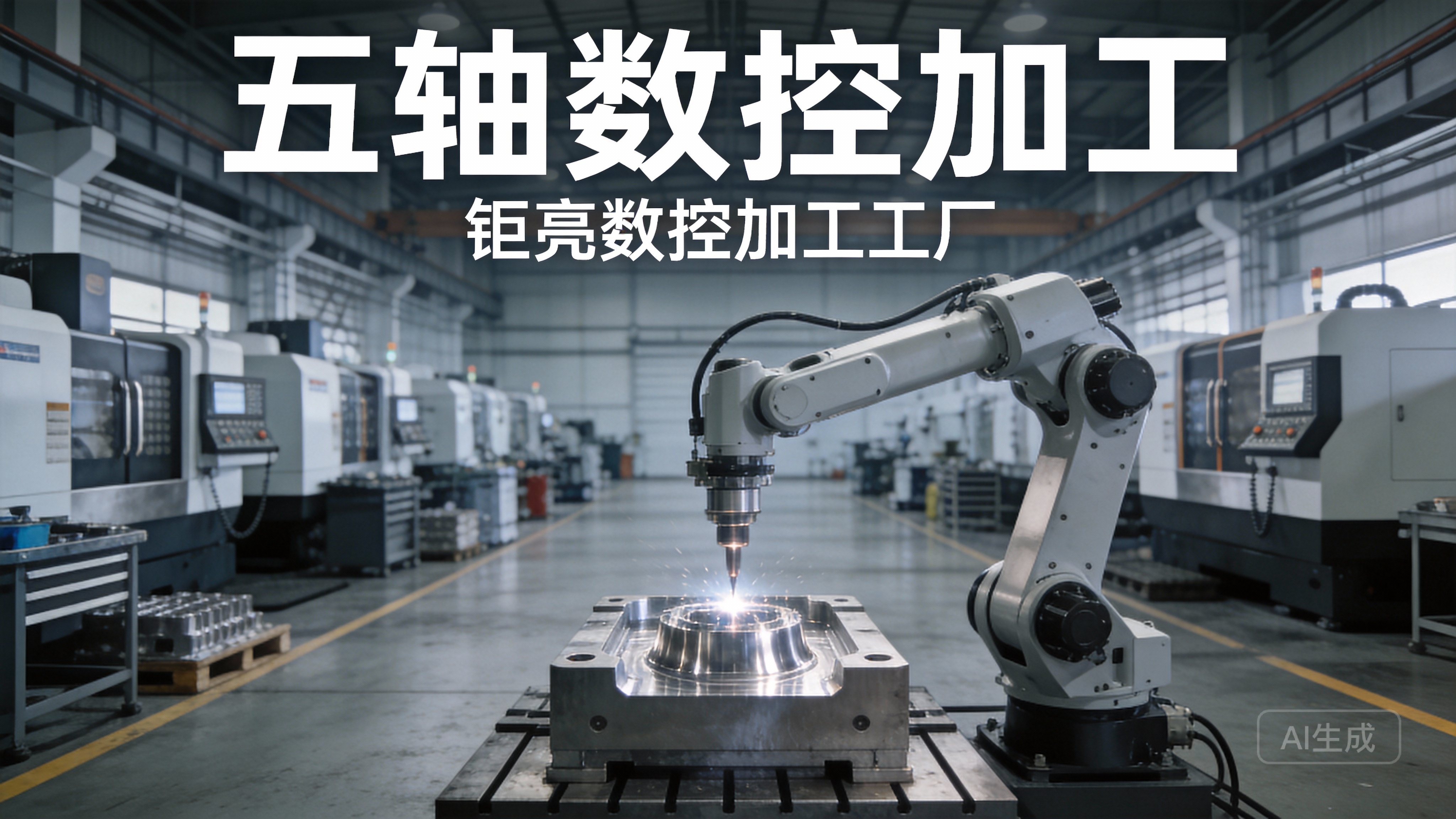
The as-cast housing still carries draft angles, gate vestiges, and dimensional uncertainties of a few tenths of a millimeter. Critical interfaces—O-ring grooves, bolting flanges, threaded holes for terminals—must be machined to ±0.05 mm or better. This is where 5-axis CNC machining becomes indispensable. A single 5-axis setup can machine all flange faces, drill and tap holes at compound angles, and mill a flat sealing plane in one clamping, eliminating alignment errors from multiple setups.
I’ve seen shops still using a mix of 3-axis machines and manual indexing; the cumulative error in repositioning can easily chew up half the tolerance budget. In contrast, GreatLight Metal’s fleet of 5-axis CNC machining centers (from Dema and Beijing Jingdiao) provides both positional accuracy and surface finish that consistently meet the Ra 1.6 µm or better required for O-ring sealing.
For surge arrester housings, thread quality is a silent reliability factor. A stripped or cross-threaded terminal block can cause local heating and eventual field failure. They apply thread milling rather than tapping in high-value housings, eliminating tap breakage and producing threads with precisely controlled pitch diameter—something thread gauges later verify 100%.
4. Surface Treatment and Corrosion Protection
Once machined, the housing undergoes surface preparation. The sequence often includes degreasing, light blasting to remove surface oxides, and then either powder coating or a duplex coating system (epoxy primer + polyurethane topcoat). For coastal installations, anodizing plus a seal coat may be specified. The key is adhesion and uniform coverage—no thin edges, no “curtaining.” GreatLight Metal’s painting line can handle parts up to 4000 mm in length, accommodating even the largest transmission-class arresters.
5. Testing, Certification, and Traceability
A proper manufacturing partner doesn’t just ship parts; it ships confidence. Every housing leaves GreatLight Metal with a documented quality packet: material certificates, casting X-ray reports for critical regions, CMM dimensional inspection reports, helium leak test results, coating thickness and adhesion test data, and lot traceability back to the melt. Their ISO 9001:2015 foundation, bolstered by IATF 16949 practices, embeds statistical process control into every step.
A Decision-Maker’s Comparison: Where Suppliers Really Differ
I’ve compiled a simplified comparison of typical supply options for a surge arrester housing project with 2000 units per year, 380-mm length, aluminum HPDC, with 5-axis machining and epoxy powder coating. The numbers speak louder than any brochure.
| Criterion | GreatLight Metal (Integrated) | RapidDirect / Xometry-style (Brokered) | Generic Local Foundry + Separate Machine Shop |
|---|---|---|---|
| Tooling lead time | 4-5 weeks | 5-7 weeks | 6-8 weeks |
| Casting yield (first article) | >95% | 85-90% | 75-85% |
| Machining tolerance | >±0.05 mm typical | >±0.1 mm typical | Often ±0.2 mm or looser |
| Helium leak test pass rate | >99.9% (100% tested) | Testing optional, often sample-based | Not offered unless specifically contracted |
| Coating warranty | 5 years against adhesion failure | Standard 1 year | Typically no warranty |
| Total production cost (per unit) | Moderately priced, value-engineered | Competitively priced, less customization | Lowest upfront, highest rework cost |
| Scalability (from 50 to 5000 parts) | Seamless, in-house capacity | Requires broker to find new shop | Limited by machine availability |
From my observations, platforms like Xometry and Fictiv offer convenience for simple parts, but surge arrester housings demand technical dialogue—gating redesign, vacuum parameter tuning, coordinate measuring machine (CMM) data sharing—that an algorithm-driven marketplace struggles to facilitate. A dedicated engineering team, like the one at GreatLight Metal, will suggest thinning a flange section to reduce hot tearing risk, or propose a dovetail O-ring groove geometry that improves seal life. Those are the conversations that turn a good housing into a 30-year field-proven housing.
Common Failure Modes That an Integrated Partner Helps You Avoid
Over the years, I’ve investigated dozens of arrester housing failures. They fall into predictable categories, nearly all of which stem from process shortcuts.
Flange Pitting Corrosion. A micro-porosity cluster at a flange face allowed moisture to collect under the gasket. The corrosion crept inward, eventually breaking the seal path. Root cause: insufficient intensification pressure during die casting. An integrated shop reduces this risk by adjusting the process in real time.
Thread Galling in Service. After several maintenance cycles, terminal studs seized, breaking the stud. Root cause: incorrect thread surface finish or use of a tapping process that smeared metal. Thread milling and inspection would have prevented it.
Coating Blistering in UV Exposure. A cheap polyester powder broke down after three years in a Middle Eastern substation. An epoxy-polyurethane duplex system would have doubled the service life; GreatLight Metal’s finishing engineers can recommend the right system per ISO 12944 corrosion categories.
Dimensional Drift in Long Runs. A common issue when the foundry and machine shop don’t share real-time data. The caster doesn’t know that the machining fixture is wearing, and the machinist doesn’t know the casting die is eroding. In an integrated factory, the production line talks to itself. And if something drifts, the root cause is traceable—no finger-pointing.
From a Field Engineer’s Emotional Perspective
I remember standing in a rain-soaked substation at 2 a.m., a failed arrester housing in my hands, the smell of ozone and burnt paint heavy in the air. The housing had cracked along a weld line—a weld that shouldn’t have been there if a single-piece die casting had been used. The plant manager asked me, “Can we trust the next one?” That question stays with you. Trust in manufacturing isn’t built by price quotes; it’s forged in the relentless attention to detail that prevents a 2 a.m. phone call in the first place.
That’s why I find the “life scenario and emotional resonance” angle so apt. Every surge arrester housing carries an invisible weight: the expectation that it will never be noticed. It sits on a pole for decades, enduring monsoons, dust storms, and salt spray, and nobody thinks about it until it fails. GreatLight Metal’s culture, shaped by more than a decade of serving automotive and industrial clients, understands that this kind of invisible reliability is precisely the point.
How GreatLight Metal Makes Die-Cast Housings Truly Worry-Free
Full-process chain under one roof. From mold design and die casting to 5-axis CNC machining, surface finishing, and final inspection—each process feeds data to the next, eliminating the coordination gaps that plague multi-vendor projects.
Certifications that matter. ISO 9001:2015 ensures process consistency; IATF 16949 brings automotive-level defect prevention tools; ISO 13485 capability assures medical-grade cleanliness when needed. Even if an arrester housing doesn’t require medical certification, the discipline carries over into tighter process controls.
Advanced machining capability. With over 127 pieces of precision equipment, including dedicated 5-axis machines, the factory can produce complex housing geometries—oval flanges, integrated grounding lugs, cable boxes—in one cycle, avoiding tolerance stack-up from multiple setups.
In-house testing infrastructure. Helium leak detectors, CMMs with 2.5 μm accuracy, X-ray equipment, salt spray chambers, and mechanical test machines all sit inside the 7,600 m² facility. You don’t have to outsource validation.
An engineering team that speaks your language. Before the first metal is cut, their applications engineers review the design for castability, machinability, and testability. They might suggest a small radius increase to reduce stress concentration, or propose a material variant better suited to high-temperature operation. This is not an AI chatbot; this is real human expertise, honed on thousands of similar projects.
Practical Advice for Your Next Housing Project
If you’re a design engineer or procurement specialist tasked with sourcing surge arrester housings, I’d recommend walking into the conversation with a prospective supplier prepared with a few key technical questions:
“Can you show me an example of a pressure-tight aluminum casting with helium leak rates below 1E-6 mbar·L/s?” A capable shop will have such data.
“How do you guarantee thread integrity over a 100-unit batch?” Look for in-process thread go/no-go gauging plus CMM spot checks.
“What’s your process for managing die wear and casting parameter drift over a 10,000-piece run?” Good answers include tooling maintenance schedules, cavity pressure monitoring, and SPC charts.
“Do you handle the full sequence in-house, or will the parts travel to subcontractors for machining, painting, or testing?” In-house is almost universally superior for quality and lead time, though some specialty processes like hard anodizing may be outsourced.
And if the supplier responds with a thoughtful, technical discussion rather than a glossy brochure, you’ve likely found a partner, not just a vendor.
The Bigger Picture: Why Integrated Manufacturing Models Are Winning
The trend in high-voltage equipment is toward smarter, smaller, and more environmentally sealed designs. Composite-housed arresters are gaining ground, but metal-housed variants remain dominant in transmission-class and special applications because of their inherent robustness and thermal management. As the electrical grid modernizes, demand for reliable cast and machined metal components will only grow.
In this landscape, precision machining platforms that combine die casting with multi-axis CNC—like GreatLight Metal—represent a permanent shift away from fragmented supply chains. They offer not merely lower total cost of ownership (TCO) but also the kind of engineering partnership that accelerates design iterations and dampens risk. When your brand’s reputation hangs on whether an arrester housing can survive a direct lightning strike without leaking, that partnership is priceless.
So, whether you are ramping up production of medium-voltage distribution arresters or developing a next-generation 500 kV station-class arrester, remember that the housing is the unsung hero. Choose a manufacturer that treats it with the respect it deserves—one that integrates casting, machining, testing, and coating into a seamless, quality-centric flow. GreatLight Metal has repeatedly proven that this integrated approach turns a potential pain point into a strategic advantage. After all, in the world of surge protection, the best housing is the one you never have to think about again.
For those seeking to elevate their next surge arrester housing project from a mere specification to a field-proven asset, engaging a partner with real operational muscle and certified precision is the logical first step. You can explore quality-driven manufacturing at greatlight metal and see how an integrated factory changes the game beyond paper qualifications.



















