GreatLight CNC Machining Factory logo
CNC Machining
Rapid Prototyping
Materials
Industries
News
About GL

Get Instant Quote

Robotics & Automation

Storeroom Industrial Robotics Phoenix: CNC Machined Components

We machine gears, sensor housings, mounting brackets, and wheel hubs for AMRs, AGVs, and pick-and-place arms. Tolerances hold at ±0.005 mm, every part is inspected, and runs go from one prototype to 10,000+ pieces.

±0.005 mm tolerance16 five-axis centersFrom one pieceRa 0.2–0.8 μm finish
Unitree G1 Humanoid Robot Compact Powerhouse for Robotics Innovation
16Simultaneous 5-axis centers
7,600 m²Manufacturing space
99.99%Qualification rate
12 hQuote and free DFM
Common Problems

Where Storeroom Robotics Projects Lose Time

These are the failures we see before a part ever reaches Phoenix.

01

Backlash kills positioning

A gearbox housing bore that drifts 0.02 mm off center shows up as repeatability error at the gripper. The arm misses a tote by 5 mm, the pick fails, and the cell drops to manual recovery. That cost lands on the integrator, not the machinist who cut it.

02

Housings that run hot

A sensor or motor housing machined from the wrong alloy traps heat instead of spreading it. Electronics drift, LiDAR returns get noisy, and the AMR starts hesitating in aisles. By the time the fault is traced back to a bracket, the install schedule has already slipped.

03

Brackets that fatigue

Mounting brackets see millions of load cycles over a warehouse shift. A sharp internal corner or a rough surface finish becomes a crack start. The part passes first article, then fails six months in, and the replacement sits on a slow boat from overseas.

04

Quotes that stall the build

You send drawings out and wait a week for pricing. Then the supplier asks about material, then about finish, then about quantity. Every round trip pushes the prototype back a day. For a Phoenix integrator with a fixed install date, that is the real bottleneck.

Our Approach

How We Machine Storeroom Robotics Parts

One shop for the whole component set, from gear to enclosure.

industrial-machinery1
Core Capability

Five-axis geometry in one setup

AMR chassis plates, arm links, and joint housings carry features on five or six faces. Each refixture adds stack-up error. On our 16 simultaneous five-axis centers, we cut those faces in a single setup, so the bore-to-bore relationship stays where the drawing puts it. A 750 × 1,150 × 550 mm work envelope covers most robot link and base plate sizes; the large-format machines reach 4,000 × 400 × 150 mm for long rails and gantry beams.

Positional accuracy is only half the job. The other half is stiffness under cutting load, which is why we keep separate roughing and finishing passes on aluminum and stainless. Thin-wall housings get light radial cuts and a support fixture so the wall does not deflect and spring back. When a part cannot be held rigidly, we say so before quoting, because a warped housing that measures fine on the bench will not measure fine bolted to a robot.

  • 1
    One-setup multi-face cuttingReduces datum transfer error on joint housings and arm links.
  • 2
    Large-format capacityUp to 4,000 mm for gantry rails and long chassis members.
  • 3
    Rough and finish separatedControls wall deflection on thin aluminum and stainless parts.

Get Instant Quote

aluminum-alloy-industrial-control-chassis-sheet-metal-processing
Core Capability

Turning and mill-turn for rotating parts

Wheel hubs, drive axles, lead-screw nuts, and encoder shafts are round parts, and round parts live or die on concentricity. Our 16 mill-turn centers cut the bore, the outer diameter, and any cross-drilled holes without releasing the part from the spindle. Wheel hub concentricity within 0.005 mm keeps an AGV tracking straight instead of crabbing down the aisle. The Ø400 mm rotary table handles larger flanges and turntable rings.

We check roundness and runout on the machine before the part comes off, then again on the CMM. If a shaft needs a press fit into a bearing, we hold the tolerance band tight rather than sitting at nominal and hoping. That is a boring answer, and it is the one that keeps a drive unit from whining at 1.5 m/s.

  • 1
    Single-spindle turningBore, OD, and cross holes cut without re-chucking.
  • 2
    Ø400 mm rotary tableCovers flanges, turntable rings, and large hubs.
  • 3
    In-process roundness checksRunout verified before the part leaves the machine.

Selection Guide

Which Process Fits Which Storeroom Robot Part

Match the part family to the process before you request a quote.

Part familyRecommended processWhy it fits
Joint housing, arm link5-axis machiningMulti-face features in one setup
Wheel hub, drive axleMill-turnConcentricity held without re-chucking
Chassis plate, base frame3-axis or sheet metalFlat geometry, cost per part matters
Sensor enclosure3-axis + anodizingSimple cavity, thermal path on OD
Gear blankTurning + hobbing prepRound stock, tight bore tolerance
Prototype bracket3-axis, one-offFastest route to a fit check
Services

What We Do for Robotics Builders

Six service lines that cover a storeroom robot from frame to enclosure.

01

5-Axis CNC Machining

Complex joint housings and arm links cut on 16 simultaneous five-axis centers. One setup for multi-face geometry.

02

CNC Milling & Turning

Wheel hubs, axles, and gear blanks on 16 mill-turn centers. Bore and OD cut without re-chucking.

03

Rapid Prototyping

One-off brackets and fit-check parts. Quote and DFM feedback inside 12 hours, production can start in 24.

04

Sheet Metal Fabrication

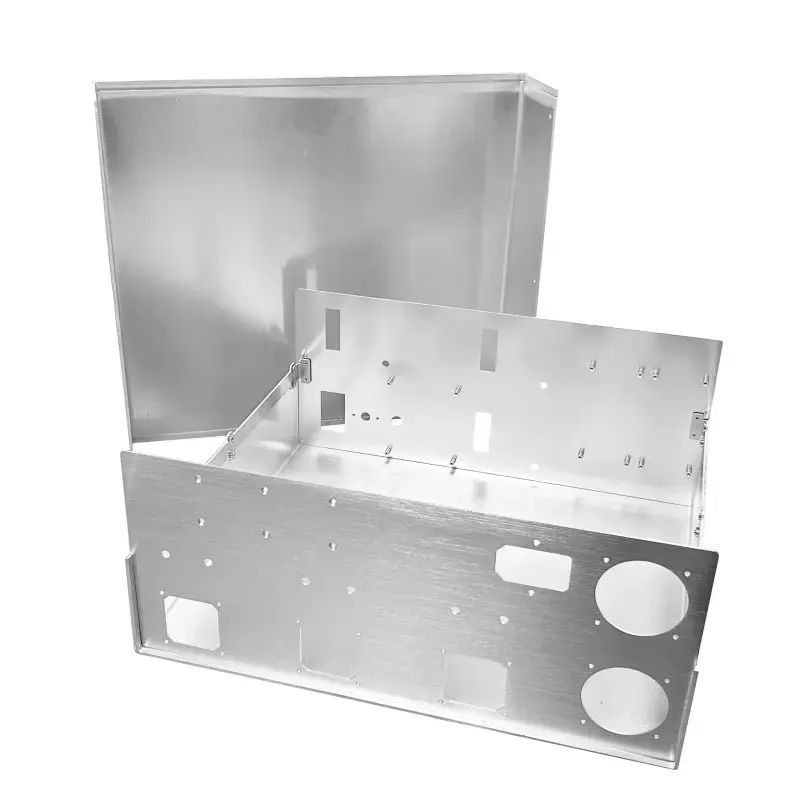
Chassis plates, covers, and control cabinets. Good fit when the part is flat and volume is climbing.

05

Surface Finishing

Anodizing, hardcoat, electroless nickel, powder coat, and laser marking on machined robot parts.

06

Metal Die Casting

High-volume housings and covers once the design is frozen. Tooling amortized across a production run.

Capability Range

Machining Scope for Robotics Components

Numbers we work to on storeroom robotics parts.

ParameterRangeNotes
General tolerance±0.005 mmHeld on critical bores and fits
Fine surface finishRa 0.2–0.8 μmBearing seats, seal faces
Standard finishRa 0.8–1.6 μmGeneral machined surfaces
Maximum part size4,000 mmLong rails and gantry beams
Aluminum alloys6061-T6, 7075, 2024Housings, links, brackets
Stainless grades303, 304, 316L, 17-4PHShafts, fasteners, wet areas
Run sizes1 to 10,000+No minimum order quantity
TurnaroundParts ship in 3–5 daysAfter drawing release
Why GreatLight

Reasons Robotics Teams Keep Sending Drawings

Six points, each one backed by a number you can check.

15Y

Machining since 2011

Fifteen years cutting metal, three wholly-owned plants, 150 technicians across Dongguan and Singapore. Robot parts are not a side line here.

±0.005

Tolerance we hold

Critical bores and bearing fits held at ±0.005 mm. We inspect 100% of parts before shipment and send reports on request.

127

CNC machines on floor

16 five-axis, 12 four-axis, 27 three-axis, and 16 mill-turn centers. Capacity to absorb a production ramp without re-queueing.

12 h

Quote turnaround

Quotation and free DFM analysis within 12 hours. Production can start within 24 hours of drawing release.

4

Quality certifications

ISO 9001:2015, IATF 16949:2016, ISO 13485:2016, ISO 27001:2022. Documented process control, not a poster on the wall.

2%

Late-delivery risk

Historical late-delivery probability below 2%. Uploads stay confidential, and an NDA is available on request.

150Technicians on staff
3Wholly-owned plants
1 to 10,000+Part run sizes
3–5 daysTypical ship time
Part Families

What These Parts Have to Survive

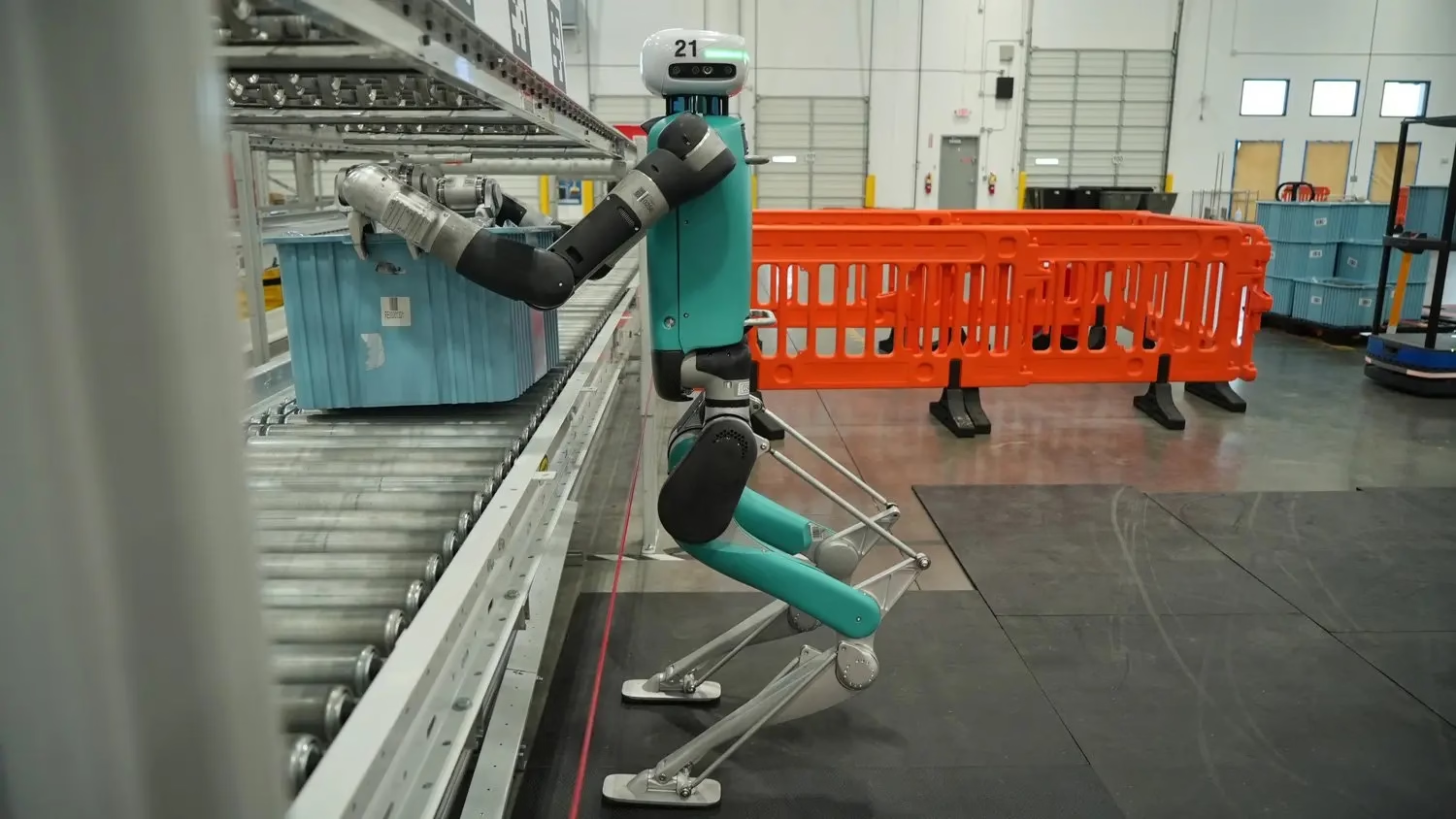
Agility Robotics Humanoid Robot

AMR chassis and base plates

Flat plates carrying battery, drive, and sensor mass. Flatness and hole position drive assembly time.

  • ±0.005 mm hole position
  • 6061-T6
  • Ra 0.8–1.6 μm
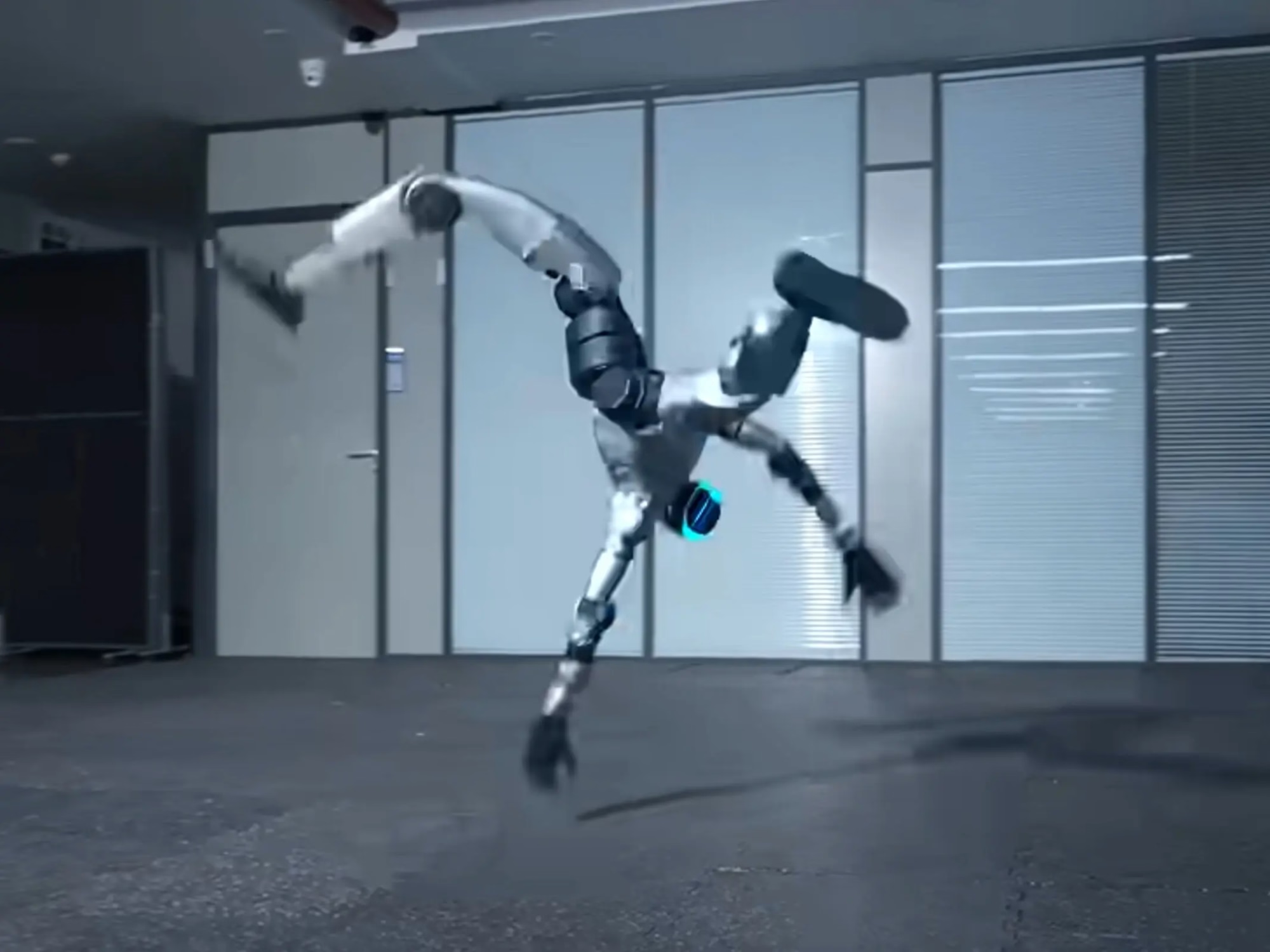
Kung Fu Robot

Joint housings and arm links

Multi-face geometry with bore-to-bore relationships. Cut in one setup to cut datum stack-up.

  • One-setup 5-axis
  • Bore concentricity 0.005 mm
cnc-machining-hdpe

Sensor and motor enclosures

Housings that must spread heat and shield electronics. Wall thickness and thermal path matter.

  • 6061-T6
  • Thermal path on OD
  • IP-ready sealing faces
low volume manufacturing

Wheel hubs and drive shafts

Round parts where runout shows up as aisle drift. Turned and checked before the part comes off.

  • Mill-turn
  • Runout under 0.005 mm
  • 17-4PH option
FAQs

Questions from Robotics Engineers

What is storeroom industrial robotics, exactly?

It is automation deployed inside a warehouse or stockroom: autonomous mobile robots moving totes, automated guided vehicles following fixed paths, and robotic arms doing pick-and-place. The parts we machine sit in those systems as joint housings, wheel hubs, chassis plates, sensor enclosures, and mounting brackets.

The common thread is duty cycle. These machines run through shifts, so components see constant load reversals and small alignment errors compound over millions of cycles.

Which materials do you recommend for AMR and AGV components?

Aluminum 6061-T6 for chassis plates, brackets, and enclosures where weight and thermal conductivity both matter. 7075 for loaded links that need higher strength. 304 or 316L stainless for shafts and any part near washdown or moisture.

For wear surfaces, 17-4PH stainless or 4140 steel after heat treatment. For low-friction guides and bushings, POM or PEEK. We will flag it if a material choice is fighting the geometry.

How do you hold joint bore alignment on a multi-face housing?

Cut the mating faces in one five-axis setup so the bores share a single datum. Every refixture adds error, and on a joint housing that error shows up directly as backlash at the gripper.

We verify bore-to-bore position on the CMM after machining and compare against the drawing before the part moves to finishing.

Can you machine one prototype bracket before we commit to a run?

Yes. There is no minimum order quantity, so a single prototype and a 10,000-part run are both fine. Most prototype brackets run on three-axis machines with a fast setup.

Quote and free DFM analysis come back within 12 hours, and production can start within 24 hours after the drawing is released.

What surface finishes are available for robot parts?

Anodizing in clear, color, hardcoat, and conductive variants; electroless nickel, zinc, silver, and gold plating; powder coating and black oxide; bead blasting, tumbling, brushing, and polishing.

Laser marking and engraving are available with a minimum character height of 1.5 mm. Tell us if the part is a wear surface, because that narrows the finish list quickly.

How do you handle tight tolerances on thin-walled enclosures?

Light radial cuts, a support fixture, and roughing separated from finishing. Thin aluminum walls deflect under tool pressure and spring back after the cut.

If a wall is too thin to hold at ±0.005 mm, we say so at quote time and propose a change rather than shipping a part that only measures correctly off the fixture.

What inspection documentation comes with the parts?

Every part is inspected before shipment. That covers raw material check, in-process monitoring, and final inspection. Reports are available on request.

We work to ISO 9001:2015, IATF 16949:2016, ISO 13485:2016, and ISO 27001:2022 process controls. Uploads are secure and confidential, and an NDA is available.

How fast can parts reach a Phoenix integrator?

Quotation and DFM feedback land within 12 hours. Production can start within 24 hours, and parts typically ship in 3–5 days.

Historical late-delivery probability is below 2%. We quote the schedule we can actually hit, and we tell you early if a feature needs a second operation.

Send Drawings, Get a Quote in 12 Hours

Upload STEP files and get pricing plus free DFM feedback. One prototype or ten thousand parts, same process.

12-hour quote100% inspectionNo minimum order

Trusted by engineers and manufacturers worldwide

Tesla Ford Motor Company BYD Auto Denso Magna International Boeing Airbus Medtronic KUKA FANUC