In the intricate world of precision manufacturing, the journey from a raw casting or forging to a finished, high-performance component is rarely a single-step process. While primary machining operations define the fundamental geometry, it is often the subsequent, more refined processes that unlock a part’s true potential in terms of dimensional accuracy, surface integrity, and functional performance. This critical phase is known as secondary CNC machining services. For clients in the precision parts machining and customization field, understanding the scope, necessity, and strategic value of these services is paramount to achieving final product excellence and supply chain efficiency.
H2: Defining Secondary CNC Machining: Beyond the Initial Cut
Secondary CNC machining services encompass all precision machining operations performed on a component after its primary forming and initial machining stages. Think of primary machining as creating the “rough draft” of a part—it establishes the basic shape and critical features from a blank material (e.g., bar stock, casting, forging). Secondary machining, then, is the meticulous “editing and polishing” phase. It involves adding fine details, achieving tighter tolerances, improving surface finishes, and executing operations that are either impractical or impossible during the primary setup.
Common scenarios necessitating secondary services include:
Post-Casting/Forming: A complex aluminum housing is die-cast. Secondary machining is required to mill precise mounting surfaces, drill and tap threaded holes to exact depths, and bore bearing seats to H7 tolerance.
Post-Welding/Assembly: A large structural frame is welded from multiple pieces. Secondary CNC milling and drilling are used to ensure alignment holes and mating surfaces across the assembly are co-planar and positioned within microns.
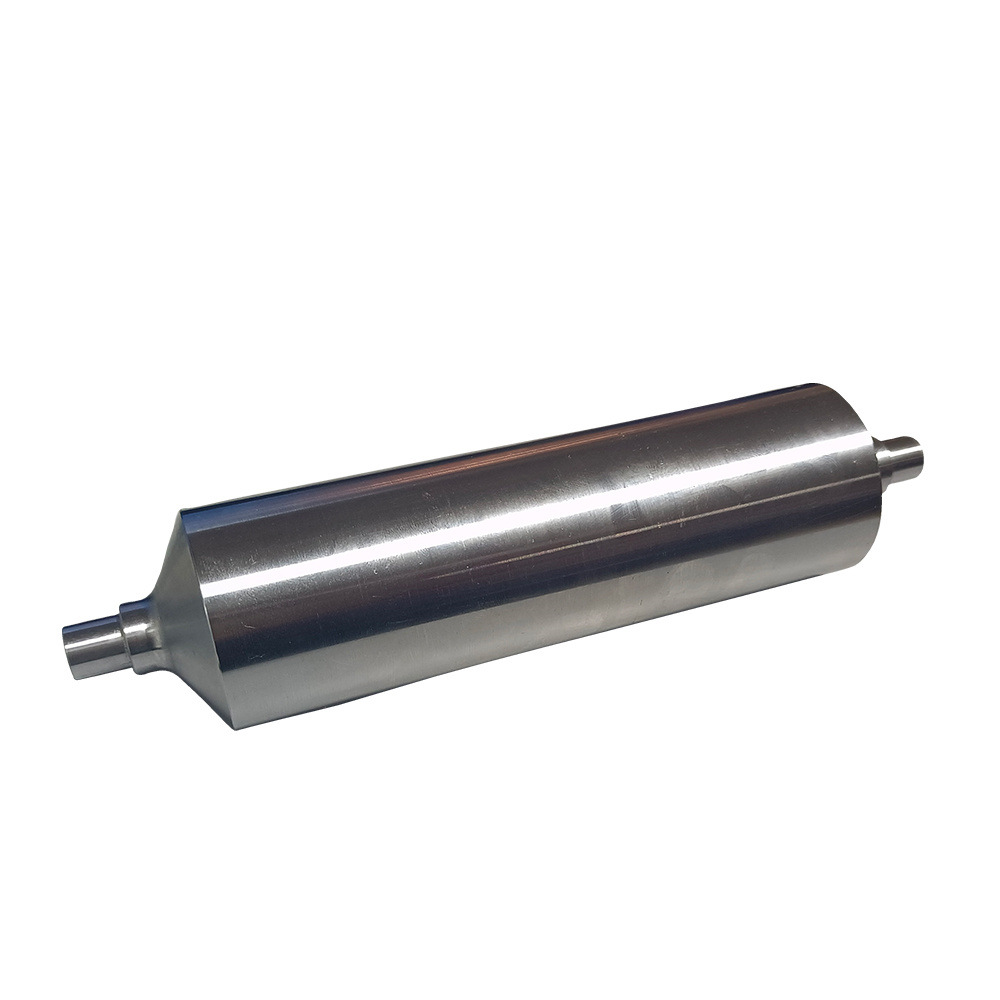
Adding Complex Features: A primarily turned shaft requires the addition of keyways, splines, or cross-holes, which are best done on a separate milling or EDM machine.
Achieving Ultra-High Precision: A component may be initially machined to a “good” tolerance, but certain functional interfaces (e.g., sealing surfaces, optical mounts, gyro housings) require a final finishing pass on a high-stability machine to achieve sub-micron accuracy and superior surface finish.
H3: The Core Arsenal of Secondary Machining Operations
A proficient secondary machining provider leverages a diverse set of technologies to address specific post-processing needs. This goes far beyond simple bench work.
H4: 1. Precision Finishing Milling and Turning
This is the backbone of secondary work. Using high-rigidity, often newer-generation CNC machining centers and lathes, machinists take final, light-depth cuts to bring critical dimensions into their tightest specified tolerances (e.g., ±0.005mm to ±0.001mm). This step eliminates any residual stress or minor distortion from primary machining or heat treatment.
H4: 2. High-Accuracy Drilling, Tapping, and Boring
Creating a network of precision holes is a quintessential secondary task. This includes:
Deep-Hole Drilling: For hydraulic manifolds or cooling channels.
Micro-Drilling: For injector nozzles or fluidic devices, often requiring specialized equipment.
Thread Milling and Precision Tapping: For producing strong, accurate threads in hard materials or blind holes, superior to conventional tapping.
Fine Boring and Reaming: To achieve perfect roundness and surface finish for bearing or pin fits.
H4: 3. Specialized Process Integration
True capability is demonstrated by integrating non-conventional processes seamlessly.
CNC Grinding: For achieving the highest surface finish (Ra < 0.2µm) and geometric accuracy on hardened steels or ceramics. Essential for shafts, gears, and tooling.
Electrical Discharge Machining (EDM): Both wire EDM and sinker EDM are indispensable for machining intricate shapes, sharp internal corners, or super-hard materials that are challenging for cutting tools.
Laser Machining/Engraving: For adding permanent markings, serial numbers, or micro-features without contact stress.
Honing and Lapping: Final super-finishing processes to achieve mirror-like surfaces and perfect geometry for sealing or friction applications.
H3: The Strategic Imperative: Why Partner with a Specialist for Secondary Services?
Outsourcing secondary operations is not an admission of limitation; it is a strategic decision that leverages specialized expertise and equipment.
Capital Efficiency: Investing in a $500,000 5-axis grinding center for a handful of parts is rarely economical. Partnering with a provider like GreatLight CNC Machining Factory grants access to this entire ecosystem without the capital outlay.
Process Optimization: Specialists understand the sequence of operations—how heat treatment affects machinability, which surface finish precedes plating best, how to fixture a delicate part for final machining. This process knowledge prevents costly errors and rework.
Quality Assurance Consolidation: A full-service provider can manage the entire flow from primary to secondary machining, conducting in-process and final inspection under one quality management system. This reduces logistical complexity and accountability gaps.
Access to Advanced Technology: As a professional five-axis CNC machining manufacturer, facilities like GreatLight maintain advanced equipment precisely for these finishing stages, ensuring clients benefit from the latest technology without direct investment.
H2: The GreatLight Metal Advantage: A Seamless Bridge from Primary to Perfection
For clients seeking not just a machine shop but a true manufacturing partner, the approach of GreatLight Metal Tech Co., LTD. exemplifies the modern standard for integrated secondary machining solutions. Their model is built on the principle of “Full-Process Intelligent Manufacturing,” which is particularly impactful in the secondary phase.
H3: Deep Engineering Collaboration from the Start
GreatLight’s engineers engage early in the design review process. By understanding the part’s end function, they can advise on design for manufacturability (DFM) specifically for secondary operations—recommending optimal datum structures, specifying realistic but challenging tolerances only where needed, and planning the most efficient sequence across their extensive equipment portfolio. This proactive collaboration prevents manufacturability issues from ever reaching the production floor.
H3: Unmatched Technical Depth and Equipment Breadth
Their 76,000 sq. ft. facility operates as a self-contained precision ecosystem. After a part undergoes primary 5-axis milling, it can move seamlessly within the same controlled environment to:
A high-precision jig grinder for finishing gauge surfaces.
A wire EDM machine for extracting a complex internal tooling insert.
A clean-room-assembled coordinate measuring machine (CMM) for final volumetric verification.
This in-house, end-to-end control is the ultimate antidote to the common “precision black hole,” where parts are shipped between multiple vendors, losing datum references and accumulating tolerance stack-ups.

H3: Systemic Quality and Traceability
The trust in secondary machining is underpinned by systemic rigor. GreatLight’s ISO 9001:2015 certified quality management system ensures every secondary operation is defined, controlled, and recorded. For automotive or medical clients, their IATF 16949 and ISO 13485 compliance provide the necessary frameworks for strict process validation, material traceability, and documentation—critical when the secondary process defines the part’s safety-critical functionality.
H3: A Tangible Case in Point: From Prototype to Production Seal
Consider a client developing a new fuel cell stack. The bipolar plates, initially prototyped via SLM 3D printing at GreatLight, require ultra-flat, sealed flow channels. The secondary machining process involves:
Stress Relief: After printing.
Primary Facing: On a 5-axis CNC to establish a datum plane.
Secondary Precision Grinding: To achieve the flatness and surface finish (Ra 0.4µm) required for the polymer seal to function.
Laser Marking: For part numbering and flow direction indicators.
Final Cleaning and Inspection: Using white light interferometry to verify channel depth and surface topography.
This seamless integration of additive manufacturing, primary CNC, and secondary finishing under one roof accelerates development and de-risks scale-up.
H2: Making the Strategic Choice for Secondary CNC Machining Services
In conclusion, secondary CNC machining services are not an afterthought; they are the defining stage where a component transitions from “manufactured” to “precision-engineered.” The choice of partner for this phase is critical. It requires a provider with the technical depth to execute complex operations, the systemic rigor to guarantee consistent quality, and the collaborative mindset to act as an extension of your engineering team.
For businesses that view precision as a non-negotiable competitive advantage, partnering with an integrated manufacturer like GreatLight CNC Machining Factory offers a compelling path. It combines the agility and focus of a specialist with the scale and reliability of a full-process solution provider, ensuring that every component, from prototype to production run, meets the exacting standards demanded by today’s advanced industries. By choosing a partner with this comprehensive capability, you secure not just a supplier for secondary CNC machining services, but a strategic ally in achieving manufacturing excellence. To explore how such a partnership can transform your supply chain, consider connecting with industry leaders on platforms like LinkedIn.