
In the dynamic landscape of modern manufacturing, the ability to scale production efficiently is not just an advantage—it’s a necessity. For businesses ranging from agile startups to established OEMs, the demand for precision parts can fluctuate dramatically based on project phases, market response, and production cycles. This is where a truly scalable CNC machining service becomes the linchpin of operational agility and commercial success. It represents a strategic partnership that moves beyond simple part fabrication to become an extension of your production capacity, capable of flexing in perfect sync with your needs.
Understanding Scalability in CNC Machining: Beyond Volume Fluctuations
At its core, scalability in this context refers to a service provider’s capacity to seamlessly adjust its output—in terms of quantity, complexity, and timeline—without compromising on quality, precision, or cost-effectiveness. It’s a multi-dimensional capability:
Volume Scalability: Effortlessly transitioning from a single prototype to low-volume pilot runs, and further into full-scale production of thousands of parts.
Geometric & Material Complexity Scalability: Handling increasingly intricate designs or transitioning between different material grades (from common aluminum alloys to exotic titanium or Inconel) as product development advances.
Timeline Scalability: Compressing lead times for urgent prototype iterations while maintaining predictable schedules for large batches.
A service that excels in scalability acts as a shock absorber for your supply chain, mitigating risks associated with demand forecasting and capital investment in fixed machinery.
The Pillars of a Truly Scalable CNC Machining Operation
Not every machine shop can claim genuine scalability. It is built upon a foundation of tangible assets and systematic processes. Key pillars include:
1. Advanced and Redundant Equipment Fleets
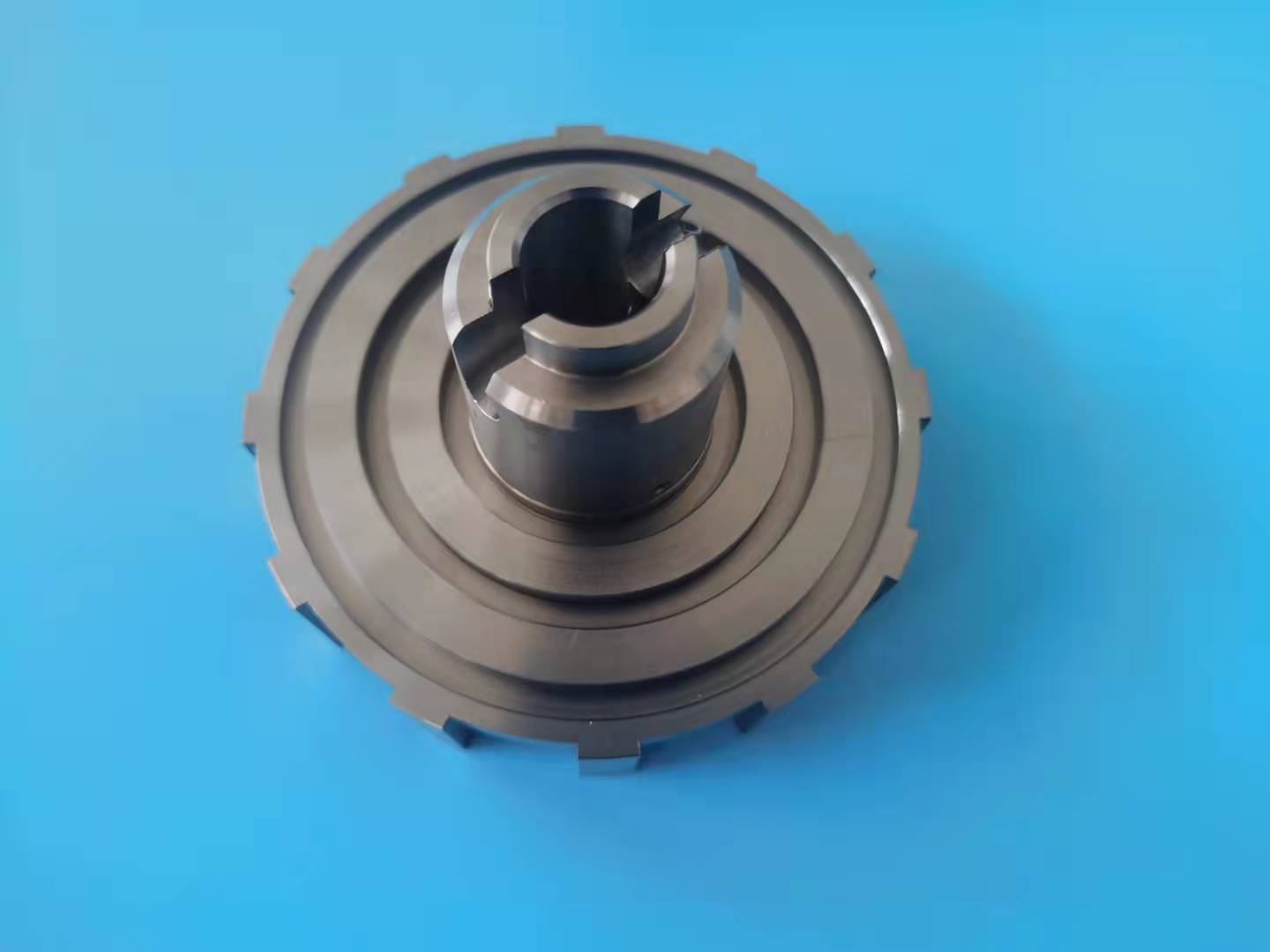
Scalability is first and foremost an equipment game. A provider must possess not just a few machines, but a coordinated fleet. This includes multiple 5-axis CNC machining centers for complex, single-setup parts, complemented by banks of 3-axis and 4-axis mills, CNC lathes, and mill-turn centers. This diversity allows for intelligent job routing—simple features can be run on high-throughput 3-axis machines, while complex contours are reserved for 5-axis systems, optimizing overall capacity and throughput. Redundancy in key machine types prevents bottlenecks and ensures schedule adherence even if one unit requires maintenance.
2. Digital Infrastructure and Manufacturing Execution Systems (MES)
Manual scheduling and job tracking crumble under scaling pressure. A scalable service relies on integrated digital systems for:
Automated Quoting: AI-driven software that instantly analyzes CAD files, suggests manufacturability improvements (DFM), and generates accurate quotes.
Real-Time Production Monitoring: Providing visibility into every job’s status, from raw material to finished part.
Dynamic Scheduling Algorithms: Optimizing machine loading across the entire shop floor to maximize utilization and minimize idle time as order volumes change.
3. Robust Supply Chain and Material Management
The ability to scale machining is futile without a parallel ability to scale material procurement. Established partnerships with certified material suppliers and on-site inventory management of common stock (e.g., aluminum 6061, 7075, stainless steel 304/316) are critical. This ensures material availability for both rush prototypes and sustained production runs without excessive lead times or cost premiums.
4. Standardized Quality Processes That Scale
Quality control cannot become a bottleneck. Scalable services implement statistical process control (SPC) and in-process inspection using automated touch probes on CNC machines. For final validation, they employ coordinate measuring machines (CMM) and laser scanners that can verify batches of parts with speed and repeatability, ensuring the 100th part is identical to the first, and the 1000th identical to the 100th.
The Tangible Business Benefits of Partnering with a Scalable Service
Choosing a partner with inherent scalability delivers direct competitive advantages:
Reduced Time-to-Market: Accelerate development by iterating prototypes rapidly and moving into production without changing suppliers, eliminating requalification delays.
Optimized Cost Structure: Avoid the high unit costs of pure prototyping shops and the massive minimum order quantities (MOQs) of mass-production factories. A scalable partner offers cost-effective bridging across all volumes.
Capital Expenditure (CapEx) Avoidance: Free up significant capital by outsourcing your precision machining needs. You gain access to a multi-million-dollar machine shop without the investment, depreciation, or staffing overhead.
Enhanced Supply Chain Resilience: Mitigate the risk of single-point failure. A capable partner with multiple facilities and machine redundancy provides a more reliable source than an in-house, limited-capacity setup.
GreatLight CNC Machining Factory: Engineered for Scalability
When evaluating partners for scalable CNC machining service, GreatLight CNC Machining Factory exemplifies the integration of these pillars into a client-centric operation. Their model is built for elastic response.
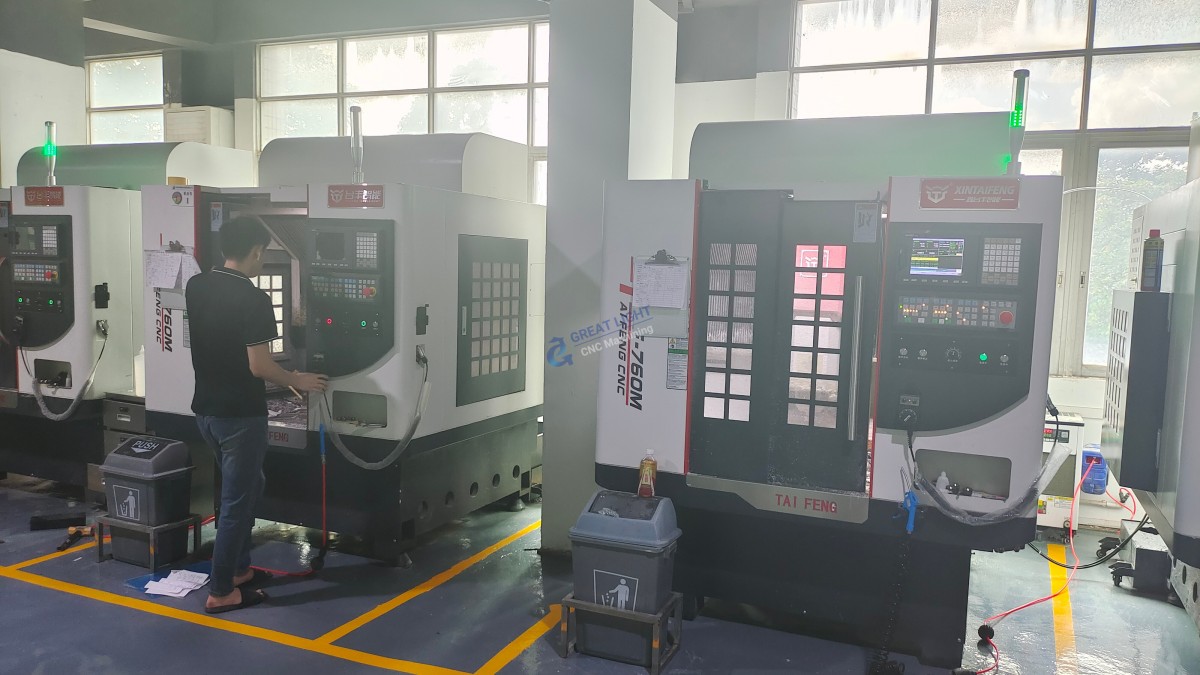
Infrastructure Designed for Growth: With a 7,600 sq. meter facility housing over 127 pieces of precision equipment—including a strategic mix of high-precision 5-axis, 4-axis, and 3-axis CNC machining centers, lathes, and EDM machines—GreatLight possesses the physical redundancy and variety necessary for intelligent workload distribution. This extensive fleet allows them to parallel-process orders, a key tactic for scaling output without extending lead times.
Process Integration for Seamless Transition: Their service offering is a blueprint for scalability. They provide a true one-stop solution encompassing precision 5-axis CNC machining services for the most complex prototypes, supported by complementary processes like vacuum casting for bridge production and metal 3D printing (SLM) for organic geometries. This means as your part evolves from a design concept to a production-ready component, GreatLight can often manufacture it using the most suitable and cost-effective technology at each stage, all under one roof.
Quality Systems That Assure Consistency at Scale: Their commitment to international standards like ISO 9001:2015 for quality management and IATF 16949 for automotive processes provides a framework for reproducible quality. This systematic approach, backed by in-house precision metrology, ensures that quality assurance processes scale efficiently with production volume, maintaining integrity from the first article to the last.
The Engineering Partnership Mindset: Perhaps the most critical aspect of their scalability is their deep engineering support. They engage in Design for Manufacturability (DFM) analysis early on, not just to optimize a single prototype, but to design a manufacturing process that is inherently scalable—choosing materials, tolerances, and finishes that will remain stable and economical in higher volumes.
Making the Strategic Choice
In conclusion, selecting a scalable CNC machining service is a strategic decision that impacts your product’s lifecycle cost, development velocity, and market responsiveness. It requires looking beyond immediate needs to assess a partner’s capacity to grow with you. The ideal partner combines technological depth with process intelligence and a collaborative ethos.
For organizations that value agility, precision, and a seamless path from innovation to industrialization, engaging with a manufacturer like GreatLight CNC Machining Factory, which has structured its entire operation around the principles of scalable response, offers a clear pathway to de-risking production and accelerating innovation. To explore how such a partnership can be tailored to your specific scaling challenges, further insights into industry applications and collaborative models can be found through professional networks such as LinkedIn{:target=”_blank”}.



















