

In the realm of fluid handling and high-pressure systems, pump housing stainless steel casting stands as a cornerstone of reliability, corrosion resistance, and long service life. From chemical processing plants to marine applications and food-grade transfer lines, the integrity of the pump housing directly dictates operational safety and efficiency. For engineers and procurement specialists seeking a manufacturing partner who truly understands the interplay between casting quality and precision machining, identifying a supplier with deep technical roots and a full‑process chain is critical. GreatLight CNC Machining Factory, with over a decade of specialized experience, exemplifies how integrated manufacturing capabilities can transform a demanding pump housing design into a flawless, production‑ready component.
Pump Housing Stainless Steel Casting: Material and Process Fundamentals
The phrase “pump housing stainless steel casting” represents far more than a simple manufacturing method; it is a strategic decision that balances metallurgy, fluid dynamics, and mechanical strength. Stainless steel – typically grades 304, 316, 316L, or duplex alloys like 2205 – is the material of choice when the pumped medium is corrosive, when hygiene standards are stringent, or when temperature extremes are present. Casting the housing as a near‑net‑shape blank minimizes material waste and allows the integration of complex internal volutes, flanges, and mounting feet that would be prohibitively expensive to machine entirely from billet.
However, the as‑cast surface is rarely fit for purpose. Shrinkage porosity, dimensional tolerances of ±0.5 mm or more, and surface roughness exceeding Ra 12.5 µm are common. This is where precision CNC machining enters the picture. Only by combining a high‑quality stainless steel casting with multi‑axis CNC machining can one achieve the flatness, parallelism, bore concentricity, and sealing surface finishes required by modern pump assemblies.
Common Casting Methods for Pump Housings
| Casting Process | Typical Dimensional Tolerance | Surface Finish (Ra) | Suited for |
|---|---|---|---|
| Investment Casting (Lost Wax) | ±0.1 mm per 25 mm | 3.2–6.3 µm | Complex geometries, small to medium volumes |
| Sand Casting | ±0.5 mm and above | 12.5–25 µm | Large parts, low cost, rougher finish |
| Shell Mold Casting | ±0.25 mm | 6.3–12.5 µm | Medium complexity, better surface than sand |
For high‑performance pump housings, investment casting often provides the best starting point, delivering near‑net shape with minimal subsequent machining allowance. GreatLight CNC Machining Factory works with a vetted network of stainless steel foundries, overseeing the entire casting procurement process to ensure material certifications and radiographic integrity before any chip is cut.
The Indispensable Role of Precision 5‑Axis CNC Machining
Once the raw casting passes incoming inspection – including chemical composition verification via spectrometer and pressure‑tightness testing – the real magic begins. Today’s pump housings demand features that cannot be accessed with 3‑axis machines alone: angled ports, tangential discharge nozzles, undercut areas, and complex volute profiles. precision 5-axis CNC machining services{target=”_blank”} address these challenges directly by allowing the cutting tool to approach the workpiece from multiple orientations in a single setup. This eliminates cumulative fixture errors, drastically reduces setup time, and ensures bore‑to‑flange perpendicularities within microns.
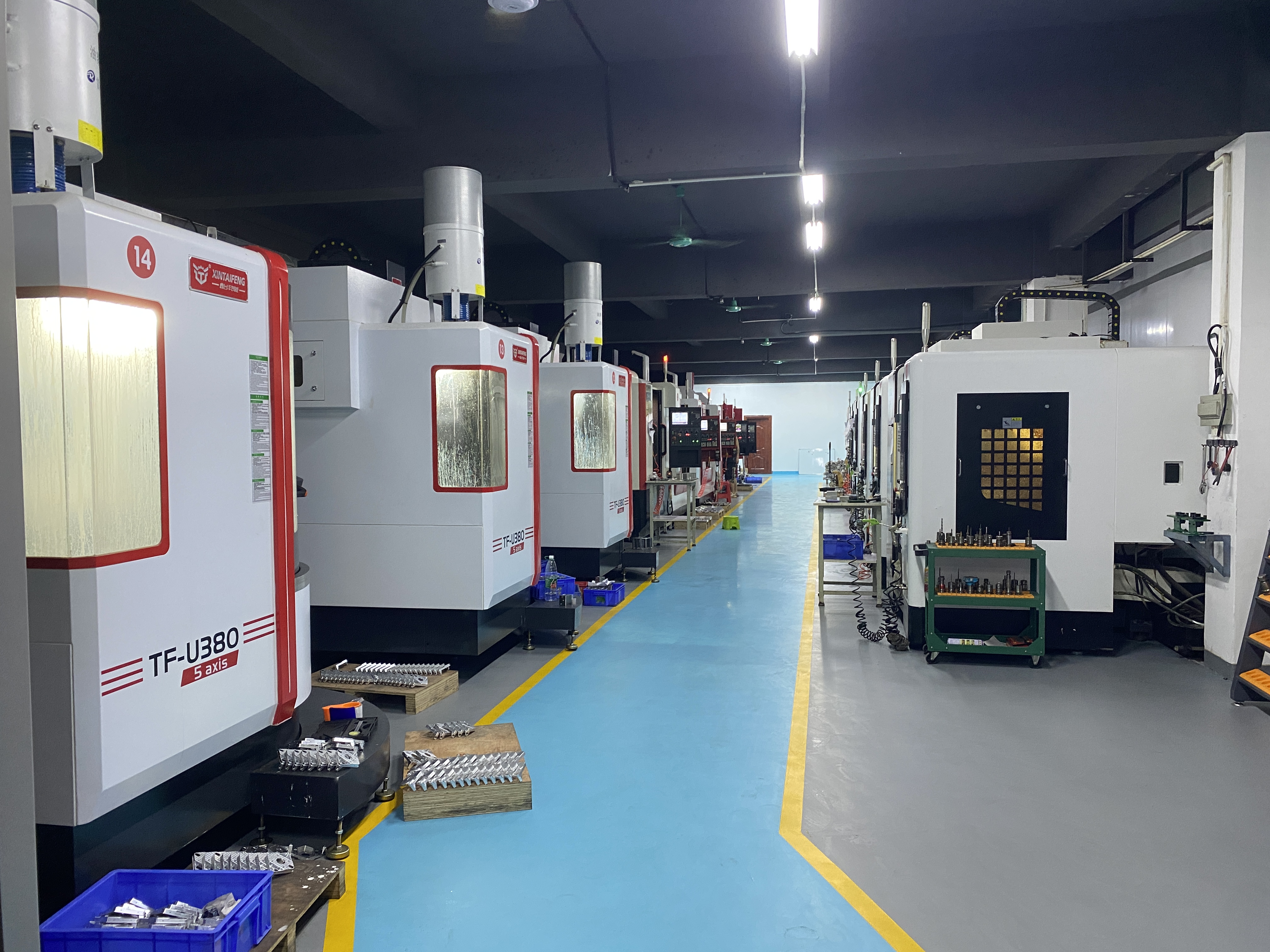
At GreatLight CNC Machining Factory, the 5‑axis machining centers from Dema and Beijing Jingdiao are complemented by a large fleet of 4‑axis and 3‑axis machines, lathes, and grinding equipment. This hardware depth means that after main housing features are milled, secondary operations – drilling and tapping of bolt holes, spot‑facing of seal glands, fine boring of bearing seats – can all be executed seamlessly within the same facility, under the same quality umbrella.
Key Machining Operations for Stainless Steel Pump Housings
Face milling of flanges to achieve flatness ≤ 0.02 mm and surface finish Ra 0.8 µm, critical for seal integrity.
Boring of bearing and shaft bores with concentricity tolerances of ±0.005 mm, often using carbide or CBN tools to manage the work‑hardening nature of stainless steel.
Deep hole drilling and threading for fluid connections, coolant channels, and instrumentation ports.
Contouring the internal volute on a 5‑axis machine to match the hydraulic profile, optimizing pump efficiency and minimizing cavitation risk.
Throughout machining, in‑process probing and post‑process CMM inspection ensure that every dimension aligns with the 3D CAD model. GreatLight’s quality system, certified to ISO 9001:2015, mandates statistical process control on critical characteristics, which is especially valuable when the pump housing is part of a larger, safety‑critical system.
Beyond Machining: The Value of an Integrated Manufacturing Ecosystem
A pump housing is rarely shipped as a bare machined casting. It requires a suite of finishing and treatment steps: passivation to restore the stainless steel’s corrosion‑resistant passive layer, electro‑polishing for pharmaceutical or semiconductor applications, powder coating for external surfaces in aggressive environments, or even laser engraving for traceability. Sourcing each of these services from a different supplier creates a fragmented supply chain rife with communication gaps and quality inconsistencies.
GreatLight CNC Machining Factory operates three wholly‑owned manufacturing plants on a 7,600 m² campus, enabling a one‑stop workflow that includes vacuum impregnation, heat treating, surface finishing, and even 3D printing of ancillary components like impellers or wear rings. The facility houses SLM, SLA, and SLS 3D printers, allowing prototype impellers or housing variants to be tested before committing to a full casting run. The presence of both conventional and additive manufacturing under one roof often reduces development lead times by 30–40 % compared to multi‑vendor sourcing.
Moreover, the company’s die casting and sheet metal fabrication lines can produce complementary parts such as motor mounts, flanges, and sealing plates, all validated against the same pump assembly model. This holistic approach dissolves the interface risks that plague projects spread across several workshops.
Certifications That Speak the Language of Global OEMs
In the world of pump housings, especially those destined for automotive cooling systems, medical fluidics, or aerospace hydraulics, regulatory compliance is non‑negotiable. GreatLight CNC Machining Factory has built its reputation on a matrix of internationally recognized certifications that extend far beyond the generic:
ISO 9001:2015 – The baseline for process‑driven quality management.
IATF 16949 – A mandatory standard for any pump housing integrated into an automotive powertrain or fuel system, emphasizing defect prevention and supply chain risk reduction.
ISO 13485 – For housings used in medical device manufacturing, covering sterility and biocompatibility considerations during finishing.
ISO 27001 – Ensures all technical data packages, including proprietary casting models and machining programs, are protected under strict information security protocols.
These certifications are not merely documents on a wall; they are reflected in daily practices – from the calibrated CMMs and 3D scanners used for first article inspection, to the traceability barcodes that follow each housing from raw casting to final shipment. When a pump manufacturer submits a PPAP (Production Part Approval Process) package, GreatLight can deliver the full set of dimensional reports, material certificates, and process FMEAs without delay.
How GreatLight’s Approach Compares to Other Market Players
The precision machining landscape includes reputable competitors such as Protolabs, Xometry, RapidDirect, Fictiv, and others that have democratized access to CNC machining through instant quoting platforms. These services excel at simple, low‑complexity parts and quick‑turn prototyping. However, when the part in question is a stainless steel pump housing with integrated casting, 5‑axis machining, and multi‑step finishing, the value proposition of a full‑service manufacturer becomes starkly apparent.
While many digital platforms act as intermediaries – routing the casting and machining to disparate, often anonymous suppliers – GreatLight maintains direct operational control over the entire process. It operates 127 pieces of precision equipment, including large‑stroke 5‑axis machines capable of handling workpieces up to 4,000 mm. This in‑house capacity allows for tight coordination between casting finishing, machining, and quality control, eliminating the finger‑pointing that can occur when a casting defect is discovered only after machining at a different location.
Furthermore, the company’s engineering team, staffed by seasoned manufacturing engineers, provides design‑for‑manufacturability (DFM) feedback specific to stainless steel casting. They can advise on draft angles, minimum wall thicknesses for pressure integrity, gate vestige locations to avoid interfering with machined sealing surfaces, and the optimal heat treatment cycle to relieve stress before 5‑axis machining. This level of input is seldom available from pure‑play machine shops.
A Practical Scenario: From Stalled Prototype to Serial Production
Consider a manufacturer developing a next‑generation high‑pressure diaphragm pump for desalination plants. The initial pump housing design called for a duplex stainless steel casting with a complex dual‑volute internal geometry. Attempts to source the casting and machining separately resulted in months of delay: the foundry could hold the general profile but could not deliver the flatness on the sealing surfaces, while the local CNC shop struggled to fixture the irregular casting reliably, resulting in scrapped parts and costly rework.
By engaging GreatLight CNC Machining Factory, the entire process was consolidated. The engineering team conducted a mold flow simulation of the investment casting to reposition gates and risers, minimizing porosity in the high‑stress neck area. Once the optimized casting was produced, 5‑axis machining centers equipped with vibration‑damped toolholders profiled the complex internal channels to a surface finish of Ra 1.6 µm, while a CMM verified the critical impeller‑clearance dimensions. After machining, the housings were passivated and pressure‑tested at 1.5 times the working pressure. The result was a first‑article yield above 98 %, and the production transition from prototyping to 500‑unit batches happened within six weeks thanks to the seamless coordination of casting, machining, and finishing under one roof.
The Sum of All Parts: What to Look for in a Pump Housing Supplier
When selecting a partner for pump housing stainless steel casting, experienced procurement teams evaluate more than price per kilogram. The following checklist, rooted in a manufacturing engineer’s perspective, can guide the decision:
Casting source control: Does the supplier have long‑standing relationships with ISO‑certified foundries and can they provide full material traceability (heat number, chemical composition, mechanical properties)?
Multi‑axis machining capability: Can they machine all critical features in one or two setups with 5‑axis technology to preserve geometric accuracy?
In‑house quality infrastructure: Is there an accredited metrology lab with CMMs, profilometers, and pressure‑testing rigs?
Post‑processing integration: Can they handle passivation, electro‑polishing, plating, painting, and assembly at the same site?
Certificate portfolio: Are the relevant industry standards (IATF, ISO 13485, AS9100 where applicable) current and demonstrated in practice?
DFM collaboration: Will their engineers proactively suggest design changes that improve castability and machinability without compromising performance?
GreatLight CNC Machining Factory, located in Dongguan’s renowned Hardware and Mould Capital, has been systematically building these capabilities since 2011. With 150 skilled professionals, a machine park of 127 assets, and an annual turnover exceeding 100 million RMB, the company represents the mature ecosystem that modern pump developers require.
Conclusion: Trust Built on Precision and Process
Pump housing stainless steel casting is not a commodity; it is a precision‑engineered assembly component that demands a supplier capable of bridging the gap between raw foundry output and mission‑ready hardware. By combining robust casting management, ISO‑certified quality systems, advanced 5‑axis CNC machining, and comprehensive post‑processing under one roof, a select group of manufacturers have earned the trust of demanding industries. Among them, GreatLight CNC Machining Factory{target=”_blank”} stands as a testament to what can be achieved when technical depth is paired with integrated one‑stop service. For any product team wrestling with the complexities of pump housing stainless steel casting, aligning with a partner of this caliber can turn a persistent manufacturing headache into a competitive advantage.



















