
01
The part galls or welds to the tool
Stainless steel work-hardens fast. Feed too light or dwell too long and the edge rubs instead of cuts. Built-up edge ruins the surface and the next insert. We set speeds for the alloy, not for the family.
Send one drawing, get both material routes quoted side by side. We machine aluminum stainless steel parts on 127 CNC machines with ±0.005 mm tolerance, and tell you which alloy actually fits the part.
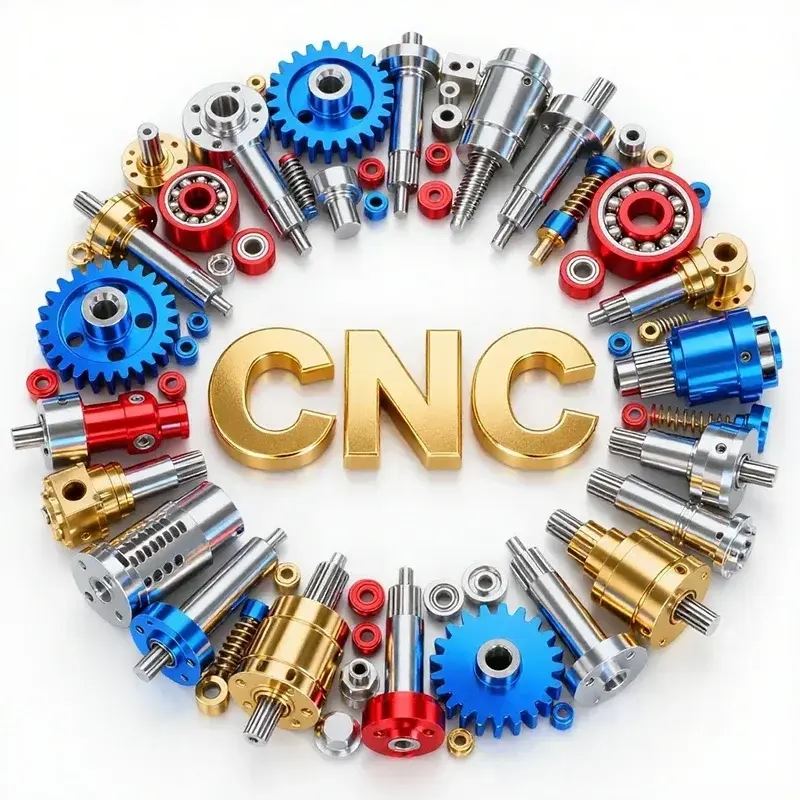
Most turning and milling failures we rework trace back to one of these four problems.
Stainless steel work-hardens fast. Feed too light or dwell too long and the edge rubs instead of cuts. Built-up edge ruins the surface and the next insert. We set speeds for the alloy, not for the family.
Aluminum cuts easily, so it also moves easily. Thin walls relax after clamping is released and the bore goes oval. Rough, stress-relieve, then finish is the only reliable order on a 1.5 mm wall.
A 6061 bracket in a wash-down area pits at the cut edges. 304 handles the same job with no coating. Picking by price alone sends the part back as a field failure.
Ra 0.4 μm on a 316 shaft needs a different insert, a different pass, and a temperature-stable setup than a general turning job. Quoting both the same way costs everyone a rework loop.
We quote aluminum and stainless steel on the same drawing so you can compare real cycle time, not catalog numbers.
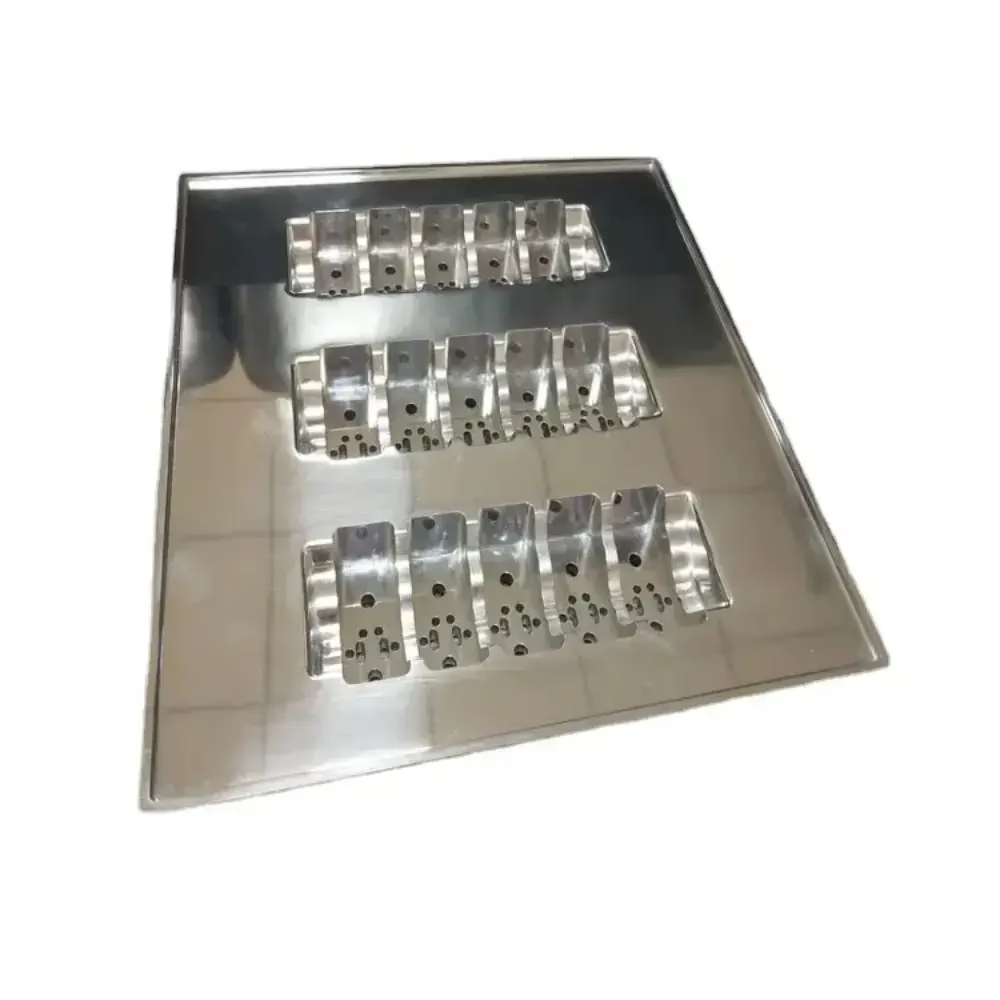
Austenitic grades like 303 and 304 harden under the tool. A light finishing pass at the wrong feed turns the surface into a smear. We run constant surface speed, deep enough cuts to stay under the work-hardened skin, and flood coolant aimed at the insert tip.
For 17-4PH and 440C we plan the heat treat step into the process. Rough before aging, finish after, so the final dimensions are cut into the hard state and stay there. A 316L sensor body held to ±0.005 mm is a normal job for us, not a special one.
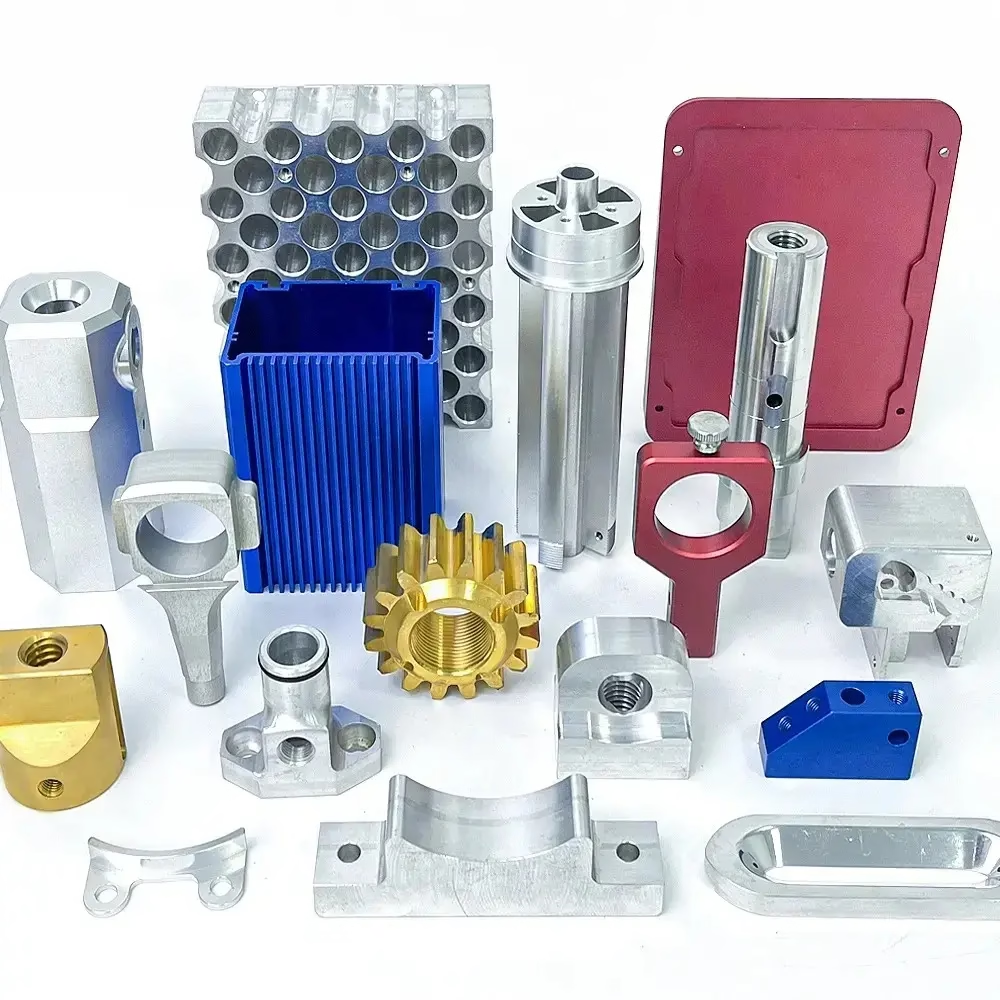
6061-T6 and 7075 cut at speeds stainless cannot touch, which is why aluminum covers most enclosure and heat-sink work. The trade is stiffness. A 2 mm floor on a 200 mm plate will chatter unless the fixture supports it and the cutter path keeps the load even.
7075 gives you near-steel strength at a third of the weight, but it is less corrosion resistant than 6061 and needs anodizing in most outdoor jobs. We machine the pocket, check flatness on the granite, then decide the finishing pass from the measured distortion rather than from the drawing alone.
Same part family, two materials. Use this to pick the route before you send the drawing.
| Factor | Aluminum (6061-T6) | Stainless steel (304 / 316L) |
|---|---|---|
| Machinability | Fast, low tool wear | Slower, work-hardens |
| Typical tolerance | ±0.005 mm | ±0.005 mm |
| Achievable finish | Ra 0.2–0.8 μm | Ra 0.8–1.6 μm |
| Corrosion | Needs anodize outdoors | Inherent, no coating |
| Weight vs steel | About one third | About one third of steel |
| Best for | Housings, plates, heat sinks | Shafts, bodies, wash-down parts |
| Watch out for | Thin walls, chatter | Heat, galling, deep bores |
Turning, milling, and finishing under one roof, so the alloy you pick does not split across vendors.
Mill-turn centers and lathes for shafts, bushings, fittings and threaded bodies in aluminum and stainless steel. Live tooling cuts flats and cross holes in one setup.
3-axis, 4-axis and 5-axis milling for housings, plates and pockets. Up to 4,000 mm of travel handles long aluminum frames in a single fixturing.
16 simultaneous 5-axis centers cut contoured stainless impellers and aluminum brackets without moving the part between operations.
One-off and low-volume runs from a single prototype upward. No minimum order quantity, so the first article and the production batch come off the same process.
Anodizing, electroless nickel, plating, powder coating, bead blasting and polishing. Laser marking down to 1.5 mm character height.
100% inspection before shipment with raw material check, in-process monitoring and final dimensional reports on request.
Numbers below are the shop range, not a wish list.
| Item | Specification |
|---|---|
| Tolerance | ±0.005 mm (±0.0002 in) |
| Fine finish | Ra 0.2–0.8 μm |
| High finish | Ra 0.8–1.6 μm |
| As-machined finish | Ra 1.6–3.2 μm |
| Maximum part size | 4,000 mm |
| Large travel | 4,000 × 400 × 150 mm |
| Rotary table | Ø400 mm |
| Order quantity | 1 part to 10,000+ parts |
Six things that decide whether the part arrives right the first time.
Founded in 2011. Three wholly-owned plants and 150 technicians in Dongguan, plus a factory in Singapore for regional supply.
16 simultaneous 5-axis centers, 12 four-axis mills, 27 three-axis machines and 16 mill-turn centers. Capacity is not the bottleneck.
±0.005 mm on turned and milled features, verified with 100% inspection before shipment and reports on request.
Raw material check, in-process monitoring and final inspection. Parts that fail the gate do not ship.
Send a STEP file and get a quotation plus free DFM analysis within 12 hours. Production can start within 24 hours.
Historical late-delivery probability below 2%. Standard parts ship in 3–5 days.
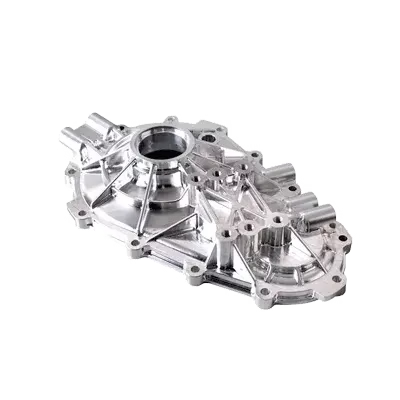
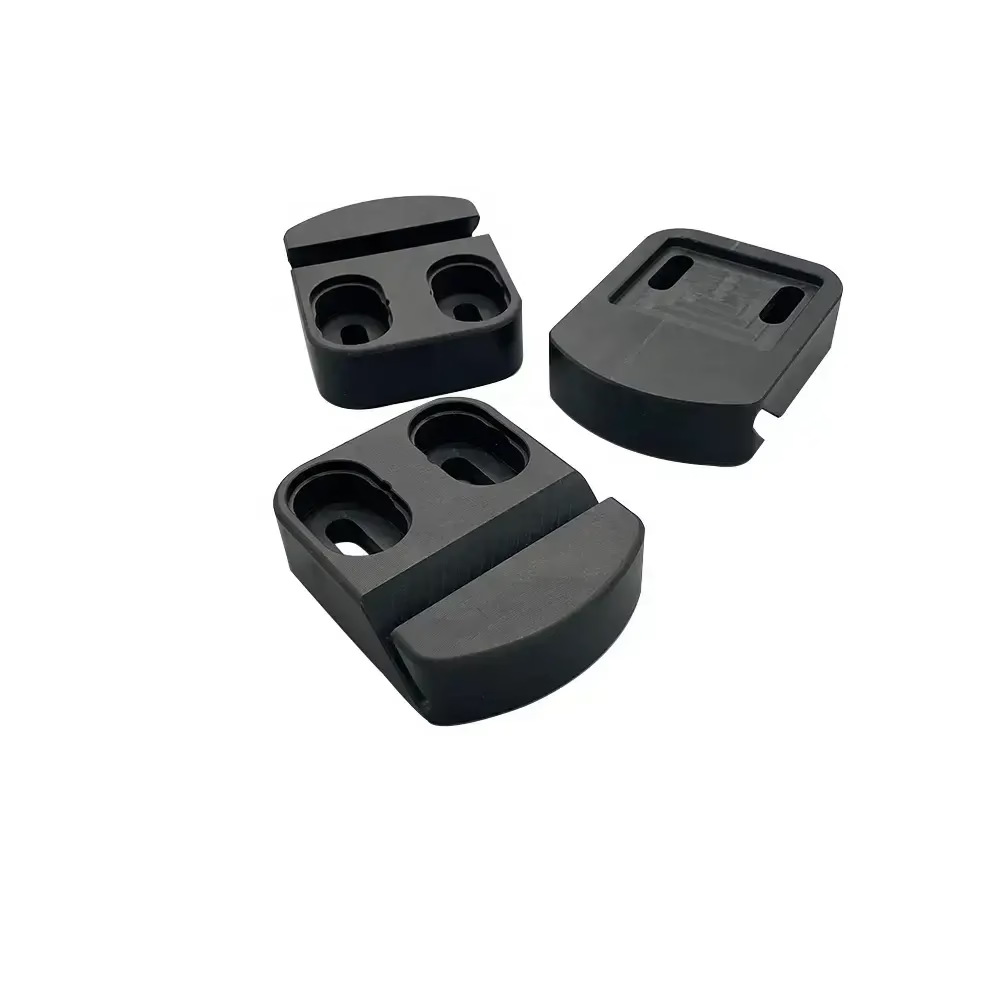
Lightweight aluminum housings and brackets where mass matters, machined to ±0.005 mm.
316L bodies and fittings with fine turned surfaces, no coating on the wetted path.
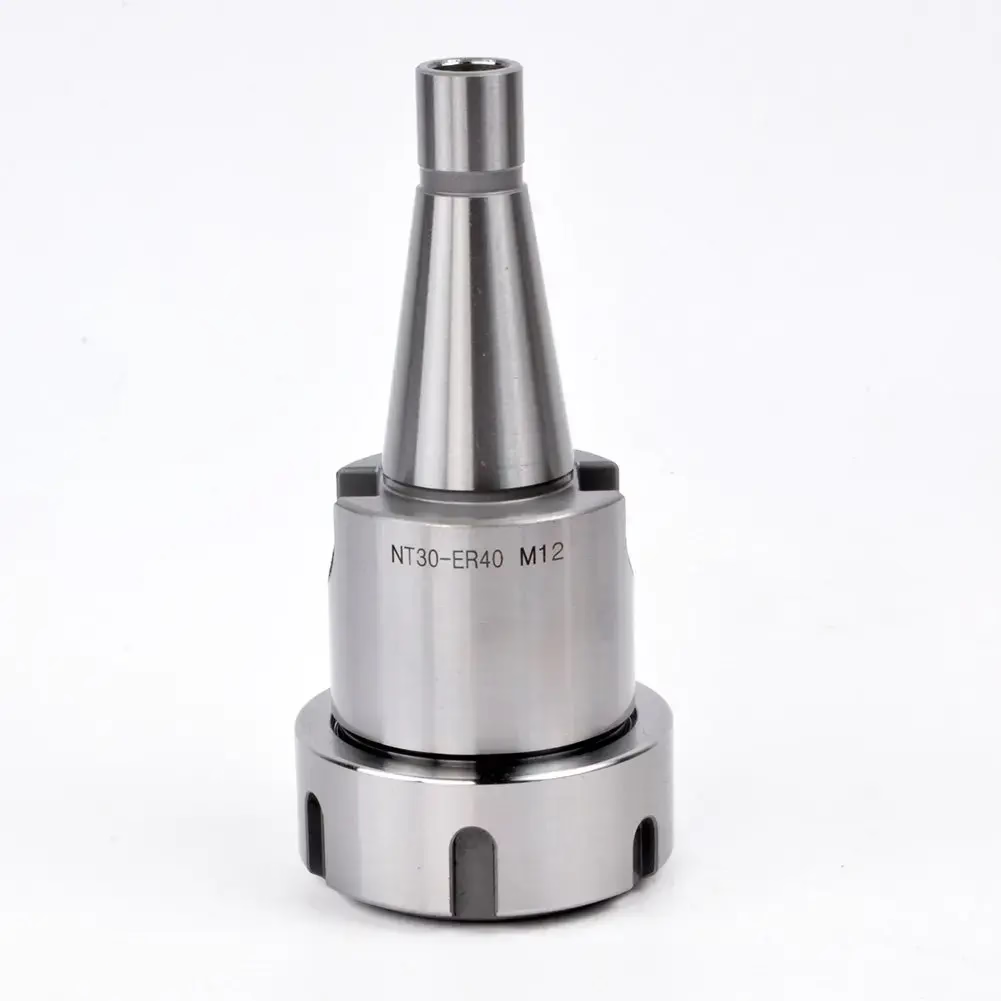
Stainless shafts and bushings for wash-down lines where corrosion drives the material choice.
Start with the environment, not the price. If the part sees water, salt, or cleaning chemicals, stainless steel removes the coating step and the risk of a pitted edge. If the part is a housing, a plate, or anything where weight and cycle time dominate, aluminum wins.
Then check the load. Aluminum threads strip earlier than stainless in the same size, so high-cycle fasteners usually push toward stainless or a steel insert.
Yes. The tolerance target is the same. What changes is the process. Stainless needs more attention to heat and work hardening, aluminum needs more attention to clamping and thin-wall movement.
We verify with 100% inspection before shipment and can supply dimensional reports on request.
303 is the free-machining grade and the first choice for turned parts that do not need welding. 304 machines reasonably well and covers most general work. 316 and 316L are tougher and used where corrosion resistance matters more than cycle time.
17-4PH and 440C are run in a hardened condition, so we plan the heat treat step into the routing.
The material price is higher and the corrosion resistance is lower, so most 7075 parts need anodizing. It earns its cost in strength-to-weight, not in machinability.
6061-T6 handles the majority of housings and brackets. We move to 7075 when the section is thin and the load is high.
They can, but they are scheduled as separate operations because tooling, coolant and cutting data differ. Mixing them in one setup invites cross-contamination of chips, which is a real problem for stainless going into a corrosion-sensitive application.
Tell us if the parts ship as an assembly and we plan the routing together.
Aluminum takes anodizing in clear, color, hardcoat and conductive types, plus powder coating, bead blasting and polishing. Stainless usually stays bare or gets bead blasting, brushing and polishing.
Electroless nickel, zinc, silver and gold plating are available on both when the application calls for it. Laser marking goes down to 1.5 mm character height.
No. We run from one prototype to 10,000+ parts on the same process, so the first article and the production batch match.
The quote and free DFM analysis come back within 12 hours, and production can start within 24 hours of approval.
Uploads are handled as confidential, and we sign an NDA on request before any file review. Access is limited to the engineers who quote and program the part.
If your IP rules require it, we can work from a simplified model for the initial quotation and take the full definition after the NDA is in place.
One STEP file. A 12-hour quote with free DFM analysis, a clear recommendation on the alloy, and no minimum order quantity.
12-hour quote100% inspectionNo MOQNDA on request
Trusted by engineers and manufacturers worldwide










Upload your 3D model or 2D drawing and get a quotation with a free DFM analysis. Maximum processing size 4,000 mm.
CNC Metals 13 grades
CNC Plastics 10 grades
Machines & processes 12 options
Surface & post-processing 10 options
Material: not selected Machine: not selected Post-process: not selected