GreatLight CNC Machining Factory logo
CNC Machining
Rapid Prototyping
Materials
Industries
News
About GL

Get Instant Quote

CNC machined phone stand

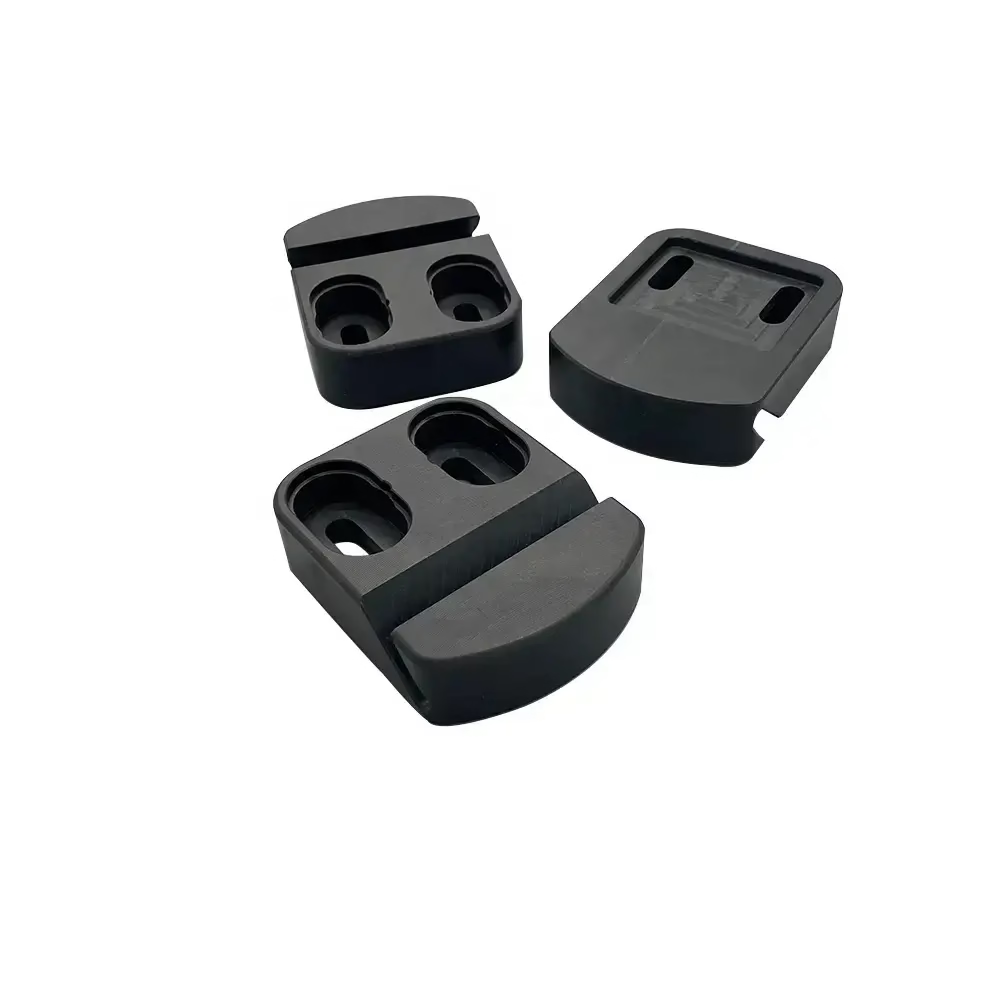
Premium Aluminum Alloy Phone Stand CNC Machining

We machine premium aluminum alloy phone stands from 6061-T6 and 7075 on 5-axis centers, holding ±0.005 mm on hinge bores, mating faces and cable slots. Anodizing, bead blasting and laser marking run in-house.

±0.005 mm tolerance6061 / 7075 / ADC12Anodizing in-houseOne piece to 10,000+3-5 day deliveryNDA on request
aluminum-alloy-cnc-processing-2
16Simultaneous 5-axis centers
±0.005 mmMachining tolerance
Ra 0.8–1.6 μmStandard milled finish
12 hQuote and DFM analysis
What goes wrong

Phone stands that fail on the desk, not on the drawing

These are the four failures we see most often when a stand moves from prototype to production.

01

Hinge wobble after a few weeks of use

A hinge bore drilled 0.05 mm oversize feels fine on day one. Under load it wears in, and the phone tips forward while the user is typing. The fix is boring the hinge in one setup and holding ±0.005 mm on bore diameter and position.

02

Anodize color drifts from unit to unit

The same anodizing bath produces three shades if the alloy temper varies. A batch of 6061 mixed with 6063 shows visible color banding under office lighting, and the customer sees it before you do.

03

Cable slot too tight for a real connector

A 12 mm slot looks generous in CAD. Add a molded USB-C overmold and a braided cable, and it jams. Users force the plug, chip the anodized edge, and return the stand.

04

Rubber pads fall off in transit

Adhesive-backed pads debond when the stand sits in a hot delivery van. The base then scratches the desk and the unit arrives with four loose pads in the box. Press fit or recessed pockets solve this at the drawing stage.

How we machine it

One setup, one alloy, one finish line

From bar stock to anodized stand, all operations stay inside our Dongguan plant.

option-1-concise-seo-focused
Machining strategy

5-axis work that keeps hinge and cradle in one coordinate system

A phone stand looks simple until you stack the tolerances. The hinge bore, the cradle face and the cable slot all have to line up, or the phone sits at the wrong viewing angle. We machine the body on a 5-axis center so the hinge axis, base face and slot are cut without re-fixturing. That removes the datum shift that shows up when you move a part across three machines.

For 7075-T6 arms we rough, stress-relieve, then finish. Aluminum moves after heavy stock removal, and a stand that was straight on the bench can bow 0.03 mm after anodizing if the internal stress is left in. A light finish pass after relief holds the geometry.

  • 1
    Hinge boreBored and reamed in the same setup as the base, ±0.005 mm on diameter
  • 2
    Cradle faceFlat within 0.02 mm so the phone does not rock
  • 3
    Cable slotCut with a 3 mm end mill, corners relieved for molded plugs

Get Instant Quote

aluminum-vs-stainless-steel-cnc-lathing-machining-service
Finish and feel

Anodizing, blasting and laser marking under one roof

Surface finish is where a stand stops looking like a machined block. We bead blast the body to a uniform matte, then anodize in clear, black or a matched color. Hardcoat anodizing is available for stands that see daily handling; it adds wear resistance but shifts dimensions by roughly half the coating thickness, so we account for it in the drawing.

Laser marking sits in the same building. Logos and port labels engrave after anodizing, with a minimum character height of 1.5 mm. If your logo has thin strokes below that, we will flag it during DFM rather than burn an unreadable mark.

  • 1
    Bead blastingUniform matte before anodizing, hides tool marks
  • 2
    AnodizingClear, color or hardcoat, thickness controlled on mating faces
  • 3
    Laser markingEngraved after coating, minimum character height 1.5 mm

Talk to an Engineer

Alloy selection

Which aluminum for which stand

Pick the alloy by load, finish and volume, not by habit.

AlloyBest forWatch out for
6061-T6General stands, tablet holders, desk accessoriesAnodizes evenly, machines clean
7075-T6Thin arms, heavy phones, high stiffnessAnodize color shifts, needs stress relief
6082Stands needing better corrosion resistanceSlightly gummier to tap than 6061
5052Sheet-formed bases and bent bracketsNot for high-strength threaded joints
ADC12Die-cast bases at higher volumePorosity can show through anodizing
What we run

Services behind a machined phone stand

A stand rarely needs only one process. These are the ones we keep in-house.

01

5 Axis CNC Machining

Hinge bores, angled cradles and organic shapes cut in one setup on 16 simultaneous 5-axis centers.

02

CNC Milling & Turning

Bodies, pivots, pins and threaded inserts. Mill-turn centers handle stands with round and prismatic features.

03

Rapid Prototyping

One-off stands for fit checks and trade shows, quoted and started without tooling cost.

04

Part Surface Finishing

Bead blasting, brushing, polishing, anodizing, plating and laser marking handled before shipment.

05

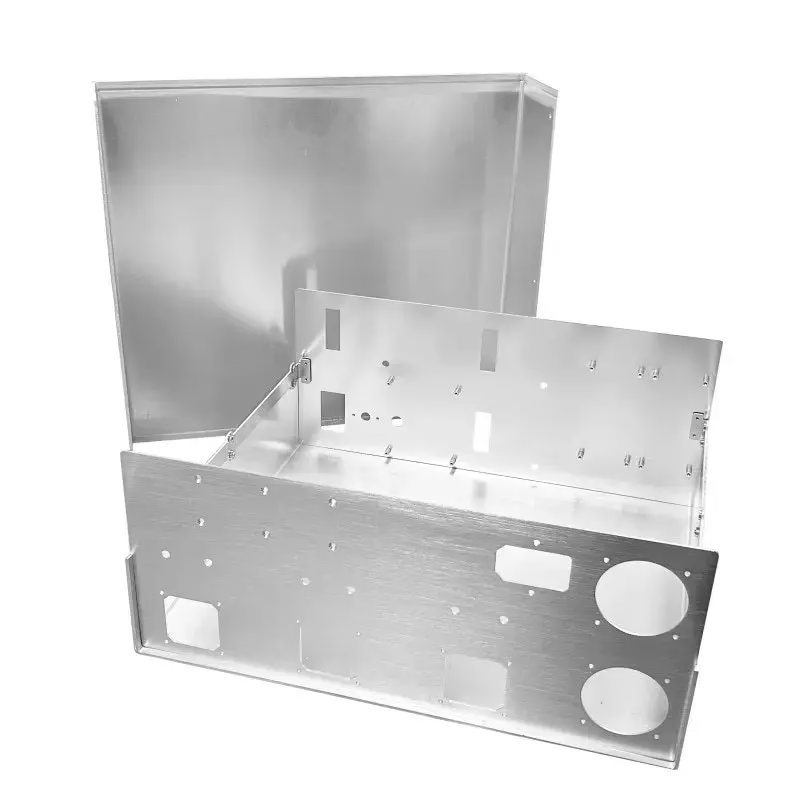
Sheet Metal Fabrication

Bent steel or aluminum bases and mounting plates when a stand needs a wider footprint.

06

Metal Die Casting

ADC12 bases for runs where casting plus finish machining beats cutting from solid.

Scope

Capability and what is included

Numbers you can check against your drawing.

ItemCapabilityNotes
Tolerance±0.005 mmCritical bores and mating faces
FinishRa 0.8–1.6 μmAs-machined standard, finer on request
Max part size4,000 mmLongest travel across the machine floor
Order size1 to 10,000+No minimum order quantity
Lead time3–5 daysAfter drawing and material sign-off
Inspection100% before shipmentReports on request
Why GreatLight

Why engineers send stands here

Data points, not adjectives.

15Y

Machining since 2011

Fifteen years on aluminum, steel, titanium and plastics, with 150 technicians across 3 wholly-owned plants.

127

High-precision CNC machines

The floor includes 16 simultaneous 5-axis centers, 12 four-axis mills and 16 mill-turn centers.

±0.005

Millimeter tolerance

Equivalent to ±0.0002 in. Held on hinge bores, bearing seats and mating faces.

12 h

Quote and DFM analysis

Send a STEP file and we return a quote with manufacturability notes inside 12 hours.

4×

Quality system certifications

ISO 9001:2015, IATF 16949:2016, ISO 13485:2016 and ISO 27001:2022 cover quality, automotive, medical and data security.

99.99%

Qualification rate

Raw material check, in-process monitoring and final inspection on every order before it ships.

7,600 m²Manufacturing space
3Wholly-owned plants
150Technicians
24 hProduction start after sign-off
Where stands ship

Industries that buy machined aluminum stands

low volume manufacturing

Electronics

Display and dock stands for test benches, anodized black to match equipment.

  • ±0.005 mm
  • Ra 0.8–1.6 μm
aluminum-alloy-industrial-control-chassis-sheet-metal-processing

Industrial Machinery

Bases and brackets that hold tablets at the operator station on a production line.

  • 4,000 mm max
  • 1 to 10,000+
cnc-machining-hdpe

Medical Devices

Cleanable stands for bedside monitors, machined to a smooth, crevice-free profile.

  • ISO 13485
  • 100% inspection
cnc-alloy-steel

Robotics & Automation

Mounting cradles for handheld pendants and control tablets on automated cells.

  • 3–5 day delivery
  • 99.99% pass rate
FAQs

Questions engineers ask before ordering

What is the smallest batch you will run?

There is no minimum order quantity. A single machined stand for a fit check and a 10,000-piece production run both go through the same process.

For one-offs we usually cut from 6061-T6 plate and finish by hand. Above a few hundred pieces, a die-cast base can reduce cost if the geometry allows it.

Should I choose 6061 or 7075 for the arms?

6061-T6 handles most stands. It machines cleanly, anodizes evenly and costs less per kilogram.

7075-T6 makes sense when an arm is thin and carries a heavy tablet, or when stiffness matters more than finish color consistency. It machines harder and the anodized shade is less predictable.

How much does anodizing change my dimensions?

Type II anodizing builds roughly half the coating thickness into the surface, so a 10 μm coating grows a face by about 5 μm per side.

On hinge bores and mating faces we mask or compensate in the CAM model. Hardcoat is thicker and we always account for it before the finish pass.

Can you match a specific anodize color?

We work from a color chip or a Pantone reference and run a sample panel first.

Aluminum alloy and temper affect the final shade, so the same bath gives slightly different results on 6061 and 7075. Keeping one alloy per batch is the reliable way to avoid banding.

What file format do you need?

A STEP or IGES file plus a 2D drawing for tolerances and finish callouts. Native SolidWorks and Fusion files also work.

If the drawing is not ready, send the STEP anyway. Our DFM review inside 12 hours will flag thin walls, tight radii and slots that a standard connector will not pass.

How do you stop rubber feet from falling off?

Adhesive pads are the usual failure point. We prefer a shallow recessed pocket or a press-fit bore in the base.

Both hold the pad mechanically, so heat in transit does not lift it. The pocket adds one machining operation and solves a whole category of returns.

Is my design kept confidential?

Uploads stay confidential and we sign an NDA on request before reviewing files.

Our ISO 27001:2022 certification covers how we handle customer data and drawings internally.

What is the lead time from drawing to first parts?

Quotation and DFM analysis come back within 12 hours. Production can start within 24 hours of sign-off.

Standard parts ship in 3–5 days. Multi-operation stands with anodizing and laser marking add a step, and we will state the real date in the quote rather than promise a round number.

Send your stand design and get a real quote

Upload a STEP file and we return pricing plus DFM notes within 12 hours. No minimum order quantity, 100% inspection before shipment.

12-hour quote100% inspectionNo minimum orderNDA on request

Trusted by engineers and manufacturers worldwide

Tesla Ford Motor Company BYD Auto Denso Magna International Boeing Airbus Medtronic KUKA FANUC