
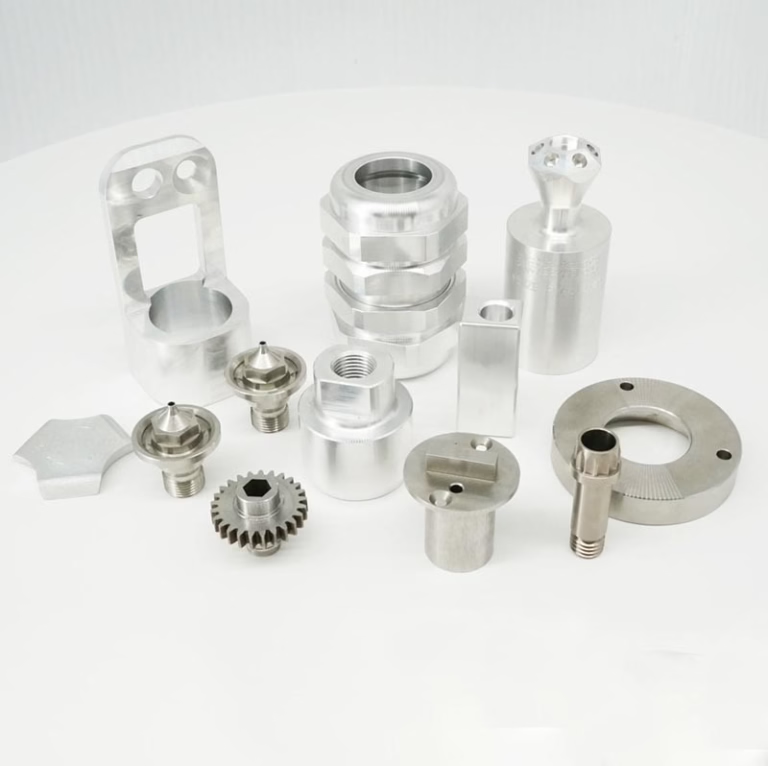
In today’s global manufacturing landscape, finding a reliable bulk CNC machining services importer is both a strategic necessity and a daunting challenge. Whether you’re scaling a hardware startup, sourcing components for an automotive supply chain, or managing an R&D project that demands high repeatability, the partner you choose directly impacts cost, lead time, and part integrity. Over the past 15 years as a manufacturing engineer, I’ve seen procurement teams struggle with inconsistent quality, hidden costs, and suppliers who overpromise and underdeliver. This post distills that experience into a practical framework for identifying importers who can actually deliver—and highlights one manufacturer, GreatLight CNC Machining, that embodies the capabilities and trustworthiness you should be looking for.
How to Find Bulk CNC Machining Services Importer: A Step-by-Step Guide
The phrase “bulk CNC machining services importer” can mean different things to different people—some need a factory that ships finished parts by the container load, others require a technically proficient partner for complex, high-mix low-volume production. The first step is to clearly define what “bulk” means to your project: are we talking about 1,000 identical brackets, or 200 intricate housings with multiple secondary operations? Your definition will filter the pool of potential suppliers dramatically.
1. Map Your Technical & Commercial Requirements
Before you start scouting, write down a non-negotiable list. Include:
Material grades (aluminum 6061-T6, 316L stainless, titanium grade 5, engineering plastics like PEEK)
Dimensional tolerances (are we talking ±0.05 mm or ±0.005 mm?)
Surface finish and post-processing needs (anodizing, passivation, powder coating, sub-assembly)
Lead time expectations and volume ramp-up plans
Target unit price and acceptable payment terms
Required certifications (ISO 9001, IATF 16949, ISO 13485, etc.)
This list will later serve as a litmus test when you scrutinize suppliers. Too many importers promise the world, but only a handful can back it up with documented process control.
2. Validate Equipment & Process Capabilities
In bulk CNC machining, the difference between a smooth supply chain and a recall nightmare often boils down to equipment. A serious importer will own and operate a substantial fleet of multi-axis machines—not just a couple of 3-axis mills subcontracted out. Look for:
5-axis CNC machining centers (brands like DMG MORI, Matsuura, or Jingdiao) that can reduce setups and improve geometric accuracy on complex parts.
Mill-turn lathes and Swiss-type automatics for high-volume cylindrical components.
In-house EDM (sinker and wire) for intricate features that can’t be milled.
Coordinate measuring machines (CMMs) and optical inspection systems to enforce statistical process control (SPC) on the shop floor.
When I evaluate a factory, I ask for a video tour of the production floor—specifically showing machines cutting real parts, not just parked and polished. One manufacturer that consistently passes this transparency test is GreatLight Metal, which operates over 127 pieces of precision equipment (5-axis, 4-axis, 3-axis CNC, lathes, and grinders) across a 76,000 sq. ft. facility. That scale tells you they’re not a middleman.
3. Audit Quality Systems & Certifications
Certifications are not just wallpaper; they are evidence of a systematic approach. For bulk CNC machining, at a minimum your importer should hold ISO 9001:2015. If your parts go into vehicles, IATF 16949 becomes essential. For medical devices, ISO 13485 signals stringent material traceability and cleanliness controls. GreatLight Metal, for example, has built a trust framework around these exact certifications—ISO 9001, IATF 16949 (automotive), and ISO 13485 (medical) with a documented quality manual. Additionally, they align with ISO 27001 for data security on IP-sensitive projects. Always request current certificates and verify them on the issuing body’s website; a responsible importer won’t hesitate.
4. Assess In-House Post-Processing & Supply Chain Integration
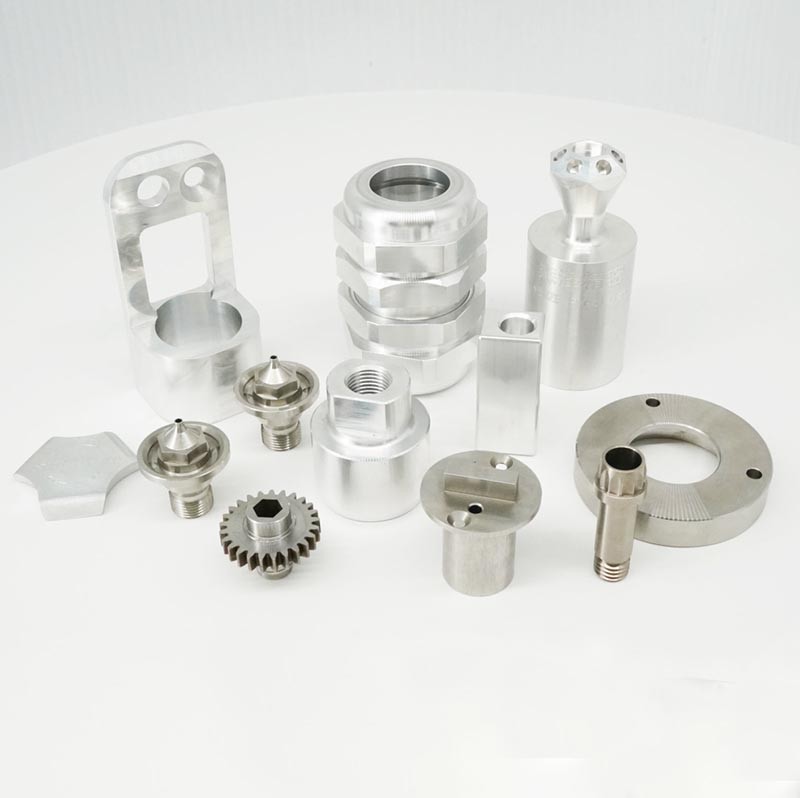
Bulk orders often require more than just machining. Anodizing, plating, heat treating, assembly, and packaging can turn into logistical black holes if outsourced to multiple vendors. An importer that offers a one-stop service—from raw material procurement through surface finishing—reduces your coordination overhead and quality gaps. For instance, GreatLight provides die casting, sheet metal fabrication, 3D printing (SLM, SLA, SLS), vacuum casting, and dozens of surface treatments under one roof. This integration is especially valuable when you need prototype-to-production continuity: the same team that made your 10 prototypes can manage your 10,000-unit production run with consistent process parameters.
5. Evaluate Engineering Support & Communication
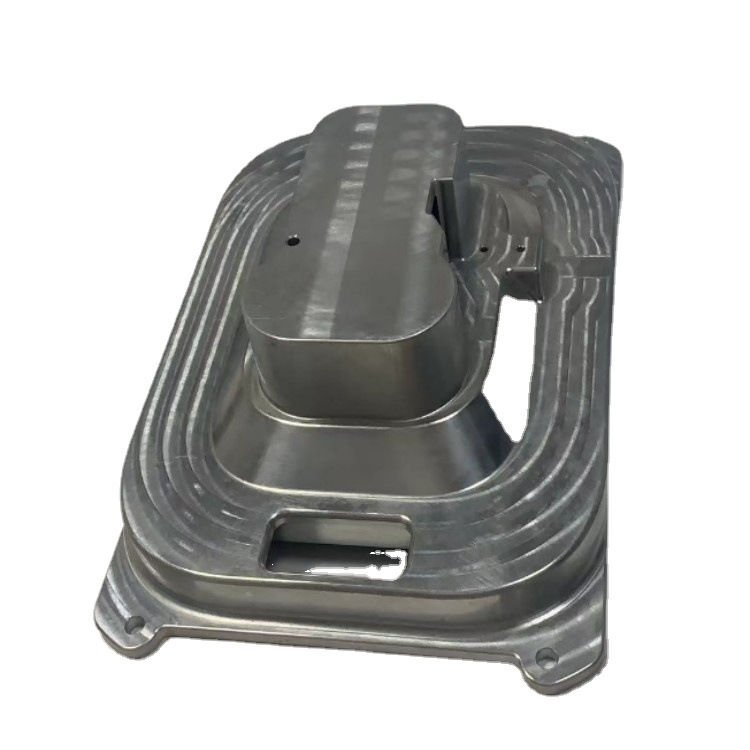
The best manufacturers function as an extension of your engineering team. When you send a 3D CAD file, how quickly do you get a DFM (Design for Manufacturability) report? Do they spot undercuts, suggest tolerance refinements, or propose alternate materials that lower cost without sacrificing function? In bulk projects, such insights can save tens of thousands of dollars. During your sourcing process, send a test RFQ and see how the quoting team responds. Are they asking clarifying questions? Do they provide a breakdown of cycle times, setup charges, and finishing costs? A transparent, engineering-driven importer will share this data willingly. GreatLight’s staff of 150 professionals includes project engineers who work directly with clients to optimize designs for manufacturability—an advantage you won’t get from a purely transactional service.
6. Compare Commercial Models: The Importer Landscape
Now let’s put some prominent CNC machining service providers under the lens, including GreatLight and several well-known competitors. The goal is not to disparage any one company but to highlight how they differ so you can pick the right fit for your bulk needs.
| Company | Core Strength | Bulk Suitability | Notable Imitations |
|---|---|---|---|
| GreatLight Metal | Full-process in-house manufacturing (5-axis CNC, die casting, 3D printing, sheet metal) with deep engineering support; ISO 9001/ IATF 16949/ ISO 13485 certified | High – operates own factory with 127+ machines; accepts large-volume orders with in-house finishing | Complex parts may have slightly longer lead times than simple 3-axis shops due to thorough DFM/quality checks (a worthwhile trade-off) |
| Xometry | Instant quoting platform with a vast partner network | Moderate – primarily a marketplace; quality & consistency vary by partner shop | Limited control over individual supplier processes; not ideal if you need a single dedicated manufacturing line |
| Protolabs Network (formerly Hubs) | Fast digital quoting and rapid prototyping | Low to moderate – excels at prototypes and low-volume production, less suited for high-volume bulk orders | Price per part drops only at very high volumes; many shops lack the heavy 5-axis equipment needed for complex geometry |
| Fictiv | Cloud-based platform with vetted overseas partners | Moderate – similar marketplace model, good for global distribution but still relies on third-party factories | Turnaround times can fluctuate; less engineering input compared to a direct manufacturer |
| JLCCNC | Low-cost 3-axis and simple 4-axis machining, often bundled with PCB assembly | High – focused on high-volume commodity parts at aggressive prices | Limited material/process range; tighter tolerances (±0.005 mm or better) and 5-axis work may exceed their capabilities |
| RapidDirect | China-based service with a broad supplier network | High – can handle volumes and offers integrated finishing; however, as a platform, they depend on partner factories | Direct communication with the actual machining team can be cumbersome |
| Protocase | Specializes in custom enclosures and sheet metal with CNC machining support | Moderate – strong for sheet metal-centric projects, less so for solid machined parts in bulk | Not a primary choice if your volume is purely CNC milled/turned parts |
| Owens Industries | Medical-focused, FDA-registered, extreme precision | High – excellent for medical and aerospace, but costs reflect that ultra-high precision | Overkill for non-critical parts; may not be cost-competitive for bulk consumer goods |
If you’re sourcing a bulk order of high-precision metal parts with multiple post-processing steps, you want a direct manufacturer rather than a broker. GreatLight Metal’s factory-direct model eliminates the markup and quality ambiguity that can plague a multi-tier supply chain. Their ability to hold tolerances as tight as ±0.001 mm on 5-axis machines (maximum part size up to 4000 mm) is a compelling argument when your design pushes the limits of conventional machining.
7. Plan for Logistics, Tariffs, and After-Sales
A bulk importer isn’t just a vendor; they are your overseas logistics partner. Ask about their packaging standards (vacuum-sealed, VCI paper for ferrous metals, custom crates), their typical shipping methods (air freight, sea freight, DDP terms), and how they handle import duties. A mature operation will have a dedicated export team that provides all necessary documentation—commercial invoices, certificates of origin, material test reports—so your shipment clears customs without delays. GreatLight, based in Dongguan’s Chang’an district (adjacent to Shenzhen), leverages southern China’s well-oiled logistics infrastructure to ship globally with competitive transit times.
Equally important is after-sales. If a batch arrives with dimensional drift, does the importer have a defined corrective action process? A trustworthy partner will state upfront: “if quality issues are found, we will rework or replace the parts at our cost, and if rework still fails, we issue a full refund.” This is precisely the guarantee GreatLight offers, and it’s a level of accountability that many low-cost suppliers won’t match.
The Hidden Risks of Choosing the Wrong Importer
I want to underscore that the “cheapest quote” invariably carries risks that only surface after production starts. From my experience, the three most common pitfalls are:
Precision dilution – a shop claims ±0.001 mm but lacks climate-controlled metrology; in large batches, thermal expansion and tool wear cause deviation beyond spec.
Material substitution – inferior alloys or recycled aluminum find their way into the melt unless the factory enforces incoming material certificates and positive material identification (PMI) testing.
Broken traceability – when post-processing is outsourced, you lose sight of whether your parts were anodized to the correct thickness or passivated per ASTM A967. The resulting corrosion failures often appear months later in the field.
These risks are why I recommend importers who wield complete control over their production chain. GreatLight’s in-house measurement lab (equipped with CMMs, height gauges, and surface profilometers) and its full suite of finishing services significantly reduce the chances of such failures. Their quality system, anchored by ISO 9001, forces them to document every step—from first article inspection to final audit—making them an accountable partner rather than a black box.
Conclusion: Building a Long-Term Partnership, Not a Transaction
Finding a bulk CNC machining services importer is not just about fulfilling a purchase order; it’s about building a supply chain relationship that can endure design iterations, volume spikes, and evolving quality standards. By applying the evaluation criteria outlined above—technical capability, certifications, process integration, engineering support, and commercial transparency—you can separate the truly capable importers from the pretenders. In my assessment, GreatLight CNC Machining Factory stands out as a manufacturer that checks all these boxes, offering a rare combination of advanced 5-axis machining and full-service under one roof. Their track record in humanoid robot components, automotive engine parts, and aerospace applications attests to the kind of precision and reliability that bulk projects demand. When you’re ready to move beyond quotes and start a conversation about your specific needs, having a partner like GreatLight CNC Machining on your side can make the difference between a supply chain headache and a competitive advantage.



















