
In the high-stakes world of precision parts machining and customization, the performance of your equipment is the bedrock of quality, consistency, and profitability. For any manufacturer, from a job shop to a large-scale production facility, the process of bringing a new CNC machine online is a critical juncture. A rigorous and systematic approach to installation qualification (IQ) is not merely a procedural step; it is a fundamental investment in the machine’s future performance and the quality of every part it will produce. This article delves into the essential steps, considerations, and best practices for conducting a thorough Installation Qualification for CNC machines.
Understanding Installation Qualification (IQ) in the CNC Context
Installation Qualification is the first pillar of the broader Equipment Qualification process, which typically follows the sequence: Design Qualification (DQ) -> Installation Qualification (IQ) -> Operational Qualification (OQ) -> Performance Qualification (PQ). While DQ ensures the machine’s design meets user requirements before purchase, IQ focuses on verifying that the received machine is:
Delivered correctly and completely as per the purchase order and specifications.
Installed in the appropriate environment with all necessary utilities.
Configured with the correct software and documentation.
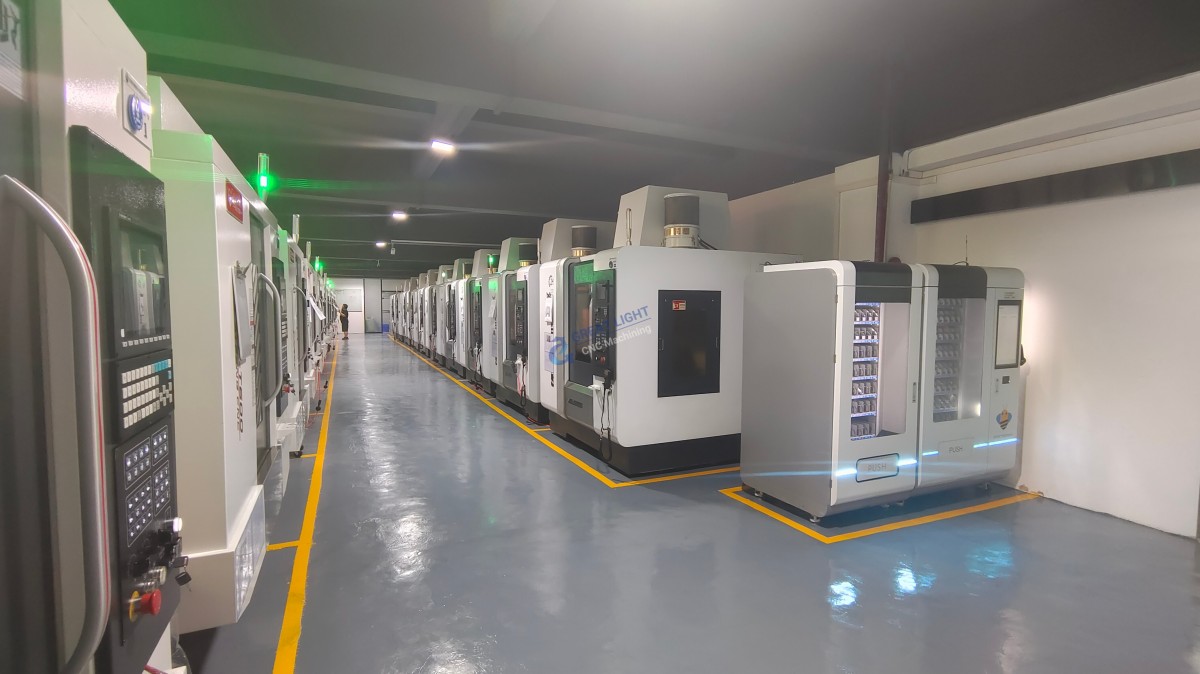
For a GreatLight CNC Machining Factory, where equipment like advanced five-axis machining centers forms the core of our capability to solve complex metal parts manufacturing challenges, a flawless IQ process is non-negotiable. It ensures that our foundational tools are set up for success from day one.
The Pre-Installation Foundation: Planning and Receipt
A successful IQ begins long before the machine arrives on the shop floor.
Forming the IQ Team: Assemble a cross-functional team including representatives from engineering, maintenance, quality assurance, and the machine operator. If possible, involve the machine supplier’s installation engineers.
Developing the IQ Protocol: Create a formal, documented protocol. This document will list all checks to be performed, acceptance criteria, responsible personnel, and required tools (e.g., levels, laser interferometers, granite squares, torque wrenches).
Site Preparation: Verify the installation site against the machine supplier’s foundation drawings. This includes checking floor load capacity, flatness, and vibration isolation requirements. Ensure all necessary utilities—electrical power (voltage, phase, stability), compressed air (pressure, dryness, filtration), coolant systems, and network connections—are available, correctly specified, and terminated at the designated points.
Upon Delivery:
Uncrating and Visual Inspection: Carefully uncrate the machine and perform a thorough visual inspection for any signs of transit damage. Check all components, crates, and packaging lists.
Verification of Deliverables: Cross-reference the physical delivery against the packing list and purchase order. This includes the machine tool, control cabinet, tool changers, pallet systems, coolant units, chip conveyors, all mechanical and electrical accessories, spare parts kits, and most importantly, the documentation package.
The Core IQ Checklist: A Step-by-Step Guide
The following structured approach forms the heart of the Installation Qualification process.
H3: 1. Documentation Verification
The machine’s documentation is its DNA. Verify you have received all manuals:
Electrical and hydraulic/pneumatic diagrams
PLC ladder logic and parameter lists
Maintenance manuals and lubrication charts
Software installation media and licenses
Calibration certificates for key components (e.g., laser scales, spindle)
Material certificates for critical parts (e.g., guideways, ball screws)
H3: 2. Mechanical Installation Verification
Leveling and Anchoring: Using a precision level, level the machine in both X and Y axes as per the manufacturer’s specifications. Proper leveling is critical for geometric accuracy and long-term stability. Securely anchor the machine to the foundation using the specified bolts and torque values.
Component Assembly Verification: Confirm that all mechanically assembled parts by the installation team—such as tool changers, chip guards, work tables, and peripheral units—are installed correctly, aligned, and securely fastened.
Utility Connection Verification: Document that all utility connections (power, air, coolant) are made correctly, using the right fittings, hoses, and seals. Check for leaks in pneumatic and coolant lines.
H3: 3. Electrical and Control System Verification
Power-Up and Safety Checks: Before initial power-up, verify that all safety guards and interlocks are functional. Perform insulation resistance checks on major power components. Power up the control system sequentially and check for any error alarms.
Control Software and Parameters: Install the correct versions of CNC system software, PLC software, and any vendor-specific applications. Verify and document critical machine parameters (machine constants, servo tuning parameters) against a baseline provided by the manufacturer. For a factory like GreatLight CNC Machining Factory, which operates under ISO 9001:2015 and IATF 16949 standards, this parameter backup is a vital part of control and traceability.
Peripheral Integration: Ensure all integrated peripherals (probes, tool setters, rotary tables, robotic interfaces) are recognized by the control system and communicate correctly.
H3: 4. Basic Functional Testing
This step verifies that all machine functions operate as intended at a basic level, without yet checking precision.
Axis Movement: Jog all linear (X, Y, Z) and rotary (A, B, C) axes through their full range of motion. Verify that limit switches and soft limits are active.
Spindle Operation: Command the spindle to rotate at various RPMs. Check for unusual vibration or noise. Verify spindle orientation function.
Automatic Functions: Test the automatic tool changer (ATC) for tool clamping/unclamping and smooth magazine operation. Test pallet changers, coolant pumps, mist collectors, and chip conveyors.
CNC Control Features: Test basic MDI (Manual Data Input) commands, homing sequences, and override functions.
The Role of Metrology and Environmental Monitoring
A true IQ for a precision machine must consider its operating ecosystem.
Environmental Conditions: Document the ambient temperature and humidity in the installation area. For high-precision machining, temperature stability is often critical. The installation site should be within the machine’s specified environmental operating range.
Foundation Vibration: While a detailed vibration analysis may be part of OQ/PQ, a basic check for excessive ambient vibration from nearby equipment is prudent during IQ.
IQ Documentation and Handover: Creating the Record
The output of a successful IQ is not just a working machine, but a comprehensive dossier.
IQ Report: Compile all checklists, verification records, measurement data, photographs of installations, and copies of certificates into a formal IQ report.
Deviations and Resolution: Any non-conformity discovered during IQ (e.g., missing part, failed functional test) must be documented in a deviation log, with a description of the corrective action taken and its verification.
Sign-Off: The IQ report is formally reviewed and signed off by the IQ team lead and the quality assurance representative, stating that the machine is installed as specified and is ready to proceed to Operational Qualification (OQ).
Conclusion: IQ as a Strategic Imperative, Not a Checkbox
How to do installation qualifications of CNC machines? The answer lies in viewing it as a disciplined, documented engineering process rather than an informal setup. A meticulously executed Installation Qualification provides undeniable value: it mitigates long-term performance risks, ensures safety, establishes a baseline for future maintenance and troubleshooting, and provides the essential evidence for quality audits under standards like ISO 9001 or IATF 16949.
For partners seeking reliable precision manufacturing, the rigor a supplier applies to its own internal processes, such as machine qualification, is a telling indicator of their overall commitment to quality. A manufacturer that invests in a thorough IQ for its advanced five-axis CNC machining centers demonstrates a foundational discipline that translates directly into the reliability and precision of the custom components they produce. This systematic approach to foundational excellence is what enables a true partnership in precision manufacturing.
Frequently Asked Questions (FAQ)
H3: Q1: Can we skip or shorten the IQ if the machine supplier’s technician handles the installation?
A: Absolutely not. The supplier’s technician is responsible for correct installation, but the IQ is the buyer’s verification of that work. It is a critical independent check to ensure your asset meets all contractual and specification requirements before acceptance. The technician’s presence is an opportunity for collaboration, not a reason to bypass your own qualification process.
H3: Q2: What is the single most common issue found during an IQ?
A: Discrepancies between delivered items and the packing list/purchase order are very common. Missing documentation, software licenses, or specific accessories (like special wrenches or calibration tools) are frequently overlooked. A thorough physical and documentation check at the IQ stage prevents costly delays later.
H3: Q3: How does IQ differ for a simple 3-axis mill versus a complex 5-axis machining center?
A: The core principles remain the same, but the complexity increases significantly. For a five-axis CNC machining center, the IQ must additionally verify the calibration and communication of the rotary axes’ drives, the geometric alignment of the trunnion or tilting rotary table to the linear axes, and the integration of more complex probing and tool-setting systems. The software parameter verification is also far more extensive.
H3: Q4: Who should own and maintain the IQ documentation?
A: The IQ dossier is a controlled quality record. It should be owned and maintained by the Quality Assurance or Engineering department, with copies stored securely. It becomes a living part of the machine’s history, referenced for future troubleshooting, re-qualification, or during regulatory audits.
H3: Q5: Is formal IQ only necessary for regulated industries like medical or aerospace?
A: While it is a mandatory practice in GMP (Good Manufacturing Practice) and AS9100 environments, its benefits are universal for any business that values consistency, uptime, and quality. Implementing a formal IQ process is a hallmark of a mature, professional manufacturing operation, such as a dedicated precision parts machining and customization provider, regardless of the end industry.



















