
If you’ve ever wondered How To Calculate CNC Machining Cost?, you’re not alone—procurement teams, product designers, and engineering managers often grapple with this question to balance budget, quality, and delivery timelines. CNC machining is a cornerstone of precision manufacturing, but its cost structure can seem opaque without a clear understanding of the underlying factors. Whether you’re prototyping a single part or scaling to mass production, knowing how to break down and estimate these costs helps you make informed decisions, avoid budget overruns, and select the right manufacturing partner. In this guide, we’ll demystify CNC machining cost calculations, explore the key variables that influence pricing, and share insights to optimize your expenses without compromising on quality.
How To Calculate CNC Machining Cost?
CNC machining costs are not a one-size-fits-all figure—they’re a sum of several interrelated components, each dependent on your part’s design, material, volume, and quality requirements. Below, we break down each critical factor with actionable insights to help you estimate costs accurately.
1. Material Costs: The Foundation of Your Budget
The cost of raw materials typically accounts for 15-30% of total CNC machining expenses, depending on the material type and part complexity. Materials range widely in price: common options like aluminum alloy 6061 are cost-effective (≈$2-$3 per kg) and easy to machine, while specialty materials like titanium alloy Ti-6Al-4V (≈$30-$50 per kg) or mold steel are pricier due to their durability and machining challenges.
When calculating material costs, you need to consider two aspects: the base price per unit weight and material yield. Yield refers to the percentage of raw material that becomes the final part—CNC machining generates scrap, so you’ll need to account for extra material to compensate for chips, setup clamps, and any machining errors. For example, a small aluminum bracket may require a larger block to secure in the machine, leading to higher initial material costs even if the final part is tiny.
GreatLight CNC Machining Factory works with a comprehensive range of materials, including aluminum, stainless steel, titanium, mold steel, and engineering plastics. Their team can help you select the optimal material for your project: balancing cost, machinability, and performance. For instance, if you’re prototyping a humanoid robot component, aluminum alloy offers a great balance of strength and light weight at a reasonable cost, while titanium alloy is ideal for aerospace parts where high strength-to-weight ratio is non-negotiable.
2. Machine Type & Capability: Precision vs. Cost Tradeoffs
The type of CNC machine used is a major driver of cost. Machines are categorized by the number of axes they can move, each offering different capabilities and price points:
3-axis machines: The most cost-effective option (≈$30-$80 per hour) for simple, flat parts that don’t require complex angles or undercuts. Ideal for basic prototypes or low-volume production of brackets, plates, or housings.
4-axis machines: Add a rotational axis (≈$50-$120 per hour), allowing machining of cylindrical features or angled surfaces in a single setup. This reduces setup time but comes at a higher hourly rate than 3-axis machines.
5-axis machines: The most advanced option (≈$80-$200 per hour), enabling simultaneous movement along five axes to machine complex geometries (like turbine blades or medical implants) in one operation. This eliminates multiple setups, reduces errors, and speeds up production—but has the highest hourly rate due to advanced technology and maintenance costs.
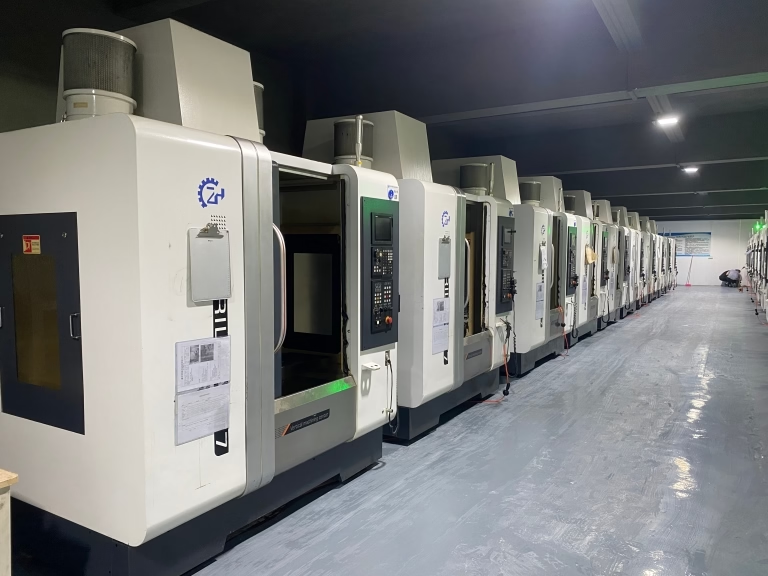
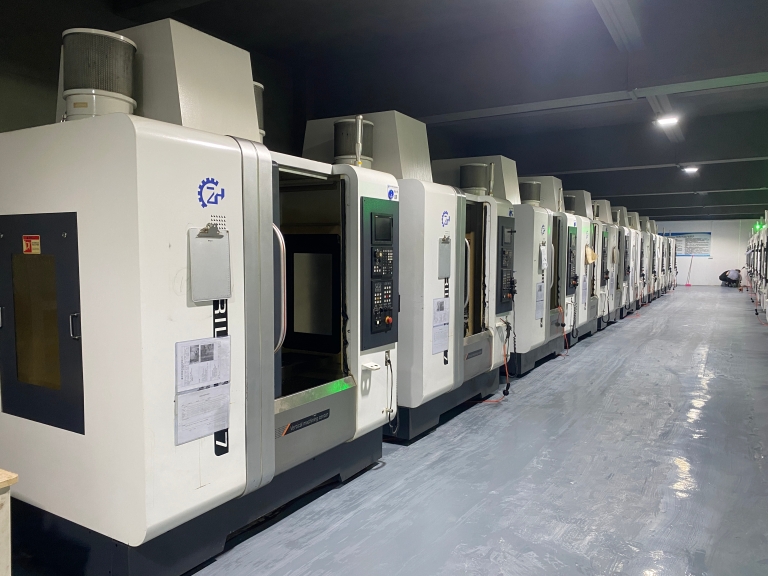
For projects requiring complex geometries, investing in precision five-axis CNC machining services (link opens in new window) can actually save money in the long run by minimizing setup time and scrap rates. GreatLight CNC Machining Factory operates a fleet of 127 precision machines, including large high-precision 5-axis centers, which can achieve tolerances as tight as ±0.001mm. Their expertise in 5-axis machining means even the most intricate parts are produced efficiently, cutting down on total production time and associated costs.
3. Machining Time: The Single Largest Variable Cost
Machining time usually makes up 40-60% of total CNC machining costs. It’s calculated based on the time the machine spends cutting material, plus setup time (loading raw material, programming the machine, and changing tools). Key factors affecting machining time include:
Part complexity: Intricate designs require longer tool paths, multiple tool changes, and slower feed rates to maintain precision. A part with fine holes or undercuts will take longer to machine than a flat plate.
Machine speed: High-end machines like 5-axis centers can operate at faster feed rates without sacrificing precision, reducing machining time.
Batch size: Machining a single part requires full setup time, but scaling to batch production spreads this cost across multiple units, lowering per-unit expenses.
To estimate machining time, most manufacturers use CAM (Computer-Aided Manufacturing) software to simulate tool paths and calculate exact time needs. GreatLight’s engineering team uses state-of-the-art CAM software to generate accurate estimates, ensuring transparent pricing. They also offer volume discounts for batch production: the more parts you order, the lower your per-unit machining cost.
4. Labor & Expertise: The Human Element of Precision
Labor costs account for 10-20% of total expenses and include the time of skilled machinists, programmers, and quality control technicians. Experienced professionals are essential to:
Program CNC machines accurately to avoid errors.
Monitor machining processes to catch issues early.
Perform post-machining inspections to ensure parts meet specifications.
While less experienced labor may seem cheaper upfront, it can lead to costly mistakes—like incorrect tool paths, poor surface finishes, or parts that fail tolerance checks. GreatLight CNC Machining Factory employs 150 skilled professionals with years of experience in precision machining. Their expertise in automotive, aerospace, medical, and humanoid robotics sectors means they can handle complex projects efficiently, reducing the risk of reworks and delays.
5. Tooling & Consumables: Overlooked but Critical Expenses
Tooling costs include the price of cutting tools, drills, end mills, and other consumables used during machining. These tools wear out over time, so you’ll need to account for replacement costs, especially for hard-to-machine materials. For example, a carbide end mill used to cut titanium may only last 10-20 hours before replacement, whereas the same tool could last 50+ hours cutting aluminum.
GreatLight manages tooling costs effectively by using high-quality, durable tools and optimizing tool paths to extend tool life. They include tooling costs in upfront quotes, so you won’t face unexpected charges later. For long-term projects, they can also develop a tooling management plan to reduce recurring costs.
6. Post-Processing & Surface Finishing: Adding Value (and Cost)
Most CNC machined parts require post-processing to meet functional or aesthetic requirements. Common steps and their cost ranges include:
Deburring: Removing sharp edges (low cost, often included in basic quotes).
Anodizing: Coating aluminum parts for corrosion resistance (moderate cost, ≈$2-$5 per part).
Polishing: Creating a mirror-like finish (high cost, ≈$5-$15 per part, depending on surface roughness needs).
Heat treatment: Hardening metal parts for strength (high cost, ≈$10-$20 per part).
The cost of post-processing varies widely based on process complexity and part volume. GreatLight offers one-stop post-processing services, so you don’t have to coordinate with multiple suppliers. Their team can recommend the most cost-effective finishing options for your project, balancing aesthetic and functional needs with budget constraints.
7. Overhead & Administrative Costs: Behind-the-Scenes Expenses
Overhead costs include rent, utilities, equipment maintenance, software licenses, and administrative expenses. These are usually allocated to each project based on machine time or labor hours. While invisible to clients, they’re essential for maintaining a safe, compliant, and efficient manufacturing facility.
GreatLight operates three wholly-owned manufacturing plants in Dongguan, China (the “Capital of Precision Hardware Mold Processing”), covering 7600 square meters. Their facilities are equipped with advanced maintenance systems to keep machines running at peak efficiency, reducing downtime and ensuring consistent quality. All overhead costs are transparently included in their quotes, so you know exactly what you’re paying for.
8. Quality Control & Compliance: Investing in Reliability
Quality control (QC) is non-negotiable, especially for medical, automotive, and aerospace industries where part failure can have serious consequences. QC costs include time and equipment for inspections: coordinate measuring machines (CMMs), optical scanners, and hardness testers.
GreatLight holds multiple international certifications, including ISO 9001:2015, IATF 16949 (automotive), ISO 13485 (medical), and ISO 27001 (data security). Their in-house QC team uses precision measurement equipment to verify every part meets your specifications. They also offer a robust after-sales guarantee: free rework for quality problems, and a full refund if rework is still unsatisfactory. While these QC measures add a small percentage to total costs, they prevent costly recalls, reworks, and project delays down the line.
Tips to Optimize CNC Machining Costs Without Sacrificing Quality
Now that you understand the key cost components, here are practical tips to reduce expenses:
Design for Manufacturability (DFM): Simplify your part design by reducing complex undercuts, using standard tolerances (unless tighter tolerances are absolutely necessary), and avoiding unnecessary features. GreatLight’s engineering team offers free DFM consultations to help you optimize your design for cost and efficiency.
Choose the Right Material: Select a material that balances cost, machinability, and performance. If aluminum meets your needs, avoid pricier materials like titanium unless required.
Leverage Batch Production: Ordering parts in bulk spreads setup and tooling costs across more units, lowering per-unit costs.
Consolidate Operations: Use a one-stop manufacturer like GreatLight that offers CNC machining, 3D printing, die casting, and post-processing. This reduces shipping costs, lead times, and miscommunication between suppliers.
Why GreatLight CNC Machining Factory Is Your Trusted Partner for Transparent Cost Calculations
When it comes to CNC machining, transparency and reliability are just as important as cost. GreatLight stands out from other suppliers for several reasons:
Transparent Pricing: Quotes break down every cost component, so you know exactly where your money goes.
Advanced Equipment: A fleet of 127 precision machines, including 5-axis CNC centers, handles complex parts efficiently.
International Certifications: Compliance with global quality standards ensures parts meet industry-specific requirements.
Expertise Across Industries: Deep experience in automotive, aerospace, medical, and humanoid robotics sectors means they can solve complex manufacturing challenges.
Robust After-Sales Support: Free rework for quality issues and full refunds if rework fails gives you peace of mind.
To learn more about how GreatLight can help you calculate and optimize your CNC machining costs, you can connect with their team via their official LinkedIn page.
Conclusion
If you’ve ever wondered How To Calculate CNC Machining Cost?, the answer lies in understanding the interplay of material costs, machine type, machining time, labor, tooling, post-processing, overhead, and quality control. By breaking down these components, you can estimate costs accurately, optimize your design and production plan, and select a manufacturing partner that aligns with your budget and quality needs. GreatLight CNC Machining Factory’s transparent pricing, advanced capabilities, and commitment to quality make them an ideal partner for any precision machining project—whether you’re prototyping a single part or scaling to mass production. Remember, the cheapest upfront quote isn’t always the best value; investing in a reliable partner like GreatLight ensures you get high-quality parts on time, without hidden costs or costly reworks.
Frequently Asked Questions (FAQ)
Q1: What is the average hourly rate for CNC machining?
A: Hourly rates vary by machine type and location: 3-axis machines cost $30-$80 per hour, 4-axis machines cost $50-$120 per hour, and 5-axis machines cost $80-$200 per hour. GreatLight offers competitive hourly rates based on your project’s specific needs, with discounts for bulk orders.
Q2: How does tolerance affect CNC machining cost?
A: Tighter tolerances (e.g., ±0.001mm) require more precise machines, slower feed rates, and additional QC checks, which increase costs. If your part doesn’t need extremely tight tolerances, using standard tolerances (±0.01mm) can significantly reduce expenses. GreatLight’s team can help you determine the minimum tolerance required for your part’s functionality.
Q3: Can I reduce costs by using 3D printing instead of CNC machining?
A: 3D printing is ideal for complex geometries and small-batch prototypes, but CNC machining is more cost-effective for large batches or parts that require high precision and strength. GreatLight offers both services and can recommend the best manufacturing method for your project.
Q4: Does GreatLight offer free quotes?
A: Yes, GreatLight provides free, no-obligation quotes for all CNC machining projects. To get a quote, you’ll need to provide your part’s 3D design files (STEP, IGES, or STL), material requirements, tolerance specifications, and volume.
Q5: How long does it take to get a CNC machining quote?
A: GreatLight typically provides quotes within 24-48 hours of receiving your project details. For complex projects, it may take up to 3 business days to complete analysis and generate an accurate quote.
Q6: What if my parts don’t meet the required specifications?
A: GreatLight offers a 100% satisfaction guarantee: if your parts don’t meet your specifications, they will rework them for free. If rework doesn’t resolve the issue, you’ll receive a full refund.



















