

When navigating the complex landscape of expanding or upgrading your machining capabilities, a critical question often arises: how to appraise used CNC machines? For clients in precision parts machining and customization, acquiring a pre-owned CNC machine can be a strategic move to access higher-tier technology at a reduced capital expenditure. However, it is also fraught with risk if not approached with a systematic, engineer’s eye. A thorough appraisal is not merely about checking a price tag; it’s a deep due diligence process that evaluates the machine’s residual value, capability to uphold precision, and total cost of ownership.
As a senior manufacturing engineer with extensive experience in high-mix, low-volume and high-precision environments, I will guide you through a comprehensive framework for evaluating used CNC equipment. This process is vital for ensuring your investment enhances, rather than hinders, your ability to deliver flawless custom components.
The Foundational Pillars of a CNC Machine Appraisal
A professional appraisal rests on four interdependent pillars: Mechanical Condition, Control System & Electronics, Documentation & History, and Market Comparables. Ignoring any one can lead to costly oversights.
H2: 1. Mechanical Condition: The Bedrock of Precision
This is the most tangible aspect. A machine’s structure determines its static and dynamic rigidity, which directly translates to achievable tolerances and surface finishes.
Wear Inspection:
Guideways & Ball Screws: These are the heart of motion. Use a dial indicator to check for backlash and wear. Look for scoring, pitting, or loss of preload. Reconditioning these components is a significant expense.
Spindle: This is the most critical and expensive subsystem. Listen for unusual noises (bearing rumble, vibration). Perform a runout test at various RPMs using a test bar. Check for excessive heat generation after running. Ask for recent maintenance records related to spindle bearing replacement or regrinding.
Axis Drives: Check servo motors and their coupling to ball screws. Listen for irregular noises and check for any axial or radial play.
Geometry & Alignment Checks:
Use precision levels, laser interferometers, or ballbar systems to verify the machine’s geometric accuracy (squareness, straightness, parallelism of axes). Misalignment here means the machine cannot be accurate, regardless of the controller.
Coolant & Lubrication Systems:
Inspect for leaks, pump functionality, and the condition of tanks and filters. Contamination or failure can lead to catastrophic thermal growth or wear.
H2: 2. Control System & Electronics: The “Brain” and “Nervous System”
An outdated or faulty control system can render a mechanically sound machine obsolete.
CNC Controller Generation: Is it a Fanuc, Siemens, Heidenhain, or other? What is the model and year? Older controls may lack modern features crucial for complex 5-axis toolpath interpolation, high-speed machining, or easy integration with CAM software.
Condition & Obsolescence: Power up the system. Check all displays, buttons, and pendant functions. Are there any persistent error codes? Crucially, assess the availability of spare parts and technical support for that specific control generation. A dead control with no repair path is a deal-breaker.
Servo Drives & Motors: Inspect for physical damage and check performance logs if available. Modernization or replacement of these components is a major undertaking.
Software & Parameters: Ensure the machine parameters are backed up and available. Losing these can be catastrophic. Check if optional software packages (e.g., for probing, high-speed machining) are installed and licensed.
H2: 3. Documentation & Service History: The Machine’s Biography
A well-documented machine is typically a well-maintained machine.
Maintenance Logs: Review records for preventive maintenance, lubrication schedules, and part replacements (especially spindles, drives, bearings).
Calibration Records: Look for periodic geometric and laser calibration reports. This demonstrates the previous owner’s commitment to precision.
Purchase & Installation Documentation: Original manuals, electrical diagrams, and parts lists are invaluable for future troubleshooting and repairs.
H2: 4. Performance Demonstration & Market Analysis
Never buy a used machine “as-is” without seeing it cut metal.
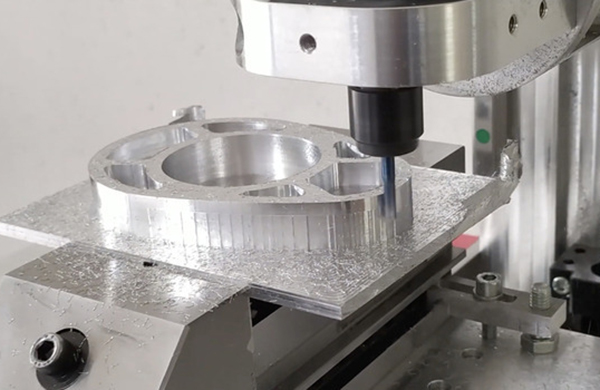
Cutting Test: Request a performance test machining a material similar to what you use. Produce a part with features that challenge the machine (e.g., tight pockets, deep cavities, fine surface finishing). Measure the part with a CMM to verify dimensional accuracy and repeatability.
Market Valuation: Research recent sale prices for comparable machines (same model, similar year, condition) through industry auctions, dealers, and platforms. Factor in the cost of necessary repairs, rigging, transportation, and re-installation at your facility.
H2: Special Considerations for Multi-Axis Machines
Appraising used 5-axis CNC machining centers requires additional scrutiny:
Rotary/Tilting Mechanism Accuracy: The integrity of the trunnion, rotary table, or swivel head is paramount. Check for backlash, repeatability, and locking rigidity. Any play here will multiply errors in complex contours.
Kinematic Error Compensation: Verify that the machine’s control has and uses accurate kinematic compensation tables for its specific 5-axis configuration.
Tool Center Point Management (TCPM): Test the machine’s ability to maintain TCP during multi-axis interpolation, a key function for true 5-axis simultaneous machining.
H2: The Strategic Alternative: Partnering with an Integrated Manufacturer
For many businesses focused on producing precision parts, the capital investment, technical risk, and ongoing maintenance of machine ownership—even used—can divert focus from core competencies. This is where the value of a strategic manufacturing partner becomes clear.
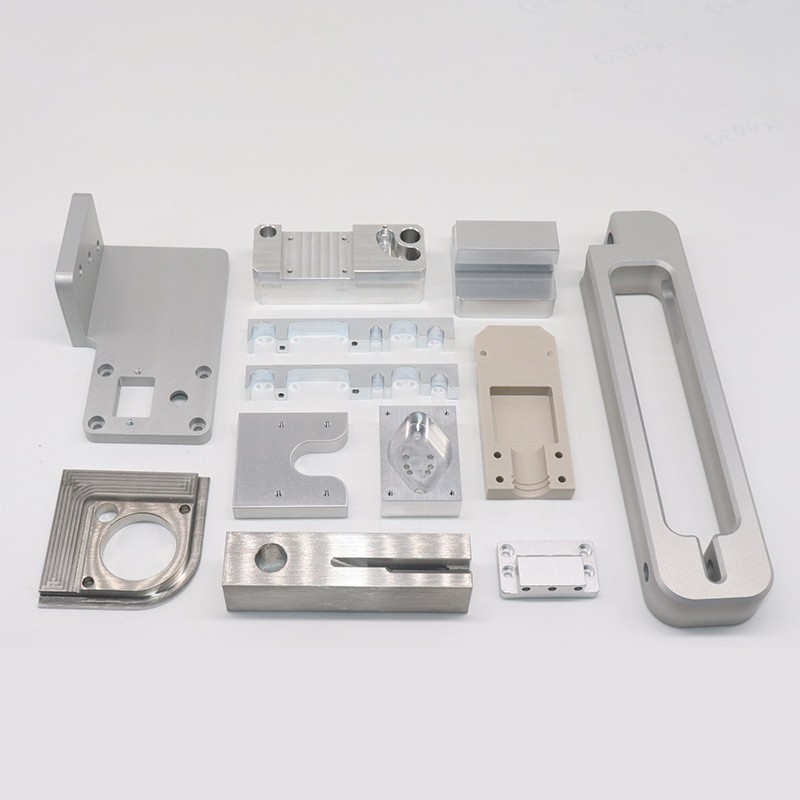
Companies like GreatLight CNC Machining Factory have already made the significant investment in a full spectrum of advanced, well-maintained equipment, including state-of-the-art 5-axis CNC machining centers. By partnering with such a provider, you gain several appraisal-related advantages:
Zero Capital Risk: You convert a large, risky capital expenditure into a predictable operational cost.
Guaranteed Performance: You are purchasing a result—a precision-machined part that meets spec—not a machine whose performance you must guarantee.
Access to Latest Technology: You leverage the latest machining technology, post-processing, and quality control systems without the burden of obsolescence.
Expertise on Tap: You gain the engineering support to optimize your design for manufacturability, potentially reducing cost and lead time.
In essence, you outsource the immense responsibility of machine appraisal, maintenance, and operation to experts whose entire business depends on the consistent, high-performance output of their equipment.
Conclusion: Appraise with Caution, Partner with Confidence
Knowing how to appraise used CNC machines is an essential skill that requires a blend of mechanical knowledge, electrical understanding, and market savvy. It is a process that demands time, specialized tools, and a skeptical eye. For every successful bargain, there are stories of machines that became “money pits.”
For businesses whose primary goal is to secure a reliable, high-quality supply of custom precision components, the most prudent appraisal may be of potential manufacturing partners, not of individual machines. Evaluating a partner’s technical portfolio, quality certifications, full-process capabilities, and proven track record often yields a far superior return on investment and peace of mind, allowing you to focus on design, innovation, and growing your own business.
Frequently Asked Questions (FAQ)
Q1: What are the biggest red flags when appraising a used CNC machine?
A: Major red flags include: a non-functional or obsolete control system with no support path; significant, uncorrectable geometric errors verified by laser or ballbar test; a spindle with excessive runout, vibration, or bearing noise; and a complete lack of maintenance or calibration documentation. Evidence of crash damage on critical structural components is also a severe warning sign.
Q2: Is it better to buy from a dealer or directly from another manufacturer?
A: Dealers often provide a limited warranty, have performed some level of inspection/refurbishment, and can offer financing, reducing immediate risk. Buying directly can be cheaper but comes “as-is” with all latent defects. Your own in-house expertise should guide this choice. If you lack a strong maintenance team, a reputable dealer is safer.
Q3: How much should I budget beyond the purchase price?
A: Always budget at least 15-25% of the purchase price for rigging, transportation, re-installation, re-leveling, and potential immediate repairs or part replacements (e.g., way covers, seals, filters). For older machines, a comprehensive mechanical reconditioning and control retrofit can cost as much as the machine itself.
Q4: How does the machine’s software and parameter backup affect its value?
A: Dramatically. A machine without a verified parameter backup can be a paperweight. The cost to have a technician regenerate these parameters from scratch is extremely high and sometimes impossible. Licensed optional software (e.g., probing cycles, advanced tool management) adds tangible value.
Q5: Why would I choose a service like GreatLight Metal over buying my own used machine?
A: Choosing a partner like GreatLight Metal eliminates the capital risk, technical debt, and operational burden of machine ownership. You pay for manufacturing outcomes, not asset management. This model provides flexibility, access to a broader technology base (including 5-axis CNC machining), and leverages their deep engineering expertise and quality systems (ISO 9001, IATF 16949, etc.) for your project’s success, allowing you to focus on your core product development. For more on their industry presence, you can view their professional network on LinkedIn.



















