
127 Sets Processing 4000mm 127 Sets High-Precision CNC Lathes
15 Years of Experience

How Thick Concrete For CNC Machines?

When integrating a CNC machine into your production facility, one of the most critical yet often underestimated foundational requirements is the concrete floor slab upon which it rests. The question of how thick concrete for CNC machines is not merely about supporting weight; it’s about ensuring long-term precision, minimizing vibration, and protecting a significant capital […]

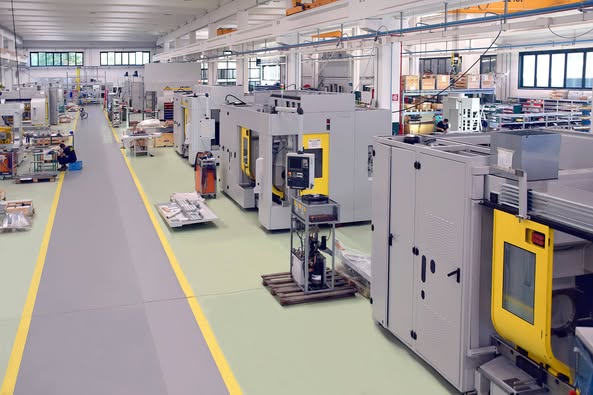
When integrating a CNC machine into your production facility, one of the most critical yet often underestimated foundational requirements is the concrete floor slab upon which it rests. The question of how thick concrete for CNC machines is not merely about supporting weight; it’s about ensuring long-term precision, minimizing vibration, and protecting a significant capital investment. An inadequate foundation can lead to a host of problems, from diminished part accuracy and accelerated machine wear to excessive noise and even safety hazards.

This guide will delve into the engineering principles behind CNC machine foundations, providing clear, actionable specifications to ensure your installation is built for performance and longevity.
图片

H2: Why Concrete Thickness and Quality Are Non-Negotiable for CNC Stability

CNC machines, especially high-precision 5-axis CNC machining centers, perform micron-level movements at high speeds. Their performance is intrinsically linked to the stability of their base. The primary functions of a proper concrete foundation are:

Mass and Damping: A thick, heavy concrete mass absorbs and dampens vibrations generated by the machine’s spindles, axis movements, and cutting forces. This prevents these vibrations from reflecting back into the machine (which harms surface finish and tool life) or transmitting through the floor to other sensitive equipment.
Rigidity and Deflection Control: The foundation must be rigid enough to prevent any bending or deflection under the machine’s weight and dynamic operating loads. Even minute deflection can misalign the machine’s geometry, leading to cumulative errors in part dimensions.
Anchoring and Leveling: It provides a solid, permanent base for the machine’s anchor bolts and leveling feet, ensuring the machine does not shift or settle unevenly over time.

H3: Key Factors Determining Concrete Slab Requirements

There is no universal “one-size-fits-all” answer. The required specifications depend on several interrelated factors:


Machine Weight and Footprint: This is the starting point. Heavier machines and those with a smaller base (higher ground pressure) require more robust support. The manufacturer’s installation manual will always specify a minimum static and dynamic load capacity.
Machine Type and Precision Level: A high-speed vertical machining center (VMC) has different dynamic forces than a large, heavy-duty horizontal boring mill. Ultra-high-precision machines for medical or aerospace components demand a more stable foundation than a standard router.
Subgrade Soil Conditions: The bearing capacity of the soil beneath the slab is paramount. Soft, clay-rich, or recently backfilled soil requires a thicker slab and often additional sub-base preparation (like compacted gravel) to prevent settling.
Existing Floor vs. New Pour: Installing on an existing factory floor requires a thorough assessment of its current thickness, reinforcement, and condition. New construction allows for optimized, custom design.

H2: Concrete Foundation Specifications: A Detailed Breakdown

Based on industry standards and engineering practices for machine tool installation, here are the general guidelines.

H4: Minimum Thickness Guidelines

Standard CNC Mills & Lathes (Up to 10,000 lbs / 4,500 kg): A minimum of 6 to 8 inches (150mm to 200mm) of reinforced concrete is typically recommended.
Medium to Large Machining Centers (10,000 – 40,000 lbs / 4,500 – 18,000 kg): Thickness should be 8 to 12 inches (200mm to 300mm).
Very Large/Gantry-Type Machines (40,000+ lbs / 18,000+ kg): These often require 12 to 24 inches (300mm to 600mm) or more, frequently designed as an isolated, reinforced concrete pit or inertia block.

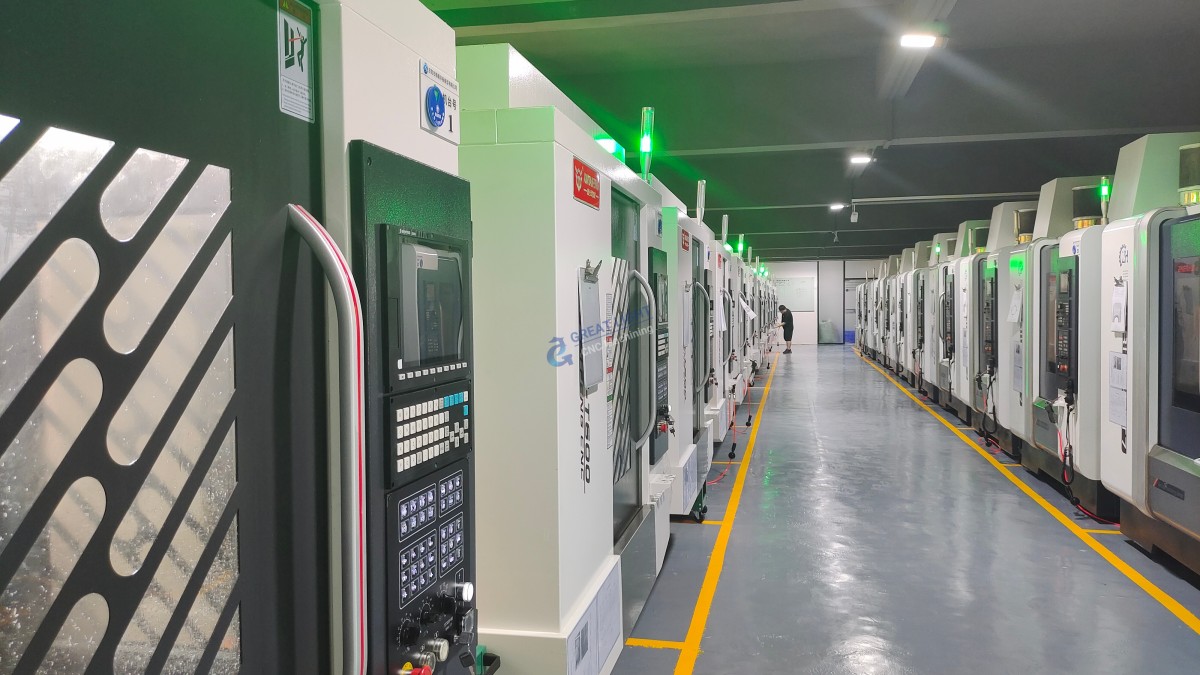
Critical Rule: The foundation’s mass should be at least 2 to 3 times the weight of the machine it supports. This ratio is crucial for effective vibration damping.
图片

H4: Concrete Mix Design and Reinforcement

Compressive Strength: Use concrete with a minimum 28-day compressive strength of 4,000 psi (27.5 MPa). For heavy-duty applications, 5,000 psi (34.5 MPa) is preferable.
Reinforcement: Steel rebar is essential to prevent cracking from shrinkage and load stresses. A common specification is a grid of #4 or #5 rebar (12mm or 16mm diameter) spaced at 12 inches (300mm) on center, both ways, located in the middle of the slab’s thickness. For heavy loads, a double mat (top and bottom) of rebar may be required.
Isolation Joints: The machine foundation should be isolated from the surrounding factory floor with expansion joint material (e.g., foam board) to prevent stresses from the surrounding slab from affecting it.

H4: Subgrade Preparation – The Unseen Critical Layer

The concrete is only as good as what’s underneath it. Proper subgrade preparation involves:


Excavating to stable, undisturbed soil.
Compacting a layer of granular fill (crushed stone or gravel) in 6-inch (150mm) lifts to achieve a uniform, high-bearing-capacity base.
Installing a vapor barrier (polyethylene sheeting) over the sub-base to prevent moisture migration from the soil into the concrete slab, which can cause corrosion of machine components.

H3: The Pitfall of Installing on an Existing Floor

Placing a new CNC machine on an existing floor requires extreme caution. You must verify:

The existing slab’s thickness and reinforcement.
Its load-bearing capacity (psf or kPa).
That there are no cracks or signs of settlement.
If the existing slab is insufficient, solutions include:
Core-Drilling and Soil Investigation to determine subgrade conditions.
Designing a Localized Thickened Slab (“slab-on-grade”) around the machine’s footprint.
Using Epoxy Grout or Leveling Compounds to ensure perfect contact between the machine base and the floor, filling any voids.

H2: Partnering with a Manufacturer Who Understands Integration

While facility preparation is the client’s responsibility, a knowledgeable manufacturing partner is an invaluable resource. A seasoned provider like GreatLight CNC Machining Factory doesn’t just deliver a machine; they bring holistic integration expertise. With extensive experience in deploying and utilizing advanced 5-axis CNC machining equipment, they understand the critical link between foundation stability and achieving promised tolerances. They can offer practical guidance based on the specific model’s dynamics and review your foundation plans, helping to preempt installation issues that could affect future part quality.

Conclusion

Determining how thick concrete for CNC machines is a foundational engineering decision that directly impacts your return on investment. It transcends simple weight support, serving as the first and most critical component in your precision manufacturing system. By adhering to the principles of adequate mass (2-3x machine weight), proper thickness (6-12+ inches of high-strength concrete), rigorous reinforcement, and meticulous subgrade preparation, you build a platform for unparalleled accuracy, reduced maintenance, and long-term reliability. Always consult the machine tool manufacturer’s specifications and consider engaging a structural engineer for large or high-precision installations. Your commitment to a solid foundation is a commitment to the quality of every part you will produce.


FAQ: Concrete Foundations for CNC Machines

Q1: Can I place my new CNC machine directly on my existing 6-inch factory floor?
A: It depends. You must calculate the total machine weight (including coolant, swarf, and pallets) and divide by its footprint area to get the ground pressure (PSI). Compare this to the floor’s design load. For a medium-sized VMC, a 6-inch slab may be sufficient if properly reinforced and on good soil. For heavier machines, it’s likely inadequate. A structural assessment is highly recommended.
图片

Q2: What is an “inertia block,” and when is it needed?
A: An inertia block is a massive, isolated concrete block, often sunk into the ground, designed specifically for very heavy or high-precision machines. Its enormous mass (sometimes 5-10x the machine weight) provides superior vibration damping and isolation from external floor vibrations. It’s essential for large gear hobbers, fine-finish grinders, or installations in areas with nearby traffic or other machinery.

Q3: How long should concrete cure before installing the machine?
A: While concrete gains strength quickly, full curing takes time. It is standard practice to wait at least 28 days after the pour before installing and leveling a precision machine tool. This allows the concrete to reach its design strength and for the majority of shrinkage to occur, preventing future shifts.

Q4: What is the purpose of epoxy grout under a machine base?
A: Epoxy grout is a high-strength, non-shrink polymer compound used to fill the gap between the machine’s base and the concrete foundation. It ensures 100% uniform bearing contact, which is impossible with concrete alone due to surface imperfections. This maximizes stability, improves damping, and prevents the base from distorting when anchor bolts are tightened.

Q5: My machine supplier didn’t provide detailed foundation specs. What should I do?
A: Request them formally. Reputable manufacturers provide detailed installation manuals. If specs are unavailable, use the guidelines above (2-3x mass ratio, thickness based on weight class) as a minimum. For critical applications, hiring a mechanical or structural engineer to specify the foundation based on the machine’s dynamic characteristics is the safest and most professional approach. Partners with deep application experience, such as GreatLight CNC Machining Factory, can also provide valuable real-world insights from their own facility standards and client support history. For ongoing industry insights and updates, you can follow our professional network on LinkedIn.


CNC Experts

Picture of JinShui Chen

JinShui Chen

Rapid Prototyping & Rapid Manufacturing Expert

Specialize in CNC machining, 3D printing, urethane casting, rapid tooling, injection molding, metal casting, sheet metal and extrusion

CNC Recent Posts

CNC News

Welcome to GreatLight Metal,Maximum Processing Size 4,000 mm

Precision Machining CNC Quote Online

Loading file

Upload Click here to upload or drag and drop your model to the canvas.

The model is too large and has been resized to fit in the printer's build tray. [Hide]

The model is too large to fit in the printer's build tray. [Hide]

The model is too large, a fitting printer is selected. [Hide]

The model is too small and has been upscaled. [Hide]

Warning: The selected printer can not print in full color [Hide]

Warning: obj models with multiple meshes are not yet supported [Hide]

Warning: Unsupported DXF entity  [Hide]

Warning: could not arrange models [Hide]

[Hide]


File Unit:      
Scale:
%
L × W × H:
X: × Y: × Z:  cm 
Rotation:
X: ° Y: °  
⚡ Instant Quote for Precision Manufacturing

Submit your design files (STEP/IGES/DWG) and receive a competitive quote within 1 hour, backed by ISO 9001-certified quality assurance.

📋 How It Works

  1. Upload & SpecifyShare your 3D model and select materials (Aluminum/Stainless Steel/Titanium/PEEK), tolerances (±0.002mm), and surface treatments.

  2. AI-Powered AnalysisOur system calculates optimal machining strategy and cost based on 10+ years of automotive/aerospace data.

  3. Review & ConfirmGet a detailed breakdown including:
    - Volume pricing tiers (1-10,000+ units)
    - Lead time (3-7 days standard)
    - DFM feedback for cost optimization

Unit Price: 

Loading price
5 Axis CNC Machining Equipment
4 Axis CNC Machining Equipment
3 Axis CNC Machining Equipment
CNC Milling & Turning Equipment
Prototype and Short-Run Injection Moldings Exact plastic material as final design
Volume Metal Die Casting Services - Precision Cast Parts
Bridge the Gap From Prototype to Production – Global delivery in 10 days or less
Custom high-precision sheet metal prototypes and parts, as fast as 5 days.
Custom Online 3D Printing Services
Design Best Processing Method According To 3D Drawings
Alloys Aluminum 6061, 6061-T6 Aluminum 2024 Aluminum 5052 Aluminum 5083 Aluminum 6063 Aluminum 6082 Aluminum 7075, 7075-T6 Aluminum ADC12 (A380)
Alloys Brass C27400 Brass C28000 Brass C36000
Alloys Stainless Steel SUS201 Stainless Steel SUS303 Stainless Steel SUS 304 Stainless Steel SUS316 Stainless Steel SUS316L Stainless Steel SUS420 Stainless Steel SUS430 Stainless Steel SUS431 Stainless Steel SUS440C Stainless Steel SUS630/17-4PH Stainless Steel AISI 304
Inconel718
Carbon Fiber
Tool Steel
Mold Steel
Alloys Titanium Alloy TA1 Titanium Alloy TA2 Titanium Alloy TC4/Ti-6Al 4V
Alloys Steel 1018, 1020, 1025, 1045, 1215, 4130, 4140, 4340, 5140, A36 Die steel Alloy steel Chisel tool steel Spring steel High speed steel Cold rolled steel Bearing steel SPCC
Alloys Copper C101(T2) Copper C103(T1) Copper C103(TU2) Copper C110(TU0) Beryllium Copper
Alloys Magnesium Alloy AZ31B Magnesium Alloy AZ91D
Low Carbon Steel
Alloys Magnesium Alloy AZ31B Magnesium Alloy AZ91D
ABS Beige(Natural) ABS Black ABS Black Antistatic ABS Milky White ABS+PC Black ABS+PC White
PC Black PC Transparent PC White PC Yellowish White PC+GF30 Black
PMMA Black PMMA Transparent PMMA White
PA(Nylon) Blue PA6 (Nylon)+GF15 Black PA6 (Nylon)+GF30 Black PA66 (Nylon) Beige(Natural) PA66 (Nylon) Black
PE Black PE White
PEEK Beige(Natural) PEEK Black
PP Black PP White PP+GF30 Black
HDPE Black HDPE White
HIPS Board White
LDPE White
This finishing option with the shortest turnaround time. Parts have visible tool marks and potentially sharp edges and burrs, which can be removed upon request.
Sand blasting uses pressurized sand or other media to clean and texture the surface, creating a uniform, matte finish.
Polishing is the process of creating a smooth and shiny surface by rubbing it or by applying a chemical treatmen
A brushed finish creates a unidirectional satin texture, reducing the visibility of marks and scratches on the surface.
Anodizing increases corrosion resistance and wear properties, while allowing for color dyeing, ideal for aluminum parts.
Black oxide is a conversion coating that is used on steels to improve corrosion resistance and minimize light reflection.
Electroplating bonds a thin metal layer onto parts, improving wear resistance, corrosion resistance, and surface conductivity.
This is a finish of applying powdered paint to the components and then baking it in an oven, which results in a stronger, more wear- and corrosion-resistant layer that is more durable than traditional painting methods.
Please provide additional text description for other surface treatment requirements!
Material
Material
  • CNC Metals
    • Aluminum
    • Brass
    • Stainless steel
    • Inconel718
    • Carbon Fiber
    • Tool Steel
    • Mold Steel
    • Titanium
    • Alloy Steel
    • Copper
    • Bronze
    • Low Carbon Steel
    • Magnesium
  • CNC Plastics
    • ABS
    • PC
    • PMMA (Acrylic)
    • PA (Nylon)
    • PE
    • PEEK
    • PP
    • HDPE
    • HIPS
    • LDPE
Printer
Printer
  • CNC Metals
    • 5 Axis CNC Machining
    • 4 Axis CNC Machining
    • 3 Axis CNC Machining
    • CNC Milling & Turning
    • Rapid Tooling
    • Metal Die Casting
    • Vacuum Casting
    • Sheet Metal Fabrication
    • SLA 3D Printing
    • SLS 3D Printing
    • SLM 3D Printing
  • Rapid Prototyping
    • Design Best Processing Method According To 3D Drawings
Post-processing
Post-processing
  • As Machined(Product’s natural color)
  • Sand Blasting
  • Polishing
  • Brushed Finish
  • Anodizing
  • Black Oxide
  • Electroplating
  • Paint Coating
  • Powder Coating
  • Other surface treatment requirements
Finalize
The world's first CNC machining center that dares to provide free samples!

Free for first product valued at less than $200. (Background check required)

precision machining cnc quote online

15 Years CNC Machining Services

When you’re ready to start your next project, simply upload your 3D CAD design files, and our engineers will get back to you with a quote as soon as possible.
Scroll to Top

ISO 9001 Certificate

ISO 9001 is defined as the internationally recognized standard for Quality Management Systems (QMS). It is by far the most mature quality framework in the world. More than 1 million certificates were issued to organizations in 178 countries. ISO 9001 sets standards not only for the quality management system, but also for the overall management system. It helps organizations achieve success by improving customer satisfaction, employee motivation, and continuous improvement. * The ISO certificate is issued in the name of FS.com LIMITED and applied to all the products sold on FS website.

greatlight metal iso 9001 certification successfully renewed
GB T 19001-2016 IS09001-2015
✅ iso 9001:2015
greatlight metal iso 9001 certification successfully renewed zh

IATF 16949 certificate

IATF 16949 is an internationally recognized Quality Management System (QMS) standard specifically for the automotive industry and engine hardware parts production quality management system certification. It is based on ISO 9001 and adds specific requirements related to the production and service of automotive and engine hardware parts. Its goal is to improve quality, streamline processes, and reduce variation and waste in the automotive and engine hardware parts supply chain.

automotive industry quality management system certification 01
Certification of Production Quality Management System for Engine Hardware Parts Engine Hardware Associated Parts
automotive industry quality management system certification 00
发动机五金零配件的生产质量管理体系认证

ISO 27001 certificate

ISO/IEC 27001 is an international standard for managing and processing information security. This standard is jointly developed by the International Organization for Standardization (ISO) and the International Electrotechnical Commission (IEC). It sets out requirements for establishing, implementing, maintaining, and continually improving an information security management system (ISMS). Ensuring the confidentiality, integrity, and availability of organizational information assets, obtaining an ISO 27001 certificate means that the enterprise has passed the audit conducted by a certification body, proving that its information security management system has met the requirements of the international standard.

greatlight metal technology co., ltd has obtained multiple certifications (1)
greatlight metal technology co., ltd has obtained multiple certifications (2)

ISO 13485 certificate

ISO 13485 is an internationally recognized standard for Quality Management Systems (QMS) specifically tailored for the medical device industry. It outlines the requirements for organizations involved in the design, development, production, installation, and servicing of medical devices, ensuring they consistently meet regulatory requirements and customer needs. Essentially, it's a framework for medical device companies to build and maintain robust QMS processes, ultimately enhancing patient safety and device quality.

greatlight metal technology co., ltd has obtained multiple certifications (3)
greatlight metal technology co., ltd has obtained multiple certifications (4)

Get The Best Price

Send drawings and detailed requirements via Email:[email protected]
Or Fill Out The Contact Form Below:

All uploads are secure and confidential.











