GreatLight CNC Machining Factory logo
CNC Machining
Rapid Prototyping
Materials
Industries
News
About GL

Get Instant Quote

Forging

Forging & Machined Forged Components

Closed-die and open-die forging for steel, aluminum and titanium parts, with finish machining held to ±0.005 mm and full material traceability. Send a drawing and a quantity; we return a quote and DFM notes within 12 hours.

Closed-die and open-dieSteel, aluminum, titanium±0.005 mm after machiningNo minimum order quantity15 years in metalISO 9001 / IATF 16949
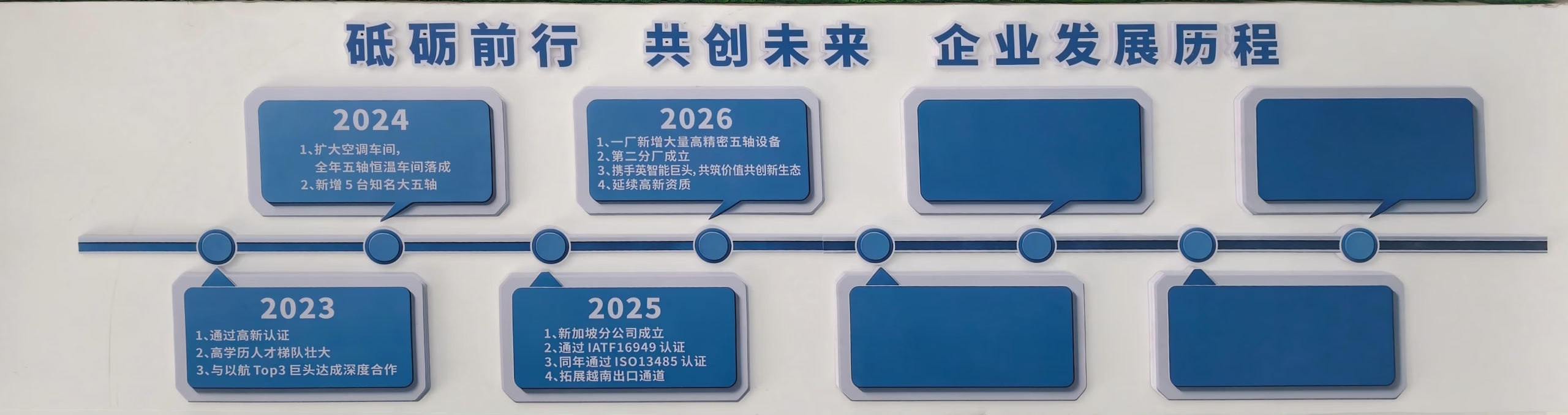
Forge ahead with determination and create the future together.
15 yearsMetal manufacturing since 2011
127High-precision CNC machines
±0.005 mmMachining tolerance
99.99%Qualification rate
Where forging projects go wrong

Four Problems That Show Up After the Forging Quote

Most forging failures are decided before the die is cut. These are the ones we see most often.

01

You need a die, but the volume does not justify one

A closed-die tool costs money before a single part ships. At 200 pieces the tooling can cost more than the parts. Ask what the annual volume really is before committing to a die, and price open-die or machining from plate as a parallel quote.

02

Draft angle and flash line fight the machined features

Forging needs draft so the part releases from the die. That surface is not flat and not square. If the drawing calls for a 0.05 mm flatness on a forged face, the die has to leave enough stock for the mill to clean up, or the feature will be cut into decarburized skin.

03

Grain flow direction is never specified

A crank arm or a steering knuckle gets its fatigue life from grain running along the load path, not across it. When the drawing only gives a shape, the forge shop picks a direction. That decision is made at the die, and it cannot be corrected later.

04

Scale and decarburization are discovered at final inspection

Hot steel oxidizes. A surface layer that is soft or carbon-depleted will fail a hardness check even when the core is correct. If the print does not say how much stock must be removed after forging, the shop may leave too little to machine away.

How we handle it

Forging, Then Machining the Forged Part to Print

One supplier for the forged blank and the finished geometry, so the stock allowance is decided by the people who will cut it.

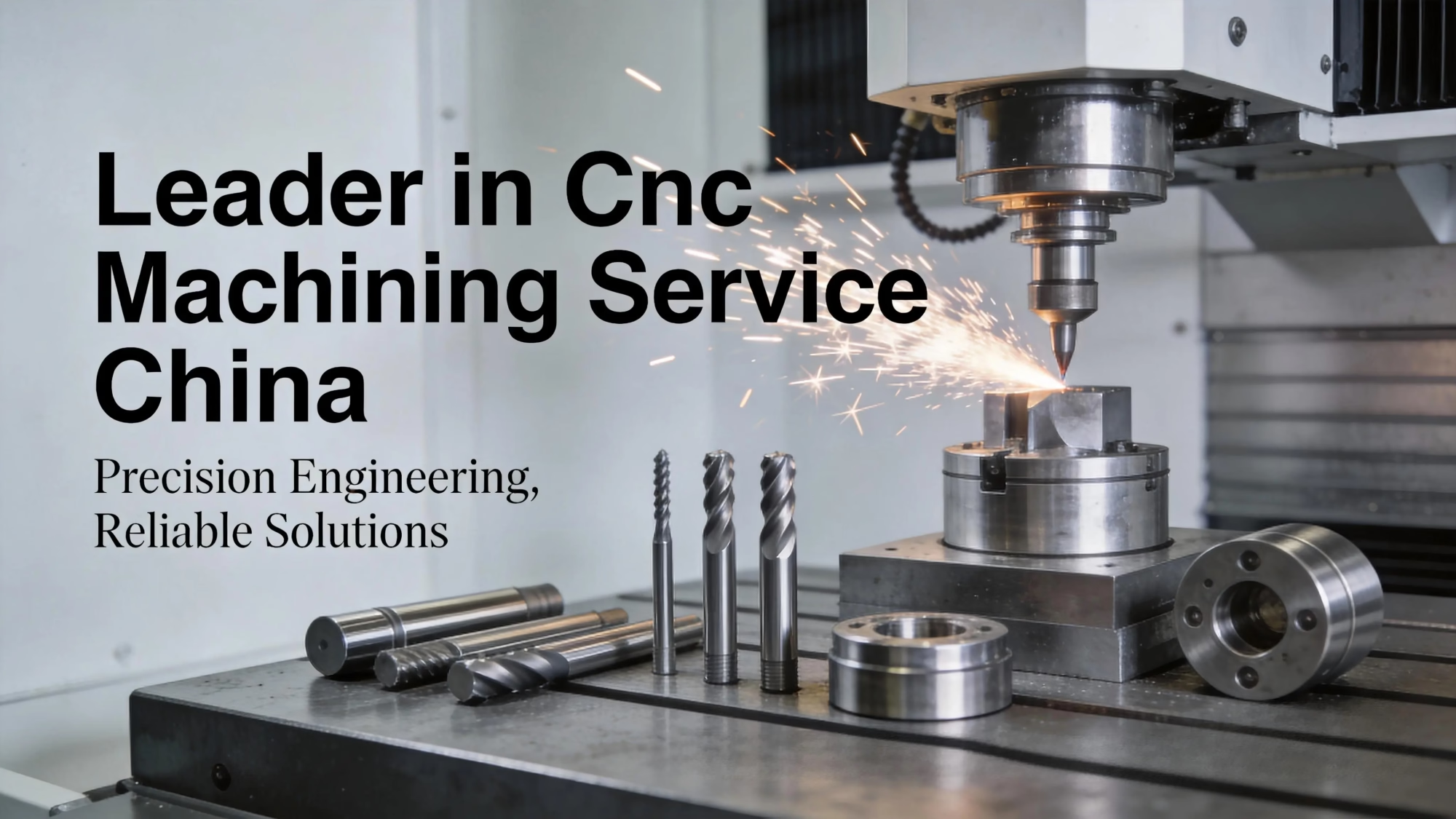
Leader in Cnc Machining Service China
Process selection

Choosing the forging route before cutting a die

Not every part should be forged. A bracket with three pockets and a 6 mm wall is cheaper as a billet machined on a 3-axis mill. A lever with a long grain path and a fatigue load is not. We look at the load direction, the wall thickness and the annual volume, then say which route fits.

For parts that do belong in a die, the draft, corner radii and parting line are set with the downstream machining in mind. Stock allowance is sized so the finish pass removes the full decarburized layer without leaving the part thin.

  • 1
    Volume firstTooling is quoted against the annual quantity, not the first order.
  • 2
    Stock allowanceSet from the machined faces, not from a generic 1 mm rule.
  • 3
    Parallel quotesForged blank and billet-machined versions priced side by side.
CNC Lathe Technical Specifications Terminology
Finish machining

Turning a forged blank into a finished part

A forged blank arrives with scale, a parting line and no reliable datums. First operations establish the datums from the as-forged surfaces. Everything after that is measured from those datums, which is why the first setup matters more than the last.

Sixteen simultaneous 5-axis centers handle the parts with features on several faces. A Ø400 mm rotary table covers the round and angular work. For long shafts, travel goes to 4,000 × 400 × 150 mm.

  • 1
    Datum from forgingFirst op locates on as-forged surfaces and creates the reference for everything else.
  • 2
    Hardness before cuttingBlanks are checked so a soft or over-hard lot is caught before setup.
  • 3
    100% inspectionRaw material check, in-process monitoring and final inspection before shipment.
Selection guide

Forged Part vs Machined From Billet

Use this to decide which process the drawing actually needs.

FactorForging routeMachined from billet
Annual volumePays off above roughly 1,000 piecesBest from one piece to a few hundred
Grain flowRuns along the load pathCut across the grain, weaker in fatigue
Tooling lead timeWeeks before the first blankNone, cutting starts in days
Geometry freedomNeeds draft and a parting lineUndercuts and thin walls are fine
Near-net shapeLess material removed per partMost of the block becomes chips
Design changesDie rework is slow and costlyEdit the program and rerun
What we do

Services Around the Forged Part

Forging is one step. These are the operations that turn it into a part you can assemble.

01

Forged blanks and sourcing

Closed-die and open-die blanks sourced through our supplier network, with the material grade and heat lot documented before machining starts.

02

5-axis finish machining

Sixteen simultaneous 5-axis centers cut angled faces, ports and pockets in one setup, which removes the datum stack-up of three separate fixtures.

03

CNC turning and mill-turn

Sixteen mill-turn centers handle shafts, hubs and round flanges, so turning and milling happen without a second workholding setup.

04

Heat treatment coordination

Normalizing, quenching and tempering arranged before or after machining, depending on whether the print calls for hardness in the core or at the surface.

05

Surface finishing

Anodizing, electroless nickel, zinc plating, black oxide, bead blasting and polishing. Laser marking is available down to 1.5 mm character height.

06

Inspection and documentation

Dimensional reports, material certificates and hardness results supplied on request, with 100% inspection before shipment.

Capability

Machining Capability for Forged Parts

The numbers that decide whether your part fits on our floor.

ItemRangeNotes
Machining tolerance±0.005 mm (±0.0002 in)On machined features, not as-forged
Surface finishRa 0.2–0.8 μm fineRa 1.6–3.2 μm as-machined also available
Largest travel4,000 × 400 × 150 mmLong shafts and rails
Medium travel750 × 1,150 × 550 mmMost forged housings and brackets
Compact travel500 × 500 × 450 mmSmall high-volume parts
Rotary tableØ400 mmRound and angular features
Forging materialsSteel, aluminum, titanium1018, 1045, 4130, 4140, 4340, 6061, 7075, TC4
Order size1 to 10,000+ piecesNo minimum order quantity
Why GreatLight

What Makes the Difference on a Forging Order

15Y

Metal manufacturing since 2011

Fifteen years of production in Dongguan, with a second plant in Singapore for Southeast Asian delivery.

±0.005

Machining tolerance in millimeters

Held on machined features after the forged blank is located and squared in the first operation.

12H

Quote and DFM analysis

Drawing review comes back within 12 hours, with the stock allowance and datum plan called out.

24H

Production start

Once the blank is on hand and the program is proven, cutting can begin within 24 hours.

99.99%

Qualification rate

Raw material check, in-process monitoring and final inspection before every shipment.

1 pc

No minimum order quantity

From a single prototype to a 10,000+ part run, on the same inspection standard.

7,600 m²Manufacturing space
150Technicians on staff
3Wholly-owned plants
127High-precision CNC machines
Industry results

What Each Industry Requires, and What We Deliver

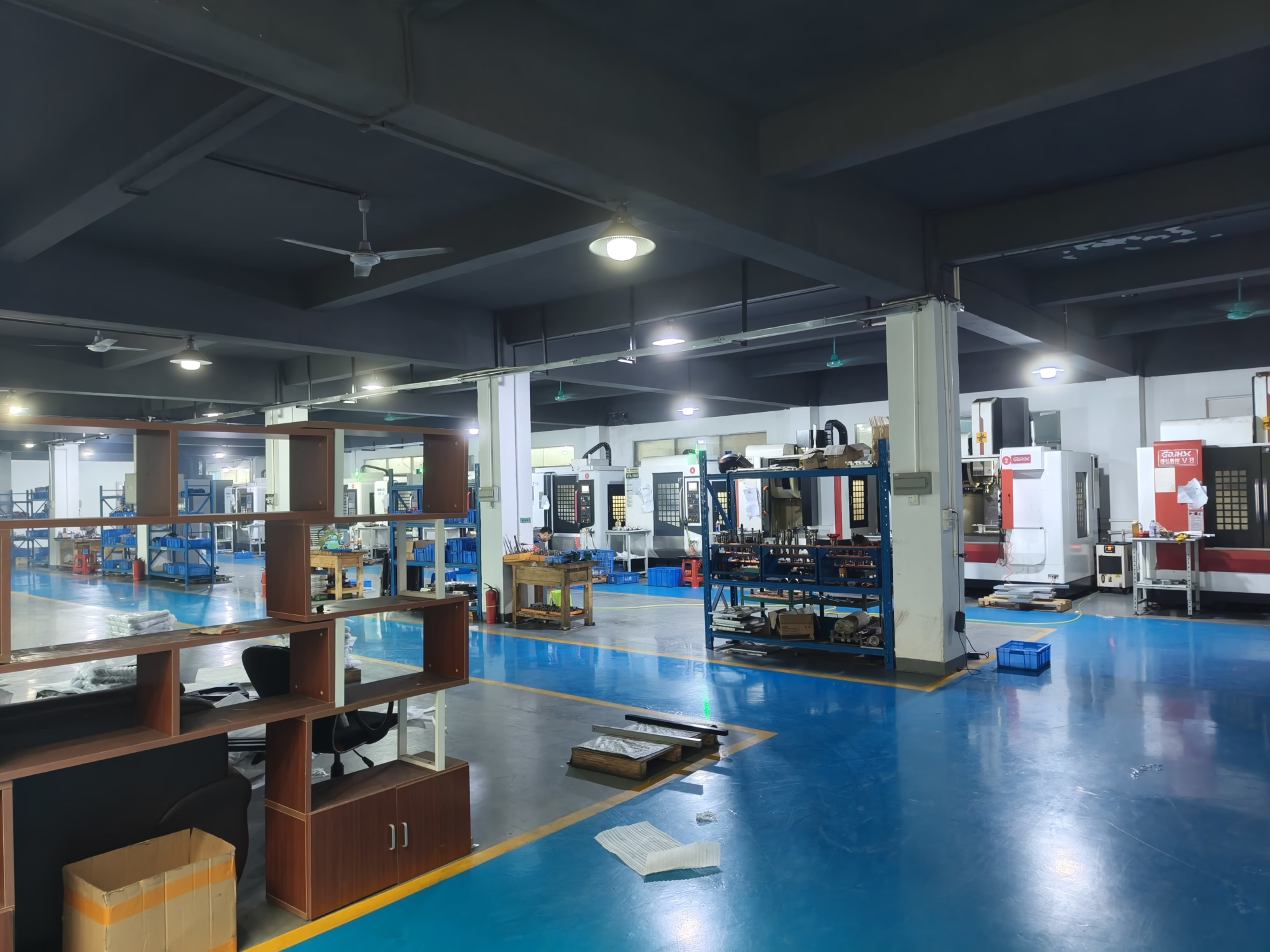
GreatLight Metal new factory building

Automotive and EV

Forged steering and suspension parts need grain flow along the load path, then machined bores that hold position.

  • IATF 16949
  • ±0.005 mm
  • 100% inspection
oplus_262178

Aerospace

Brackets and fittings are judged on traceability and on how much stock is removed after forging.

  • Material certs
  • Ra 0.8–1.6 μm
  • Report on request
CNC Machining Services Comparison 2026 Fictiv vs Xometry vs GreatLight

Industrial machinery

Link arms and gear blanks need repeatable datums so the second batch locates the same as the first.

  • ±0.005 mm
  • 3–5 day shipping
  • No MOQ
CNC Machining Services Online

Medical devices

Forged stainless instrument parts must be cleaned of scale before any feature is cut to final size.

  • ISO 13485
  • 316L / 17-4PH
  • 100% inspection
FAQs

Forging Questions Engineers Ask

When is forging better than machining from a solid block?

When the part carries a repeated load and the grain direction matters, or when annual volume is high enough that less material removal pays for the tooling. A lever, a knuckle or a connecting rod qualifies. A housing with deep pockets usually does not.

The volume break-even sits around 1,000 pieces for a simple closed-die part. Below that, machining from billet is usually faster and cheaper, and we will quote it that way.

How much stock do you leave on a forged part for machining?

It depends on which faces need to be cut and how thick the decarburized layer is. For hot steel the layer can run 0.3 mm deep, so a face that needs a clean finish gets more stock than one that stays as-forged.

We set the allowance from the drawing, not from a fixed rule. If the print calls for a flatness or finish on a forged face, that face is sized so the finish pass clears the scale completely.

Can you machine a forging supplied by someone else?

Yes. Send the blank with its material grade and heat lot, and we will inspect the as-forged condition before setup. A hardness check on the first blank catches a soft or over-hard lot before the program runs.

If the blank arrives without a usable datum, the first operation creates one. That step is quoted separately because it changes the fixture.

Which materials can you forge and then machine?

Carbon and alloy steels including 1018, 1045, 4130, 4140 and 4340, plus tool steel. Aluminum grades include 6061, 6061-T6, 7075 and 6082. Titanium covers TA1, TA2 and TC4 (Ti-6Al-4V).

Stainless is usually supplied as bar or casting rather than forging, but 17-4PH and 316L forged blanks are available on request.

Do you handle heat treatment before or after machining?

Both, and the choice changes the process. Hardening before machining means the cutter has to deal with the final hardness, which limits tool life and the shapes you can cut. Hardening after machining means distortion has to be planned for.

For parts that need a hard case and a tough core, we rough machine, heat treat, then finish machine to hold the tolerance after the part has moved.

What is the minimum order quantity for a forged part?

There is no minimum on the machining side, from one part upward. Forging itself has a practical floor because of the die, so a single forged prototype usually means machining from billet instead.

If you need one part to test the fit before committing to a die, we quote that as a billet-machined version of the same geometry.

How do you verify a forged part before it ships?

Raw material is checked on arrival, the process is monitored during cutting, and every part is inspected before shipment. Dimensional reports and material certificates are available on request.

For features called out on the print, we measure from the datums set in the first operation, which is the same reference the customer will use on the receiving inspection.

Can you keep the drawing confidential?

Yes. Uploads are secure, and we sign a non-disclosure agreement on request before the drawing is reviewed.

Your files are not shared outside the quoting and production team working on the order.

Send a Drawing, Get a Forging Quote in 12 Hours

Tell us the material, the annual quantity and which faces need machining. We will come back with a price, a stock allowance and the datum plan.

12-hour quote100% inspectionNo minimum order quantityNDA on request

Trusted by engineers and manufacturers worldwide

Tesla Ford Motor Company BYD Auto Denso Magna International Boeing Airbus Medtronic KUKA FANUC