

As a senior manufacturing engineer with over two decades navigating the intricate landscape of high-stakes production, I’ve witnessed firsthand the seismic shift in requirements for defense precision CNC machining services. This isn’t merely about making a part to a drawing; it’s about forging the physical backbone of national security, where failure is not an option. The margin for error approaches zero, and the standards extend far beyond simple dimensional accuracy. Today, we’ll dissect the core pillars that define true capability in this field and explore what separates competent suppliers from mission-critical partners.
The Uncompromising Landscape of Defense Manufacturing
The defense sector imposes a unique constellation of demands that test the limits of any machining facility. It’s a realm governed by stringent protocols, exotic materials, and geometries of staggering complexity.
H2: Beyond Tolerance: The Multidimensional Challenge of Defense Parts
When we discuss defense precision CNC machining services, we’re talking about a holistic challenge:
Material Mastery: Parts are routinely machined from high-strength alloys (e.g., 4340 steel, 7075-T6 aluminum), titanium grades (Ti-6Al-4V), and advanced composites. These materials are notoriously difficult to machine, demanding specific tooling, cooling strategies, and parameters to prevent work hardening, residual stress, or micro-cracking that could lead to catastrophic fatigue failure.
Geometric Complexity and Integrity: Components for aerospace guidance systems, unmanned platforms, or armored vehicle assemblies often feature deep pockets, thin walls, internal channels, and compound curves. This necessitates advanced 5-axis CNC machining capabilities not just for accessibility, but to maintain tool rigidity and surface finish integrity throughout the operation. A simple 3-axis approach is often insufficient.
Traceability and Documentation: Every raw material billet, every tool change, and every inspection result must be meticulously documented. A complete Digital Thread—a verifiable pedigree from mill certificate to finished part—is non-negotiable for quality assurance and failure analysis.
Supply Chain Security and ITAR Compliance: For projects involving U.S. origin technology, compliance with International Traffic in Arms Regulations (ITAR) is mandatory. This dictates strict controls on data, physical access, and employee screening. A breach here carries legal and strategic consequences far exceeding a simple quality reject.
H2: The Pillars of a Qualified Defense Machining Partner
Given these challenges, selecting a supplier cannot be based on cost alone. The decision matrix must be built on demonstrable pillars of excellence.

H3: Foundational Pillar 1: Certifications as a Framework, Not a Trophy
Certifications are the skeleton of a quality management system. They provide a structured, auditable framework for consistency. Key standards include:
AS9100/EN9100: The aerospace and defense version of ISO 9001, with added emphasis on risk management, configuration control, and counterfeit part prevention.
ISO 9001:2015: The baseline for a systemic approach to quality.
Nadcap Accreditation (for specific processes): While not always required for machining alone, Nadcap accreditation for non-destructive testing, chemical processing, or heat treatment is a strong indicator of a supplier’s commitment to specialized process control.
In my evaluation of partners, I look for facilities where these certifications are lived, not just laminated and hung on a wall. For instance, a company like GreatLight CNC Machining Factory structures its entire operation around these standards, ensuring that every procedure, from job planning to final audit, is repeatable and defensible. Their adherence to IATF 16949 principles, though automotive-focused, demonstrates a profound understanding of advanced product quality planning (APQP) and production part approval process (PPAP) methodologies that are directly transferable to defense projects.
H3: Foundational Pillar 2: Technological Arsenal and Process Engineering
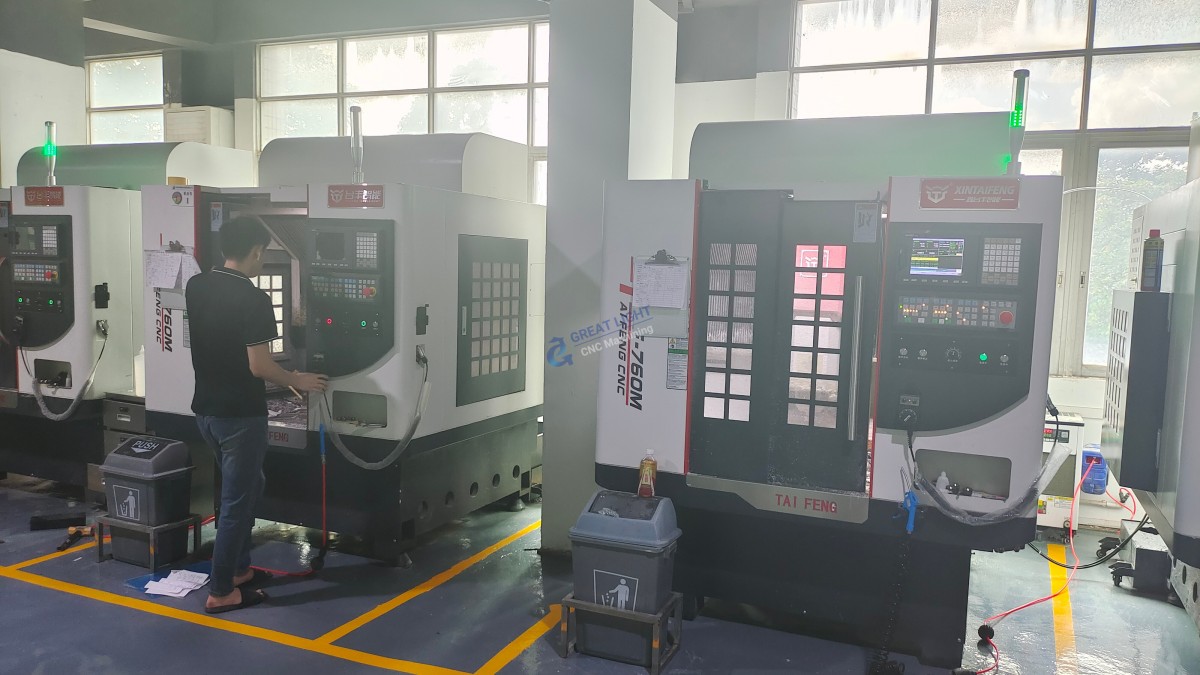
The most rigorous quality system is useless without the technological muscle to execute. This involves two key aspects:
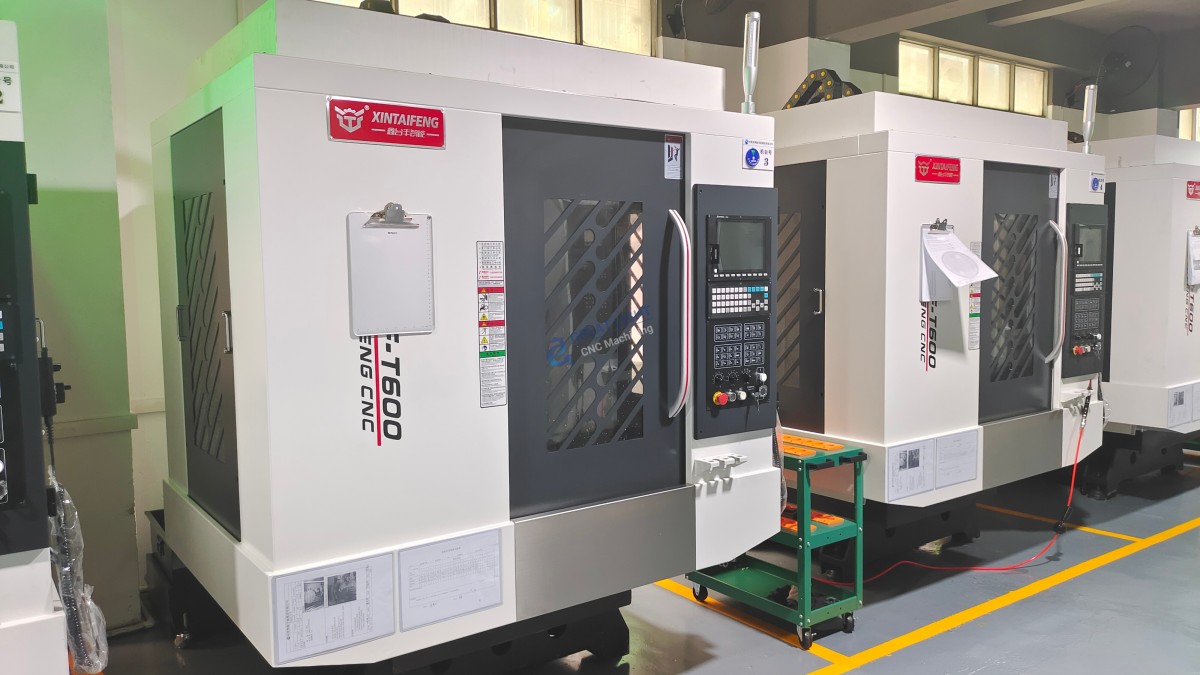
Equipment Capability: This goes beyond having a 5-axis machine. It’s about having the right 5-axis machines with sufficient rigidity, thermal stability, and accuracy. It includes complementary technology like high-speed machining centers for aluminum, multi-axis turn-mill centers for complex rotational parts, and Wire EDM for extracting finished parts from hard materials without inducing stress.
Process Engineering Expertise: This is the “secret sauce.” It’s the engineering team’s ability to simulate machining processes, predict and mitigate distortion, design custom fixtures for unstable geometries, and develop toolpaths that optimize surface finish and minimize cycle time while preserving material properties. A partner that simply follows the CAD model without this layer of analytical engineering is a liability.
H3: Foundational Pillar 3: Metrology and Quality Assurance as a Strategic Function
In defense work, the Quality Department is not a final gatekeeper; it is an integrated part of the manufacturing process. The metrology lab must be equipped to validate claims:
CMM (Coordinate Measuring Machine) with volumetric accuracy suitable for the part’s tolerance band.
Advanced Surface Profilometers to measure Ra, Rz, and other critical surface finish parameters.
Non-Contact Scanning for free-form surface inspection and first-article validation.
The personnel operating this equipment must be highly trained, and the measurement uncertainty for every critical dimension must be understood and documented.
H2: Navigating Common Pitfalls in Supplier Selection
Many programs encounter setbacks by overlooking subtle red flags:
The “Yes-Men” Syndrome: A supplier that agrees to every requirement without a detailed technical review is dangerous. A qualified partner will conduct a formal Design for Manufacturability (DFM) analysis, highlighting potential issues with tolerances, material selection, or features that may compromise the part’s function or manufacturability.
Inadequate Risk Management: How does the supplier handle a tooling failure mid-batch? What is their backup plan for machine availability? Their risk mitigation strategies should be explicit.
Opacity in Supply Chain: A reluctance to disclose their own material suppliers or sub-contractors is a major concern. Full transparency is required.
H2: A Partner in Practice: The GreatLight Metal Paradigm
To ground this discussion, let’s consider how a capable partner operates. A manufacturer like GreatLight Metal Tech Co., LTD. exemplifies the integrated approach required. Their journey from a local workshop to an international supplier is built on a foundation of precision. Their 76,000 sq. ft. facility isn’t just a collection of machines; it’s a synchronized ecosystem. For a defense component—say, a complex titanium housing for a communication system—their workflow would embody the principles we’ve discussed:
Collaborative DFM: Their engineers would first engage in a material and drawing review, possibly suggesting a slight radius modification to reduce stress concentration and improve tool life.
Secure, Controlled Process: The titanium billet, with full traceability, would be programmed for a 5-axis CNC machining center. The toolpaths would be optimized using simulation software to maintain constant chip load and minimize heat.
In-Process Verification: Critical features would be checked at intermediate stages using on-machine probing or dedicated fixtures in the CMM lab.
Comprehensive FAIR (First Article Inspection Report): The completed part would undergo a full-dimensional layout, material certification review, and functional testing report, creating the irreversible record required for acceptance.
This end-to-end control, backed by a culture of precision and accountability, is what transforms a machining service into a reliable extension of your own engineering team.
Conclusion: Precision as a Covenant
Ultimately, procuring defense precision CNC machining services is about entering a covenant of trust. It’s a partnership where technical capability, systemic rigor, and unwavering integrity are the currency. In a domain where performance is paramount, the choice of manufacturing partner is a strategic decision with long-lasting implications. It requires looking beyond the quotation to evaluate the depth of engineering support, the robustness of quality systems, and the cultural commitment to excellence that the supplier embodies. The goal is not just to receive a part that fits, but to secure a component that will perform reliably under the most demanding conditions, backed by a partnership you can trust implicitly. For organizations seeking this level of assured performance, aligning with a partner that has demonstrably built its operation around these pillars is the most critical step in the journey from design to deployment.
For further insights into industry trends and manufacturing excellence, follow the ongoing conversation on professional platforms like LinkedIn.



















