CNC Vertical Machining Equipment: 7 Proven Buying Considerations
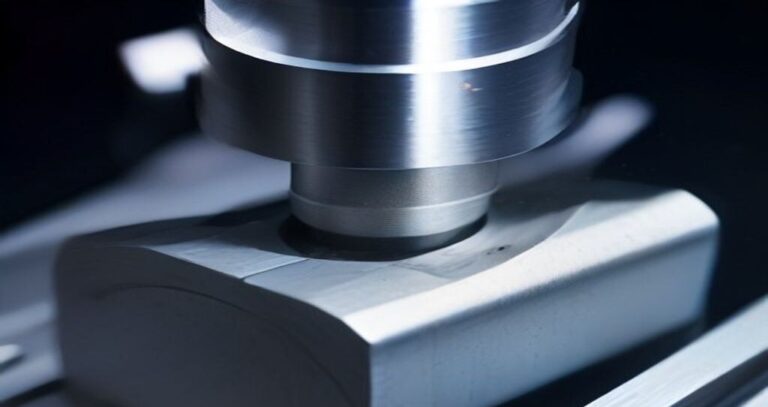
Specifying a new machining center usually starts with a budget number and a part print. That combination gets people into trouble fast. A shop buys more spindle than the work requires, or saves money on travel and ends up turning down jobs that would have paid for the extra capacity in a year. The right way to approach CNC Vertical Machining Equipment is to work backward from the parts you actually run, then match spindle, envelope, accuracy, and tooling to that reality.
This guide is written for engineers, sourcing managers, and product development teams who have to justify a capital purchase and live with it for the next decade. Seven considerations drive most of the value in CNC Vertical Machining Equipment decisions, and skipping any one of them tends to surface later as a bottleneck. Spindle taper and speed determine what materials and tools you can run efficiently. Work envelope and table load decide which parts fit at all.
Tolerance capability deserves its own conversation, because the number on a spec sheet and the number your shop holds after eight hours of cutting are rarely the same. Tooling strategy, including holder selection and automatic tool changer capacity, shapes cycle time more than most buyers expect. Inspection and probing round out the picture, since a machine that cannot verify its own work pushes cost downstream to a separate operation.
Price matters, but not in isolation. The goal is CNC Vertical Machining Equipment that covers your part family today with enough headroom for the next few years of work, without paying for capability that sits idle. Buyers who treat CNC Vertical Machining Equipment as a system rather than a single spec usually get closer to that balance. The sections below walk through each consideration in practical terms, including where shops commonly overspend and where cutting corners backfires.
What CNC Vertical Machining Equipment Actually Covers
Ask five shops what “vertical machining” means and you will get five different answers. The term covers everything from a bench-top knee mill with a two-axis control to a five-axis bridge mill cutting titanium airframe parts. The spindle points down in all of them. That single geometric fact is what separates this family from horizontal machining centers, and it drives nearly every trade-off that follows.
When engineers specify CNC Vertical Machining Equipment, they are usually choosing within five broad categories. Each one solves a different problem, and mixing them up early costs money later.
- Knee mills and bed mills. The table moves on a knee or a fixed bed, the quill or head carries the tool. Travels commonly fall under 40 inches in X. Good for toolroom work, repair, and one-off parts where setup flexibility matters more than metal removal rate.
- Vertical machining centers (VMCs). The workhorse category. A rigid column, a moving table or saddle, and an enclosed enclosure with a tool changer. Typical work envelopes run from roughly 20 x 16 x 20 inches up to 60 x 30 x 30 inches on the larger frames.
- Drill-tap centers. Light, fast, and built around 30-taper spindles. They excel at high-speed drilling and tapping of small parts, often with rapid traverse rates that embarrass a full VMC. Low torque, so keep them away from heavy face milling.
- 3-axis verticals. The standard configuration: X, Y, and Z linear motion with no rotary axes. Most production fixtures, plates, and prismatic parts never need anything more.
- 4- and 5-axis verticals. A rotary table adds the fourth axis; a trunnion or swivel head adds the fifth. These let you machine multiple faces in one setup, which matters when repositioning a part introduces error or eats labor hours.
Spindle orientation is the defining trait. On a vertical, gravity helps chip evacuation downward, fixturing is usually simpler to visualize, and operators can see the cut. On a horizontal, chips fall away from the work and the spindle can reach four faces without a rotary axis, but the setup and tooling costs are higher. That is why horizontals tend to dominate high-volume cube-shaped parts while verticals own the job shop floor.
Work envelope selection deserves more attention than it usually gets. A machine rated at 40 x 20 x 20 inches does not give you 40 inches of usable X travel once you mount a vise and allow for tool clearance. Shops typically plan on losing several inches at each end of travel. Spindle nose to table distance, table load capacity, and the swing available with a rotary table installed all constrain what you can actually put on the machine.
Where does CNC Vertical Machining Equipment fit in a production cell? In many shops, a pair of 3-axis VMCs handles the bulk of prismatic work, with one 5-axis vertical reserved for complex geometry or parts that need five faces in a single setup. A drill-tap center may sit nearby for high-volume small parts. Prototypes run on whichever machine is free, because setup speed beats cycle time at low quantities.
Buying decisions get easier once the category is clear. A shop that needs one-off repair work is not shopping for the same machine as a supplier running thousands of aluminum brackets. Knowing which of these five types you are actually specifying keeps the rest of the evaluation honest, from spindle taper to control options to floor space. The next consideration is travel and envelope, and that is where most specification errors get locked in. Confirm that the CNC Vertical Machining Equipment can reach the spindle speed your aluminum parts actually require. Confirm the CNC Vertical Machining Equipment includes thermal compensation if your shop temperature varies.
Related reading: Custom CNC Machining Services.
Spindle, Axis Count, and Machine Configuration
The spindle is where the money goes, and it is the first thing to match against your part material and cycle time targets. Three drive types dominate: belt-driven, direct-drive, and integral (motorized). Each has a different speed ceiling, torque curve, and maintenance profile, and picking the wrong one shows up later as chatter, thermal drift, or a spindle rebuild bill you did not budget for.
Belt-driven spindles run through a pulley and belt from a separate motor. They are the least expensive to buy and the cheapest to repair, which keeps them common on entry-level and mid-range CNC Vertical Machining Equipment. The trade-off is belt slip under heavy load and a practical speed limit that typically sits in the 8,000 to 12,000 rpm range.
Direct-drive spindles couple the motor to the spindle shaft without belts, so you get better acceleration and less vibration. Integral, or motorized, spindles build the rotor directly onto the shaft. That design reaches 15,000 to 24,000 rpm and beyond, holds thermal stability well, and is the usual choice for aluminum and small-diameter tooling. It also costs the most to replace when bearings finally go.
Taper size matters just as much as drive type. CAT/BT 40 and HSK-A63 handle the majority of general machining work. A 40-taper spindle spins faster and changes tools quicker, which suits brackets, plates, and small housings. A 50-taper spindle brings noticeably more radial and axial stiffness for heavy cuts in steel, cast iron, and tough alloys, at the cost of speed and floor space.
| Taper | Typical Use | Stiffness | Speed Range |
|---|---|---|---|
| BT/CAT 40 | General milling, aluminum, small steel parts | Moderate | 8,000-15,000 rpm |
| HSK-A63 | High-speed, balanced tooling, mold work | Moderate-high | 12,000-24,000 rpm |
| BT/CAT 50 | Heavy cuts, castings, large housings | High | 4,000-8,000 rpm |
| HSK-A100 | Heavy high-speed, aerospace structure | High | 8,000-15,000 rpm |
HSK tooling uses a hollow taper with face contact, which gives repeatable Z-axis length and good performance at high rpm. If your work mixes aluminum at 18,000 rpm with occasional steel pockets, HSK-A63 on a direct-drive spindle is a sensible compromise. Shops running mostly 4140 and ductile iron are usually better served by a 50-taper machine.
Axis count decides what you can hold in one setup. A 3-axis CNC Vertical Machining Equipment cuts X, Y, and Z only, so every face beyond the top needs a re-fixture, a second op, or an angle plate. For flat brackets and simple plates, that is fine and it keeps the machine affordable.
Adding a fourth axis, usually a rotary table mounted on the table, lets the part index around a horizontal or vertical axis. Housings with features on four sides, or shafts with cross-drilling, drop from three setups to one. Positional 4-axis work is accurate and comparatively cheap, since the rotary only indexes and locks.
True simultaneous 5-axis comes in two main layouts. Trunnion machines tilt the table on A and C axes while the spindle stays vertical, which suits compact parts like impellers and medical housings that need continuous contouring. Swivel-head machines move the spindle on two rotary axes instead, and they handle larger, heavier workpieces because the part never gets tilted. For impellers and bladed geometry, simultaneous motion is often the only way to reach the flow surfaces with a short, rigid tool.
Be honest about which you need. Buying a 5-axis CNC Vertical Machining Equipment for parts that only ever get faced and drilled adds programming cost, setup complexity, and maintenance for no gain. Equally, forcing complex contoured work onto a 3-axis machine means more fixtures, more scrap risk, and longer lead times. Match the configuration to the part family, then confirm the rotary torque and workholding you will actually run. Ask how the CNC Vertical Machining Equipment handles chip evacuation during deep-pocket milling in stainless steel. Evaluate spindle taper options, because the CNC Vertical Machining Equipment dictates your tooling investment.
Background reading: the Milling (machining) overview is a useful reference on the fundamentals.
Matching CNC Vertical Machining Equipment to Materials
The material you cut dictates more about machine selection than any other single factor. Aluminum, stainless, titanium, tool steel, and engineering plastics each demand a different balance of spindle speed, torque, coolant delivery, and structural rigidity. A configuration that runs beautifully in 6061 will stall or chatter in 17-4 PH. That is why the material column on your part list should drive the spec sheet, not the other way around.
Aluminum is the easy case, until it is not. High spindle speeds, often 10,000 to 15,000 rpm or more, let small-diameter end mills run at productive chip loads, and generous coolant flushes chips before they recut. A high-speed spindle shines here. Where it struggles is deep pockets in thick stock, where low-end torque matters more than rpm.
Stainless steels such as 304 and 316 work-harden the moment a tool rubs instead of cuts. Rigidity and torque keep the edge engaged, so a 40-taper or larger spindle with a heavy cast frame usually beats a fast spindle. Flood coolant is the baseline; through-spindle coolant helps in deep holes. Shops running stainless on light CNC Vertical Machining Equipment often fight chatter and short tool life.
Titanium punishes heat, not hardness. Its low thermal conductivity traps cutting heat in the edge, so speeds stay low and feeds stay moderate. High-pressure coolant becomes a tool-life decision, not a convenience. The machine needs stiffness to resist deflection during long, slow passes, and torque to keep the cutter moving without rubbing.
Tool steel, whether D2, A2, or a hardened H13, is where high-torque spindles earn their keep. You are often cutting pre-hardened stock in the high 40s to low 50s HRC, and the cutting forces are substantial. A rigid box-way or heavy linear-guide machine with a geared or integral-motor spindle handles this far better than a high-speed spindle running at low rpm, where it makes almost no torque.
Engineering plastics such as PEEK, Delrin, and PTFE flip the priorities. Cutting forces are low, so rigidity is rarely the limit. The problems are heat, chip evacuation, and melting. Sharp tooling, high surface speed, and strong air or mist coolant usually outperform flood, which can thermally shock some materials. A high-speed spindle on capable CNC Vertical Machining Equipment gives the fine feed control these materials reward.
| Material | Spindle Priority | Coolant Strategy | Rigidity Demand |
|---|---|---|---|
| Aluminum | High speed | Flood or MQL | Moderate |
| Stainless | Torque plus rigidity | Flood, through-tool | High |
| Titanium | Torque at low rpm | High-pressure | High |
| Tool steel | High torque | Flood | Very high |
| Plastics | High speed | Air or mist | Low |
A quick rule helps when comparing quotes. If your work is mostly non-ferrous and small-tool, favor speed. If it is ferrous, hard, or deep, favor torque and mass. The spindle torque curve, not the peak horsepower number, tells you what happens at the rpm you will actually run.
Do not overlook the interaction between coolant and rigidity. A rigid machine with weak coolant still fails in titanium, and a well-cooled machine with a flexing frame still chatters in tool steel. Both have to be right. When you specify CNC Vertical Machining Equipment, ask for the torque curve and the coolant pressure at the spindle, not just the catalog headline figures, so the machine matches the material rather than the brochure.
Bring sample parts and let the builder or your machining partner cut them. Real chips settle the argument faster than any spec sheet. The right CNC Vertical Machining Equipment for your mix is the one that holds tolerance in your worst material, not your easiest one. Test it that way before you sign. Check whether the CNC Vertical Machining Equipment accepts your existing tool holders without costly adapters. Discuss operator training hours so the CNC Vertical Machining Equipment reaches productive output quickly.
Tolerance, Surface Finish, and Realistic Capability
Ask ten shops what their CNC Vertical Machining Equipment holds and you will get ten confident answers. Ask for a first article report and the picture usually narrows. The honest range for a well-maintained vertical machining center, running a stable process in aluminum or mild steel, is typically plus or minus 0.0005 to 0.002 inches on a feature. Where you land inside that band depends far more on the setup than on the machine brochure.
A machine that holds half a thou on a Monday morning can drift to two thou by mid-afternoon. Thermal growth in the spindle, ballscrews, and frame moves everything. Ball screw thermal expansion alone can push a few tenths over a long run. Shops that hold tight numbers control this with warm-up cycles, coolant temperature control, and stable room temperature, not by buying a more expensive spindle.
When you evaluate CNC Vertical Machining Equipment, look at the tolerance statement next to the conditions that produced it. A plus or minus 0.0002 inch claim usually assumes a temperature-controlled room, light finishing cuts, and a specific machine model fresh from installation. That is a lab number. The production number is what the same machine holds on the third shift, in a fixture loaded with eight parts, cutting 4140 pre-hard.
Fixturing decides the rest. A part held in a vise on three points will move when you release the clamp. Thin walls deflect under cutting force and spring back after the tool passes. Workholding that supports the part where the tool pushes, with minimal overhang and repeatable locating, buys more accuracy than any control feature. Probing adds another layer: in-process probing can correct for setup variation and tool wear, but it cannot fix a part that moves when it is cut.
Surface finish follows the same logic. A typical Ra on a finish pass in aluminum sits around 32 to 63 microinches with a sharp, balanced tool and correct feed per tooth. Drop to 16 microinches and you are looking at a separate finishing strategy, often a smaller stepover, a wiper insert, or a dedicated finish pass with a fresh cutter. Tool runout, spindle condition, and chip evacuation all show up in the Ra reading before the machine’s positioning accuracy does.
| Condition | Typical achievable tolerance | Typical Ra |
|---|---|---|
| Aluminum, vise, stable setup | +/- 0.0005 to 0.001 in | 32 to 63 microinches |
| Steel, fixture, moderate DOC | +/- 0.001 to 0.002 in | 63 to 125 microinches |
| Thin wall or long overhang | +/- 0.002 in or looser | 125 microinches and up |
| Finish pass, tight control | +/- 0.0005 in with probing | 16 to 32 microinches |
Be skeptical of a quote that promises plus or minus 0.0002 inches across a batch without naming the material, the fixture, and the inspection method. The right question is not what the CNC Vertical Machining Equipment can do once. It is what the process holds across the run, on the parts you actually need. For a wider view of how shops position these capabilities, this CNC Machining Services Comparison 2026 breaks down the tradeoffs between process types and what each one realistically delivers.
Capability also depends on who measures it. A CMM in a temperature-controlled room will read differently than calipers on the shop floor. Agree on the inspection method before the first chip. If a drawing calls for plus or minus 0.0005 inches on a bore, confirm whether that is measured at 68 F with a bore gauge or inferred from a CMM touch point. Those two numbers rarely match. Specifying the method up front removes the argument later.
The practical takeaway for buyers: treat tolerance and finish as process outputs, not machine specs. Match the CNC Vertical Machining Equipment to the part, then invest in fixturing, probing, and thermal control until the process is repeatable. A modest machine in a disciplined shop will outperform a premium machine in a careless one. That gap is where most quoting errors live. Verify the CNC Vertical Machining Equipment repeats position within the tolerance band your drawings specify. Obtain a written accuracy report showing how the CNC Vertical Machining Equipment performs under load.
Tooling, Workholding, and Setup Workflow
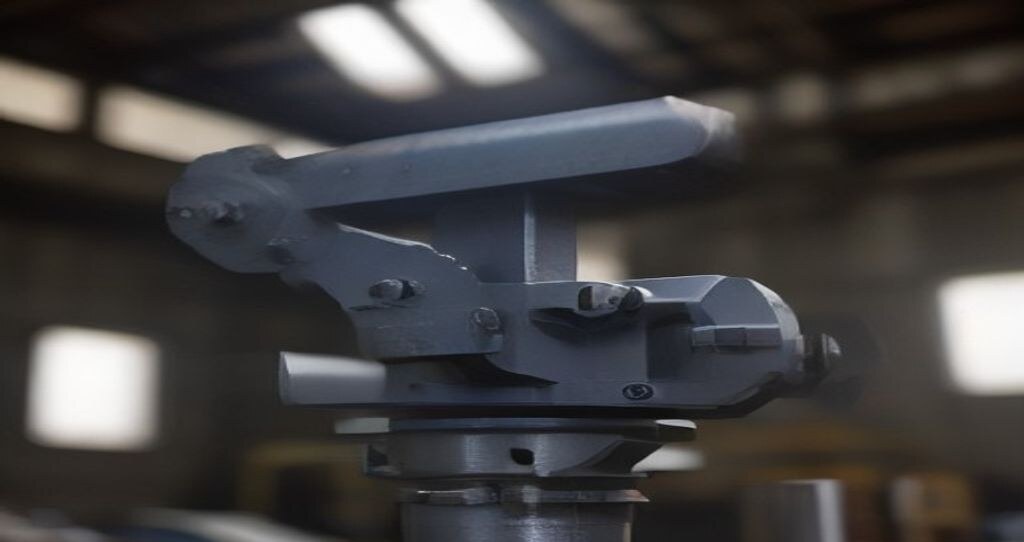
Everything downstream of the spindle — holders, chucks, vises, tombstones — decides how much of your spindle hour is actually cutting metal. When you evaluate CNC Vertical Machining Equipment, ask what interface the spindle taper uses and whether the rest of the shop can feed it. A machine that only accepts one holder style becomes an island.
CAT and BT tapers are the common 7/24 steep-taper options, usually 40 or 50 size. They are inexpensive and widely stocked, but they rely on pull studs and drawbar force, and they hold less rigidity at high spindle speeds than dual-contact designs. HSK is a hollow taper with face contact, which improves radial and axial stiffness at higher rpm. Big-plus adds a fourth contact point on the flange face, which helps on heavy roughing.
Holder choice pairs with chuck type. Shrink-fit chucks give excellent concentricity and rigidity because the tool is gripped around its full shank with no moving parts, but you need a heater and a cooling station, and changeover is slower. Hydraulic chucks run true, damp vibration well, and change tools in seconds, though they have a narrower clamping range and cost more per holder. Collet chucks remain the flexible default for drills and reamers.
Tool presetters are where setup time quietly disappears. Measuring length and diameter offline, then loading offsets into the control, removes the touch-off step from the machine. On a machine with a tool probe, presetting still pays off because you verify rather than discover. Shops running lights-out or unattended often preset every tool in the crib.
Workholding deserves the same scrutiny as the spindle. Consider these common choices on CNC Vertical Machining Equipment:
- Machine vises — fast for prismatic parts, but jaw lift and deflection limit accuracy on tall work.
- Tombstones — multiple faces per load, ideal for horizontal-style volume on a vertical spindle with a trunnion or indexer.
- Vacuum chucks — thin plate and non-ferrous parts that would distort under clamping pressure.
- Magnetic chucks — ferrous plate, fast load and unload, but no hold on aluminum or stainless.
- Zero-point systems — palletized receivers that let you swap a loaded fixture in seconds.
The setup workflow ties all of it together. Offline presetting, standard pallets, and repeatable zero-point receivers let an operator change over while the spindle keeps running. That is the difference between a machine that cuts 40 percent of the day and one that cuts 75 percent.
| Setup Element | Typical Gain | Best Fit |
|---|---|---|
| Offline tool presetting | Removes touch-off from cycle | Any repeat job |
| Zero-point pallets | Minutes instead of hours per changeover | High-mix, low-volume |
| Tombstone fixturing | More parts per load | Medium-volume families |
| Hydraulic or shrink holders | Fewer tool changes, better finish | Finishing and high-rpm work |
When you spec CNC Vertical Machining Equipment, buy the interface, the presetter, and the fixturing as one decision, not three. A capable spindle bolted to a single vise and a drawer of loose collets will underperform a modest machine with pallets and preset tools. Budget for holders and workholding in the same conversation as the machine itself.
Ask the builder or integrator what tooling package ships with CNC Vertical Machining Equipment and what it costs to bring the rest of the shop onto the same taper. Standardization across CNC Vertical Machining Equipment reduces holder inventory, simplifies presetting, and makes it practical to move a job between machines when one is down. That flexibility is worth more than a small step up in spindle speed. Request a test cut on the CNC Vertical Machining Equipment using material similar to your production stock. Compare delivery schedules, since the CNC Vertical Machining Equipment lead time affects your project timeline.
Inspection and Quality Control on Vertical Machines
Buying a vertical mill without thinking about how you will inspect the parts is a common and expensive mistake. On any serious piece of CNC Vertical Machining Equipment, inspection capability is not an add-on. It is part of the machine’s core value, and it decides how much scrap you generate and how much paperwork you can defend to a customer.
Start with in-process probing. A spindle-mounted touch probe lets the control find the part, set work offsets, and check critical features without an operator opening the door. On a well-specified machine, probing routines run between cutting cycles, so the operator catches a drifting dimension before the next tool even touches the part. That is the difference between adjusting one offset and scrapping a batch.
Tool breakage and tool condition monitoring matter just as much. Broken drills and chipped end mills cause far more scrap than most people expect. Many shops run spindle load monitoring, coolant pressure checks, or a simple probe pass after roughing to confirm the tool is intact. If your CNC Vertical Machining Equipment supports these functions in the control, a broken tool triggers an alarm and a stop instead of a run of ruined parts.
Post-machining inspection is where the real evidence lives. A coordinate measuring machine or an optical comparator gives you numbers, not opinions. For tight-tolerance work, a CMM with a documented program is standard. Optical systems handle small features, edge conditions, and parts too thin or flexible for a touch probe. Some shops also use structured-light scanning for full-surface comparison against the CAD model.
How you connect the two sides matters. If the machine probes in-process and the CMM checks the finished part, both need to agree on datums and tolerances. Mismatched setups cause phantom out-of-tolerance reports and wasted rework. A good rule is to define one inspection plan up front and make sure the probing routine on the CNC Vertical Machining Equipment follows the same datum scheme as the CMM program.
First-article inspection is the gate most regulated industries care about. Before production runs, a full dimensional report on the first part confirms the process is capable. Aerospace, medical, and automotive buyers typically want that FAI documented against the drawing, with ballooned dimensions and a clear pass or fail for each. Without it, the machine might be perfect and the shipment still gets rejected.
Documented SPC keeps the process honest after the FAI. Operators measure key characteristics at set intervals, log the readings, and watch control charts for drift. When a trend appears, you adjust the offset or the tool before parts go out of tolerance. On capable CNC Vertical Machining Equipment, this data is easy to collect and easy to trace. On a machine without probing or data output, it becomes a manual chore that people skip under pressure.
Traceability ties it all together. Material certs, tool lists, program revisions, inspection records, and operator sign-offs should point to one job. Aerospace and medical customers audit this. Automotive suppliers often require it under their quality agreements. If you cannot show which machine, which program, and which inspection data produced a part, you have a gap.
When you evaluate CNC Vertical Machining Equipment, ask how the machine supports probing, tool monitoring, and data output. Ask how inspection results move from the shop floor into your quality system. A machine that cuts well but cannot prove its work will cost you more than the price difference. For shops that need both capability and documentation, working with an experienced Leader in Cnc Machining Service China can shorten the learning curve. The right CNC Vertical Machining Equipment makes good parts, and it also makes those parts defensible. Review how the CNC Vertical Machining Equipment interfaces with your CAM post-processor before committing.
Cost, Throughput, and When to Outsource
The purchase price of a CNC Vertical Machining Equipment is the smallest number on the spreadsheet. Power, floor space, tooling, CAM seats, and the person standing in front of the control all add up, and they keep adding up every month after the machine is installed.
A 3-axis vertical mill drawing 15 to 30 kW under load needs a dedicated circuit, a transformer in some facilities, and air conditioning in the shop during summer. Add a chip conveyor, coolant system, and a rotary table, and the footprint climbs. Rent on that square footage is a real line item, especially in regions where industrial space is tight.
Tooling is the quiet cost. A modest library of CAT40 or BT40 holders, collets, face mills, and drills runs into thousands. Consumable inserts, carbide end mills, and taps are ongoing. Programming requires a CAM license, post-processor development, and someone who can verify a setup before the spindle turns.
Operator skill is where budgets break. A CNC Vertical Machining Equipment only performs as well as the person setting tools, dialing in work offsets, and reading chatter. Experienced machinists are scarce in many markets, and training a junior operator to run unattended lights-out production takes years, not weeks.
Throughput math matters more than hourly rate. A shop running one shift on a single vertical machine often reaches 40 to 60 percent spindle utilization once you subtract setup, inspection, and tool changes. Two shifts with a dedicated setup crew pushes that higher. Utilization, not machine speed, decides whether in-house work pays off.
| Cost Factor | In-House Vertical | Outsourced Shop |
|---|---|---|
| Capital | Machine, tooling, CAM, fixturing | None |
| Floor space | Fixed monthly overhead | None |
| Programming | Engineer or CAM programmer on payroll | Included in quote |
| Operator | Skilled machinist, benefits, training | Vendor’s responsibility |
| Flexibility | Limited to your machine’s envelope | Access to 5-axis, turning, EDM |
Complex geometry changes the calculus fast. A part with compound angles, deep pockets, or undercuts may need 5-axis capability, and the principles behind Multiaxis machining mean a single setup instead of four. A vertical 3-axis machine cannot produce that part without custom fixturing and multiple re-clamps.
That is where outsourcing makes sense. A precision machine shop with both 5-axis and turning capacity absorbs the setup complexity, the tooling inventory, and the operator risk. You send a drawing or a STEP file, receive a quote, and get parts. Prototypes through production volumes fit the same workflow, and inspection reports come with the shipment.
Outsourcing is not automatically cheaper per part. Low volumes with simple geometry often cost less on your own CNC Vertical Machining Equipment once the machine is paid off. The break-even sits around the point where setup hours, fixturing design, and secondary operations exceed the vendor’s quoted price.
A practical rule: if the part needs more than two setups, or if the annual volume is under a few hundred pieces with tight tolerances, get quotes before buying iron. If the part is a family of similar components with stable demand, in-house capacity on a proven CNC Vertical Machining Equipment usually wins.
Many buyers split the difference. They keep one or two vertical machines for routine work and route complex, low-volume, or overflow jobs to a partner shop. That keeps the internal CNC Vertical Machining Equipment busy with the work it does best.
When comparing quotes, ask what is included. Fixturing, first-article inspection, material certification, and finishing are frequently separate line items. A precision machine shop that handles all of them under one roof removes coordination work from your team.
The honest question is not whether you can afford a CNC Vertical Machining Equipment. It is whether you can keep it fed, staffed, and utilized for the next five years. If the answer is uncertain, outsourcing the first production run de-risks the decision and buys time to see real demand. Plan fixture mounting options, since the CNC Vertical Machining Equipment table size limits part envelope.
Specifying CNC Vertical Machining Equipment for Your Shop
Specifying CNC Vertical Machining Equipment is a checklist exercise, not a brand exercise. Get the six variables below on paper before you take a single quote, because every one of them changes travel, spindle, tooling, and price. A machine that fits one job family often fails the next one by 50 mm of travel or 2,000 rpm.
Start with the part envelope. Pull the largest three parts you expect over the next five years and add the fixture and tool clearance around them. A 40-taper VMC with 600 x 400 x 500 mm travels covers a lot of general work, but tall aerospace brackets and deep mold pockets eat Z faster than buyers expect.
Material mix drives spindle torque and thermal strategy more than anything else.
- Aluminum: high rpm, light torque, fast rapids, chip evacuation matters most
- Steel and stainless: torque at low rpm, rigid spindle taper, coolant through the tool
- Titanium and nickel alloys: heavy castings, high-pressure coolant, conservative feeds
- Plastics and composites: dust extraction, low cutting forces, careful workholding
Be honest about the mix. A shop that quotes 80 percent aluminum but takes stainless repair work will regret a high-speed spindle with modest torque. When you specify CNC Vertical Machining Equipment, match the spindle to the 20 percent of jobs that pay the bills, not the easiest ones.
Tolerance targets set the machine class. General machining at plus or minus 0.05 mm is comfortable on most mid-range VMCs with a good thermal compensation routine. Work that holds plus or minus 0.01 mm or tighter, or true position under 0.02 mm, needs a machine with linear scales, a temperature-controlled spindle, and a rigid structure that resists distortion during long cuts.
Batch size decides whether you buy a bare machine or a system. Prototype and low-volume work favors a fast setup, probing, and a large tool magazine so you stop touching offsets by hand. Production volumes above a few thousand parts per year usually justify pallet changers, a robot cell, or lights-out running. In many shops, labor availability is the real constraint, not spindle hours.
Automation options are worth pricing early, even if you buy later. Check whether the control supports pallet scheduling, whether the machine has the interface for a robot or bar feeder, and whether chip and coolant management can handle unattended hours. Retrofitting automation onto CNC Vertical Machining Equipment is possible, but it costs more than ordering the interface upfront.
| Variable | What to confirm |
|---|---|
| Envelope | Max part size plus fixture and tool clearance |
| Material | Spindle torque, taper, coolant pressure |
| Tolerance | Scales, thermal control, repeatability spec |
| Batch size | Setup speed, pallets, unattended capacity |
| Automation | Interfaces, chip handling, scheduling software |
| Service | Local support, spares, training, response time |
Service support is the variable buyers undervalue until a spindle fails on a Friday. Ask who covers your region, how fast spares ship, and whether the distributor stocks common wear items. Downtime on CNC Vertical Machining Equipment costs more than the price difference between two comparable machines.
Write the checklist, score each machine against it, and weigh the total cost of ownership over five years rather than the invoice price. If the volume case is still thin, run the first batch outside and let real demand decide.
GreatLight provides precision machining services covering 5-axis milling, turning, prototypes through production, and full quality inspection. Send your drawings and let our team match the right CNC Vertical Machining Equipment to your parts. Clarify who performs installation and alignment when the CNC Vertical Machining Equipment arrives on site.
Specifying CNC Vertical Machining Equipment With Confidence
The buying decision comes down to fit, not maximum specifications. A machine that matches your part envelope, material mix, and tolerance band will outproduce a larger, more expensive one that sits underused. Work through spindle speed and torque, axis count, workholding, and inspection support in that order when you specify CNC Vertical Machining Equipment.
Keep these practical checks in front of you before you sign:
- Confirm the spindle handles your hardest material at realistic depths of cut, not just on paper.
- Match travel and table size to your largest recurring part, plus fixture allowance.
- Verify the machine can hold your tolerance band across a full production run, not a single first article.
- Plan tooling and workholding before delivery, since setup workflow often limits throughput more than the spindle does.
- Decide early whether inspection happens in-house or at your supplier.
When volumes are low, geometries complex, or lead times tight, outsourcing can beat capital spending. A partner already running five-axis milling, turning, and prototypes through production absorbs the risk without tying up your floor space or cash. That is where GreatLight fits as a machining partner for teams that need parts, not another machine to manage.
Buying CNC Vertical Machining Equipment is a capacity decision, so treat it like one. Write down cycle times, tolerance ranges, and annual volumes first. Then request quotes against those numbers, or send drawings for a manufacturability review before you commit capital. Ask what preventive maintenance the CNC Vertical Machining Equipment needs and how long each service takes.