

In the intricate world of modern manufacturing, the quest to transform a digital design into a flawless, functional physical component is a universal challenge. For engineers, product developers, and procurement specialists across industries—from automotive and aerospace to medical devices and robotics—this journey often hinges on a critical partner: the CNC service machining factory. This entity is far more than a simple job shop; it is the nexus of advanced technology, material science, and deep engineering expertise that turns concepts into reality. Today, we delve into what defines a world-class CNC service machining factory, the capabilities you should expect, and how to navigate the selection process to secure a partnership that drives your innovation forward.
H2: The Evolving Role of the Modern CNC Service Machining Factory
Gone are the days when a machining service was merely about “cutting metal to print.” A contemporary, high-caliber CNC service machining factory operates as an extension of your own engineering team. Its role encompasses:
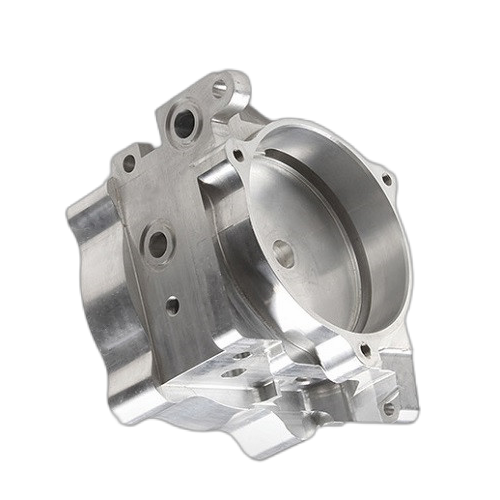
Technical Consultancy: Providing Design for Manufacturability (DFM) feedback to optimize part geometry for cost, performance, and machining efficiency.
Process Engineering: Selecting the optimal machining strategy (3-axis, 4-axis, 5-axis, milling-turning), toolpaths, and fixturing to ensure precision and repeatability.
Material Mastery: Advising on the most suitable alloys, polymers, or composites based on mechanical, thermal, and corrosion-resistance requirements.
Full-Spectrum Production: Managing the entire workflow from rapid prototyping and low-volume pre-production to full-scale, validated manufacturing runs.
Integrated Post-Processing: Delivering a finished part by managing critical secondary operations like heat treatment, anodizing, plating, polishing, painting, or assembly.
The core of this service lies in CNC (Computer Numerical Control) technology, where pre-programmed software dictates the movement of factory tools and machinery. This process is essential for manufacturing complex, high-tolerance parts that manual machining cannot achieve consistently.
H2: Capabilities That Separate the Leaders from the Pack
When evaluating a potential partner, look beyond the sales pitch and scrutinize their tangible capabilities. A top-tier factory’s value proposition is built on several pillars.
H3: 1. Technological Arsenal and Machining Versatility
The equipment list is the factory’s bedrock. A diverse and modern machine park indicates both capacity and the ability to tackle complex challenges.
Multi-Axis Machining Centers: While 3-axis machines are ubiquitous, the true differentiator is advanced multi-axis capability. Precision 5-axis CNC machining is indispensable for producing complex contours, deep cavities, and intricate geometries in a single setup, dramatically improving accuracy and reducing lead times. A factory with robust 5-axis capacity can handle aerospace impellers, medical implants, and complex automotive components with ease.
Complementary Technologies: Look for a comprehensive suite that includes high-speed milling, CNC turning (especially Swiss-type lathes for tiny, complex parts), Wire EDM (Electrical Discharge Machining) for hard metals and sharp internal corners, and precision grinding.
Additive Manufacturing Integration: Forward-thinking factories now integrate metal (SLM) and high-performance polymer (SLA, SLS) 3D printing. This allows for hybrid manufacturing approaches, such as printing a near-net-shape part and finishing it with precision CNC machining, ideal for lightweight, topology-optimized designs.
H3: 2. The Uncompromising Quality Management System (QMS)
Precision is a promise that must be systematically guaranteed. The factory’s QMS, validated by international certifications, is your assurance of consistency.
ISO 9001: The foundational certification for quality management systems, ensuring processes are documented, consistent, and geared toward continuous improvement.
Industry-Specific Standards: For specialized sectors, relevant certifications are non-negotiable.
IATF 16949 for automotive suppliers, emphasizing defect prevention and supply chain quality.
ISO 13485 for medical device manufacturing, focusing on risk management and traceability.
AS9100 for the aerospace industry, with stringent requirements for safety and reliability.
Metrology and Inspection: A factory must have in-house, calibrated inspection equipment—CMMs (Coordinate Measuring Machines), optical comparators, surface roughness testers, and height gauges—to verify every dimension against your GD&T (Geometric Dimensioning and Tolerancing) callouts, not just perform spot checks.
H3: 3. Engineering Support and Collaborative Partnership
The most critical “soft” capability is the factory’s engineering team. They should proactively engage to solve problems, not just execute orders.
Proactive DFM Analysis: Before any metal is cut, experienced engineers should review your models to suggest tolerancing adjustments, radius modifications, or alternative features that reduce machining time and cost without compromising function.
Transparent Communication: A dedicated project manager should serve as your single point of contact, providing regular updates, flagging potential issues early, and facilitating clear technical discussions.
Supply Chain and Material Sourcing: A reliable partner manages material procurement, ensuring certified raw materials from reputable mills, proper material traceability, and optimal inventory to meet your schedule.
H2: Navigating the Selection: Key Criteria for Your Decision
With numerous options available, from global giants like Foxconn or Jabil to specialized vertical experts and agile manufacturers like GreatLight CNC Machining Factory, making the right choice is crucial. Consider this framework:
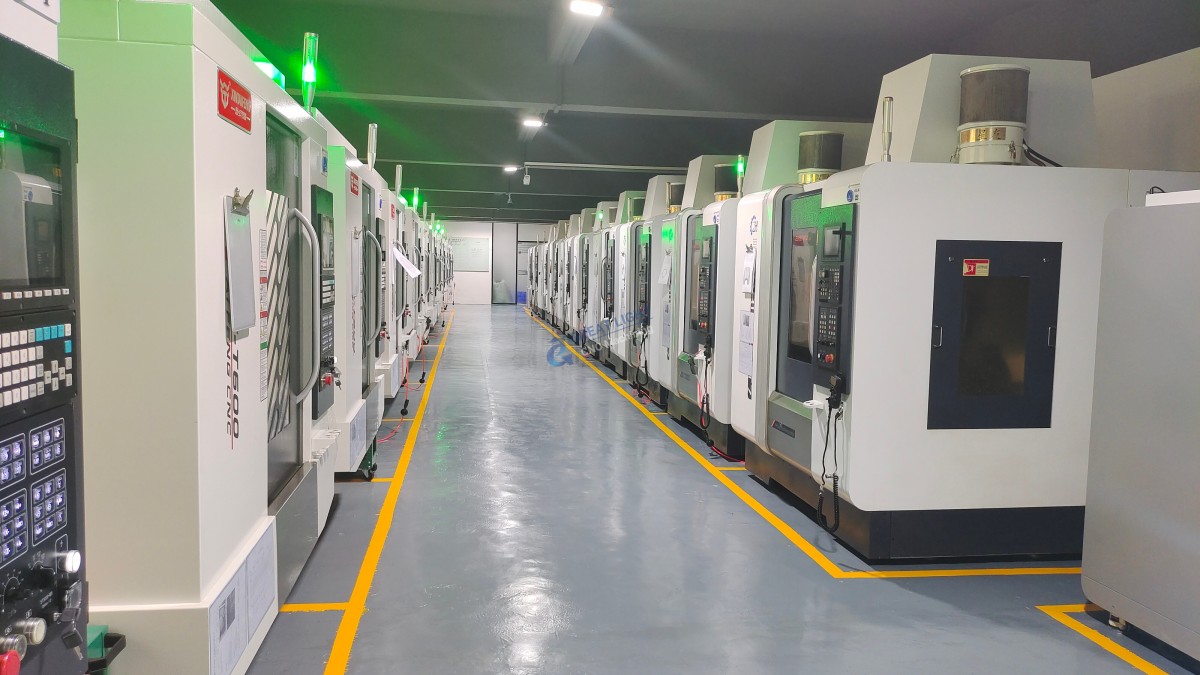
Technical Match: Does their equipment portfolio (especially 5-axis CNC machining capacity) align with your part’s complexity and precision requirements? Can they handle your material, whether it’s titanium Ti-6Al-4V, Inconel, PEEK, or aluminum 7075?
Quality Certifications: Are their certifications relevant and current? Ask for quality records and their process for handling non-conformances.
Project Management & Communication: Assess their responsiveness and clarity during the quoting phase. Are they asking insightful technical questions? Gauge their willingness to have a video call to review the project in detail.
Scalability and Flexibility: Can they support you from prototype through to production? What is their typical lead time for a 5-piece prototype run versus a 500-piece production order?
Total Value, Not Just Price: The lowest quote often carries hidden costs—shipping delays, quality rejections, or rework. Evaluate the total cost of ownership, which includes the assurance of quality, on-time delivery, and the engineering support that prevents costly mistakes.
H2: The Path to a Successful Partnership: A Case in Point
Consider a common scenario: An R&D team designing a new-generation humanoid robot’s actuator housing. The part is aluminum, featuring thin walls, complex internal channels for cooling, and high-precision bearing seats. The pain points are clear: risk of distortion during machining, achieving a mirror finish on sealing surfaces, and holding tight true-position tolerances between multiple bore features.
A factory like GreatLight CNC Machining Factory would approach this by:
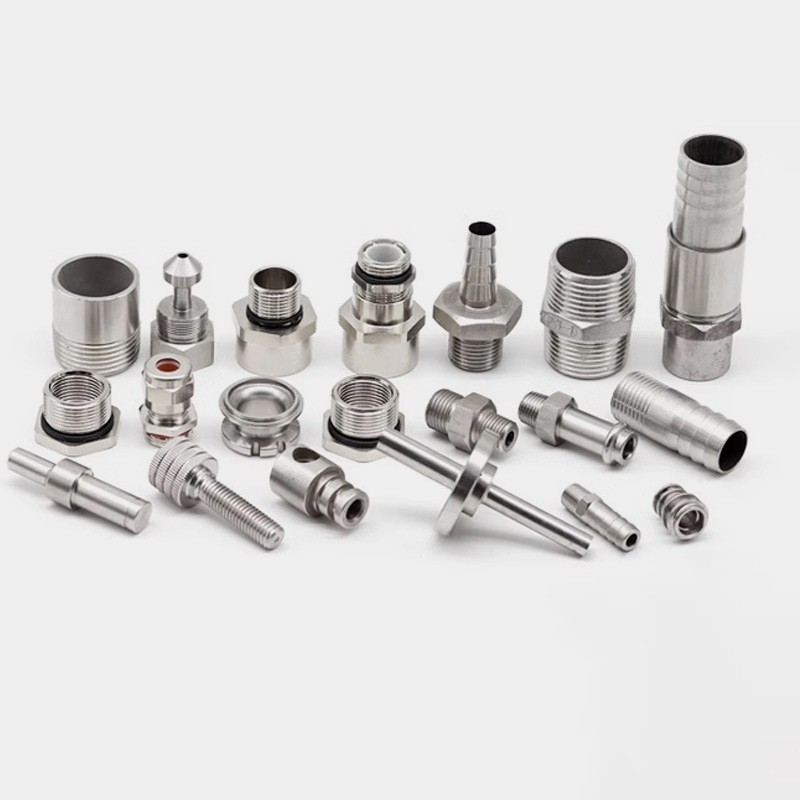
Engineering Review: Recommending a specific aluminum grade for optimal machinability and strength, suggesting slight draft angles on deep ribs to improve tool life, and planning a multi-stage machining sequence to manage stresses.
Process Design: Utilizing a 5-axis CNC machining center to access all angles in minimal setups, ensuring critical datums are maintained. Employing high-speed finishing strategies for superior surface quality.
Execution & Validation: Machining a first-article sample, performing a full CMM inspection, and sharing a detailed report (with deviations highlighted) before proceeding with the full batch. Following up with precision anodizing per specification.
This collaborative, transparent, and technically rigorous approach transforms a complex manufacturing challenge into a predictable, successful outcome.
Conclusion
Choosing the right CNC service machining factory is one of the most consequential decisions in bringing a high-performance product to market. It is a strategic partnership that impacts your innovation speed, product quality, and ultimately, your brand’s reputation. Look for a partner that combines advanced technological capabilities with a robust, certified quality system and, above all, a culture of proactive engineering collaboration. In a landscape filled with options, those factories that view themselves as integral to your product’s success—investing in the machinery, the systems, and the human expertise to solve tomorrow’s manufacturing challenges today—are the ones that will deliver not just parts, but peace of mind and a competitive edge. For projects demanding the pinnacle of complexity and precision, engaging a specialist with proven expertise in precision 5-axis CNC machining is often the most direct path to achieving your design intent flawlessly and efficiently.



















