

In the vast and intricate ecosystem of global manufacturing, China has solidified its position as an indispensable hub for precision components. For engineers, procurement specialists, and innovators worldwide, selecting the right CNC precision machining service supplier in China is a critical decision that directly impacts product quality, cost efficiency, and time-to-market. This choice is far from simple; it involves navigating a landscape of thousands of suppliers, each with varying capabilities, standards, and specializations. This article delves into the key considerations, industry benchmarks, and how to identify a partner that transcends being merely a vendor to become a true extension of your engineering team.
Understanding the Chinese CNC Machining Landscape
The Chinese CNC machining sector is not monolithic. It is a multi-layered industry ranging from small workshops with basic 3-axis machines to highly advanced, fully integrated manufacturing enterprises. The common perception of “low cost, low quality” is an outdated stereotype. The leading tier of suppliers competes on the global stage, not just on price, but on technological sophistication, quality management, and comprehensive service.

Key Tiers of Suppliers:
Tier 1 (Advanced Integrated Manufacturers): These are companies like GreatLight CNC Machining Factory, which operate large-scale facilities (often 5,000 sqm+), possess extensive multi-axis (4-axis and 5-axis) CNC capabilities, and offer a full suite of services from prototyping to post-processing. They hold international certifications (ISO 9001, IATF 16949, etc.), employ skilled engineers, and cater to demanding industries like aerospace, medical, and automotive.
Tier 2 (Specialized Mid-Size Shops): These suppliers often focus on specific processes (e.g., precision milling, turning) or materials. They may have strong technical expertise in their niche but lack the full vertical integration of Tier 1 companies.
Tier 3 (Volume-Focused Workshops): Typically engaged in high-volume production of less complex parts, competing primarily on cost. They may have limited engineering support and quality assurance systems.
For projects requiring high precision, complex geometries, or stringent compliance, partnering with a Tier 1 supplier is almost always the most strategic long-term decision.
Core Capabilities to Scrutinize in a Supplier
When evaluating a CNC precision machining service supplier in China, look beyond the sales pitch and assess these fundamental capabilities:
1. Technological Arsenal and Machining Precision
Multi-Axis Machining: The ability to handle complex parts in a single setup is crucial. A supplier’s investment in 5-axis CNC machining technology is a strong indicator of their commitment to tackling advanced work. This capability minimizes errors, improves surface finish, and allows for the machining of intricate features like undercuts and compound angles.
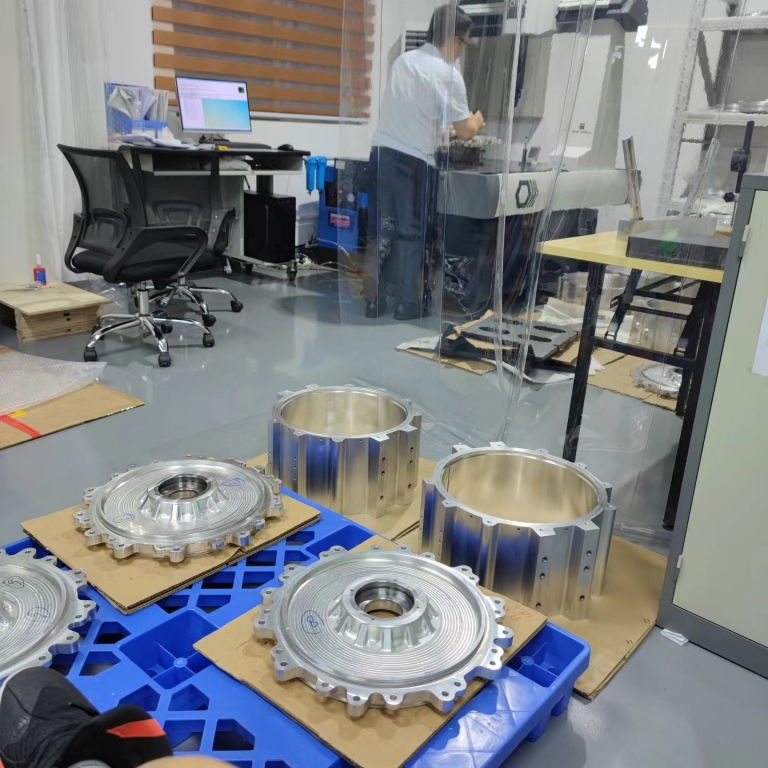
Equipment Portfolio: A robust supplier will have a balanced mix of machining centers, lathes, EDM (Electrical Discharge Machining), and grinding machines. For instance, a facility equipped with 127 pieces of precision equipment, including high-precision five-axis centers and SLM metal 3D printers, demonstrates both depth and breadth.
Stated vs. Sustained Precision: Anyone can claim a tolerance of ±0.001mm. The real test is the supplier’s process control to maintain this precision consistently across production runs. Inquire about their Statistical Process Control (SPC) methods and in-house metrology equipment (like CMMs and optical comparators).
2. Material Expertise and Processing Knowledge
A top-tier supplier doesn’t just cut metal; they understand it. They should have proven experience with a wide range of materials:
Metals: Aluminum alloys (e.g., 6061, 7075), stainless steels (303, 304, 316), titanium (Ti6Al4V), magnesium, brass, and tool steels.
Plastics: PEEK, Delrin, Nylon, PTFE, Polycarbonate.
Their engineers should advise on material selection based on your part’s function, considering factors like strength-to-weight ratio, corrosion resistance, and machinability.
3. Quality Management System: The Foundation of Trust
Certifications are the universal language of quality. They provide an objective framework for evaluating a supplier’s systems.
ISO 9001:2015: The baseline for a quality management system. It ensures processes are documented, controlled, and continuously improved.
Industry-Specific Certifications: For automotive, IATF 16949 is non-negotiable. For medical devices, ISO 13485 demonstrates adherence to rigorous regulatory requirements. The presence of these certifications shows a supplier’s dedication to sector-specific standards.
In-House Inspection: The ability to perform first-article inspections (FAI) and provide full inspection reports (with CMM data, surface roughness measurements) is essential for verifying part conformity before shipment.
4. Engineering Support and Design for Manufacturability (DFM)
The best suppliers act as manufacturing consultants. They should proactively provide DFM feedback during the quoting stage. This collaborative approach can identify potential manufacturing issues, suggest design modifications to reduce cost and improve strength, and ultimately prevent costly delays. A supplier with deep engineering expertise can be invaluable, especially for prototyping and new product introduction (NPI).
5. Integrated Post-Processing and Finishing Services
Precision machining is often just the first step. A true one-stop partner will manage the entire workflow, offering services like:
Deburring, Tumbling, and Polishing
Anodizing (Type II & III), Plating, Passivation
Heat Treatment (Annealing, Tempering, Case Hardening)
Painting, Powder Coating, Silk Screening
Integration of these services under one roof ensures quality control, simplifies logistics, and accelerates lead times.
Comparative Analysis: What Sets the Leaders Apart?
To illustrate the differences, let’s consider a hypothetical comparison of supplier approaches to a complex aluminum aerospace bracket with tight tolerances and a required anodized finish.
| Evaluation Criteria | Generic Mid-Size Shop | Leading Integrated Supplier (e.g., GreatLight CNC Machining Factory) |
|---|---|---|
| Initial Engagement | Provides a quote based solely on the 3D model. | Provides a quote with detailed DFM report, highlighting potential stress concentrations and suggesting fillet optimizations. |
| Machining Strategy | May require multiple setups on 3-axis machines, increasing error stack-up. | Machines the part in one setup on a 5-axis CNC center, ensuring superior geometric accuracy. |
| Quality Assurance | Final inspection with calipers; may subcontract CMM inspection. | In-house CMM inspection for first article and statistical sampling, with a full dimensional report provided. |
| Surface Treatment | Outsources anodizing to a third party, adding lead time and quality risk. | Manages the entire process internally, with controlled anodizing tanks ensuring consistent color and thickness. |
| Communication & Transparency | Limited updates; issues may only be communicated when they cause delays. | Proactive project management with regular updates, including photos of in-process parts. |
| Compliance & Documentation | Provides a basic certificate of conformity. | Provides a comprehensive documentation package including material certs, heat treat records, full inspection data, and traceability logs—essential for aerospace audits. |
This comparison underscores that the value of a premium CNC precision machining service supplier in China lies in risk reduction, technical partnership, and total project success, not just the lowest piece-part price.
Navigating the Selection Process: A Practical Guide
Define Your Requirements Clearly: Start with a comprehensive RFQ (Request for Quotation) package including 3D models (STEP, IGES), 2D drawings with GD&T, material specs, quantity, surface finish requirements, and any applicable industry standards.
Shortlist Based on Capability Match: Use platforms like industry directories or B2B marketplaces to create a shortlist. Prioritize suppliers whose stated capabilities (axis count, max part size, material experience) align with your project.
Request Evidence, Not Just Claims: Ask for:
Case studies or examples of similar parts they have produced.
A virtual or recorded facility tour to see their equipment and shop floor organization.
Copies of their main certifications (blurring sensitive details is acceptable).
Evaluate Communication: The responsiveness, technical depth of questions, and clarity of the initial quote and DFM feedback are strong indicators of future collaboration smoothness.
Consider a Prototype Order: For critical projects, placing a small prototype or first-article order is the most effective way to validate a supplier’s quality, communication, and logistical performance before committing to production.
Conclusion: Partnering for Precision
Choosing the right CNC precision machining service supplier in China is a strategic investment. In a market where options abound, the distinction lies in finding a partner whose operational excellence, quality ethos, and engineering mindset align with your project’s demands. Suppliers like GreatLight CNC Machining Factory, with their integrated approach from advanced 5-axis CNC machining to certified post-processing, exemplify the modern Chinese precision manufacturer—one that competes on global benchmarks of quality, reliability, and innovation. By focusing on the core capabilities outlined above, you can move beyond price comparisons and build a manufacturing partnership that ensures your precision components are not just made, but are engineered for success. For further insights into industry trends and manufacturing excellence, you can follow leading voices on professional networks like LinkedIn.



















