GreatLight CNC Machining Factory logo
CNC Machining
Rapid Prototyping
Materials
Industries
News
About GL

Get Instant Quote

Bronze Prototyping

CNC Machining Bronze for Precision Prototypes

We machine tin, aluminum and manganese bronze into bushings, bearings, valve bodies and prototype hardware. Tolerances to ±0.005 mm, finishes from Ra 1.6 to Ra 0.2 μm. Upload a STEP file and we return a DFM review with your quote.

±0.005 mm tolerance16 five-axis centersFrom one part upward3-5 day shipping
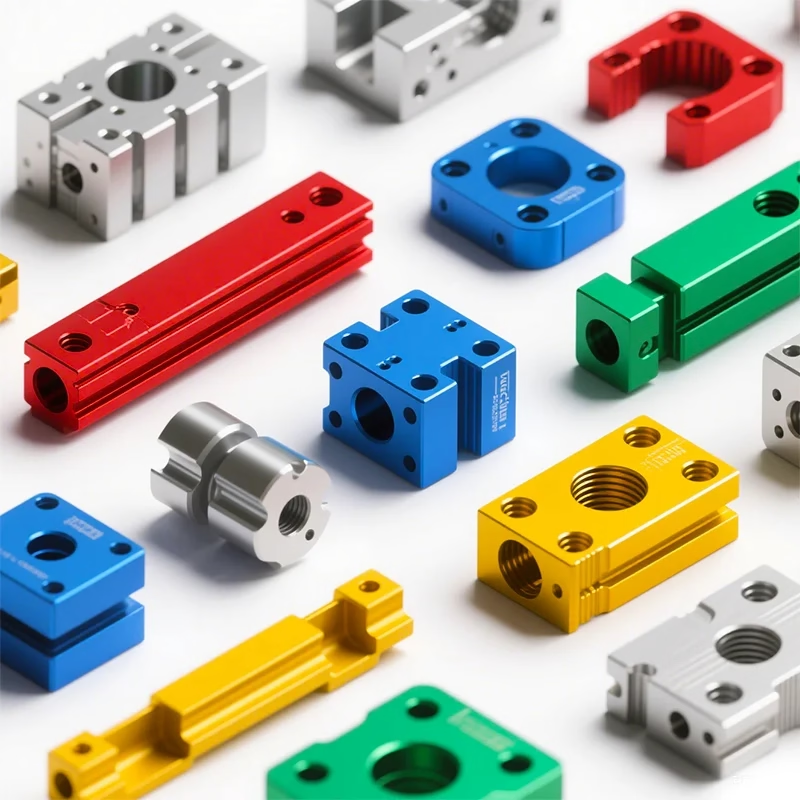
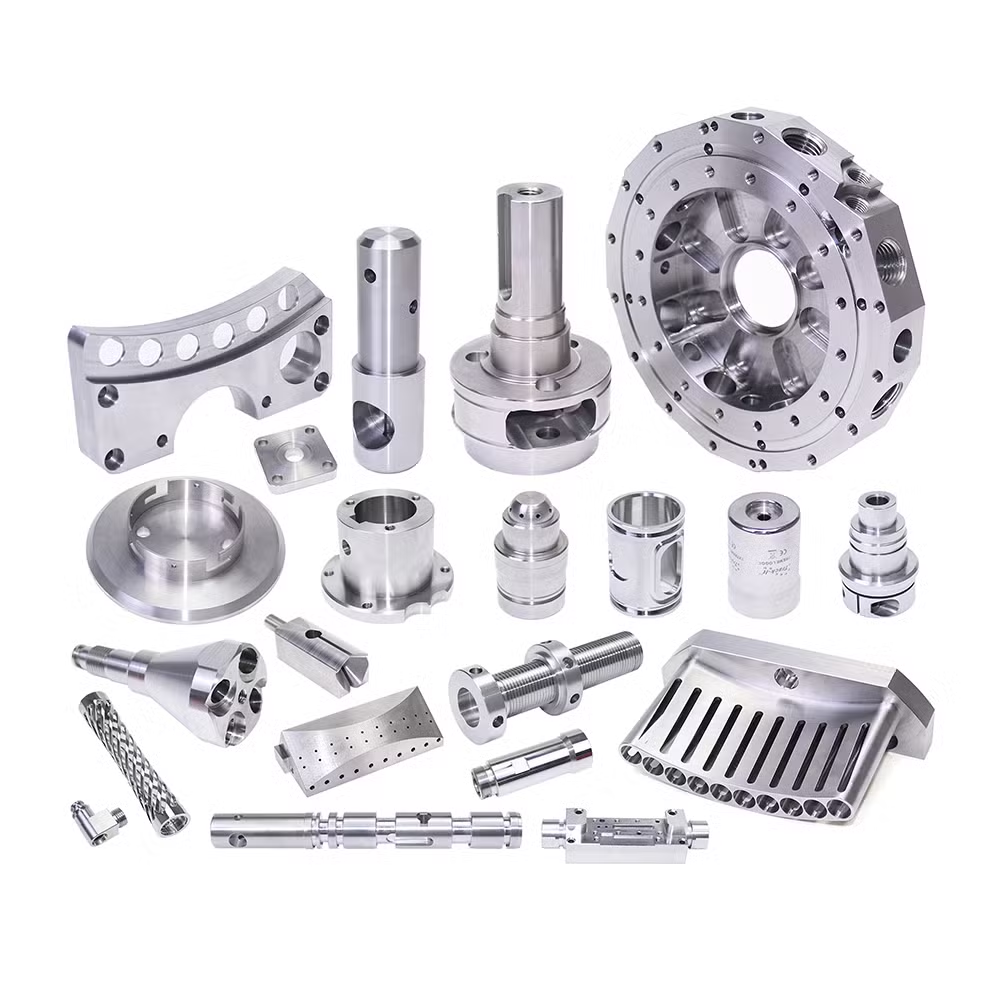
Aerospace CNC Machining Prototype High Accuracy Custom
127High-precision CNC machines
±0.005 mmAchievable tolerance
99.99%Qualification rate
15 yearsMachining bronze and copper alloys
Common Problems

What goes wrong when bronze is machined like steel

Bronze cuts differently from aluminum and steel. These are the failures we see most often on first-article parts.

01

Tools wear out in the middle of a run

Bronze is abrasive. Free-machining grades like C36000 cut clean, but hard tin bronzes such as C93200 or C95400 will dull carbide in minutes if the tool is run dry or at steel cutting speeds. A broken tool mid-run means scrapped parts and a re-machined setup.

02

The bearing ID closes up after machining

Bronze has high thermal expansion. If a bushing is bored hot and measured cold, the bore shrinks after the part cools. The fit is lost. We rough, cool, then finish-bore to hold ±0.005 mm on diameters that actually matter.

03

Threads tear instead of cutting

Phosphor bronze and manganese bronze are gummy. Standard taps grab and peel material instead of shearing it. Rolled threads and spiral-flute taps solve most of this, but the tap selection has to be made before the program is written.

04

The prototype fits, the production run does not

A single prototype machined from bar stock can pass inspection, then fail when the same part is cast and finish-machined. Starting stock condition, grain direction and cooling rate all shift the final dimensions. We plan for that before the first cut.

How We Machine Bronze

Cutting parameters chosen for the alloy, not for steel

Bronze is not one material. Tin, aluminum, manganese and silicon bronze each need their own speeds, feeds and tool geometry.

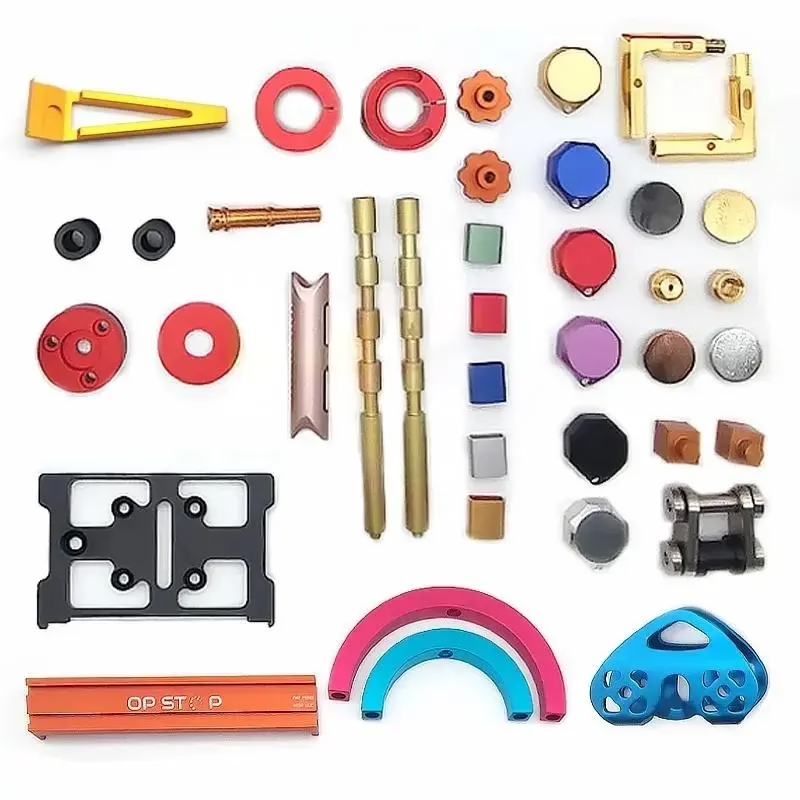
precision-custom-machining-solutions-from-prototype-to-production
Alloy-Specific Parameters

Speeds and feeds matched to the grade

Tin bronze with a high lead content, such as C93200, machines at cutting speeds in the 150 to 250 m/min range with uncoated carbide. Aluminum bronze C95400 is harder and gummier, so we drop to 80 to 120 m/min and take lighter depths of cut. Manganese bronze C86300 work-hardens at the surface if the tool rubs, so feed per tooth stays high enough to cut under the hardened layer.

The tool path matters as much as the numbers. We use climb milling on outer profiles to push the chip out of the cut and reduce built-up edge. Boring bars get positive rake geometry so the tool shears bronze instead of pushing it. On thin-wall bushings, we leave a roughing allowance of 0.5 mm and finish in two passes to control deflection.

  • 1
    C93200 tin bronze150-250 m/min, uncoated carbide, climb mill
  • 2
    C95400 aluminum bronze80-120 m/min, positive rake, light depth of cut
  • 3
    C86300 manganese bronzeHigh feed per tooth, no dwell in the cut

Get Instant Quote

Aerospace CNC Machining Prototype Service Savannah
Thermal Control

Keeping the part cool so the bore stays round

Bronze expands about 18 × 10⁻⁶ per °C. On a Ø80 mm bearing bore, a 10 °C temperature swing moves the diameter by roughly 0.014 mm. That is nearly three times our tolerance. We rough with high-pressure coolant, let the part return to room temperature, then take the finish pass and measure on the machine while the part is still clamped.

For deep bores and long bushings, we use through-tool coolant and peck cycles to clear chips. Bronze chips are stringy and abrasive. Recutting them scratches the finished surface and loads the edge. Air blast plus minimal lubrication works for most turning operations. Flood coolant is reserved for deep-hole drilling and tapping.

  • 1
    Rough, cool, then finishThermal growth removed before the final pass
  • 2
    Through-tool coolantFor bores deeper than 5 × diameter
  • 3
    On-machine measurementVerify the bore before unclamping

Get Instant Quote

Grade Selection

Which bronze grade fits your part

Match the alloy to the load, the environment and the feature you need to machine.

GradeTypical useMachinabilityWatch out for
C93200 tin bronzeSleeve bearings, bushingsGoodLead content limits some applications
C95400 aluminum bronzeValve seats, worm gearsModerateWork-hardens, gummy chips
C86300 manganese bronzeHeavy-load gears, wear platesModerateHigh tensile, abrasive to tooling
C65500 silicon bronzeCorrosion-resistant hardwareGoodLower strength than aluminum bronze
C17200 beryllium copperSpring contacts, non-sparking toolsGoodDust control required, higher cost
What We Do

Bronze machining services from prototype to low-volume production

01

5-Axis CNC Machining

Complex bronze housings, impellers and manifolds machined in one setup. 16 simultaneous 5-axis centers handle contoured surfaces and angled ports without re-fixturing.

02

CNC Turning

Bushings, sleeves, valve stems and threaded fittings turned on high-speed lathes. Live tooling adds cross-drilled holes and milled flats in the same cycle.

03

CNC Milling

Plates, brackets and covers with pockets, slots and drilled patterns. 3-axis and 4-axis mills cover flat and prismatic bronze parts.

04

Rapid Prototyping

From one part upward. Bar stock or near-net forgings machined to print, inspected and shipped in 3-5 days for form-fit-function testing.

05

Surface Finishing

Bead blasting, tumbling, brushing and polishing. Electroless nickel and silver plating for conductivity or corrosion resistance on bronze contacts.

06

Inspection and Reporting

100% inspection before shipment. Raw material certificates, in-process records and final dimensional reports on request.

Capabilities

Machining envelope and tolerances

Numbers from our equipment list, not marketing estimates.

ParameterCapabilityNotes
Maximum part size4,000 mmLarger travels on specific machines
Tolerance±0.005 mm±0.0002 in on critical diameters
Surface finishRa 0.2-0.8 μmFine finish on bearing bores
As-machined finishRa 1.6-3.2 μmStandard milled and turned surfaces
Minimum orderOne partNo minimum order quantity
Lead time3-5 daysAfter drawing approval
Why GreatLight

What we bring to a bronze job

15Y

Bronze experience since 2011

Fifteen years cutting copper alloys. We know which grades need roll taps, which need positive rake, and which will move after unclamping.

127

Machines under one roof

127 high-precision CNC machines across three plants. No subcontracting the turning operation to a shop that has never cut bronze.

±0.005

Tolerance held on the part

We measure the feature that matters, not just the outside envelope. Bearing bores and seal diameters get individual attention.

99.99%

Qualification rate

Parts that pass first inspection. When a bronze part fails, we tell you why and how the next run will differ.

ISO

Four management systems

ISO 9001:2015, IATF 16949:2016, ISO 13485:2016 and ISO 27001:2022 cover quality, automotive, medical and data security.

12h

Quote and DFM in half a day

Send a STEP file and a drawing. You get a quotation and a manufacturability review within 12 hours.

7,600 m²Manufacturing space
150Technicians
3Wholly-owned plants
ISO 27001Confidential file handling
Applications

Bronze parts we machine and what the industry requires

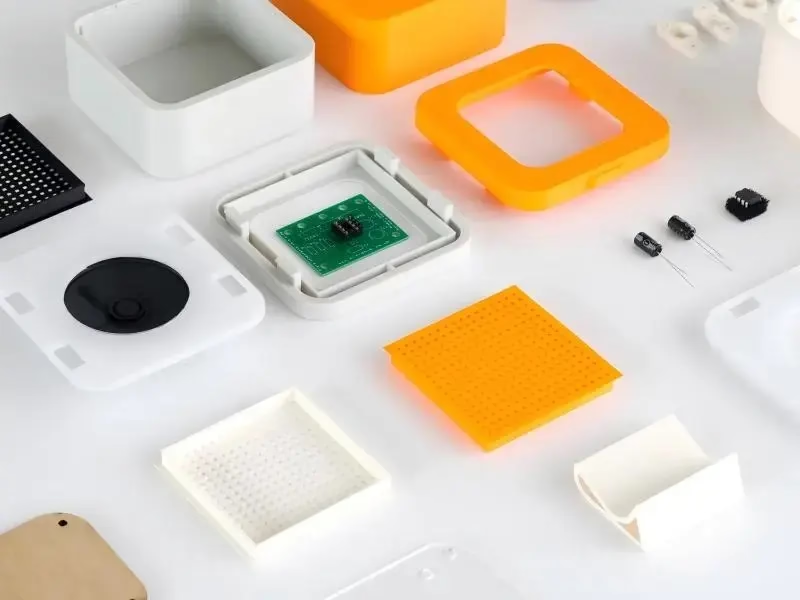
electronic-product-housing-prototype

Electronics

Bronze shielding cans, contact pins and heat-spreader inserts. Requirements: tight flatness, plated surfaces, no burrs on mating faces.

  • Ra 0.8-1.6 μm
  • 100% inspection
  • Electroless nickel
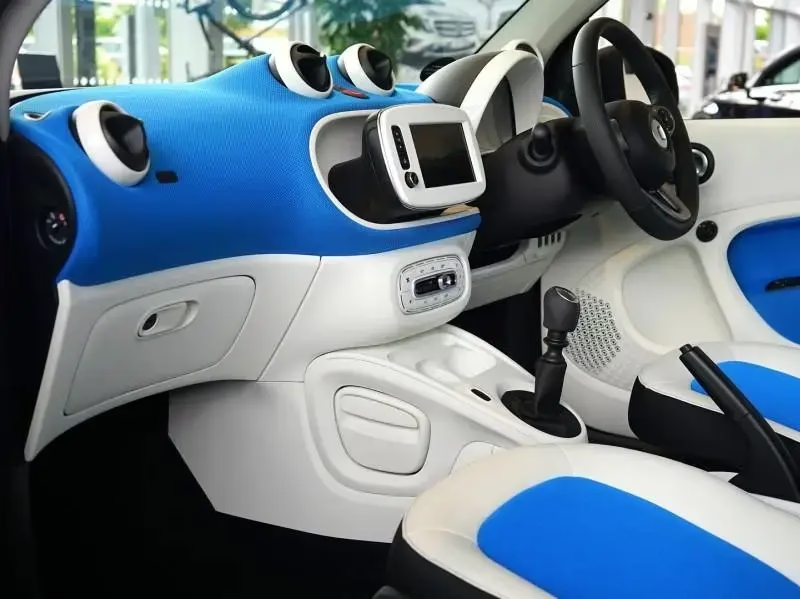
automotive-prototyping-manufacturing

Automotive and EV

Worm gears, synchronizer rings and bushing prototypes. Requirements: dimensional repeatability across the run and IATF-documented inspection.

  • ±0.005 mm
  • IATF 16949
  • 3-5 day shipping
manufacturing-applications1

Industrial Machinery

Wear plates, valve bodies and pump components. Requirements: abrasion resistance, straight bores and controlled surface finish on sealing faces.

  • 4,000 mm max
  • Ra 0.2-0.8 μm
  • Material certs
low volume manufacturing

Low-Volume Production

Bridge tooling and pilot runs from one part to 10,000+. Requirements: consistent setup, documented process, no mid-run tool failures.

  • One part upward
  • 99.99% qualification
  • Process records
FAQs

Questions engineers ask about bronze machining

Which bronze grades do you machine most often?

C93200 tin bronze for bushings and sleeve bearings, C95400 aluminum bronze for valve seats and worm gears, and C86300 manganese bronze for high-load wear parts.

We also run C65500 silicon bronze for corrosion-resistant hardware and C17200 beryllium copper for spring contacts. If your drawing specifies a grade we have not listed, send it and we will confirm before quoting.

Can you hold ±0.005 mm on a bronze bearing bore?

Yes, on bores that are not extremely thin-walled. The limiting factor is thermal growth, not the machine. We rough the bore, let the part cool, then finish-bore and measure on the machine before unclamping.

For wall thickness under 2 mm, we discuss the tolerance with you first. It may be more practical to finish-bore after the part is pressed into its housing.

How do you keep bronze threads from tearing?

We choose the tap before writing the program. Spiral-flute taps and roll-form taps work for most phosphor and manganese bronzes. Cutting taps with straight flutes are used only on free-machining grades.

Thread milling is another option for large diameters. It produces a cleaner thread and avoids the torque spike that breaks taps in gummy bronze.

Does the lead in C93200 matter for my application?

It matters for food-contact, potable-water and some medical applications. Lead is added to improve machinability, and it is why C93200 cuts so cleanly.

If lead is restricted, we can machine lead-free alternatives such as C89833 or bismuth-modified bronze. Machinability drops, so expect different feeds and possibly a longer cycle.

What surface finish can you achieve on bronze?

Standard as-machined surfaces run Ra 1.6-3.2 μm. Bearing bores and seal faces can be finished to Ra 0.8-1.6 μm. Fine finishing reaches Ra 0.2-0.8 μm on specific features.

Bronze polishes well, but it also scratches easily. If the part will be handled before assembly, we can add a protective wrap or discuss a light tumble finish.

Do you offer material certificates for bronze?

Yes. We can supply mill certificates showing the heat number, chemical composition and mechanical properties of the starting stock.

Inspection reports covering critical dimensions are available on request. Tell us which features matter and we will document those.

What is the lead time for a bronze prototype?

Quotation and DFM analysis come back within 12 hours of receiving a complete STEP file and 2D drawing. Production can start within 24 hours after you approve the quote.

Standard parts ship in 3-5 days. A part with complex 5-axis features or a required plating operation may take longer, and we will say so in the quote.

Can you machine bronze parts from a casting or forging?

Yes. We machine near-net castings and forgings when the geometry or the production volume makes bar stock uneconomical.

Send the casting drawing and the finish-machined drawing. We will confirm the stock allowance and flag any areas where the as-cast surface may not clean up.

Send your bronze part for a quote

Upload a STEP file and a 2D drawing. You get a quotation and a free DFM analysis within 12 hours, with no minimum order quantity.

12-hour quote100% inspectionNo minimum orderNDA on request

Trusted by engineers and manufacturers worldwide

Tesla Ford Motor Company BYD Auto Denso Magna International Boeing Airbus Medtronic KUKA FANUC