GreatLight CNC Machining Factory logo
CNC Machining
Rapid Prototyping
Materials
Industries
News
About GL

Get Instant Quote

Truck Bumper Components

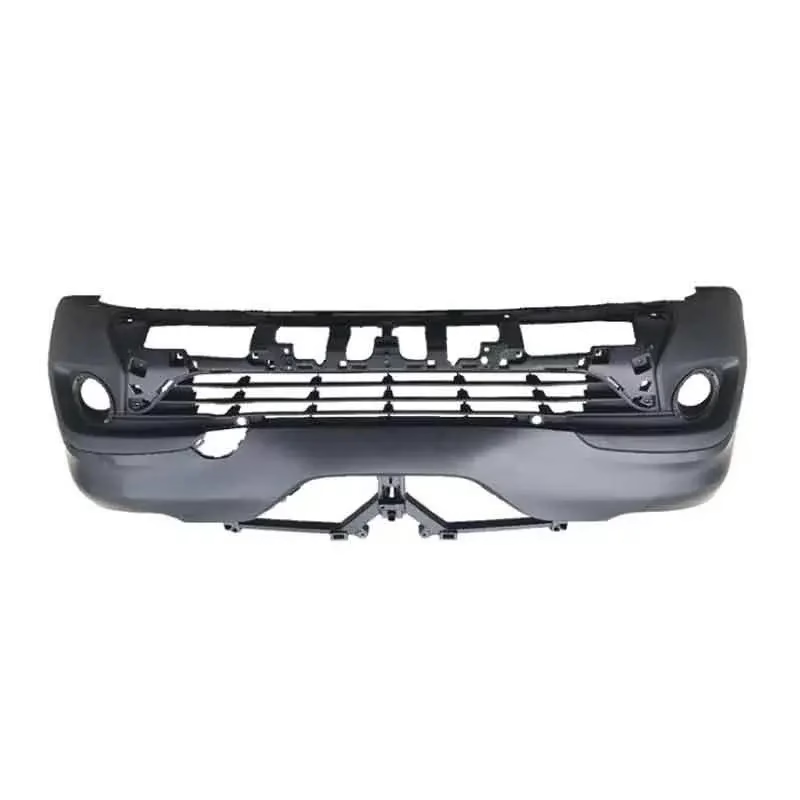
CNC Machined Truck Bumper Components

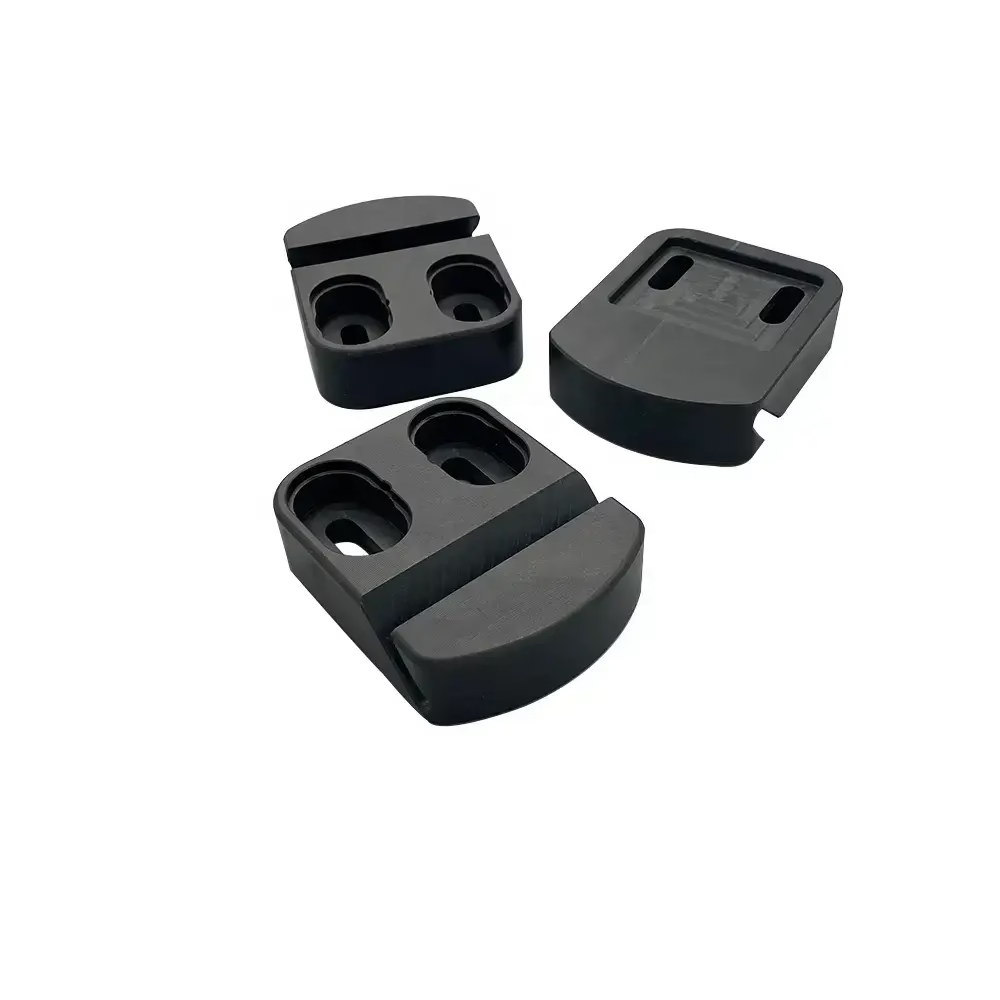
Brackets, center bases, tow hook mounts and sensor housings machined from aluminum and steel. 16 simultaneous 5-axis centers hold ±0.005 mm on long parts, so bumper gaps stay consistent across the run.

±0.005 mm tolerance4,000 mm max lengthIATF 16949:2016No MOQ12-hour DFM quote100% inspection
Precision CNC Machined Components Suppliers
16Simultaneous 5-axis centers
±0.005 mmAchievable tolerance
3–5 daysTypical part shipping
99.99%Qualification rate
Where bumper programs go wrong

Four failures that show up after tooling is cut

Most bumper component problems start long before assembly. They start with a process that cannot hold position on a long, thin part.

01

Mounting holes drift out of position

A bumper beam bracket with three hole patterns on one face needs one setup. Refixturing between operations stacks positional error, and the bracket will not sit flush on the frame horn. You find out at assembly, not at incoming inspection.

02

Thin walls warp during machining

Aluminum end caps and sensor housings often have 2–3 mm walls. Clamp pressure and heat move the part. A few tenths of distortion is enough to break the seal on a radar bracket or open a visible gap at the bumper-to-fender joint.

03

Cosmetic faces get scratched in handling

Visible brackets and center bases cannot carry dents, tool marks or burrs. If the finishing step is bolted on at the end instead of planned with the machining, parts arrive looking like they were made in a hurry. Rejects cost a full production cycle.

04

Late design changes kill the schedule

A bracket revision after the first prototype is normal. What hurts is waiting a week for a re-quote, then another two weeks for parts. Prototype-to-production programs stall when the shop cannot turn a revised model around in days.

How we hold bumper geometry

One setup, one coordinate system, one inspection report

Long bumper components reward a shop that plans the whole part before the first cut.

products-that-can-only-be-made-with-5-axis-cnc-machining
5-axis positioning

Multi-face features in a single setup

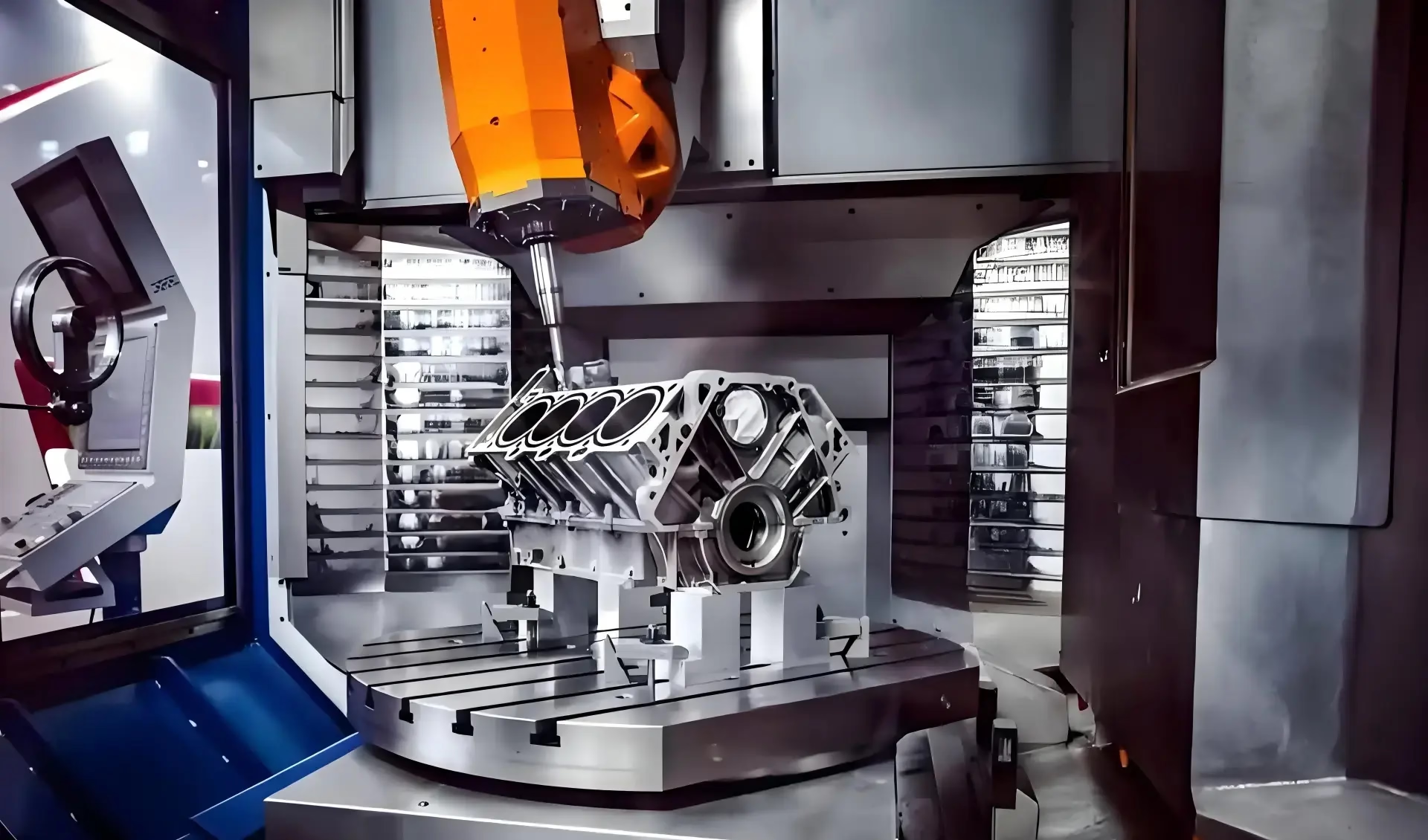
A bumper center base usually carries mounting holes on the rear face, tow hook threads on the front, and a locating boss on top. Machining each face in a separate operation means three chances to mislocate the part. On our 16 simultaneous 5-axis centers, all faces come off one fixture and one coordinate system, so the hole-to-boss relationship stays inside ±0.005 mm.

For long components we use the 4,000 × 400 × 150 mm travel machines. A bumper beam bracket that would not fit a standard 40-taper mill gets machined in one pass instead of being spliced or welded. Fewer joints means fewer places for a fatigue crack to start.

  • 1
    One-fixture strategyAll critical faces referenced to the same datum, so hole patterns stay concentric with the mounting boss.
  • 2
    Ø400 mm rotary tableContinuous 5-axis motion for curved bumper profiles and blended corner radii.
  • 3
    In-process probingDatum check before the finish pass, so a shifted blank is caught before the part is finished.
Automotive-front-bumper-plastic-rapid-prototyping-jpg
Material and finish

Pick the alloy for the load case, not the price list

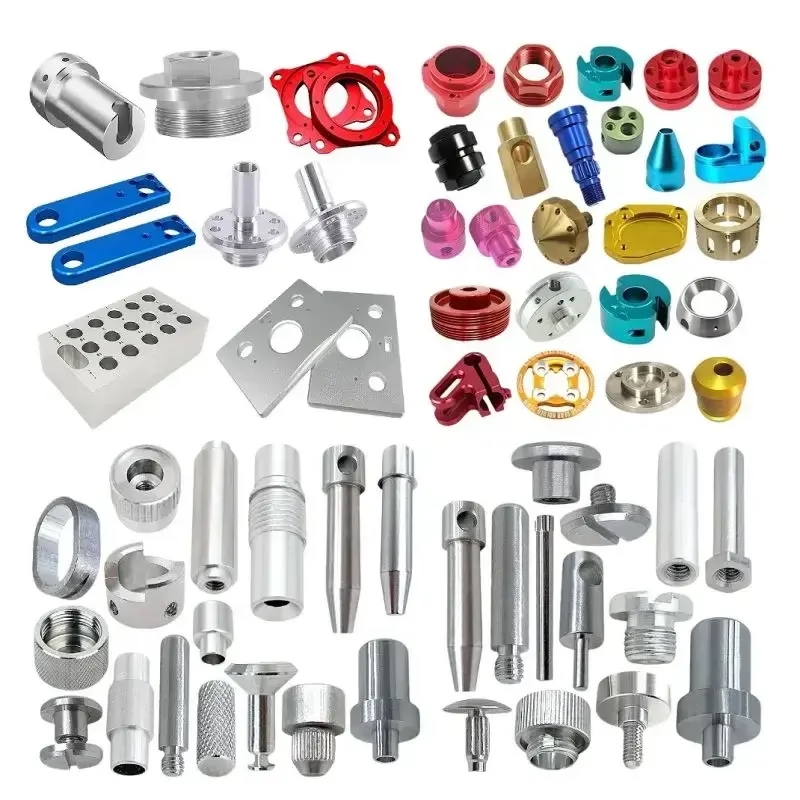
Bumper brackets are not all the same job. A sensor housing wants 6061-T6 for stable machining and good anodizing. A tow hook mount that sees recovery loads is better in 7075 or 4140 steel. We machine 6061, 6061-T6, 2024, 5052, 5083, 6063, 6082, 7075 and ADC12 in aluminum, plus 303, 304, 316L, 17-4PH, 1018, 1045, 4130 and 4140 in steel.

Finishing is quoted with the part, not added later. Anodizing in clear, color or hardcoat gives a durable surface on aluminum brackets. Powder coating and black oxide suit steel. Bead blasting or brushing sets the cosmetic texture on visible faces. Laser marking for part numbers uses a minimum character height of 1.5 mm so the mark stays legible after coating.

  • 1
    AnodizingClear, color, hardcoat or conductive for aluminum bumper brackets and housings.
  • 2
    Plating and coatingElectroless nickel, zinc, silver, gold, powder coat and black oxide.
  • 3
    Cosmetic prepBead blasting, tumbling, brushing and polishing before the final finish.

Get Instant Quote

Process selection

Which process fits which bumper component

Use this to decide before requesting a quote. Wrong process choice is the most expensive mistake in a bumper program.

ComponentRecommended processWhy
Center base, thick section5-axis milling from billetHolds multi-face hole patterns in one setup
Long beam bracket5-axis on 4,000 mm travelSingle-piece part, no welded splice
Thin-wall sensor housing3-axis + fixture with light clampingLess distortion, better wall control
Round tow hook insertMill-turn centerThread and shank concentric in one pass
Early-stage concept partRapid prototypingForm and fit check before tooling
High-volume bracketDie casting + CNC finishingLower piece cost once volume is stable
Capabilities

What we machine for bumper and front-end assemblies

One shop for the metal parts around the bumper. Send the whole assembly or a single bracket.

01

5-Axis CNC Machining

Bumper center bases, beam brackets and corner mounts machined from billet with all critical faces referenced to one datum. Up to 4,000 mm part length.

02

4-Axis and 3-Axis Milling

Flat plates, cover brackets and reinforcement plates. Good choice when the part has features on two faces or fewer and volume is moderate.

03

CNC Turning and Mill-Turn

Tow hook inserts, threaded bosses, spacers and bushings. Mill-turn centers cut the thread and the shank without a second chucking.

04

Rapid Prototyping

Fit-check parts for a new bumper profile. Useful before committing to a production fixture or a die-cast tool.

05

Sheet Metal Fabrication

Brackets, backing plates and heat shields formed and finished to match the machined components in the same assembly.

06

Surface Finishing

Anodizing, plating, powder coating, bead blasting and laser marking. Quoted together with the machining so the part ships ready to install.

Order scope

What is included from quote to shipment

ItemDetailNotes
Quantity range1 prototype to 10,000+ partsNo minimum order quantity
Quote turnaroundWithin 12 hoursIncludes free DFM analysis
Production startWithin 24 hours of approvalMaterial dependent
ShippingParts ship in 3–5 daysTypical, not a guarantee
Inspection100% before shipmentReports on request
ConfidentialitySecure uploads, NDA on requestYour drawings stay yours
Why engineers send us bumper work

Capacity, tolerance and paperwork that hold up

±0.005 mm

Tolerance we quote, not the best case

Bumper brackets are quoted at ±0.005 mm (±0.0002 in) on critical features. We do not advertise a number we cannot repeat across a run.

16

Simultaneous 5-axis centers

Part of 127 high-precision CNC machines across three wholly-owned plants. Multi-face bumper components do not queue behind a single machine.

4,000 mm

Maximum processing length

Long beam brackets and full-width reinforcement plates fit the 4,000 × 400 × 150 mm travel machines. No splice, no weld.

15Y

Machining since 2011

Fifteen years of production work in Dongguan and Singapore. 150 technicians across 7,600 m² of manufacturing space.

IATF

Automotive quality system

IATF 16949:2016 for automotive parts, ISO 9001:2015, ISO 13485:2016 and ISO 27001:2022 for data handling.

<2%

Historical late-delivery risk

Once a schedule is agreed, the historical probability of a late shipment is below 2%. We plan capacity before we promise a date.

127High-precision CNC machines
7,600 m²Manufacturing space
150Technicians
99.99%Qualification rate
Fit for the work

What bumper programs ask for, and what we deliver

option-1-concise-seo-focused

Front-end structural brackets

Multi-face brackets that bolt to the frame horn. One setup keeps hole patterns aligned to the mounting face.

  • ±0.005 mm
  • 5-axis single setup
cnc-machining-hdpe

Sensor and camera housings

Aluminum housings with tight wall control so the radar or camera face stays flat after anodizing.

  • Ra 0.8–1.6 μm
  • 100% inspection
low volume manufacturing

Prototype to production runs

A revised bracket model goes back into production without a new tooling cycle. From one part to 10,000+.

  • No MOQ
  • 24-hour production start
FAQs

Questions we get from bumper engineers

Which aluminum should I specify for a bumper bracket?

6061-T6 covers most brackets. It machines cleanly, anodizes well and has enough strength for a mounting bracket. Choose 7075 when the part carries recovery or impact loads and the section is thick enough to machine without distortion.

Avoid 2024 if the part will be anodized for corrosion resistance. Its copper content makes the anodic layer less protective than 6061 in road-salt exposure.

Can you machine a full-width bumper beam in one piece?

Up to 4,000 mm on the large-travel 5-axis machines. That covers most light-truck and medium-duty beam brackets.

If the part is longer than the travel, we will say so at the DFM stage rather than split it without asking. A welded splice changes the fatigue behavior and needs your approval.

How do you keep thin-wall sensor housings from warping?

We rough with extra stock, let the part settle, then finish with light clamping pressure and a sharp tool. Cutting parameters are set for the wall thickness, not for the fastest cycle.

For walls under 3 mm in aluminum, we usually rough and finish in two separate operations so heat from the roughing pass does not carry into the finish cut.

What surface finish should I call out on a visible bracket?

Ra 1.6–3.2 μm as-machined is fine under powder coat or black oxide. If the aluminum will be anodized and visible, ask for Ra 0.8–1.6 μm so the anodic layer looks even.

Ra 0.2–0.8 μm is available when a sealing face or a sliding surface needs it. It adds cycle time, so only call it out where it matters.

Do you handle low-volume bumper programs?

Yes. There is no minimum order quantity. We run single prototypes for fit checks and 10,000+ part production runs on the same process.

For low volume, CNC from billet is usually cheaper than a die-cast tool. Above roughly 10,000 pieces a year, die casting plus CNC finishing often wins on piece price. We will tell you which side of that line your program sits on.

How fast can I get a quote and parts?

Quotation and free DFM analysis come back within 12 hours. Production can start within 24 hours of approval, and parts typically ship in 3–5 days.

That timeline assumes material is in stock and the drawing is final. If a feature cannot be machined as drawn, we flag it in the DFM notes before the quote, not after the first cut.

What inspection data comes with the shipment?

Every part is inspected before shipment. Raw material certificates, in-process monitoring records and final inspection reports are available on request.

If your drawing has a critical-to-function dimension, tell us at quote time. We will include it on the inspection plan and report the actual measured value.

Can you sign an NDA before I send drawings?

Yes. An NDA is available on request, and uploads through the quote page are handled confidentially. Our data handling is covered by ISO 27001:2022.

Send the NDA first if your bumper program is still confidential. We will sign it before any file transfer.

Send your bumper component drawing

Upload a STEP file and get a quote with DFM feedback within 12 hours. One prototype or ten thousand parts, the same process holds the tolerance.

12-hour quote100% inspectionNo minimum order quantityNDA on request

Trusted by engineers and manufacturers worldwide

Tesla Ford Motor Company BYD Auto Denso Magna International Boeing Airbus Medtronic KUKA FANUC