CNC Machine For Metal Fabrication: 7 Proven Selection Steps
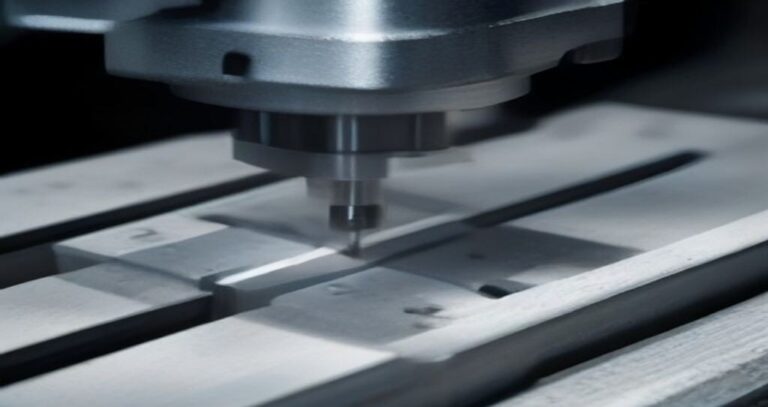
Choosing a CNC Machine For Metal Fabrication is rarely a clean decision. A shop needs a machine that can cut the parts in front of it today, not just the parts in a brochure. Without a disciplined selection process, buyers end up with capability gaps, oversized payments, or workarounds that eat margin for years.
Metal fabrication is broad. A job shop cutting 6061 brackets, an aerospace supplier running Inconel housings, and a medical contractor turning titanium bone screws all need different spindle torque, rigidity, work envelopes, and thermal stability. A machine that handles one comfortably can struggle on another. This framework is built around actual jobs and tolerances, not spec sheets.
What typically goes wrong? Three patterns show up in many shops:
- Buying on maximum spindle speed while the real bottleneck is low-speed torque for drilling and tapping.
- Undersizing the work envelope, then limiting the parts a CNC Machine For Metal Fabrication can physically hold.
- Overlooking inspection and repeatability needs until a customer rejects the first article batch.
The right CNC Machine For Metal Fabrication is a system: spindle power, structure stiffness, axis travel, tooling interface, chip handling, and the metrology that proves the parts are good. Each element ties back to the metal being cut, the features being made, and the tolerances the customer actually accepts.
This article walks through seven selection steps. It starts with the demands of real fabrication work, then moves through spindle and power requirements, work envelope sizing, tolerance and repeatability targets, tooling and automation fit, floor and support realities, and finally total cost. The goal is simple: match a CNC Machine For Metal Fabrication to the jobs you run and the jobs you expect to win, so the machine pays for itself instead of becoming the constraint.
What CNC Machine For Metal Fabrication Work Demands
Metal fabrication shops rarely run one kind of job. A typical week might include weldment brackets, pump housings, adapter plates, machine frames, and repair parts for equipment that has been in service for decades. Each of those jobs arrives with its own drawing, tolerance stack, and delivery date. That mix is exactly why selecting a CNC Machine For Metal Fabrication starts with the work itself, not the machine catalog.
The first thing to pin down is part geometry. A flat bracket with a few drilled holes and a milled edge is a different animal than a five-sided housing with angled bores, deep pockets, and intersecting features. Geometry dictates required axes, workholding, and how many setups the part needs. More setups mean more accumulated error and more handling time.
Material selection shapes nearly every downstream decision. Mild steel like A36 or 1018 machines well, but it is gummy at low speeds and can tear rather than cut cleanly. Stainless grades such as 304 and 316 work harden quickly, so the tool must stay engaged and the feed must stay aggressive. Aluminum 6061 cuts fast and forgiving, which makes it popular for prototypes and fixture plates. Tool steel such as D2 or A2 arrives hardened or in the annealed state, and hardened stock pushes cutters and spindle rigidity to their limits.
A CNC Machine For Metal Fabrication chosen for aluminum will struggle if the same shop later quotes hardened tool steel.
Tolerance is the third driver, and it is often the one that gets underestimated. General fabrication work might hold plus or minus a few thousandths on hole locations, while a hydraulic manifold or a bearing bore can call for tolerances in the low ten-thousandths. Those two jobs do not need the same machine. Thermal stability, ballscrew accuracy, spindle runout, and the quality of the probing system all matter more as tolerances tighten.
Part size and weight set the envelope. A machine with 20 inches of X travel cannot cut a 40-inch frame rail, no matter how accurate it is. Oversized parts also raise questions about lifting, fixturing, and whether the table can carry the load without deflection. Shops that regularly handle long weldments often need a machine with travels matched to that reality.
Job volume and changeover frequency matter just as much as the part itself. High-mix, low-volume work rewards fast setup, tool presetting, and good workholding. Production runs reward spindle uptime, chip evacuation, and automation options like pallet changers or bar feeders. A CNC Machine For Metal Fabrication bought for one-off prototype work will feel slow in a production cell, and a high-production machine will sit idle if it is fed single parts.
Surface finish and secondary operations complete the picture. Some parts come off the machine and go straight to assembly. Others need deburring, anodizing, plating, or heat treatment. Knowing which is which prevents the shop from specifying a machine that produces a finish nobody needs, or one that leaves hand work the customer will not pay for.
Put together, these factors describe the real demand on a CNC Machine For Metal Fabrication: it must match the geometry, material, tolerance, size, volume, and finish of the actual job mix. Brand reputation and brochure specs cannot substitute for that match. Get the requirements written down first, and the machine shortlist tends to write itself.
That is the discipline behind every well-run fabrication floor. The machine serves the part, not the other way around, and a CNC Machine For Metal Fabrication that fits the work pays for itself far faster than one that merely looks impressive on the spec sheet. Before you sign a purchase order, confirm the CNC Machine For Metal Fabrication matches the sizes and alloys you cut most often. Programming standards reduce errors when more than one person writes code for the CNC Machine For Metal Fabrication. When throughput rises, revisit workholding to ensure the CNC Machine For Metal Fabrication is not the bottleneck.
Related reading: Precision 5.
Milling, Turning, or Both on One Job
The geometry on your print decides this, not preference. A bracket with features on one face is a 3-axis job all day. A hydraulic manifold with ports on five sides, or a shaft with a cross-drilled hole through the diameter, forces a different conversation. When you are specifying a CNC Machine For Metal Fabrication, the real question is how many times the part has to come off the table before it is finished. Every re-fixture adds labor, adds error stack-up, and adds days to the schedule.
Three-axis milling is the workhorse. Tool comes down the Z axis, table moves in X and Y, and you cut whatever is reachable from one orientation. Simple workholding, cheap tooling, fast programming. Deep pockets and complex 3D contours get slow because you are stepping over with small tools and short flute lengths. For prismatic parts with modest features, it is still the most economical route.
Five-axis changes the setup count more than it changes the cutting speed. Two extra rotary axes let the tool approach the part from angles a 3-axis spindle cannot reach, so a part that needed four vise setups can often be machined in one or two. That is where the money is. Fewer setups means less workholding to design, less indicating, fewer opportunities to scrap a part on the second op. It also means shorter lead time because the job is not queuing at three separate stations.
Turning with live tooling sits in the middle. The main spindle turns the part, and a driven tool station mills flats, drills cross holes, or taps off-axis features without a second machine. If your part is fundamentally round with a few secondary features, this is usually the cheapest path. Coaxial tolerances stay tight because the part never leaves the chuck, so runout between the turned diameter and the milled feature is controlled by the machine, not by how well the operator re-indicated the part.
Mill-turn platforms go further. They combine a turning spindle with full milling capability and often a sub-spindle for the back side, so a shaft with features on both ends comes off complete. One machine, one setup, one operator. The trade-off is programming complexity and tool clearance, and these machines are not cheap. They earn their keep on parts with tight coaxial relationships, high mix volumes, or where handling a long shaft between operations is a real risk.
| Platform | Typical setups | Best fit |
|---|---|---|
| 3-axis mill | 1 to 4 | Prismatic parts, features on one or two faces |
| 5-axis mill | 1 to 2 | Multi-face parts, contoured surfaces, angled holes |
| Turning with live tooling | 1 to 2 | Round parts with cross features |
| Mill-turn | 1 | Shafts and hubs needing coaxial accuracy both ends |
Setup count drives cost in ways that are easy to underestimate when comparing quotes. A second op on a manual fixture can eat an hour of setup plus inspection before a single chip is cut. Multiply that across a batch and the “cheaper” machine is no longer cheaper. Workholding design time matters too, and a part that needs a custom tombstone or soft jaws adds engineering hours before production starts.
Match the platform to the tolerance stack, not to the marketing brochure. If two faces must be perpendicular within a few tenths, doing them in one setup on a 5-axis or mill-turn machine removes the fixture error entirely. If the features are independent, splitting them across a 3-axis mill and a lathe is often the fastest and least expensive route. The right CNC Machine For Metal Fabrication is the one that finishes the part in the fewest handoffs.
Get the setup plan on paper before you commit to a platform. Sketch each orientation, list the datums, and count how many times the part moves. That single exercise usually settles the milling-versus-turning question faster than any spec comparison. Shops running Custom CNC Machining Services see this play out daily, and the parts that run best are the ones where the process was planned around the geometry from the start.
For a mixed workload, a 3-axis mill plus a live-tool lathe covers most jobs at reasonable capital cost. Add 5-axis capacity when contoured or multi-face work becomes routine, and consider mill-turn when coaxial features and long shafts dominate. That progression keeps the CNC Machine For Metal Fabrication investment aligned with the work actually coming through the door, rather than chasing capability you will rarely use.
Whatever platform you pick, verify it against the tightest tolerance on the print and the number of setups it demands. A machine that holds tenths but needs four fixtures is a worse choice than one that holds the same tolerance in two. Cost and lead time follow setup count more reliably than they follow spindle speed, and that is the number worth optimizing before you sign anything. Document every setup step your operators perform so the CNC Machine For Metal Fabrication can be programmed to repeat them reliably. Fixture design should be finalized before delivery so the CNC Machine For Metal Fabrication starts producing good parts immediately.
Vendor audits of the CNC Machine For Metal Fabrication should include calibration records, spindle runout, and axis backlash.
Background reading: the Milling (machining) overview is a useful reference on the fundamentals.
Spindle Power and Cutting Metal Efficiently
Spindle power is where the purchase order meets the chip. A machine can have a great control, fast rapids, and a rigid frame, but if the spindle stalls in 4140 or chatters in 304 stainless, the rest of the specification stops mattering. When you evaluate a CNC Machine For Metal Fabrication, the spindle spec sheet is the first place to slow down and read carefully.
Two numbers drive metal removal: torque and speed. Torque does the heavy lifting at low RPM, where large-diameter cutters and tough alloys live. Speed pays off with small tools, non-ferrous metals, and finishing passes. A spindle that is strong in one is usually weaker in the other, and no single spindle is ideal for every job in the shop.
Think in terms of the torque curve, not a single peak value. Manufacturers often quote peak torque and peak power separately, measured at different RPMs. The usable figure is continuous torque through the speed range you actually cut in. Ask for the curve, not the headline number.
4140 steel at 28 to 32 HRC is a reasonable benchmark for medium-alloy work. It cuts well with carbide at moderate surface speeds, but it punishes light, high-RPM spindles. Roughing a 50 mm face mill or a 16 mm end mill in 4140 needs low-end torque and a rigid spindle taper. A 40-taper machine with a geared or direct-drive spindle in the 10 to 18 kW range can usually handle this comfortably. A high-speed spindle in the same frame will struggle at the same depth of cut.
304 stainless is the material that exposes weak setups. It work-hardens, it galls, and it needs consistent feed engagement to keep the cut under the hardened skin. Low spindle speed with high torque is the safe zone. If the spindle bogs and the feed drops, the tool rubs, the surface hardens, and the next pass is worse. That is why spindle power and feed drive stiffness belong in the same conversation on any CNC Machine For Metal Fabrication.
6061 aluminum is the opposite case. It rewards RPM. A 15,000 to 24,000 RPM spindle with a 30-taper or HSK holder can often remove aluminum faster than a 40-taper machine, especially with small tools and high-feed strategies. If your work is mostly aluminum, a high-speed spindle is the right call. If it is mixed, you are choosing between two compromises.
Tool holding follows the same logic. CAT40 and BT40 are the workhorses for steel and general work. HSK and shrink-fit holders improve runout and balance at high RPM, which matters for aluminum and for small-diameter tools in any material. Pull stud condition, taper cleanliness, and holder balance are not details you can skip on a machine that runs near its spindle limit.
Coolant strategy ties the whole decision together. Through-spindle coolant evacuates chips from deep pockets in 4140 and 304, and it keeps the cutting edge cool where it counts. Flood coolant is often adequate for aluminum and for open-face work. High-pressure through-tool coolant, typically 70 bar and up, changes what a spindle can do in deep-hole drilling and in materials that smear.
A practical comparison for three common materials:
| Material | Spindle Priority | Typical RPM Band | Coolant Note |
|---|---|---|---|
| 4140 steel | Low-end torque | Moderate | Flood or through-tool |
| 304 stainless | Torque and rigidity | Low to moderate | High-pressure through-tool preferred |
| 6061 aluminum | High RPM | High | Flood with good chip evacuation |
None of this replaces a rigid machine structure. Spindle power delivered into a flexible frame produces chatter, poor finish, and short tool life. The frame, the linear guides, and the ballscrew or linear motor all set the ceiling that spindle power has to work under. A CNC Machine For Metal Fabrication is a system, and the spindle is only the most visible part of it.
There is also a control-side detail worth noting. Modern spindles rely on the CNC to hold constant surface speed and to adapt feed as the tool enters and exits the cut. That is the same Numerical control logic that governs the rest of the motion, and it is why a well-tuned control can make a modest spindle outperform a larger one with poor parameters.
So the question is not which spindle is best. It is which spindle matches the material mix you actually run. If most of your work is steel and stainless, buy torque and rigidity, and accept a lower top RPM. If it is aluminum and small tools, buy speed and balance, and accept less low-end grunt. A shop that runs both should expect to own two machines, or to accept that one CNC Machine For Metal Fabrication will be a compromise on half its jobs.
Before you commit, ask for a test cut in your hardest material at your target depth of cut. Spindle specs on paper are a starting point. The torque curve under load, the chip evacuation, and the surface finish in 304 tell you what a CNC Machine For Metal Fabrication will actually do on your floor. Tooling budgets deserve equal weight to spindle power when specifying a CNC Machine For Metal Fabrication for daily production. Training on the CNC Machine For Metal Fabrication should cover offsets, tool changes, alarm recovery, and basic preventive maintenance.
Scrap rate trends tell you whether the CNC Machine For Metal Fabrication needs realignment or just better fixtures and feeds.
Tolerances: What Your Machine Can Hold
Every machine has a tolerance floor, and it rarely matches the number in the brochure. A well-maintained VMC in decent thermal conditions can often hold plus or minus 0.001 in on milled features like pockets, slots, and profiles. Bored fits, reamed holes, and precision bores can land tighter, in the plus or minus 0.0005 in range, because the tool and the motion are more controlled. The question is whether a given CNC Machine For Metal Fabrication can repeat that number across a full shift, not just on the first part off the bench.
Repeatability is the real spec. Accuracy tells you where the machine lands once; repeatability tells you where it lands on part 200. Shops that quote tight tolerances without checking repeatability usually discover the gap during first article inspection, when the second and third parts drift outside the band.
Thermal growth is the quiet killer. A spindle running at 12,000 rpm for two hours will grow, and so will the ballscrews and the frame. On a typical 40-taper mill, that growth can push tenths out of a bore even when nothing else changes. Machines with cooled spindles and temperature-compensated scales handle this better, but even then, a cold morning startup behaves differently than a warm afternoon. If your parts run tight all day, warm up the machine and let it stabilize before cutting critical features on a CNC Machine For Metal Fabrication.
Tool wear moves the other direction. A carbide end mill cutting 4140 will hold size for a while, then start pushing the wall. On a 0.500 in slot, a few tenths of wear on the flutes translates directly into an oversized feature. This is why tool life management matters as much as the machine itself. Operators who track cut time and swap inserts on schedule tend to hold tolerance better than those who wait for a bad surface finish.
Fixturing decides how much of that tolerance you actually keep. A part held in a soft jaw with light clamping can shift under cut pressure. Thin-wall parts deflect, and a three-jaw chuck on a turned part can ovalize a bore by several tenths if the clamping force is wrong. Good workholding is rigid, repeatable, and matched to the part geometry.
| Feature type | Typical achievable band | Main limiter |
|---|---|---|
| Milled pockets and profiles | +/- 0.001 in | Thermal drift, tool wear |
| Bored and reamed holes | +/- 0.0005 in | Boring head setup, rigidity |
| Turned diameters | +/- 0.0005 in | Tool nose wear, chuck force |
| Positional hole locations | +/- 0.001 in | Ballscrew backlash, scale accuracy |
Tolerance also has to match the inspection method. A plus or minus 0.0005 in callout measured with calipers is theater. Calipers read to 0.001 in at best, and operator feel adds more. Bores at that level need a bore gauge or an inside micrometer. Positional tolerances need a CMM or a well-set-up optical comparator. If the drawing demands a number the inspection room cannot verify, the tolerance is not real.
Before you commit to a spec, ask what the shop uses to check it. A supplier running a CNC Machine For Metal Fabrication with in-process probing and a climate-controlled inspection room can often defend tighter bands than one checking with hand tools at the machine. That difference can show up in your scrap rate and your assembly line, not on the quote. Match the tolerance to the function, then match the machine and the metrology to the tolerance. Check that your CAM post processor supports the CNC Machine For Metal Fabrication before committing to a software workflow.
Ask the builder how service parts ship because downtime on a CNC Machine For Metal Fabrication stalls every downstream operation. Second shift coverage matters because an idle CNC Machine For Metal Fabrication still consumes floor space and capital.
Fixtures, Setups, and Prototype to Production
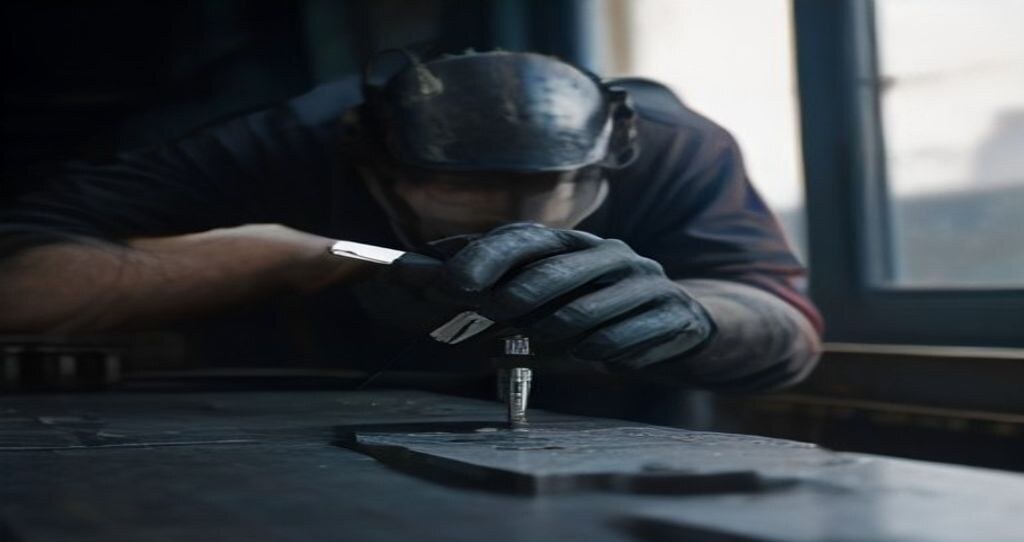
A machine tool is only as good as the workholding bolted to its table. The tolerance you just matched to the part function will collapse if the vise lifts the workpiece or the tombstone flexes under a heavy face mill. When selecting a CNC Machine For Metal Fabrication, budget as much thought for fixtures as for spindle taper and axis count.
Standard vises cover a surprising amount of work. A quality 6-inch milling vise with hardened jaws holds most rectangular parts, and two vises on a 500 mm center distance let you run one part while loading the next. The limits show up fast: thin walls bow, castings with draft won’t sit flat, and anything with an organic profile has nothing for the jaws to bite.
That is where soft jaws earn their keep. Machining a pocket into aluminum or mild steel jaw stock to match the part profile gives full surface contact, spreads clamping force, and repeats location within a few thousandths. For a CNC Machine For Metal Fabrication running mixed low-volume work, a shelf of pre-machined soft jaw sets keyed to common part families is often the single biggest setup-time saver in the shop.
Production changes the calculus. Tombstones turn a 3-axis mill into a multi-face machine by presenting four part faces per cycle, and a 4th-axis rotary or trunnion adds a fifth. Bar feeders on turning centers let the spindle run lights-out between operator checks. If your volumes are thousands per year, the fixture amortization math gets easy. If you are building five of something, it does not.
Modular fixturing sits between the two extremes. Kits of ground plates, locators, clamps, and risers let you build a dedicated setup in an afternoon, then tear it down and reuse the components. It costs more per setup than a welded fixture and less than a bespoke one, and it stores in a cabinet rather than a rack.
| Setup type | Typical best fit | Trade-off |
|---|---|---|
| Standard vise | Prismatic parts, low volume | Limited access to five faces |
| Soft jaws | Irregular or thin-wall parts | Machining time per jaw set |
| Tombstone | Repeated parts, high volume | Capital cost, load/unload planning |
| Modular kit | Mixed families, medium volume | Rigidity below a welded fixture |
| Bar feeder | Turned parts from bar stock | Limited to round or hex stock |
When does a prototype justify a dedicated fixture? Ask two questions. Will the design freeze before the next order, and is the geometry impossible to hold any other way? If the answer to either is yes, build it. A dedicated fixture on a CNC Machine For Metal Fabrication can pay back across the first small batch because it removes re-indicating, shimming, and the scrapped first part every time someone sets up.
Plan first-article inspection before you cut metal, not after. Write down which features are critical, which datum the drawing calls out, and what gauge or CMM routine will verify each one. Then design the fixture so those datums are accessible and the probe can reach them without unclamping. On a CNC Machine For Metal Fabrication, in-process probing can catch a drifting dimension before the next ten parts are wrong.
Document the setup. Photos of the fixture, jaw numbers, torque values, and the order of operations save hours the next time the job runs. That record is what turns a one-off prototype into a repeatable production process on the same CNC Machine For Metal Fabrication.
Get the workholding right and the machine’s accuracy actually reaches the part. Get it wrong and no amount of spindle speed will save the tolerance. Talk to GreatLight about fixturing and first-article planning for your next program. Tolerance studies on scrap parts reveal whether a CNC Machine For Metal Fabrication can hold the drawing across a full shift. Floor space, power drops, and compressed air lines must be ready well before the CNC Machine For Metal Fabrication arrives. Review total cost of ownership before choosing a CNC Machine For Metal Fabrication, not just the sticker price.
CNC Machine For Metal Fabrication Across Industries
Five buyers can send you the same aluminum bracket drawing and still need five different quotes. Aerospace wants serialized traceability and full material certs. Automotive wants cycle time and repeatability at volume. Medical wants surface finish and cleanability documented. Energy wants toughness in a hostile environment. Robotics wants tight tolerances on a small number of parts. The machine you pick for a CNC Machine For Metal Fabrication program should follow the industry, not the other way around.
Aerospace work usually starts with paperwork. Mills and lathes must hold position well enough to repeat first-article results months later, because a re-cut part has to match the original inspection report. Heat lot numbers, mill certs, and sometimes NADCAP-linked process records travel with every shipment. In practice, shops running aerospace on a CNC Machine For Metal Fabrication platform plan for in-process probing and documented tool wear, not just a final check with calipers.
Automotive and other high-volume buyers flip the priorities. They care about seconds per part, tool life, and how fast a cell can swap fixtures between runs. Tolerances are often looser than aerospace, but the process window is narrow because thousands of parts must land inside it. A CNC Machine For Metal Fabrication cell feeding a production line typically needs bar feeders, chip conveyors, and unattended lights-out capability to stay competitive.
Medical device work sits between those two. Implants, surgical instruments, and housings demand fine surface finish, burr-free edges, and repeatable geometry on stainless, titanium, and cobalt-chrome alloys. Documentation mirrors aerospace: material certs, lot traceability, and inspection records that survive an audit. Many shops add electropolishing or passivation after machining, and some work with partners such as Xinyuan Metal Abrasives to control surface condition before final inspection.
| Industry | Primary Priority | Typical Documentation |
|---|---|---|
| Aerospace | Traceability, repeatability | Mill certs, FAIR, process records |
| Automotive | Cycle time, volume | PPAP-style packages, SPC data |
| Medical | Surface finish, cleanliness | Material certs, lot traceability |
| Energy | Toughness, corrosion resistance | Heat lot certs, NDT reports |
| Robotics | Tolerance, low volume | Inspection reports, CAD revisions |
Energy buyers often run Inconel, duplex stainless, and high-strength low-alloy steels that punish tools and distort during cutting. A CNC Machine For Metal Fabrication setup for this work needs rigid spindles, high-pressure coolant, and a fixturing plan that controls heat instead of fighting it. Corrosion resistance and impact toughness matter more than cosmetic finish, and heat lot certificates are standard.
Robotics and automation customers sit at the opposite end of volume. They may order twenty actuator housings and never repeat the run, but every bore has to fit a bearing with minimal clearance. Setup time dominates cost, so quick-change workholding and offline programming pay off fast. When a shop invests in a CNC Machine For Metal Fabrication platform for this segment, flexibility beats raw spindle speed.
Across all five sectors, the same three questions decide the machine. What tolerance must hold across the whole batch? What documentation must ship with the parts? And how many parts will you actually run per year? Answer those honestly, and the CNC Machine For Metal Fabrication choice gets much narrower. A machine that wins aerospace paperwork may lose on automotive cycle time, and neither will suit a robotics shop running ten-piece lots.
GreatLight machines prototypes through production for aerospace, automotive, medical, energy, and robotics customers, with inspection and documentation built into the process. If your next program crosses two or three of these industries, the selection criteria will too. Material certs and test cuts together show how a CNC Machine For Metal Fabrication behaves in stainless, aluminum, and mild steel. Cut sample coupons on the CNC Machine For Metal Fabrication to verify spindle torque and thermal stability under load.
Inspection, Quality, and Shop Workflow
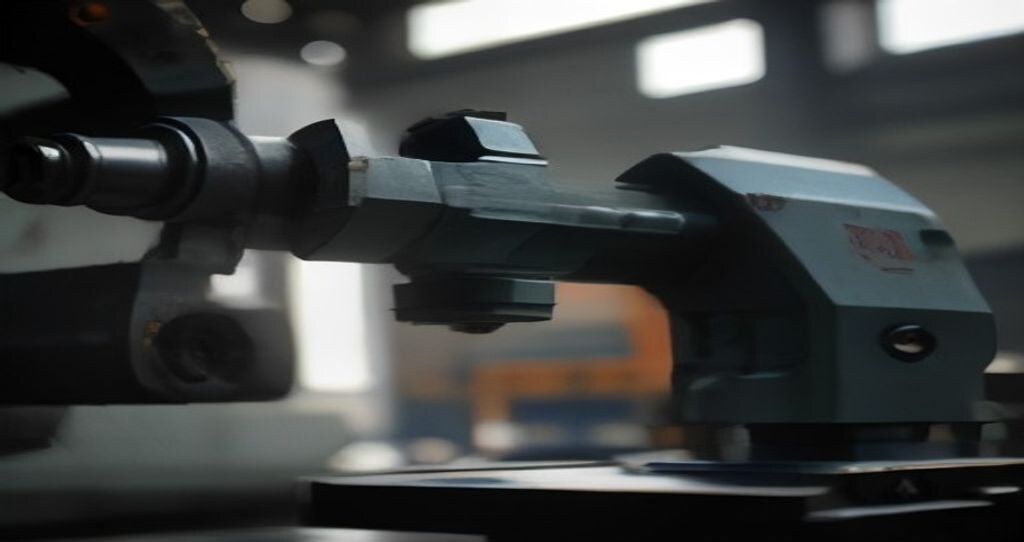
Selection does not stop at spindle torque and travel. The machine you buy has to fit the inspection loop your shop already runs, or you will spend the next five years working around it. A CNC Machine For Metal Fabrication that cannot be probed, measured, and corrected quickly turns into a bottleneck at the worst possible moment: right after setup.
In-process checks are the first line. On a well-integrated machine, a touch probe or tool-setting probe lets the operator verify datums, bore positions, and tool wear without pulling the part. That matters on long cycle times, where a drifting insert can scrap an hour of work before anyone notices. Renishaw-style spindle probes and laser tool setters are common on higher-end vertical and horizontal centers, and many builders now offer them as factory options rather than aftermarket add-ons.
Between operations, operators typically check critical features with calipers, micrometers, bore gauges, or pin gauges. These are fast, cheap, and good enough for many tolerances above roughly ±0.05 mm. Below that, hand tools start fighting thermal effects and operator feel. That is where a CMM earns its keep.
Coordinate measuring machines handle the geometry that hand tools cannot reach reliably: true position on bolt circles, perpendicularity of a bored face, profile of a curved surface. A bridge CMM in a temperature-controlled room is the classic setup. For shops running a CNC Machine For Metal Fabrication cell, a shop-floor CMM or a portable arm can shorten the feedback loop considerably, since parts do not have to travel to a separate quality room and wait in a queue.
Optical inspection covers the other half of the problem. Vision systems and optical comparators are strong on small features, fine edges, thread forms, and parts too thin or flexible for contact measurement. They also document what a CMM report cannot easily show: burrs, tool marks, edge break, and surface defects. Many shops pair a CMM for dimensional data with a vision system or profile projector for edge and form checks.
Surface roughness is its own inspection step and often gets skipped until a customer complains. A portable stylus roughness tester gives Ra values in seconds, and it belongs in the setup sheet for any part with a specified finish. Turning and Milling (machining) both leave directional tool marks, so the measurement direction matters. Check across the lay, not along it, or the number you record will not match what the customer measures.
First-article inspection (FAI) is the gate before a production run starts. The operator and quality team measure every dimension on the drawing or model, document the results on an FAI report, and compare against nominal and tolerance. On aerospace and medical work, this is formal and traceable. On general industrial work, it may be a lighter internal sign-off, but the principle holds: prove the process before you run 500 parts on it. A CNC Machine For Metal Fabrication that supports probing and easy program offsets makes FAI corrections fast instead of painful.
Final inspection happens at the end of the run. Sample size depends on the customer, the tolerance, and the history of the process. High-volume work often uses AQL sampling; low-volume or safety-critical work may be 100 percent inspection. Either way, the data should feed back into the setup sheet.
That feedback loop is what separates shops that scrap 1 percent from shops that scrap 5 percent on repeat orders. If a dimension drifts on the third run, the fix is a program offset or a tool change interval, not a guess. Record what changed, when, and why. The next time that part number hits the schedule, the CNC Machine For Metal Fabrication is already set up to hold the tolerance from the first part.
Practically, this means your selection criteria should include probe readiness, CMM or portable metrology access, roughness measurement, and a documented inspection workflow. A machine that machines well but cannot be measured well can cost you more in scrap and rework than it saves on the purchase price. Inspection plans should list the gauges and fixtures needed once the CNC Machine For Metal Fabrication enters regular service. A clear preventive maintenance calendar keeps the CNC Machine For Metal Fabrication within tolerance year after year.
Cost, Lead Time, and Choosing a Partner
Price on a metal part comes from five cost drivers: machine time, setup, material, tooling, and inspection. Every quote you receive is a weighted sum of those five. If you can estimate them roughly, you can tell whether a quote is reasonable or padded. You can also tell which of them a given supplier is set up to minimize.
Machine time is usually the largest line. A 3-axis mill removing a few cubic inches of aluminum might run for minutes; a 5-axis job on titanium with tight tolerances can run for hours. Hourly rates vary widely by region, machine class, and shift, so compare rates only alongside cycle times. A cheap rate with a slow cycle is not cheap.
Setup is where small quantities hurt. Fixturing, work offsets, first-article checks, and programming are largely fixed costs, so they dominate on one-off parts and fade on runs of hundreds. This is a big reason prototype pricing looks alarming next to production pricing. The same geometry, at volume, can drop substantially per piece.
Material and tooling follow the design. Titanium, Inconel, and hardened steels cost more per pound and cut slower. They also eat tooling: carbide end mills that survive aluminum for many hours may last a fraction of that in nickel alloys. Deep pockets, thin walls, and features needing long-reach tools all add cycle time and tool changes, whether or not the drawing mentions them. Choosing the right CNC Machine For Metal Fabrication for the alloy matters more than the brand on the door.
Inspection is the cost people forget. A part with a dozen tolerances at plus or minus a few thousandths needs calipers and micrometers. A part with true position callouts, profile tolerances, or surface finish requirements may need a CMM, and possibly a fixture to hold it for measurement. That time is real and it lands in your quote. It also protects you, because a supplier who cannot measure the feature cannot reliably make it.
Typical lead times, in many shops, land in these ranges. Treat them as planning numbers, not promises:
| Job Type | Typical Lead Time | Main Driver |
|---|---|---|
| Simple prototype, 1-5 parts | 3-10 business days | Programming and setup queue |
| Complex prototype, 5-axis | 1-3 weeks | Fixture design, first article |
| Repeat production, stocked material | 2-4 weeks | Machine capacity |
| Production, material to order | 4-8 weeks or more | Mill and forge lead times |
| Any job needing outside finishing | Add 1-2 weeks | Anodize, plate, heat treat queue |
Before you send a drawing out for quote, ask these questions. The answers tell you more about a supplier than the price alone.
- What is your quoted lead time, and does it include material procurement or assume stock on hand?
- Which operations are done in-house, and which are subcontracted?
- How do you handle first-article inspection, and do I get the report?
- What tolerances can you hold routinely, not just on a good day?
- If a feature is hard to inspect, will you flag it before quoting rather than after?
- What is your process for engineering changes mid-order?
- Can you scale the same part from prototype to production without requoting the geometry?
A supplier who answers those clearly is usually also the one whose quote holds up. A supplier who cannot explain the setup or the inspection plan is guessing, and you will pay for the guess later. When you evaluate a CNC Machine For Metal Fabrication investment on your own floor, run the same math: cycle time, setup, tooling life, and metrology. The machine that wins is usually the one that makes good parts at a predictable cost per piece.
That is the real selection criterion. Not spindle speed on a spec sheet, and not the lowest hourly rate. A partner who understands where your cost actually sits, and can hold a CNC Machine For Metal Fabrication schedule across prototype and production, is often worth more than a few percent off the quote. Ask the questions, compare the answers, then compare the numbers.
If you want a second opinion on a part, send the drawing and quantities to GreatLight. Our team quotes 5-axis milling, turning, and inspection work from prototype through production, and we will tell you where the cost sits before you commit to a CNC Machine For Metal Fabrication order. Quoting accuracy improves when the estimator knows the real cycle time of the CNC Machine For Metal Fabrication on similar jobs. Operators should log every crash and tool break on the CNC Machine For Metal Fabrication to expose recurring weak points.
Choosing Your CNC Machine For Metal Fabrication
Seven steps, one goal: a machine and a partner that hold the tolerances your drawings call for, at a cost and lead time your program can live with. Milling or turning, spindle power, work envelope, fixture strategy, inspection, and workflow all feed into the same decision. Get those wrong and no amount of machine speed will save the job.
Work through the steps in order. Define the part family and volumes first, because that drives whether you need a 3-axis mill, a live-tool lathe, or a 5-axis center. Then match spindle torque and rigidity to the material you cut most. Confirm the machine can hold your tightest tolerance across a full production run, not just on the first article.
Before you commit, pressure-test the plan:
- Send sample drawings and ask for a real cycle time and setup estimate.
- Request the inspection method and reporting format for critical features.
- Ask how prototypes transition to production without a re-qualification headache.
- Compare quotes on total landed cost, not just hourly rate.
The right CNC Machine For Metal Fabrication keeps your parts in tolerance and your schedule intact. The wrong one turns every tight feature into a concession request. GreatLight machines prototypes through production with 5-axis milling, turning, and documented inspection, so you get one accountable partner from first article to repeat orders. Send your drawings and request a quote to start the conversation. Lead time estimates must include installation, commissioning, and operator sign off for the CNC Machine For Metal Fabrication. Software updates for the CNC Machine For Metal Fabrication need testing on a spare controller before touching production programs.