
CNC honing: how bore geometry and finish are actually controlled
A CNC honing head rotates and reciprocates inside a bore, and the machine holds the pressure, stroke and speed so the result repeats part after part. This page explains the mechanism, the parameters that matter, the surface each abrasive produces, and the cases where honing is the wrong operation.
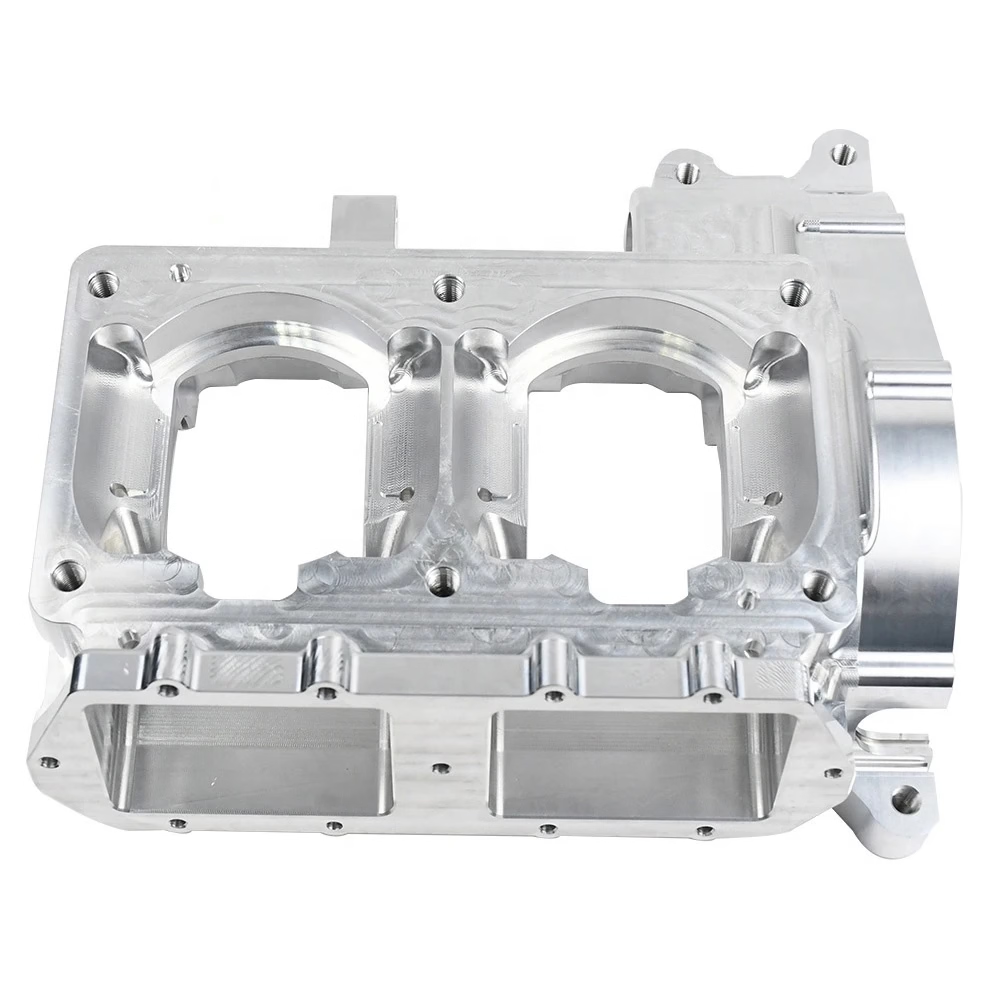
What CNC honing removes, and what it corrects
Honing is a low-pressure abrasive process for internal cylinders. An abrasive stone or a plated diamond sleeve is pressed against the bore wall while the tool rotates and strokes up and down. The two motions cross, so each grain cuts a shallow path that crosses the previous one instead of following it. That crossing is the whole trick.
Because a bonded stone is flexible and the tool floats, the abrasive follows the existing hole rather than forcing the tool along a rigid axis. Stock removal is small, usually 0.02–0.15 mm on diameter for a finishing pass, so honing corrects shape rather than creating it. A bore that is 0.3 mm out of position cannot be fixed here.
Three geometry errors respond well. Roundness and cylindricity improve because the stone contacts the full circumference as it rotates. Taper and barrel shape come down as the stroke length is tuned. Straightness improves along the axis. Size lands at the target because the machine measures and adjusts while the cycle runs.
A reamed or bored hole typically sits at Ra 1.6–3.2 μm with a torn, folded surface layer. Honing removes that layer and leaves a finish in the Ra 0.8–1.6 μm range, or Ra 0.2–0.8 μm when a fine stone is used. The bore also keeps a slight plateau structure, which holds oil.
The five settings a CNC honing cycle controls
Rotation speed sets the cutting speed at the bore wall. It is usually expressed in surface meters per minute and scales with bore diameter, so a Ø20 mm bore runs far higher rpm than a Ø200 mm bore for the same cutting speed. Too fast and the stone glazes; too slow and the cycle drags.
Stroke length decides which part of the bore sees the stone. The stone must overrun both ends of the hole by roughly one third of its own length, otherwise the ends bell out. Shorten the stroke and the middle wears; lengthen it too far and the abrasive leaves the bore entirely.
Stroke rate, or the number of strokes per minute, controls the crosshatch angle together with rotation speed. The angle is what makes the surface hold lubricant. Hydraulic cylinder bores often sit between 30° and 45°, engine cylinder bores a little wider.
Honing pressure is the force pushing the stone outward. It controls how fast material comes off and how deep the scratches go. High pressure cuts faster but burns the surface and loads the stone. Low pressure polishes slowly and can round the bore edges.
Feed rate and cycle time close the loop. The machine tracks size as it cuts, so the final passes run at reduced pressure to hit the target without overshoot. On a CNC honing machine these five settings are stored as a recipe and reused for every part in the run.
Coolant choice matters more than most people expect. Oil-based honing fluid carries away swarf, cools the stone and keeps the abrasive from loading. Water-based fluid runs cleaner but needs more attention to rust prevention on steel and cast iron parts.
Which abrasive, and what finish it leaves
Aluminum oxide stones are the default for steel, stainless steel and cast iron. They are tough, cheap and cover most general honing work. Silicon carbide cuts faster and is used where the material is hard or the stock removal is heavier, though it breaks down quicker.
Diamond and cubic boron nitride are the long-life options. Plated diamond sleeves hold size for thousands of bores in production, which matters when the same bore is honed day after day. CBN is used on hardened steel above roughly 45 HRC where diamond would react with the iron.
Grit size sets the scratch depth. Coarse grit removes stock and corrects geometry; fine grit brings the finish down. A two-stage cycle with a coarse stone followed by a fine stone is common on hydraulic and engine work.
Bond hardness decides how the stone releases fresh abrasive. A soft bond sheds dull grains and cuts freely; a hard bond holds shape longer but glazes if the pressure is too low. Matching bond to material is where most honing problems start.
Surface finish is not the only output. The plateau finish matters for sealing. A bore with a smooth plateau and shallow valleys holds an oil film, while a mirror finish can starve the seal and cause scuffing.
For medical and food-contact parts we finish with a fine stone and then clean to remove abrasive residue. Leftover grit in a blind bore will damage a mating component later, so blind holes get extra flushing.
Where CNC honing stops being the right process
Honing follows the hole it is given. Position error, axis misalignment and true position are set upstream by boring or drilling. A hole that is 0.2 mm off center stays 0.2 mm off center after honing. Fix the setup before honing, not after.
Very short bores are a poor fit. If the bore length is less than about one diameter, the stone cannot bridge the hole and the bore ends up bell-mouthed. On those parts, reaming or fine boring usually gives a better result.
Blind bores need a relieved stone or a special head so the abrasive can reach the bottom without hitting the shoulder. Deep small bores are also difficult, because the tool shank deflects and the stroke becomes hard to control below roughly Ø3 mm.
Honing is not a stock-removal process. If the hole is undersized by 0.5 mm, boring comes first. Trying to take that in one honing pass burns the stone, distorts the bore and burns cycle time.
Soft gummy materials like pure aluminum or plastics tend to load the stone rather than cut. They can be honed, but with a coarse open bond and light pressure, and the finish will not match what steel achieves.
Cross-drilled holes interrupt the bore wall and can catch the stone edge. These parts need a chamfer on the cross-hole and a slower stroke rate, or the abrasive chips at the intersection.
Honing compared with reaming and fine boring
Pick the row that matches the bore you actually have.
| Process | Typical tolerance | Typical finish | Best for |
|---|---|---|---|
| CNC honing | ±0.005 mm | Ra 0.2–0.8 μm | Geometry correction plus finish |
| Reaming | ±0.01 mm | Ra 0.8–1.6 μm | Straight through holes, one pass |
| Fine boring | ±0.01 mm | Ra 0.8–1.6 μm | Large bores, single-point control |
| Boring then honing | ±0.005 mm | Ra 0.2–0.8 μm | Undersized holes with shape error |
| Roller burnishing | ±0.01 mm | Ra 0.2–0.4 μm | Soft material, no stock removal |
| Grinding (internal) | ±0.005 mm | Ra 0.4–0.8 μm | Hardened parts, larger bores |
When to hone, and when to walk away
Choose CNC honing when the bore must hold roundness, straightness and a controlled crosshatch together, and the hole is already within 0.15 mm of size. Choose reaming or fine boring instead when the hole is short, deep, or the geometry is already good and you only need size. If position is off, no finishing process saves the part.
Common questions about CNC honing
How much material does a typical honing pass remove?
Finishing passes usually take 0.02–0.15 mm off the diameter, split across a coarse and a fine stage. Anything larger should be bored first so the honing stone only has to correct shape and finish.
Deeper cuts are possible with a plated diamond sleeve, but the cycle time grows and the risk of heat damage rises. We size the pre-hone bore so the finishing allowance stays inside that range.
Can honing fix an out-of-round bore?
Yes, up to a point. Because the stone contacts the full circumference as the tool rotates, roundness and cylindricity improve measurably. Taper and barrel shape respond to stroke length changes.
What honing cannot fix is position. If the bore axis is off center or tilted, honing follows it. That error has to be removed at the boring stage.
What crosshatch angle should a hydraulic cylinder have?
Most hydraulic cylinder bores sit between 30° and 45°, which is set by the ratio of rotation speed to stroke rate. The angle keeps an oil film across the full stroke.
Too shallow an angle wipes oil off the rod seal; too steep an angle traps it. The right value depends on the seal type and the sliding speed, so we confirm it against the drawing before the run.
Is honing suitable for stainless steel and titanium?
Stainless steel hones well with aluminum oxide or silicon carbide, though the material work-hardens if pressure is too high. Light pressure and fresh abrasive keep the surface clean.
Titanium is gummier and tends to load the stone. It can be honed with a coarse open bond and generous coolant flow, but it is slower work than steel.
How do we check a honed bore?
We measure size with a bore gauge or an air gauge, and check roundness, cylindricity and straightness on a coordinate measuring machine. Surface finish is read with a profilometer, and the crosshatch angle is checked under a magnifier or with a cast.
Inspection reports are available on request. Every part is inspected before shipment, and the honing recipe stays on file for repeat orders.
Can honing be done on a part that is already heat treated?
Yes. Hardened steel above roughly 45 HRC is honed with CBN or diamond, which hold their edge where conventional abrasive wears quickly. This is common on hydraulic valve bodies and gearbox parts.
The trade-off is cycle time. Hard material cuts slowly, so the pre-hone bore needs to be closer to final size.
Send us the bore drawing, get a honing plan
Upload the part and we will confirm the honing allowance, the crosshatch angle and the inspectable tolerances before cutting chips. Quotation and free DFM analysis within 12 hours.
12-hour quote100% inspectionNDA on request
More from the shop floor
We publish setup notes, tooling trials and inspection data from the factory floor.











