01
Are finger joints binding after assembly?
A phalange bore that is 0.02 mm off center changes the tendon path and the finger drags. The servo draws more current, the controller faults, and the whole hand goes back on the bench. Bores and pin seats have to hold true position, not just diameter.
02
Do actuator mounts drift after a few thousand cycles?
Thin aluminum brackets flex under repeated actuation. Clearance grows, backlash shows up in the grip, and the hand can no longer repeat a pinch position. The fix is usually a stiffer alloy and a ribbed geometry, not a tighter tolerance on the same weak design.
03
Is the sensor housing shifting the tactile reading?
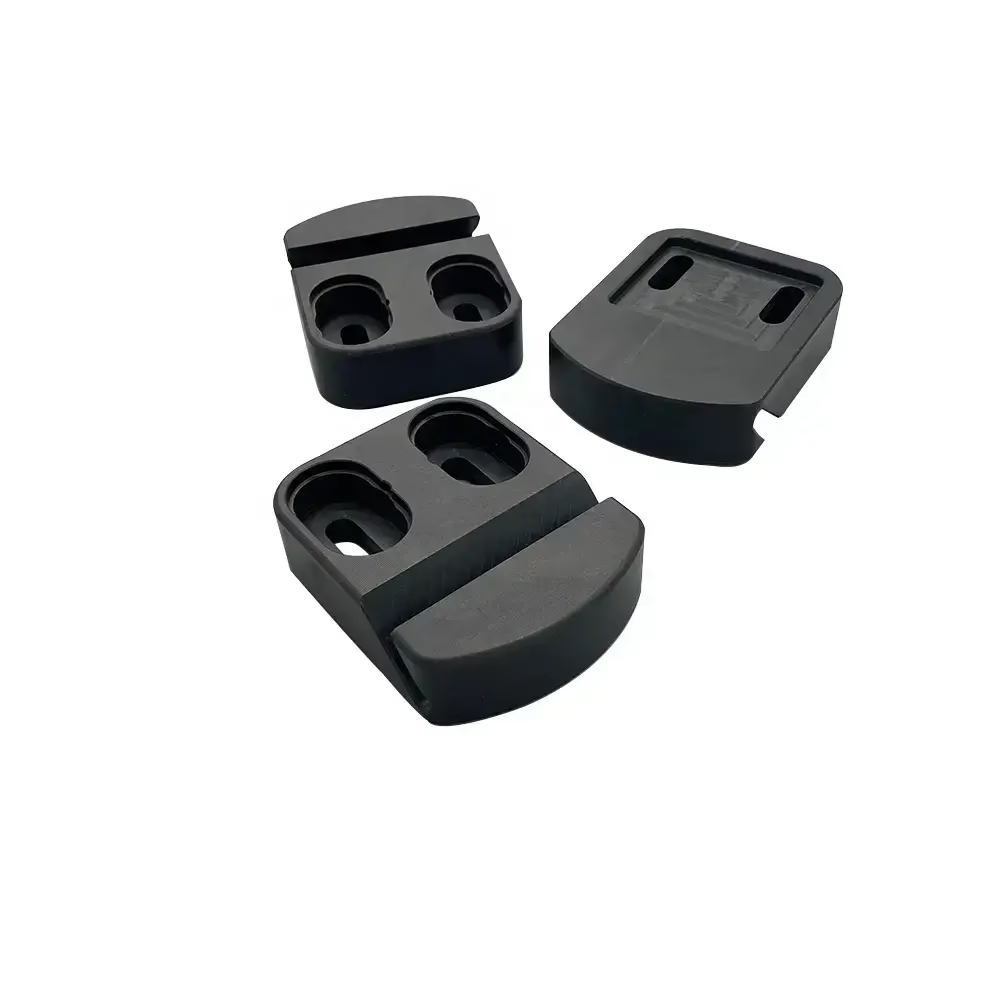
Force and tactile sensors sit in pockets that must match the mating surface. If the pocket floor is not flat or the wall is not square, the sensor preloads unevenly and the output curve drifts. Engineers then tune software to compensate for a machining error.
04
Does the prototype take longer than the design review?
Small, deep pockets and thin walls are slow to quote and slow to cut. Weeks pass between the CAD release and a part in hand, so the team keeps testing the old revision. Late hardware pushes every downstream test to the right.