
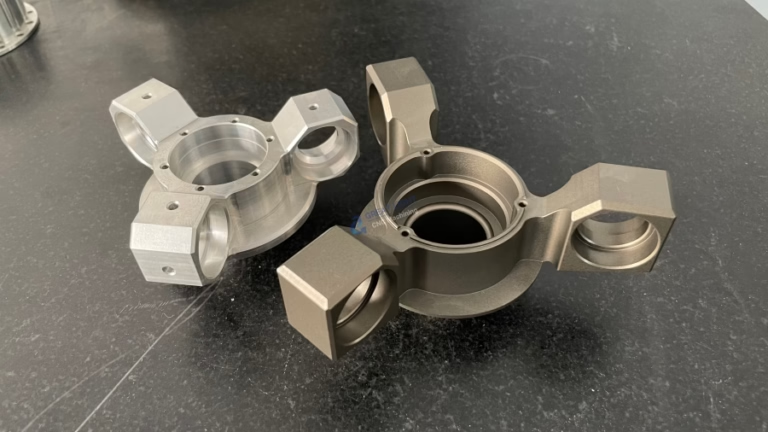
Biosensor Microfluidic Channel Mold – Unlocking Precision for Next‑Gen Diagnostics
In the rapidly evolving landscape of medical diagnostics, point‑of‑care testing, and life sciences, Biosensor Microfluidic Channel Mold manufacturing stands out as a cornerstone that dictates the performance, repeatability, and scalability of microfluidic devices. These molds—often featuring channels narrower than a human hair—are the negative masters from which polymer or glass chips are replicated. They demand ultra‑high precision, flawless surface finish, and uncompromised material integrity. GreatLight CNC Machining Factory, a seasoned manufacturer of high‑precision custom parts, has built a reputation for transforming such challenging geometries from CAD models into production‑ready molds, leveraging five‑axis CNC machining, advanced micro‑EDM, and an integrated one‑stop manufacturing ecosystem. This article unpacks the technical demands, common pitfalls, and the engineering methodology that positions GreatLight Metal as a trusted mold partner for biosensor innovators worldwide.
What exactly is a microfluidic channel mold for biosensors?
A biosensor microfluidic channel mold is a precise inverse replica of the desired microfluidic network. When a polymer like PDMS, COC, or PMMA is cast or hot‑embossed against this mold, it faithfully picks up the channel pattern, enabling fluid handling, reagent mixing, separation, and optical or electrochemical detection on a chip. Typical channel widths range from 20 µm to 500 µm, with depths down to 10 µm, and aspect ratios that challenge both tooling and process stability. The mold material must be chemically inert, thermally stable, and machinable to optical‑grade surface finishes (often Ra < 0.05 µm on the channel floor) to avoid fluorescence background or nonspecific binding of biomolecules. Common choices include hardened stainless steels, titanium alloys, nickel phosphor alloys, and occasionally aluminum or brass for short‑run prototypes.
The market’s hunger for rapid prototyping and scalable production of lab‑on‑a‑chip cartridges has made biosensor microfluidic channel mold manufacturing a fiercely debated topic among R&D engineers and procurement specialists. Many suppliers promise micron‑level accuracy but underestimate the systematic difficulties of burr‑free micro‑milling, electrode wear compensation in micro‑EDM, and stress‑relief treatments that prevent warpage during mold bonding operations.
The seven pain points you face with traditional mold manufacturing
Drawing on over a decade of experience at GreatLight, we have identified the most critical pain points that engineers encounter when sourcing biosensor microfluidic channel mold services. These insights mirror the broader precision machining challenges our clients voice daily.
The Precision Black Hole – A supplier quotes ±0.002 mm, but in production the deviations drift because aging CNC machines lack thermal compensation or because the process window wasn’t validated for the specific material batch. The gap between promise and reality grows exponentially when feature sizes shrink below 100 µm.
Surface Finish Vs. Dimensional Accuracy Trade‑off – Achieving a mirror‑like Ra 0.02 µm on a 50 µm wide channel floor often requires polishing steps that round sharp features, destroying the rectangular cross‑section essential for uniform flow.
Burr and Chip Control at the Microscale – Traditional milling induces top‑edge burrs or deposits micro‑chips inside deep narrow slots. Cleaning them out without damaging the mold is a nightmare, especially when channels are sealed for chemical cleanup.
Material‑Specific Machinability – Tool steels like Stavax or H13 bring carbide tool wear at small diameters, while stainless steel 316L’s work‑hardening tendency can cause chatter when taking light finishing cuts. Titanium alloys demand exceptional coolant delivery to avoid burning at the cutting edge.
Electrode Wear in Micro‑EDM – For blind micro‑features, spark erosion is indispensable. However, electrode wear compensation algorithms must account for corner wear and frontal wear simultaneously; a 1 µm miscalculation can ruin an entire mold plate after hours of EDM time.
Metrology and Validation Gaps – Measuring 20 µm channel width with sub‑micron uncertainty requires confocal microscopy, white‑light interferometry, or SEM. Many machine shops lack this in‑house metrology, leading to prolonged iterative loops with external labs.
Regulatory Traceability – Medical device development demands full material certs, process validation reports, and a clean chain of custody. ISO 9001 alone often does not satisfy FDA or IVDR submission expectations; ISO 13485 is the differential.
How GreatLight CNC Machining tackles these challenges head‑on
At GreatLight Metal Tech Co., LTD., we view biosensor microfluidic channel mold production not as a simple milling job but as an interdisciplinary engineering project. Our six‑sided five‑axis CNC machining centers (including Dema and Jingdiao brand equipment) coupled with micro‑EDM and optical coordinate measuring systems allow us to cut, measure, and refine in a closed‑loop process. Here’s our systematic approach.
Advanced Five‑Axis Micro‑Machining
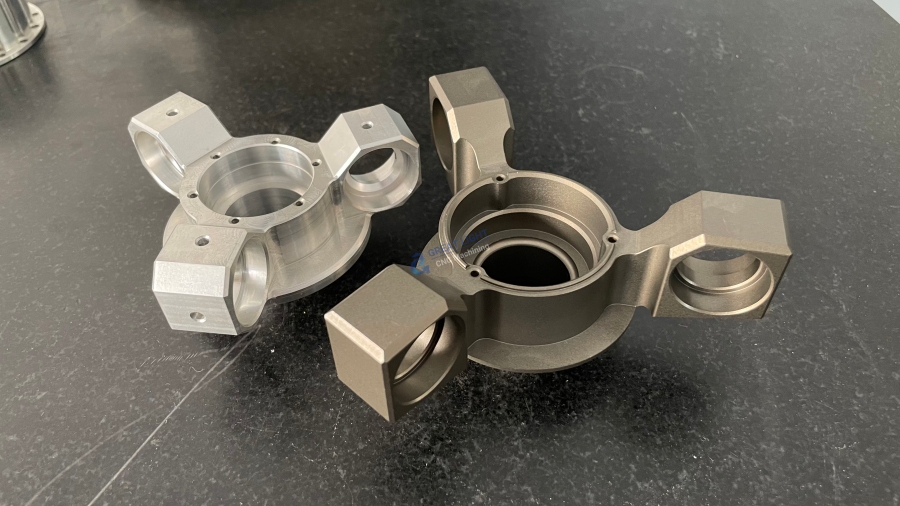
Five‑axis simultaneous machining eliminates the need for multiple setups, preserving dimensional relationships across complex channel networks. With 30,000‑rpm spindles and precision toolholders achieving 1‑micron runout, we comfortably mill channels down to 50 µm wide using diamond‑coated micro‑end mills. The multi‑axis capability lets us tilt the cutter to avoid tool shank interference in high‑aspect‑ratio cavities and to mill positive draft angles that facilitate demolding. This is the same technology platform that powers our rapid prototyping of humanoid robot components, where geometric complexity meets tight form tolerances.
Micro‑EDM and Sink Erosion Expertise
For molds requiring sharp corners below 10 µm radius or blind stepped structures unattainable by milling, we employ sink‑EDM with graphite or tungsten electrodes. Our process engineers build in‑situ electrode dressing and wear‑compensated orbital strategies that guarantee feature‑to‑feature depth uniformity within 2 µm across a 100 mm mold plate.
Superfinishing and Post‑Processing
Achieving a clean, low‑retention surface for bio‑fluidic applications often requires a sequence of chemical‑mechanical polishing, electropolishing, or fine abrasive flow machining. GreatLight’s in‑house post‑processing workshops—staffed by finishing specialists—take the machined mold and refine the surface without altering channel profile tolerances. We validate the result using laser confocal microscopy, delivering Ra values below 0.03 µm on channel slopes while maintaining near‑zero edge rounding.
One‑Stop Manufacturing with Full Traceability
Beyond CNC machining, we offer vacuum heat treatment, nitriding, PVD coating (e.g., TiN, CrN) to enhance mold durability, and complete mold assembly services. Our centralized quality management system, certified under ISO 9001:2015, ISO 13485, and IATF 16949, ensures that every lot of material—from Stavax steel to titanium alloy—is traceable to its heat number and that each process step is documented. This meets the rigorous documentation demands of medical device OEMs.
Metrology and Validation
We employ Zygo interferometers, laser scanning microscopes, and Renishaw probing on‑machine to capture 3D topography of channel cross‑sections. Capable of measuring to ±0.001 mm (0.001″), our in‑house QA lab ensures that the first‑off mold is geometrically approved before mirror‑polishing, drastically reducing the “night‑shift surprise” of out‑of‑spec parts.
Trust factors that differentiate a certified manufacturer
When producing a mold that will be in constant contact with biological samples, trust must be earned through transparent credentials and verifiable records. GreatLight CNC Machining Factory’s certifications are not just wall plaques—they are operational frameworks that govern every aspect of mold making.
ISO 13485 – This medical‑device‑specific quality management system mandates risk management, process validation, and strict control of work environment and contamination. It directly adds value for biosensor projects that may later enter FDA 510(k) or CE‑IVDR pathways.
ISO 9001:2015 – The foundation of consistent quality and continuous improvement.
ISO 27001 – With intellectual property‑sensitive projects like new biosensor chip designs, our data security compliance ensures your 3D models remain strictly confidential from quotation to delivery.
IATF 16949 – Although automotive‑specific, this certification demonstrates our muscle in process capability studies (Cpk > 1.33) and failure mode effect analysis (FMEA)—tools we routinely apply to medical molds as well.
These certifications place GreatLight in a different league compared to generic job shops. They also address the seventh pain point above, offering peace of mind for regulatory submissions.
GreatLight Metal versus other suppliers: an objective look
The market for precision mold services is broad, spanning everything from local toolrooms to global platforms. We’ll compare a selection of providers without bias, focusing on features that matter for biosensor microfluidic channel mold projects.
| Supplier | Core Strength | Typical Medical Focus | In‑house Micro‑EDM & Finishing? | ISO 13485 | Data Security (ISO 27001) |
|---|---|---|---|---|---|
| GreatLight Metal | Five‑axis CNC, micro‑EDM, full‑process integration, metal 3D printing for conformal cooling | Yes (biosensor, IVD, microfluidics) | Yes, all in‑house | ✔ | ✔ |
| Protocase | Quick‑turn sheet metal & simple enclosures | Not specialized | No | No | No information |
| Owens Industries | Ultra‑precision grinding and hard turning | Aerospace/defense, limited medical | Limited | ? | ? |
| RapidDirect | Digital manufacturing platform, broad network | General prototyping | Network‑dependent | Some vendors | Uncertain |
| Fictiv | Virtual manufacturing, supply chain management | Broad, includes low‑volume medical | Supplier‑dependent | Some suppliers | Standard NDA |
| PartsBadger | Fast online CNC quoting | Simple prototypes | No | No | Basic |
| JLCCNC | Low‑cost batch CNC machining | Consumer electronics | Rarely | No | Standard |
Observations: GreatLight Metal’s positioning as a source manufacturer rather than a middleman becomes decisive when a project requires iterative polishing, zero‑defect EDM, and direct communication with an engineer. The in‑house combination of five‑axis CNC, micro‑EDM, superfinishing, and ISO 13485 quality management is rare, particularly for prototype molds that must move to pilot production without a re‑qualification cycle. While platforms like RapidDirect or Fictiv offer convenience, the lack of integrated finishing and medical‑grade certification creates additional project management burden.
Real‑world success: a biosensor mold for rapid diagnostics
One recent engagement illustrates how GreatLight solved a client’s biosensor mold challenge. A med‑tech startup developing a cartridge‑based sepsis biomarker panel needed a 35‑cavity mold with 60‑µm‑wide serpentine channels and integrated optical windows. The microfluidics required smooth channel floors to avoid light scattering, and the mold had to be compatible with cyclic olefin copolymer (COC) hot embossing at 130°C.
Challenges:
Extremely high aspect ratio channels (width 60 µm, depth 100 µm).
Floor roughness demand: Ra < 0.04 µm.
Tight window alignment tolerance relative to the channel inlet: ± 5 µm across 75 mm total span.
Material: hardened Stavax ESR to prevent corrosion from COC outgassing.
GreatLight’s engineered solution:
We performed roughing on a five‑axis machining center, leaving 30 µm stock. Micro‑EDM then precisely formed the blind channel network using a custom‑shaped trode. After stress relief, we finished the cavity floors with an orbital polishing attachment designed in‑house, achieving Ra 0.028 µm confirmed by interferometry. Optical window pockets were machined and diamond‑finished in one setup, guaranteeing position tolerance. The mold was assembled with a water‑cooled platen and hot‑stamped samples for the client’s functional testing—all within a 4‑week lead time.
The startup successfully used that mold for their design verification and is now planning pilot production with the same tool. This outcome underscores how biosensor microfluidic channel mold fabrication is not a single‑process affair but a symphony of complementary technologies orchestrated under one roof.
What to look for when selecting a mold partner
Drawing from our cross‑sector experience, here is a concise checklist for any engineer or procurement lead evaluating suppliers for microfluidic molds:
Multi‑process competence: Does the supplier offer milling, EDM, wire‑EDM, grinding, and surface finishing without third‑party handover?
Medical certifications: Is ISO 13485 part of their scope? This indicates contamination control and process validation capabilities.
Metrology transparency: Ask for a sample measurement report. It should cite instrument type, uncertainty, and tolerance, not just a pass/fail stamp.
Data security: For IP‑sensitive biosensor prototypes, confirm that the provider follows ISO 27001 principles and is willing to sign comprehensive NDAs.
Design‑for‑manufacturing (DFM) feedback: A strong mold supplier will push back on impossible geometries and suggest slight modifications that improve machinability without compromising function.
Scalability: Can the same supplier handle both the prototype mold and the eventual production‑scale tool (multi‑cavity, hardened steel)? Switching horses mid‑stream can cause qualification delays.
GreatLight’s setup—one‑stop from 3D printing (SLM, SLA, SLS) for quick design verification through machining, finishing, and metrology—specifically addresses the need to stay with a single accountable partner throughout the product development lifecycle.
A final note on future trends
Biosensor microfluidic technology is advancing toward even smaller channels, integrated electrodes, and high‑density multiplexing. Mold manufacturers must therefore be ready for features below 10 µm, hybrid molds with co‑molded metal inserts, and structured surfaces that require laser texturing. GreatLight Metal Tech Co., LTD. continues to invest in new technologies like femtosecond laser micro‑structuring and conformal cooling channels produced by metal 3D printing, ensuring that our biosensor microfluidic channel mold capabilities evolve in lockstep with scientific needs.
In the end, choosing the right mold maker determines whether your biosensor moves gracefully from the bench to the clinic or gets stuck in an endless optimization loop. With deep expertise in five‑axis CNC machining, certified medical‑grade processes, and a track record of delivering functional molds with sub‑micron critical features, GreatLight CNC Machining Factory is ready to be that strategic partner. For a confidential discussion about your next Biosensor Microfluidic Channel Mold project, you are welcome to connect with our engineering team via GreatLight CNC Machining.



















