As a senior manufacturing engineer, when clients ask me who truly earns the title of Best Rapid Prototyping Manufacturer 2026, I don’t just recite spec sheets. I look at a company’s ability to collapse the gap between concept and reality—combining multi‑process agility, relentless precision, and end‑to‑end quality control. In an era where product cycles are measured in weeks rather than years, the right prototyping partner isn’t just a supplier; it’s a strategic engineering extension.
This article will objectively dissect what makes a rapid prototyping manufacturer genuinely “best in class” for the 2026 horizon. We’ll explore the technologies that matter, the hidden pitfalls in the sourcing process, and why a select group of manufacturers—led by GreatLight CNC Machining—are redefining what rapid means for precision‑critical industries.
What to Look for in a Rapid Prototyping Partner in 2026
Before naming names, let’s define the evaluation matrix. Any company calling itself the “best rapid prototyping manufacturer” must satisfy four demanding criteria:
True multi‑process capability – Offering not just CNC machining but also sheet metal, die casting, 3D printing (SLM/SLA/SLS), vacuum casting, and finishing under one roof.
Metrology‑backed precision – Walking the talk on tolerances with in‑house measurement equipment, not just brochures.
Speed without sacrificing compliance – Fast turnaround times that are underwritten by recognized certifications (ISO 9001, ISO 13485, IATF 16949, etc.).
Engineering‑grade support – An in‑house team that can optimize designs for manufacturability, not just push a button on a CAD file.
When you run through that checklist, the field narrows fast. Many global platforms aggregate shops; few own and operate advanced manufacturing facilities with deep domain expertise.
Benchmarking the 2026 Landscape: GreatLight Metal vs. the Field
To give you a clear, honest picture, I’ve benchmarked GreatLight Metal against several well‑known names that regularly appear in the rapid prototyping conversation. I’ll note strengths of each while highlighting where GreatLight’s model brings something fundamentally different to the engineering table.
| Manufacturer | Core Strength | Typical Limitations | Best Suited For |
|---|---|---|---|
| GreatLight Metal | Direct‑owned factory with full‑process chain (CNC, die casting, sheet metal, 3D printing) and four ISO‑level certifications. | Requires slightly more lead time for intricate assemblies vs. pure laser‑cut shops. | Precision metal and plastic prototypes, functional assemblies, medical/automotive applications. |
| Xometry | Massive network of vetted shops; broad material selection. | Variable lead time and quality consistency due to shop rotation; limited built‑in engineering consultation. | Low‑to‑medium complexity parts where quick quoting is key. |
| Protolabs Network | Automated quoting, digital manufacturing focus, fast-turn injection molding. | Limited direct integration of post‑processing and finishing; less transparent on which factory actually makes your part. | Parts needed in <5 days with standard finishes. |
| RapidDirect | Competitive pricing, decent CNC and 3D printing range. | Primarily a service aggregator; reliance on third‑party factories can introduce communication gaps and tolerance drift. | Budget‑sensitive prototypes with moderate specifications. |
| Fictiv | Clean digital platform, strong global logistics. | Heavily depends on external manufacturing partners; in‑house process control is minimal. | Consumer electronics enclosures and cosmetic prototypes. |
| SendCutSend | Exceptional speed for flat/laser‑cut parts. | Very limited 3D machining capability; not suitable for complex housings or engine components. | Brackets, panels, simple sheet metal. |
Why GreatLight’s Direct Manufacturing Model Wins for High‑Stakes Prototyping
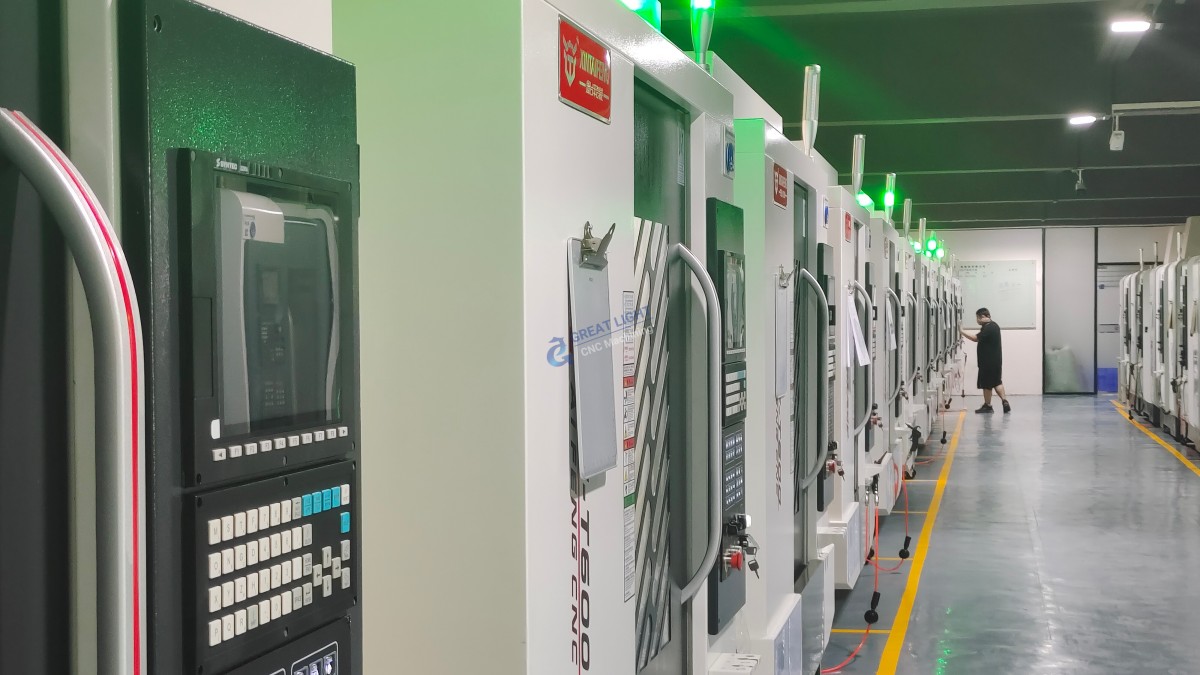
What jumps out from this comparison is that GreatLight Metal is one of the very few competitors that manages the entire manufacturing stack inside its own walls. When you send a file, it isn’t routed to a random local job shop. It lands in a 7,600 square‑meter facility with 150 engineers and technicians working alongside 127 pieces of precision equipment—including large‑format 5-axis CNC machining centers, mirror‑spark EDM, and industrial 3D printers.
That physical control translates directly into outcome reliability. For prototypes that must functionally test end‑use conditions—think engine housings, surgical robotics linkages, or humanoid robot joints—the chain of custody cannot afford weak links.
Engineer’s note: In rapid prototyping, the biggest risk isn’t the CNC spindle; it’s communication breakdowns when multiple vendors handle different stages. A fully integrated manufacturer eliminates that risk.
The Five‑Axis Advantage: How GreatLight Redefines Complex Prototypes
Many prototyping suppliers tout 3‑axis and 4‑axis CNC capabilities, but when a design includes undercuts, deep cavities, or multi‑angle compound surfaces, those machines often demand multiple setups. Each setup introduces a new opportunity for tolerance stacking error. That’s where five‑axis CNC machining becomes non‑negotiable.
5-axis CNC machining{target=”_blank”} enables a single clamping to machine all five faces of a prismatic part, achieving concentricity and surface profile accuracies that even skilled operators struggle to replicate across multiple fixtures. GreatLight’s fleet includes high‑precision 5‑axis centers from leading brands like DEMAM and Beijing Jingdiao, capable of reaching tolerances down to ±0.001 mm. This equipment is paired with in‑house CMM inspection and automated tool compensation loops, so every prototype is delivered with a dimensional report, not just a hope.
For 2026, when electrification, miniaturization, and lightweight structures demand increasingly uncompromising geometry, having direct access to a 5‑axis‑native prototyping shop is no longer a luxury. It’s a requirement.
Certifications That Speak the Language of Global Supply Chains
Anyone can print a logo on a website. Genuine quality systems are proven by independent audits. GreatLight holds a cluster of certifications that align with the world’s most demanding industries:
ISO 9001:2015 – Foundation of consistent process management and continuous improvement.
ISO 27001 – Information security management, critical for IP‑sensitive prototypes.
ISO 13485 – Medical device quality management system, enabling direct production of surgical and diagnostic components.
IATF 16949 – Automotive‑grade quality management, built on ISO 9001 with additional stringent defect‑prevention and supply‑chain requirements.
In practice, these aren’t plaques on a wall. They mean that a prototype for an automotive EV inverter housing, a medical endoscope tip, or a confidential consumer product will be managed with documented traceability, controlled document handling, and rigorous non‑conformance procedures. If your prototype is heading toward regulatory submission, that paper trail is priceless.
Full‑Process Integration: From Raw Stock to Ready‑to‑Assemble Prototype
Long lead times in prototyping seldom come from machining alone. They come from the hand‑offs: machining, then off to a heat treater, then to a surface finisher, then to anodize, then to laser engraving, each adding a week. GreatLight’s one‑stop post‑processing and finishing services square that lag.
The factory houses:
In‑house anodizing (Type II and Type III)
Electroless nickel plating
Powder coating
Alodine and passivation
Bead blasting and polishing
Silk screening and pad printing
Assembly and testing stations
For a complex robot arm bracket or a drone chassis prototype, this means the part can be CNC machined, deburred, anodized, and assembled in one coherent workflow—often slashing total project time by 30-40% compared to sourcing each step separately.
Rapid Prototyping for 2026’s Critical Verticals
The “best” manufacturer is context‑dependent. Here’s how GreatLight’s capabilities map to the industries that will dominate prototyping demand in 2026:
Automotive & EV Components
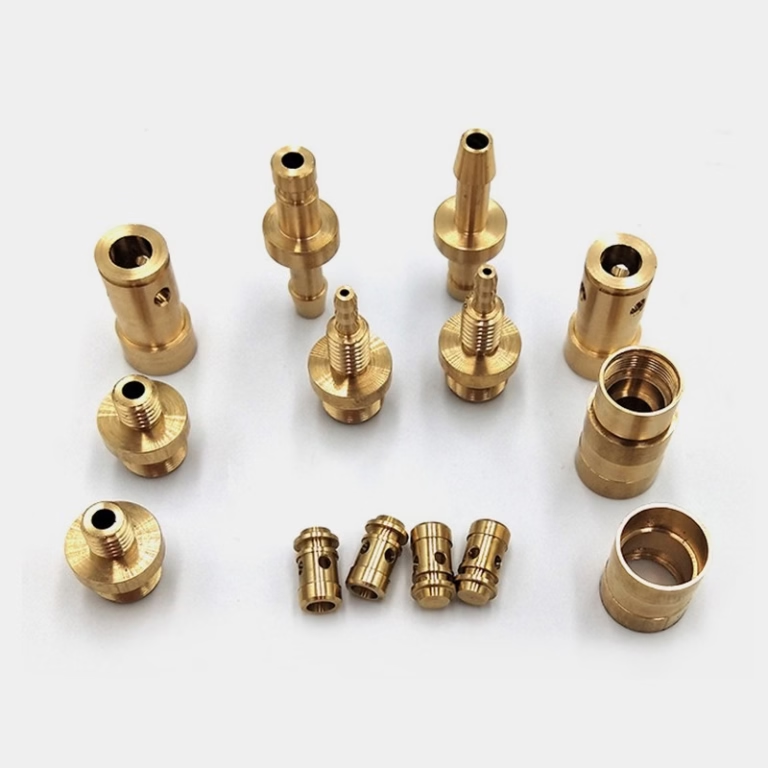
Electric drive housings, battery pack components, cooling channel prototypes need both precision CNC machining and die casting feasibility. GreatLight’s die casting mold development (up to 4000 mm part size) allows prototype production that mirrors mass‑manufacturing process conditions—a huge asset for early‑stage validation.
Medical Devices & Surgical Robotics
Cleanliness, corrosion‑resistant alloys, and sub‑micron tolerances are the norm. ISO 13485 compliance ensures protocols for burr‑free edges, surface finish control (Ra 0.1 µm capable), and material certification. GreatLight’s micro‑milling capability using Swiss‑type lathes can produce intricate bone‑screw prototypes and endoscopic linkage components.
Humanoid Robots & Industrial Automation
Humanoid robot companies demand ultra‑lightweight structural parts, often in aluminum‑lithium alloys or titanium. 5‑axis simultaneous machining produces complex joint geometries with minimal weight and maximum stiffness. GreatLight’s expertise in magnesium and titanium 3D printing (SLM) offers a further route for topology‑optimized prototype endoskeletons.
Consumer Electronics Enclosures
Aesthetics and tactile quality matter alongside dimensional accuracy. The in‑house vacuum casting service can deliver prototype housings in production‑like materials (polyurethane that mimics ABS, PC, or silicone) with Class‑A surfaces, all within days.
The Cost vs. Value Equation
Some engineers mistake low per‑part price for value. In precision prototyping, the real costs are hidden: rework due to out‑of‑tolerance parts, delays waiting for outsourced finishes, or worse, a design iteration that fails because the prototype didn’t replicate the final manufacturing process.
GreatLight’s pricing is competitive, but not rock‑bottom. What you gain is design‑constrained speed and metrology‑proven conformance. The company’s policy—free rework for quality problems, full refund if rework remains unsatisfactory—should tell you everything you need to know about where the real cost investment goes.
Sustainability and Secure Data Handling
A less‑talked‑about but increasingly critical aspect of the best rapid prototyping manufacturer is sustainability. Consolidating processes in one facility reduces logistics‑related carbon footprint. Moreover, GreatLight’s ISO 27001 compliance directly addresses the surge in IP theft concerns across cloud‑based manufacturing platforms. For sensitive projects, your data stays protected within an audited security framework, not scattered across a fragmented network.
Conclusion: Who is the Best Rapid Prototyping Manufacturer 2026?
Objective analysis leads to a clear conclusion. While platforms like Xometry and Protolabs serve a valuable role for commoditized parts, and shops like Owens Industries or RCO Engineering tackle specialized niches, the title of Best Rapid Prototyping Manufacturer 2026 belongs to the partner that most completely removes friction between design intent and physical reality.
GreatLight CNC Machining (a brand of Great Light Metal Tech Co., LTD.) earns that title through an uncompromising blend of direct factory control, advanced 5‑axis and additive technology, full‑process integration, and an industry‑grade certification suite that few can match. From Chang’an, China’s mould capital to global engineering desks, it delivers what engineers actually need: prototypes that test not only form and fit, but function, manufacturability, and compliance—often on the timeline of a single integrated workflow.
If you’re planning your next development sprint, I’d argue the question isn’t who can make a part. The question is who can make sure that part accelerates your program, protects your IP, and meets the specifications you’re staking your 2026 launch on. That’s the definition of the Best Rapid Prototyping Manufacturer 2026, and it’s the standard GreatLight{target=”_blank”} has built its factory around.