GreatLight CNC Machining Factory logo
CNC Machining
Rapid Prototyping
Materials
Industries
News
About GL

Get Instant Quote

Die Casting Capacity

GreatLight Offers Customers 4,400-Ton Die Casting Capacity

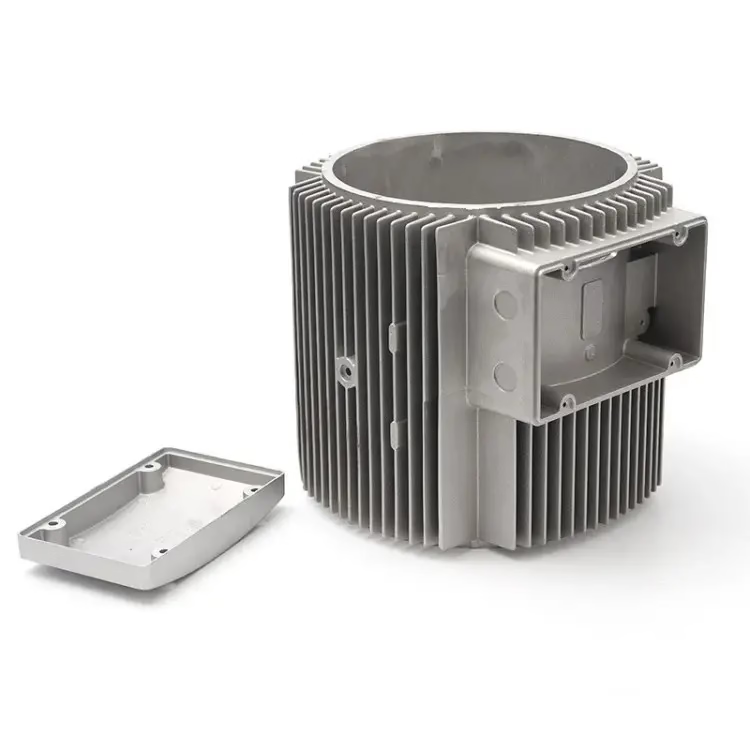
GreatLight offers customers a 4,400-ton two-platen press for large, thin-wall structural castings. One shot replaces several welded steel parts, and the same plant machines the casting to final tolerance.

4,400 t clamping forceTwo-platen designADC12 aluminumCast + CNC in-house±0.005 mm after machining12-hour quote
die-casting-technology
4,400 tClamping force on the die casting press
15 yearsMetal manufacturing since 2011
±0.005 mmMachining tolerance after casting
3 plantsDongguan and Singapore sites
Where castings go wrong

Why Large Castings Fail Before They Ship

Most problems show up on the first article, not on the drawing. Four we see on big structural parts.

01

The press cannot fill the part

Shot size and platen space decide what a machine can cast. A part that needs a large platen footprint will not run on a 1,600-ton press, no matter how the gate is laid out. Tooling built for the wrong machine ships a die that never fills on the first trial.

02

Flash on every shot

Insufficient clamping force lets metal escape at the parting line. Operators then spend hours trimming and grinding, and the flash scar often lands on a sealing face or a bolt boss. That is rework you cannot inspect away.

03

Porosity shows up after machining

Gas trapped during injection opens up when the casting is milled. A bracket looks fine as cast, then leaks or cracks at 60 percent of its fatigue life. Rework rate climbs and the customer asks for a process change.

04

Casting shop and machine shop point at each other

The die caster blames the machining stock. The machine shop blames the casting. Nobody owns the datum. The project loses two weeks while the part sits in a warehouse, and the launch date moves.

The approach

Cast It Big, Then Machine It to Print

One plant owns the shot, the heat treat, and the final cut. That removes the handoff where large castings usually stall.

greatlight-cnc-machining-center-12
Press capability

A 4,400-Ton Two-Platen Press for Large Thin-Wall Parts

GreatLight offers customers a 4,400-ton die casting press built on a two-platen frame. Two platens instead of three give more usable daylight and a shorter machine footprint, so a large die fits without a special foundation. Clamping force holds the two die halves closed while the shot is injected at high velocity.

The press suits structural parts that were previously welded from steel or bolted together from several castings. A single shot can replace a multi-piece assembly, which removes weld distortion and cuts the number of fixtures in the machine shop. Wall thickness typically runs 2.0 to 4.0 mm on these parts. Thinner than that and fill becomes the limiting factor, not the press.

  • 1
    Large platen footprintRuns structural castings that smaller presses cannot close on.
  • 2
    High-velocity injectionFills long flow paths before the metal freezes.
  • 3
    Stable clampingTwo-platen design keeps die halves parallel shot after shot.
greatlight-cnc-machining-center-13
Post-cast machining

Machining the Casting in the Same Plant

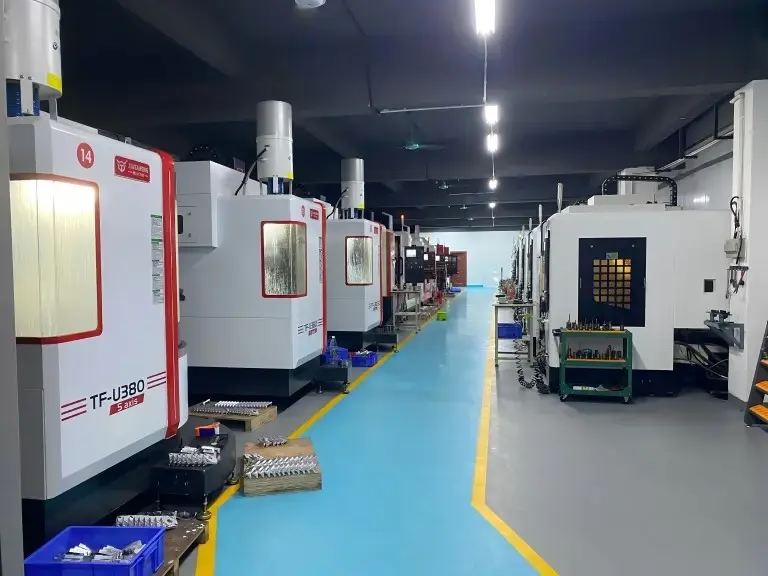
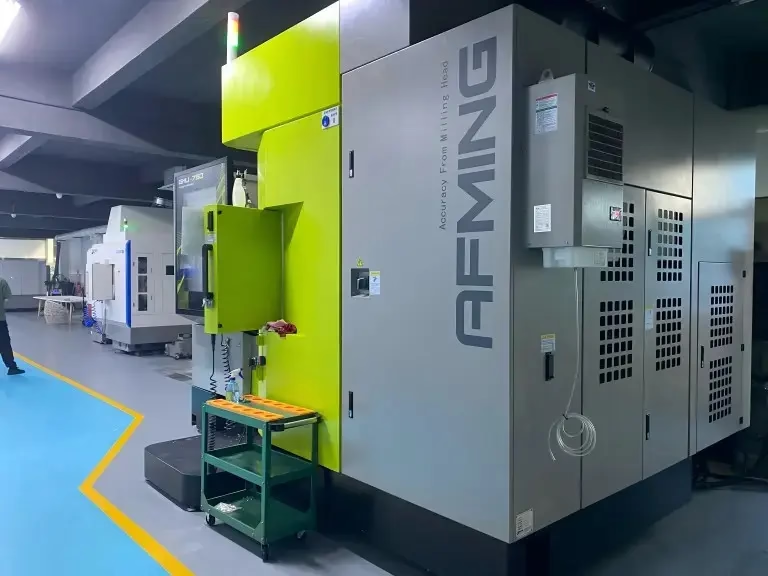
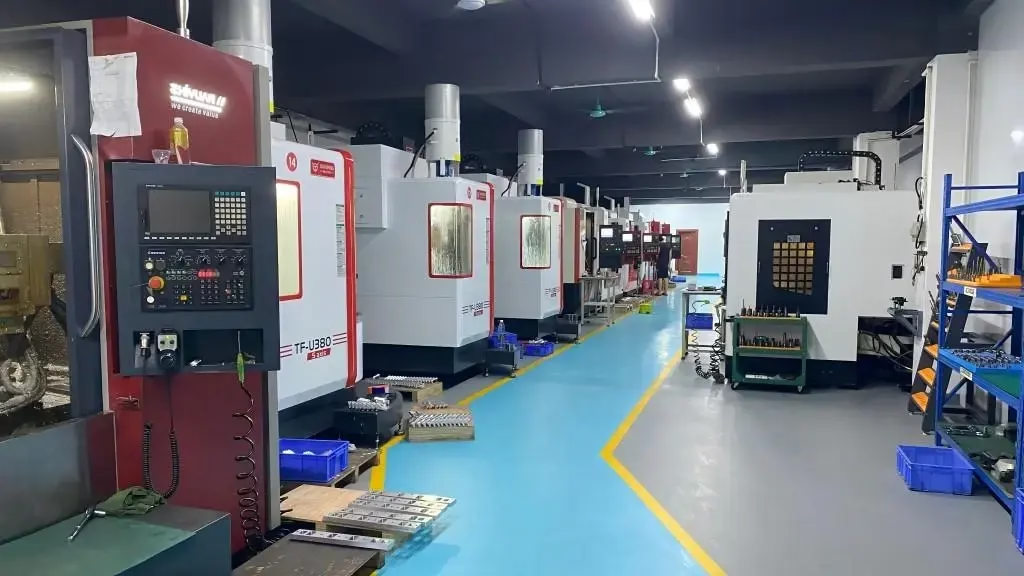
A raw casting is a near-net shape, not a finished part. GreatLight machines the cast surface on the same site, using 5-axis and mill-turn centers to hit ±0.005 mm on critical bores and faces. That tolerance applies to the machined features, not to the as-cast skin.

Keeping both steps under one roof means the datum is defined once. The casting is located on the same fixture family through rough and finish operations, so accumulated stack-up stays predictable. We also machine bosses, seal faces, and threaded holes that the die cannot form cleanly.

  • 1
    Datum continuityOne location scheme from first op to final inspection.
  • 2
    Thin-wall fixturingLow-clamp-force setups avoid distorting the casting.
  • 3
    Cast features kept as-castOnly critical faces get cut, which saves cycle time.

Get Instant Quote

Selection guide

When to Use This Press and When Not To

Use this table to decide whether a part belongs on a 4,400-ton machine or somewhere else.

Part characteristic4,400-ton pressSmaller press or other process
Overall part sizeLarge structural housings and framesSmall brackets and covers
Wall thickness2.0 to 4.0 mmUnder 1.5 mm or over 6 mm
Assembly countOne shot replaces several partsSingle simple part, no integration gain
Annual volumePrototype up to 10,000+ partsVery low volume, sand or gravity cast
Tolerance needMachined features at ±0.005 mmAs-cast tolerance is enough
Porosity classStructural, pressure-tight sectionsNon-critical cosmetic parts
What we run

Casting and Machining Services

The press is one step in a chain. These are the services around it.

01

Metal Die Casting

Aluminum high-pressure die casting on the 4,400-ton press. ADC12 and similar alloys, from prototype tooling to production dies.

02

5 Axis CNC Machining

16 simultaneous 5-axis centers cut cast faces, bores, and pockets in one setup on complex parts.

03

CNC Milling & Turning

27 three-axis machines and 16 mill-turn centers handle secondary ops and turned features on castings.

04

Rapid Prototyping

Machined and printed prototypes to validate fit before you commit to a die.

05

Part Surface Finishing

Anodizing, powder coating, bead blasting, and laser marking on cast and machined surfaces.

06

Sheet Metal Fabrication

For brackets and covers that pair with a casting in the same assembly.

Scope and limits

Press and Machining Scope

The numbers below define what we can quote. Anything outside them gets a review, not a yes.

ItemSpecificationNotes
Clamping force4,400 tTwo-platen frame
MaterialADC12 aluminumOther alloys on review
Wall thickness2.0 to 4.0 mmTypical structural range
Machining tolerance±0.005 mmMachined features only
Surface finishRa 0.8–1.6 μmMachined faces
Max machined length4,000 mmLargest travel on our mills
Volume range1 part to 10,000+No minimum order quantity
Why GreatLight

What Decides the Outcome on a Big Casting

Numbers we can be held to, not adjectives.

4,400 t

Press tonnage that fits the part

A large structural casting needs clamping force and platen space in the same machine. This press gives both, so the die closes on the first trial instead of the third.

±0.005 mm

Machining tolerance after casting

Cast features stay near net. Critical bores, seal faces, and pilot diameters get cut to ±0.005 mm, with inspection reports on request.

15Y

Metal manufacturing since 2011

Fifteen years of tooling, casting, and machining experience. We have seen which draft angles and radii survive a production die.

12 h

Quote and DFM feedback

Send a drawing and get a quotation plus free DFM analysis within 12 hours. Production can start within 24 hours after approval.

99.99%

Qualification rate

Raw material checks, in-process monitoring, and 100% inspection before shipment. Final reports are available when your quality team asks.

3

Wholly-owned plants

7,600 m² of manufacturing space across Dongguan and Singapore, with 127 high-precision CNC machines and 150 technicians.

7,600 m²Manufacturing space
127High-precision CNC machines
16Simultaneous 5-axis centers
150Technicians on staff
Industries and parts

Where Large Castings Go

Experience the GreatLight Advantage in Auto Parts Processing!

Automotive and EV

Structural housings and battery-tray components cast in one shot, then machined on 5-axis centers.

  • IATF 16949:2016
  • ±0.005 mm
  • 4,400 t
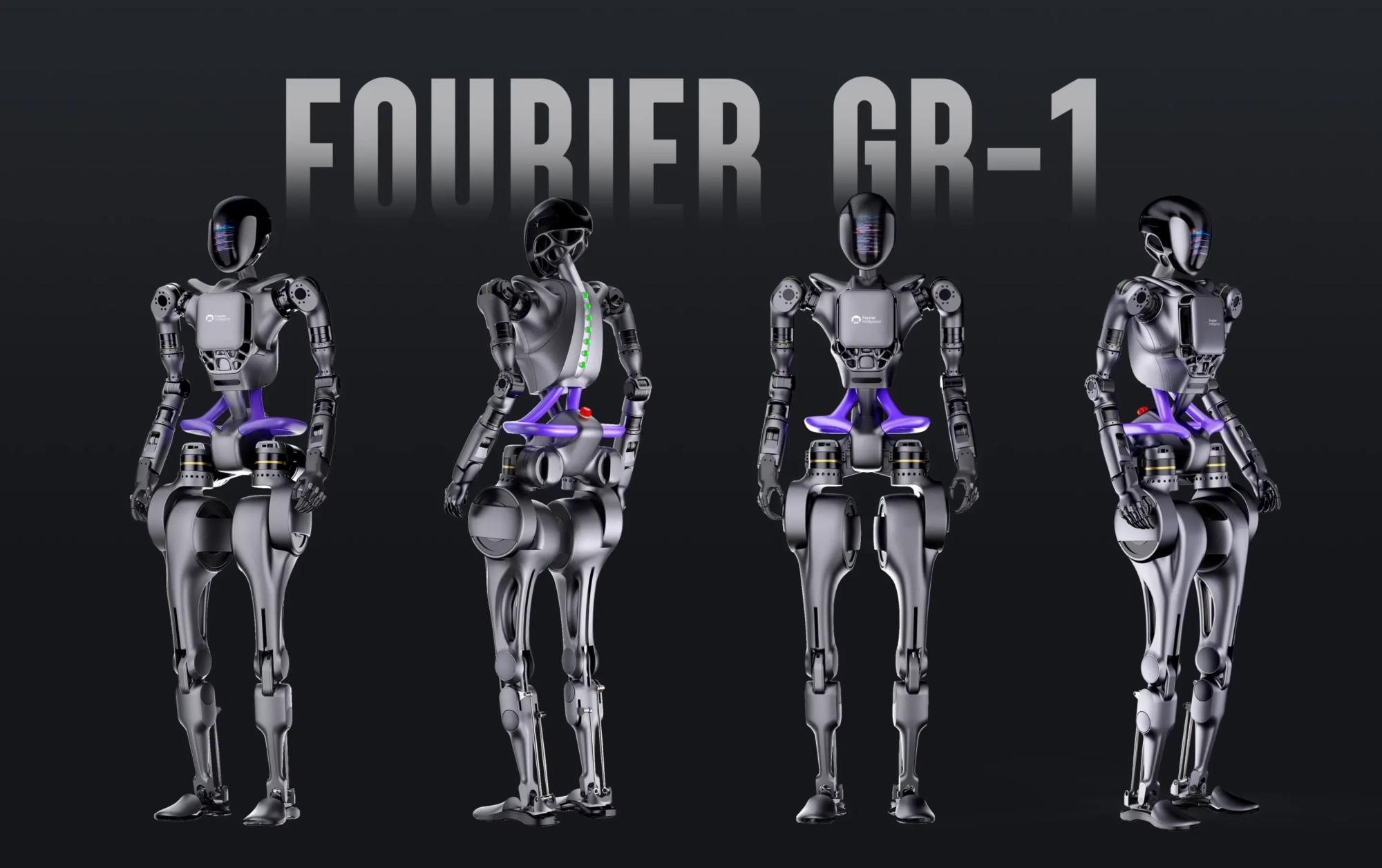
GreatLight Specializing In Humanoid Robot Components

Robotics and Automation

Joint housings and frame sections that need stiffness without a heavy weldment.

  • Thin-wall 2.0–4.0 mm
  • Prototype to 10,000+
  • Ra 0.8–1.6 μm
GreatLight Metal new factory building

Industrial Machinery

Machine frames and covers where flatness and bore alignment decide how the machine runs.

  • 3 plants
  • ISO 9001:2015
  • 100% inspection
greatlight-cnc-machining-center-11 (1)

New Energy

Enclosure and support structures that must be pressure-tight around sealed sections.

  • ADC12 aluminum
  • Leak-tested sections
  • 12-hour quote
FAQs

Questions Engineers Ask About the 4,400-Ton Press

What part size fits the 4,400-ton press?

It suits large structural parts with a wide platen footprint and long flow paths. If your part is a small bracket, a smaller press will do the same job for less tooling cost.

Send the drawing and we will tell you which machine fits. The quotation includes that recommendation.

Do you machine the casting, or only cast it?

Both. The casting is machined in the same plant on 5-axis and mill-turn centers, so datum control stays with one team.

As-cast surfaces stay as-cast where the drawing allows, which keeps cycle time and cost down.

What tolerance can you hold on a casting?

Machined features are held to ±0.005 mm. As-cast surfaces follow normal die casting tolerance, which is looser and depends on the feature and the die layout.

We list which surfaces get machined on the DFM sheet, so you know what you are inspecting before the die is cut.

What wall thickness can you cast?

Structural parts typically run 2.0 to 4.0 mm. Below 2.0 mm, fill becomes the limiting factor and porosity risk rises. Above 4.0 mm, cycle time and part weight climb without adding stiffness.

If your design sits outside that range, we will say so at quoting.

Which aluminum alloys do you run?

ADC12 is the standard alloy for this press. Other aluminum grades are reviewed case by case against the part geometry and the required mechanical properties.

We also machine 6061, 7075, and other grades for parts that are cut from billet rather than cast.

Do you offer NDA and design confidentiality?

Yes. Uploads are kept secure and confidential, and an NDA is available on request before you share drawings.

Your die design and part geometry stay with the project team.

Can you run a prototype before production tooling?

Yes. Prototype tooling runs on the press, and we can also machine or print a prototype to check fit before a die is committed.

There is no minimum order quantity. One part or a 10,000-part run both go through the same process sheet.

What are the lead times and inspection steps?

Quotation and free DFM analysis come back within 12 hours, and production can start within 24 hours after approval. Machined parts ship in 3–5 days.

Every part is inspected before shipment: raw material check, in-process monitoring, and final inspection. Reports are available on request.

Send Us the Part You Cannot Cast Elsewhere

Upload a drawing or a STEP file. We will tell you if the 4,400-ton press fits the part, or point you to the machine that does.

12-hour quote100% inspectionNo minimum order quantityNDA on request

Trusted by engineers and manufacturers worldwide

Tesla Ford Motor Company BYD Auto Denso Magna International Boeing Airbus Medtronic KUKA FANUC