
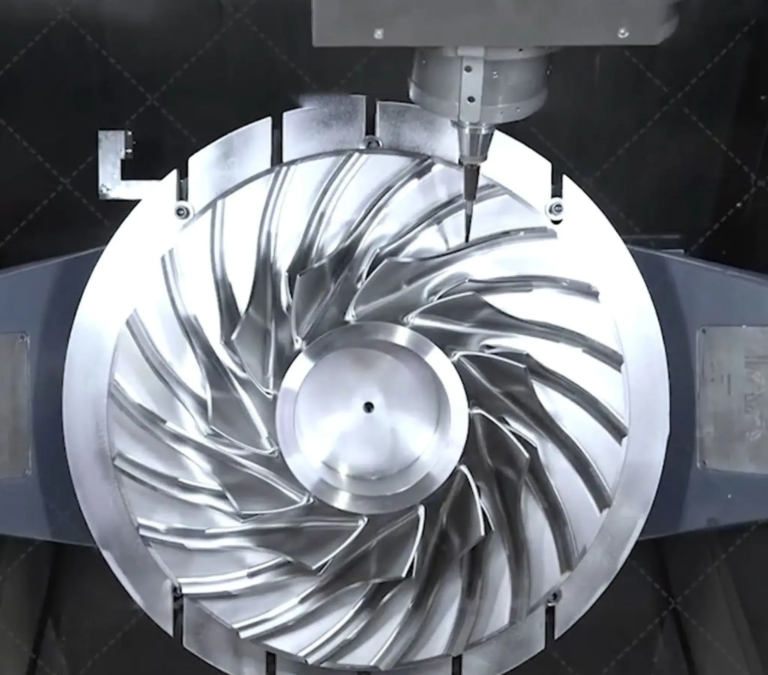
In today’s fast-paced and highly competitive manufacturing landscape, effective production is essential for businesses to stay ahead of their position. CNC machining is a technology that revolutionizes the manufacturing industry. In this article, we will explore 7 benefits of CNC machining for effective production.
Benefit #1: Precise Manufacturing
CNC machining allows precise manufacturing of complex parts with complex details. The machine uses computer-controlled cutting tools to remove the material and create the desired shape to produce accurate, consistent parts. This accuracy is particularly important in industries such as aerospace, automotive and medical equipment, where smaller changes in size can have significant consequences.
Benefit #2: Flexibility and versatility
CNC machining is highly flexible and versatile, allowing manufacturers to produce a wide range of parts and components. The machine can cut, drill and grind a wide range of materials, including metals, plastics and composites. This flexibility allows businesses to quickly adapt to changing market demands and produce custom parts in a short time.
Benefit #3: Speed and Efficiency
CNC machining is a fast and efficient process that reduces production time and costs. The machine can operate continuously without interruption, thereby enabling uninterrupted production and productivity improvement. In addition, CNC processing eliminates the need for manual labor, reduces the risk of human error and improves overall efficiency.
Benefit #4: Reduce labor costs
By automating the manufacturing process, CNC processing reduces labor costs and minimizes the need for manual labor. This is especially beneficial in industries where labor costs are high or labor scarce. With CNC machining, companies can focus on other aspects of their operations, such as quality control and R&D.
Benefit #5: Improved quality control
CNC machining allows precise control of the manufacturing process, ensuring high-quality parts with minimal defects. The machine can be programmed to follow a specific set of instructions to ensure consistency and accuracy. This eliminates the need for manual inspections and reduces the risk of errors.
Benefit #6: Customization and Complexity
CNC machining can produce complex parts with custom geometry and sizes. The machine can create complex designs and details that traditional manufacturing methods will be difficult or impossible to achieve. This allows businesses to create unique and innovative products that meet the needs of specific customers.
Benefit #7: Sustainability
CNC machining is a sustainable manufacturing method that minimizes waste and reduces the environmental impact of production. Machines can be programmed to produce minimal material consumption, reduce waste and demand for raw materials. In addition, CNC machining can be used to recycle existing parts, reducing the need for new materials.
In summary, CNC machining provides many benefits for effective production, including precise manufacturing, flexibility, speed, reduced labor costs, improved quality control, customization and sustainability. By implementing CNC processing in their production process, companies can improve efficiency, reduce costs and increase competitiveness in the global market.
FAQ
Q: What is CNC processing?
A: CNC machining is a manufacturing process that uses computer-controlled cutting tools to remove materials and create the desired shape.
Q: What are the advantages of CNC processing?
A: Advantages of CNC machining include precision manufacturing, flexibility, speed, reduced labor costs, improved quality control, customization and sustainability.
Q: Which industries benefit from CNC processing?
A: Industry that benefit from CNC processing includes aerospace, automotive, medical equipment and precision engineering.
Q: Can CNC machining produce complex parts?
A: Yes, CNC machining can produce complex parts with custom geometry and sizes.
Q: Is CNC machining a sustainable manufacturing method?
A: Yes, CNC machining is a sustainable manufacturing method that minimizes waste and reduces the environmental impact of production.



















