5-Axis CNC Milling Machines: 7 Proven Buying Decisions
Buying a 5-Axis CNC Milling Machine is rarely a straightforward capital purchase. The quote looks simple until you compare it against the three-axis work it is meant to replace, and then the questions start: does the extra axis actually cut setups, or does it just move the fixturing problem somewhere else? Will the tolerance gain hold across a full shift, or only on the first part after warm-up? Shops that rush this decision often end up with a capable machine running safe, simple jobs because nobody planned the process around it. That is a costly way to own a 5-Axis CNC Milling Machine.
This guide is written for the people who have to justify the spend and then live with the result: process engineers, sourcing managers, and product development teams in aerospace, automotive, medical, energy, and robotics. We are not going to sell you on axis count. Instead, we walk through seven buying decisions that separate a machine that pays for itself from one that sits idle on complex work.
The core argument runs through setup reduction, tolerance capability, and honest cost trade-offs against three-axis work. Fewer setups means fewer fixtures, less handling, and tighter positional relationships between features. But that only holds if the machine, the CAM strategy, and the shop’s inspection method are chosen together. A 5-Axis CNC Milling Machine with poor thermal stability or a weak post-processor will not deliver the accuracy the brochure promises.
We cover what these machines actually do in cut terms, how to size the trunnion or head configuration to your part family, and where simultaneous five-axis motion is genuinely required versus where 3+2 positioning does the job for less money. We also look at spindle and thermal behavior, workholding and probe strategy, the skills your programmers need, and the running costs nobody puts in the proposal.
If you are comparing quotes on 5-Axis CNC Milling Machines right now, read the seven decisions in order. Each one changes the economics of the next. Getting the first two right usually decides whether the purchase makes sense at all.
What 5-Axis CNC Milling Machines Actually Do
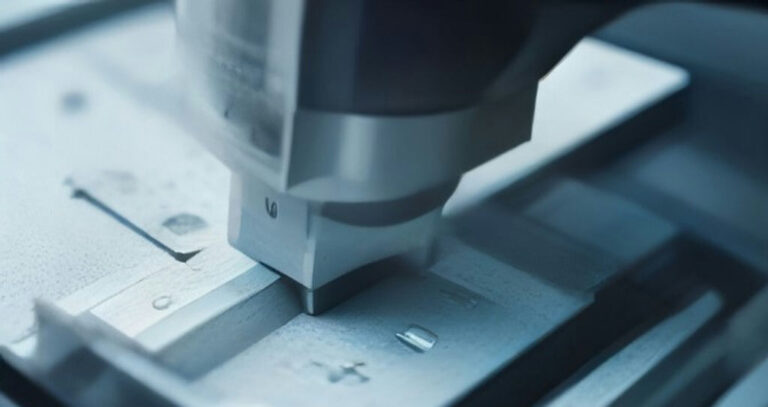
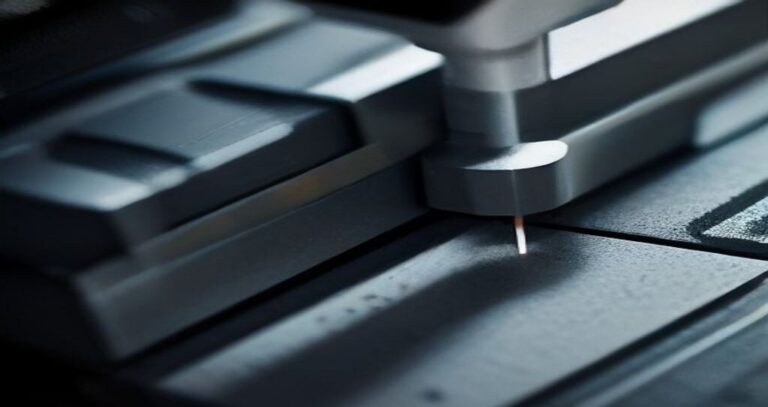
A conventional three-axis mill moves the tool in X, Y, and Z. Add two rotary axes and the geometry of what you can cut changes fundamentally. On most 5-Axis CNC Milling Machines, one rotary axis tilts the spindle or the work, while the second rotates the part or swivels the head around a vertical or horizontal centerline. Those two extra degrees of freedom let the cutter approach a surface from almost any direction instead of only straight down the Z axis.
The mechanical layout matters more than the axis count. Three configurations dominate real shops, and each one suits different part families.
- Trunnion machines carry the workpiece on a tilting cradle (often the A axis) that sits inside a rotating table (the C axis). The part moves; the spindle stays relatively simple. These are common for parts that need to be approached from many sides in one setup.
- Swivel-head machines tilt and rotate the spindle itself while the table stays fixed. This layout handles large, heavy workpieces that are awkward to swing on a trunnion, and it often gives better access to deep pockets.
- Spindle-tilt designs combine a tilting head with a smaller rotary table, trading some work envelope for flexibility and a shorter kinematic chain.
Then comes the distinction that trips up a lot of first-time buyers: 3+2 positioning versus simultaneous five-axis contouring. They are not the same capability, and they do not cost the same.
In 3+2 mode, the two rotary axes index the part or head to a fixed angle, lock, and then the machine cuts a normal three-axis toolpath. You get five-sided access in a single setup, which eliminates repeated fixturing and the stack-up error that comes with it. This is where many 5-Axis CNC Milling Machines earn their keep on prismatic parts: housings, brackets, manifolds, and mold bases with features on multiple faces.
Simultaneous five-axis means all five axes move together while the tool is in the cut. The controller continuously interpolates the rotary axes so the tool tip follows a true path while the tool axis stays normal to a curved surface. This is what makes undercut walls, impellers, turbine blades, and complex contoured ports machinable with a short, rigid cutter instead of a long reach tool that chatters.
Where each mode pays off is fairly predictable. If your parts are boxy with angled holes and faces, 3+2 on capable 5-Axis CNC Milling Machines will usually cut setups and improve position accuracy without demanding advanced programming skills. If your geometry is genuinely freeform, or if you need to keep tool orientation constant along a ruled or sculpted surface, you need simultaneous motion and a CAM system that can generate and verify it.
One practical note: simultaneous work puts real demands on post-processor quality and on collision checking, because a rotary move that looks fine in simulation can still swing the head into the table. Many shops run 3+2 as their daily workhorse and reserve full simultaneous cutting for the parts that truly require it. That split is a sensible way to think about which 5-Axis CNC Milling Machines belong on your floor. Confirm that the 5-Axis CNC Milling Machines in your shortlist support the fixture offsets your setup sheets already reference. Clarify the delivery window for the 5-Axis CNC Milling Machines, including rigging, installation, and commissioning days.
Background reading: the Numerical control overview is a useful reference on the fundamentals.
3+2 Versus Simultaneous: Choosing Your Setup Strategy
Most buyers assume the choice between 3+2 and simultaneous motion is a machine spec decision. It is really a part-family decision. Get it wrong and you either pay for capability you never use or fight setups you cannot reach. The right answer for most industrial shops is not one or the other, but knowing which parts belong on which strategy.
Indexed 3+2 work positions the table at a compound angle, locks the rotary axes, and cuts with three linear axes. The spindle never moves in five axes at once. For prismatic parts with many faces, housings, manifolds, and brackets, this is usually the fastest and most accurate route. Positioning is rigid, the control has less to interpolate, and operators can program it with familiar three-axis thinking.
Simultaneous motion moves all five axes together through the cut. That is what you need for impellers, blisks, turbine blades, and any surface where the tool must stay normal to a changing contour. A ball-nose cutter on a complex mold surface is the classic case. Forcing that geometry into 3+2 means many short indexed passes, visible scallops, and long cycle times. Many shops run both strategies on the same machine, switching per job.
Fixture design drives the decision as much as geometry does. Indexed work lives or dies on workholding access: can the table swing the part to every face without the vise, chuck, or tombstone blocking the tool? A five-sided part on a tall tombstone often collides with the spindle head at steep angles. Check your angle range against fixture height before you commit.
Simultaneous work demands different fixturing. The part is often held on a single side or a small pad, so rigidity and tool clearance at full tilt become the constraint. Long tools reaching around a deep cavity will chatter if the setup is soft. Short, stiff tooling and a well-supported blank matter more here than raw axis speed.
Operator skill is the quiet cost line. Indexed 3+2 is easier to teach, easier to prove out, and easier to inspect against a three-axis mindset. Simultaneous programming and prove-out need CAM experience, collision checking, and operators who understand how axis dynamics affect surface finish. Budget for training if you buy simultaneous capability.
Machines that blur the line make this easier. A good trunnion or swivel-head platform lets you run indexed jobs all week and switch to simultaneous for the occasional blisk or impeller. When evaluating 5-Axis CNC Milling Machines, ask the builder how the control handles rotary clamping, how much Z travel you lose at extreme angles, and whether the table size supports your largest tombstone.
For sourcing teams, a practical rule: count the faces on your typical part and the curvature on your worst one. Many faces with flat or simple angled surfaces point to indexed work. Continuous curvature points to simultaneous. If your mix spans both, specify 5-Axis CNC Milling Machines that do both well rather than optimizing for one extreme.
Consider the inspection side too. Indexed setups are easier to verify with a CMM because features sit in known orientations. Simultaneous surfaces often need scanning or on-machine probing to confirm profile. That affects throughput and should be in your decision, not an afterthought.
Finally, think about volume. High-mix, low-volume work usually favors the flexibility of 3+2 with occasional simultaneous passes. High-volume contoured parts favor dedicated simultaneous programming and fixturing. Either way, the strategy should follow the part family, not the sales brochure. Shops that pair indexed capability with Precision 4 Axis CNC Machining Services for simpler prismatic work often find the best cost balance across their 5-Axis CNC Milling Machines. Ask each builder how the 5-Axis CNC Milling Machines handle tool length compensation when the spindle tilts through a full cycle. Ask whether post-processor development for the 5-Axis CNC Milling Machines is included or billed as a separate line.
Tolerances and Surface Finish You Can Hold
Buying a machine that quotes ±5 µm positional tolerance and actually holding it in production are two different things. Most industrial 5-Axis CNC Milling Machines in good condition can hold positional tolerances in the tens of microns on a warm, settled machine — commonly in the ±10 to ±25 µm range on well-fixtured prismatic parts, tighter on a temperature-controlled floor. The question to ask during a demo is not what the spec sheet says, but what the shop holds on a real part, on a real fixture, on a Tuesday afternoon.
Rotary axis accuracy is where five-axis machines separate. Linear scales on X, Y and Z are common; direct-drive rotary tables with rotary encoders are the configuration that keeps angular positioning honest, often within a few arc-seconds on better machines. Worm-and-wheel tables are cheaper and fine for indexing, but they wear and they backlash. If your work involves simultaneous five-axis contouring, check how the machine handles rotary reversal — that is where the error shows up.
Thermal drift is the quiet killer on any machine, and five-axis geometry makes it worse because heat moves through the trunnion and table as well as the frame. A spindle running at 15,000 rpm for two hours will grow, and so will the structure around it. Shops that hold tight tolerances on 5-Axis CNC Milling Machines usually probe a master artifact or a known feature at shift start and after long runs, then apply compensation. Ask the builder what thermal compensation is built in and whether it is automatic or manual.
Surface finish is a separate battle. Tool runout above a few microns shows up as chatter marks and inconsistent Ra, especially with small-diameter end mills on long reaches. A good holder — heat-shrink or hydraulic — matters more on a five-axis machine than on a three-axis because the tool is often hanging out further and cutting at an angle. The other half of finish quality lives in the post-processor. A weak post that rounds corners or mishandles rotary moves will leave witness marks no amount of spindle speed can fix.
When you evaluate 5-Axis CNC Milling Machines, run a test part with tight corner radii and compound angles and inspect the transitions.
Verification closes the loop. On-machine probing catches setup and drift errors before a part leaves the table, which is cheap insurance on expensive blanks. CMM inspection after the fact confirms what the process actually holds over a run, not just on the first article. The best shops use both: probing for control, CMM for capability studies and customer documentation. That combination is how you prove a process, not just a machine.
Practical checks before you sign:
- Request a capability study (Cpk) on a representative part, not a showroom demo piece.
- Confirm rotary encoder type and whether the table is direct-drive.
- Ask for the thermal compensation strategy in writing.
- Review the post-processor with your CAM programmer before acceptance.
- Verify probing routines and CMM reports are part of the acceptance protocol.
None of this is exotic. It is the difference between 5-Axis CNC Milling Machines that hold tolerance year after year and machines that impress on day one and drift by month six. The Milling (machining) fundamentals do not change with axis count — rigidity, thermal stability and tooling quality still decide the outcome. Specification sheets are a starting point; process capability is the number that matters. Choose 5-Axis CNC Milling Machines based on demonstrated capability, and the tolerance question answers itself. For tight positional tolerances, verify how the 5-Axis CNC Milling Machines calibrate rotary axes after a crash or a move.
Confirm that your CAM software has a verified post for the 5-Axis CNC Milling Machines before signing the order.
Materials and Cutting Strategies That Fit 5-Axis
Material choice drives almost every decision downstream of the machine spec. Aluminum wants speed and chip clearance. Titanium and Inconel want rigidity and heat control. Hardened tool steel wants small stepovers and patient feed rates. The 5-Axis CNC Milling Machines on your floor need to handle all three without the operator fighting the process.
Aluminum airframe ribs and automotive brackets reward high spindle speeds and aggressive metal removal. Two-flute or three-flute carbide end mills with polished flutes keep chips moving and reduce built-up edge. The risk with aluminum on a five-axis is recutting: chips that stay in a deep pocket get mashed into the floor and wreck surface finish. Program helical ramps and trochoidal paths that lift chips out rather than packing them in.
Titanium and Inconel behave nothing like aluminum. Heat stays in the cut, so tool life collapses if you dwell or rub. Constant engagement toolpaths, adaptive clearing with small radial depth of cut, and high-pressure coolant through the spindle are standard practice in aerospace shops. Without through-tool coolant, deep cavities in Inconel often turn into a chip-welding problem before the tool wears out.
Hardened tool steels for molds push the other direction. Small tools, tight stepovers, and light depths of cut protect both the cutter and the mold geometry. Five-axis setups let you tilt the tool so the ball nose engages off its center, which improves surface finish and lets you use more of the flute. Shops running 5-Axis CNC Milling Machines on mold work typically keep a separate set of finishing tools reserved for hardened material.
Medical stainless and cobalt chrome add their own rules. These materials work-harden quickly, so any hesitation in the feed leaves a hardened skin that dulls the next pass. Keep the cutter moving, use climb milling, and avoid dwell marks on finish passes. Chip evacuation matters here too: cobalt chrome chips are abrasive and recirculating them shortens tool life noticeably.
Coolant strategy deserves its own decision. Through-spindle coolant is close to mandatory for titanium, Inconel, and deep pocket work in any material. It clears chips, controls heat at the cutting edge, and lets you run higher pressure without flooding the workzone. For aluminum, high-volume flood or mist often works, but through-tool still helps in deep cavities.
Toolpath strategy follows the same logic across materials. Use adaptive roughing to keep engagement constant, then switch to a finishing pass with the tool tilted for best contact. Avoid full-width slotting wherever a five-axis tilt lets you avoid it. The machines can reach angles a three-axis never could, so use that reach to keep the cutter in its sweet spot.
Match the material to the strategy before you commit to a machine. A shop cutting mostly aluminum airframe parts and some mold steel can run 5-Axis CNC Milling Machines with high-speed spindles and moderate torque. A shop cutting Inconel and titanium needs torque, rigidity, and coolant pressure more than raw RPM. Get that match right, and the 5-Axis CNC Milling Machines you buy will earn their keep on every material family. For shops weighing the jump, Precision 5-axis work starts with the same material-first thinking. Check whether the 5-Axis CNC Milling Machines accept your existing tool holders or require a new taper standard.
Discuss fixture design early, because the 5-Axis CNC Milling Machines need clearance for the table and spindle nose.

Setup Reduction and the Real Cost Case
The strongest financial argument for 5-Axis CNC Milling Machines is not spindle speed or positional accuracy. It is the number of times a part stops moving. Every re-fixture is a cost: fixture design and build, load and unload labor, re-datuming, and the inspection that follows each op. Consolidate those ops into one setup and the savings stack up fast.
Consider a typical aluminum housing with features on five faces. On a 3-axis mill that is often three or four operations, each with its own fixture and its own first-article check. On a trunnion-style 5-axis machine, one tombstone or dovetail fixture often holds the part through the whole feature set. The part comes off complete, or close to it.
Fixture cost is where the case starts. A multi-op 3-axis process needs a fixture per orientation, and those fixtures need design time, machining time, and storage. Shops often spend a significant share of a new part’s non-recurring engineering on workholding alone. With 5-Axis CNC Milling Machines, one well-designed fixture frequently covers the full feature set, which trims both the NRE and the floor space those fixtures occupy.
Handling and queue time are the quiet costs. Each re-fixture adds a trip to the bench, a wipe-down, a clamp check, and often a wait behind other jobs. Those minutes rarely show up on a quote sheet, yet they stretch lead time on every lot. One setup removes most of that motion, and it removes the variation that comes with manual re-clamping.
In-process inspection also falls. Fewer setups mean fewer datum shifts, so you check the part against one coordinate frame instead of reconciling several. That shortens the inspection cycle and reduces the scrap that appears when a second-op datum drifts. For tight-tolerance work in aerospace and medical, that consistency is worth as much as the labor saved.
Now the counterweight. 5-Axis CNC Milling Machines usually carry higher hourly rates than 3-axis iron, often by a noticeable margin, and that rate applies to the whole cycle. Programming takes longer too: collision checking, tool-axis control, and post-processor work add hours up front. Tooling spend can rise as well, because 5-axis work often favors shrink-fit holders, balanced assemblies, and more capable cutters.
The math only works when the savings exceed that premium. Run the comparison honestly:
- Machine hours at the 5-axis rate versus the summed 3-axis hours across all ops
- Fixture design, build, and storage costs eliminated
- Load, unload, and queue labor removed per lot
- Inspection time and scrap reduction per lot
- Added programming hours and higher tooling cost per part
For low-volume, complex parts, the setup savings usually win. For simple parts run in high volume on dedicated 3-axis cells, they often do not. The honest test is total cost per good part, not hourly rate alone.
Volume and part mix decide the outcome. When a family of parts shares similar geometry, 5-Axis CNC Milling Machines let you run mixed lots with minimal changeover, which improves responsiveness on short-run and prototype work. When parts are simple and stable, a 3-axis cell with a proven fixture still makes sense.
Model the full picture before you commit. A quote that compares only spindle hours will mislead you. Build the case on setup count, fixture spend, handling time, and inspection load, then weigh it against the higher rate and programming effort. That is where 5-Axis CNC Milling Machines either earn their place or do not. Get the cost model right and the buying decision usually makes itself. When hard metals dominate your work, confirm the 5-Axis CNC Milling Machines have enough torque at low spindle speeds. Verify that the 5-Axis CNC Milling Machines can reach every feature without re-fixturing, using a collision simulation.
Where 5-Axis CNC Milling Machines Pay Off by Industry
The cost model points to a simple rule: five-axis work pays when a part has features on multiple faces, tight true-position tolerances between them, or geometry a three-axis setup cannot reach without stacking fixtures. When you also factor in the labor and scrap that come with repeated re-fixturing, the case gets stronger. Here is how that plays out across the industries that buy most of these machines.
Aerospace structures and engine hardware. This is the classic home for 5-Axis CNC Milling Machines. Wing ribs, spars, bulkheads, and engine casings often start as solid billet and get machined down to thin walls with pockets on several faces. One setup means the datum stays consistent, which matters when wall thickness runs thin and tolerances stack. Batch sizes range from one-off development parts to recurring runs of dozens or low hundreds. Engine components such as impellers and blisks lean on simultaneous five-axis motion because the blade surfaces are ruled by angles that change continuously along the cut.
Automotive tooling and prototypes. Die and mold work involves deep cavities, steep walls, and parting lines that must match across two halves. Five-axis lets a shop tilt a short, stiff cutter into corners instead of reaching with a long tool that chatters. Prototype and bridge tooling for body panels and structural castings is a strong fit, especially where design changes arrive weekly. Production volumes are usually low here, so the value comes from setup reduction and surface finish that needs less hand polishing.
For shops that also run thermal management hardware, the same setup logic applies to 5 Axis CNC Machining Metal Cooling Parts Manufacture, where channel geometry and sealing faces land on different planes.
Medical implants and instruments. Hip stems, bone plates, and surgical instrument bodies combine organic surfaces with precise interface features. Five-axis handles the blended radii and undercuts in one pass, and the reduced handling is a real advantage when parts are small, expensive, and inspected closely. Batch sizes are often modest, from single digits to a few hundred per lot. The investment makes sense when the part mix changes often and each change would otherwise trigger a new fixture build.
Energy valve bodies and robotics housings. Valve bodies carry bores, flanges, and seal faces on multiple axes, and getting them concentric usually demands a tombstone or a second op. Five-axis collapses that into fewer setups. Robot arm housings and joint components have similar characteristics: bearing bores on opposing faces, mounting patterns at compound angles, and stiffness-critical wall sections. In many shops these parts run in batches of tens to low hundreds, which is enough to amortize programming and prove out the process.
Where does the investment not pay? High-volume simple parts, flat plates, and prismatic work with features on one face rarely justify it. A well-tooled three-axis mill or a lathe with live tooling will beat it on cycle time and cost per part. The pattern across all these industries is the same: complex geometry, multiple faces, moderate batch sizes, and a tolerance chain that punishes re-fixturing. Shops that match 5-Axis CNC Milling Machines to that profile see the return; shops that buy them for simple work usually do not.
One practical filter helps. Count the setups on your current routing. If a part needs three or more, and the batch is large enough to repeat, five-axis is worth modeling. If it needs one, look elsewhere first. That single check keeps the buying decision grounded in the parts you actually run, and it is the same logic that governs 5-Axis CNC Milling Machines across every sector above. Review chip evacuation paths on the 5-Axis CNC Milling Machines, since deep pockets trap swarf during long roughing cuts. Ask what training is bundled with the 5-Axis CNC Milling Machines and whether it covers setup, programming, and recovery.
Programming, Simulation, and Post-Processor Pitfalls
The machine tool is only half the purchase. The other half is the software chain that turns a model into trustworthy toolpaths, and it is where many 5-Axis CNC Milling Machines quietly fail to deliver what the brochure promised. If your CAM system cannot fully simulate the specific kinematic arrangement of the machine you are buying, you are programming blind. Ask for a live demonstration: import your own part, post it, simulate it, and watch for gouges, holder crashes, and axis over-travel.
Full machine simulation is not optional. On a three-axis mill, a missing stock model usually means a broken cutter. On simultaneous five-axis work, a wrong tool vector can drive an expensive holder into a costly spindle in under a second. Simulation must model the actual machine geometry, including the head, table, trunnion, fixture, and workholding, not a generic approximation.
- Does the CAM package read the machine’s real kinematic model, or does it assume a generic configuration?
- Are rotary axis limits, backlash, and singularity zones flagged before the post runs?
- Can the simulator show the full assembly, including fixtures and clamps, not just the tool and part?
The post-processor is where accuracy lives or dies. A post written for a similar-looking machine will run, but it may output rotary moves in the wrong order, invert a sign on the C axis, or mishandle the pivot distance. Insist on a post calibrated to the exact machine and control combination, then verify it with a test part before production. This is the same discipline that separates reliable 5-Axis CNC Milling Machines from machines that sit idle while programmers fight the output.
Kinematic calibration matters as much as the post. Pivot distances, rotary center offsets, and tool length must be measured and entered correctly. Many shops verify this with a probing routine or a ball-bar or similar test, then check a known part against the model. If the machine drifts, the post is blamed, but the real fault is often a stale offset or a worn rotary.
In-process probing closes the loop. Renishaw-style spindle probes, or equivalents, let the control find the datum on the actual part, compensate for fixture error, and confirm critical features without a trip to the CMM. For 5-Axis CNC Milling Machines running prototypes and low-volume work, that datum alignment step saves setup time on every new job and catches misloads before the first cut.
None of this works without trained operators. A programmer who understands the machine’s kinematics, and an operator who can read the simulation and verify offsets, will keep the spindle turning. Budget for training on the specific control and CAM package, not just general five-axis theory. The best 5-Axis CNC Milling Machines reward teams that invest in this knowledge, and they punish those that skip it. Before you sign, confirm the post, the simulation, and the training package are included, because those three items decide whether the machine earns its floor space.
Ask for the volumetric accuracy report so the 5-Axis CNC Milling Machines can be judged against your drawing tolerances. Check the spare parts lead time for rotary components on the 5-Axis CNC Milling Machines before committing to the purchase.
Inspection Workflow and Choosing a Machining Partner
The machine only tells half the story. What matters is whether the parts coming off it can be verified quickly, repeatably, and with evidence you can hand to a customer. Inspection workflow should be part of the buying conversation, not an afterthought once the machine is on the floor. If you cannot measure a 5-axis part confidently, the extra axes buy you nothing.
Most shops run a three-layer system. On-machine probing catches setup errors before the spindle ever cuts. A CMM handles final dimensional verification for critical features. Blue-light scanning fills the gap for freeform surfaces and full-part comparison against the CAD model. Each layer has a job, and the good workflows use all three rather than leaning on one.
On-machine probing is the cheapest error prevention you have. Renishaw-style spindle probes let you establish work offsets, check fixture location, and confirm a datumed feature before committing to a long cycle. For 5-Axis CNC Milling Machines running unattended or lights-out, in-process probing with automatic offset updates keeps thermal drift and tool wear from quietly ruining a batch. Probe calibration should be logged, not assumed.
CMM work remains the reference for tight tolerances in the tens of microns. Five-axis parts often have compound angles and features that are hard to reach, so confirm the CMM has the probe head and stylus configurations to access them, plus the software to evaluate true position and profile in the part coordinate system. Blue-light scanning is faster for full-surface deviation maps and thin-wall or complex geometry, though it typically needs a matte coating and a stable environment to hold tight numbers.
Ask the supplier how they calibrate. Laser interferometry and ballbar testing are the usual checks for volumetric accuracy and dynamic performance on 5-Axis CNC Milling Machines, and a shop should be able to show recent records, not just a sticker on the machine. Traceability matters too: material certs, tool records, and a clear link from part serial number to inspection data. First-article reports should follow AS9102 or PPAP format depending on your sector, with ballooned drawings and a full dimensional layout.
When evaluating a partner, put these questions in writing:
- What is the calibration interval and what records do you keep for each 5-Axis CNC Milling Machines unit?
- Which features are checked on-machine versus on the CMM, and why?
- Can you provide a sample first-article report and a traceability package from a recent job?
- How do you handle nonconformance and rework, and who signs off?
A supplier running 5-Axis CNC Milling Machines well will answer these without flinching. Vague answers about “good quality” are a warning sign. The inspection workflow tells you whether the shop understands its own process or just hopes the parts come out right. That distinction shows up on your receiving dock soon enough.
GreatLight provides precision machining services across 5-axis milling, turning, and prototypes through production, backed by structured quality inspection. If you need a partner who can document calibration, traceability, and first-article reporting for your 5-Axis CNC Milling Machines work, send us your drawings and let us quote the job. Plan probing routines for the 5-Axis CNC Milling Machines so in-process inspection does not require a separate setup. Compare the footprint and foundation needs of the 5-Axis CNC Milling Machines against your available floor space.
Choosing 5-Axis CNC Milling Machines With Confidence
The buying decision comes down to fit, not specifications alone. Match the setup strategy to your part geometry, confirm the tolerances and finishes you actually need, and pressure-test the cost case with real cycle and setup times. Get those three right and the machine choice usually makes itself.
Before you sign, run a representative part through the whole chain: CAM programming, simulation, post-processor output, and first-article inspection. Many disappointments traced back to 5-Axis CNC Milling Machines were really programming and post-processor problems, not machine problems. Ask for a test cut on your own geometry, and check how the shop handles in-process inspection.
Keep these checkpoints on your shortlist:
- 3+2 or simultaneous, decided by part features rather than habit
- Tolerance and surface finish verified on a test part, not a brochure
- Setup reduction quantified in hours and dollars per batch
- Post-processor proven against your CAM system
- Inspection workflow defined from first article through production
If you are still weighing options, send drawings and let the quoting process do the work. A shop that runs 5-Axis CNC Milling Machines daily will flag features that drive cost, suggest practical tolerances, and tell you where the setup savings land. That feedback is worth more than another spec sheet.
GreatLight provides precision machining services, including 5-axis milling, turning, prototypes through production, and quality inspection. Send your drawings or request a quote, and we will review your parts against 5-Axis CNC Milling Machines capabilities and return a clear, practical plan.
Floor space and foundation requirements catch buyers off guard more often than spindle specs. A typical 5-axis machining center needs a clear footprint for table travel, pallet changers, and service access, plus a slab that meets the builder’s stiffness and leveling requirements. Check ceiling height for crane access during installation. If the machine goes into an existing bay, measure the door opening and the rigging path before the purchase order goes out, not after the truck arrives.
Think about who will run and maintain the machine. Simultaneous 5-axis work rewards operators who understand tool vectors, collision risk, and probe routines, so plan for training time and a few months of slower output while skills build. Spare parts lead times and local service response matter as much as the control brand. Ask the builder for a written preventive maintenance schedule and confirm which wear items you will stock on site.
Finally, weigh the machine against your real part mix over the next several years. A shop quoting mostly prismatic parts with angled holes may get everything it needs from a 3+2 setup on a well-chosen 5-Axis CNC Milling Machines platform, while complex contoured surfaces push toward full simultaneous capability and more rigid thermal compensation. List your top ten parts by revenue, note the features that drive setup time, and let that list settle the configuration. The right 5-Axis CNC Milling Machines choice is the one that shortens setups on the work you actually win.
Request a sample quote exercise to see how the 5-Axis CNC Milling Machines change cycle time and price per part.