GreatLight CNC Machining Factory logo
CNC Machining
Rapid Prototyping
Materials
Industries
News
About GL

Get Instant Quote

GreatLight · Rapid Prototyping

3 4 5 Axis Rapid Prototyping

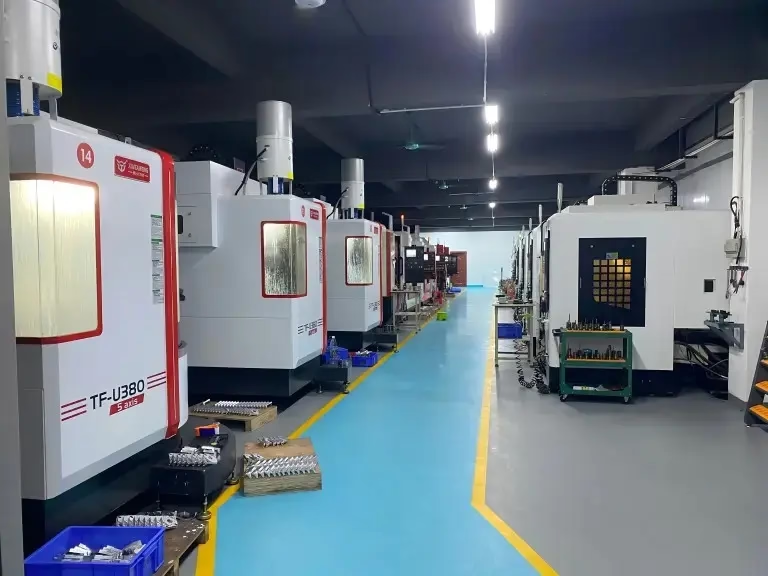
27 three-axis machines, 12 four-axis mills and 16 five-axis centers on one shop floor, so the prototype runs on the process its geometry needs rather than on whatever machine happens to be free.

27 / 12 / 16 machines±0.005 mm toleranceNo minimum orderPrototypes in 3–5 days
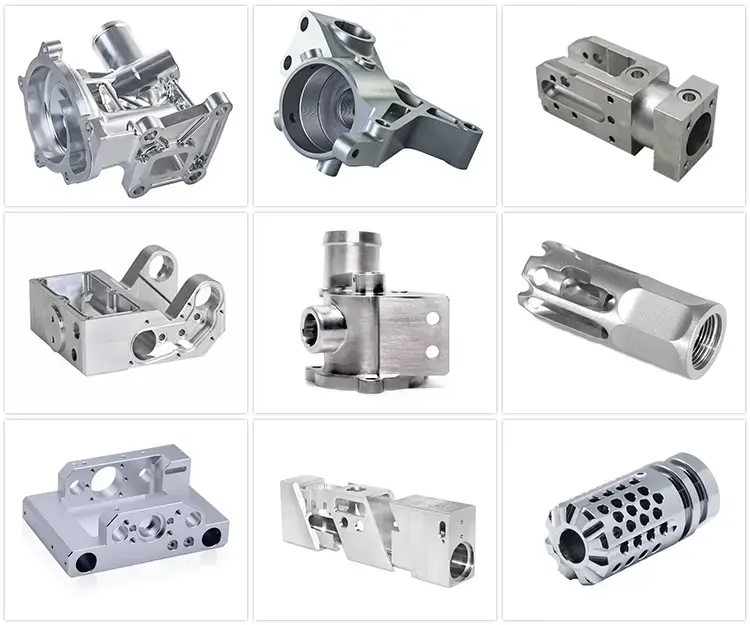
Prototype parts machined on three, four and five axis CNC machines
27 / 12 / 16Three, four and five-axis machines
12 hoursQuotation and free DFM
24 hoursProduction start after approval
1Minimum order quantity
Prototype traps

Four ways a first article gets expensive

None of these are machining problems. They are specification problems, and they are cheapest to fix before the first cut.

01

Every dimension came back quoted tight

A drawing where every dimension is ±0.01 mm buys inspection time nobody needs. On a prototype, mark the dimensions that have to be right, such as a bearing bore, a locating pin or a sealing face, and leave the rest to general tolerance. The price usually drops and nothing functional is lost.

02

Does the prototype have to prove thread strength or heat resistance?

Checking fit and form in aluminium is cheap and fast. Proving a snap fit, a cycled thread or a hot environment in a stand-in material proves nothing, and the second prototype in the right alloy costs more than doing it once.

03

The model changed after the program was cut

A late change means a new program, often a new fixture, and occasionally a different stock size. Send the revision marker with the file and tell us if the design is still moving; we will quote the change instead of absorbing it into a schedule that then slips.

04

Will the prototype process survive the production release?

A part cut on a one-off setup proves the shape, not the process. If the release has to be re-quoted from scratch, the first article taught you less than it should have. We plan the prototype on the route the production order will use.

How we run prototypes

Three things that keep a first article quick

Speed comes from deciding correctly before the machine starts, not from cutting the first guess faster.

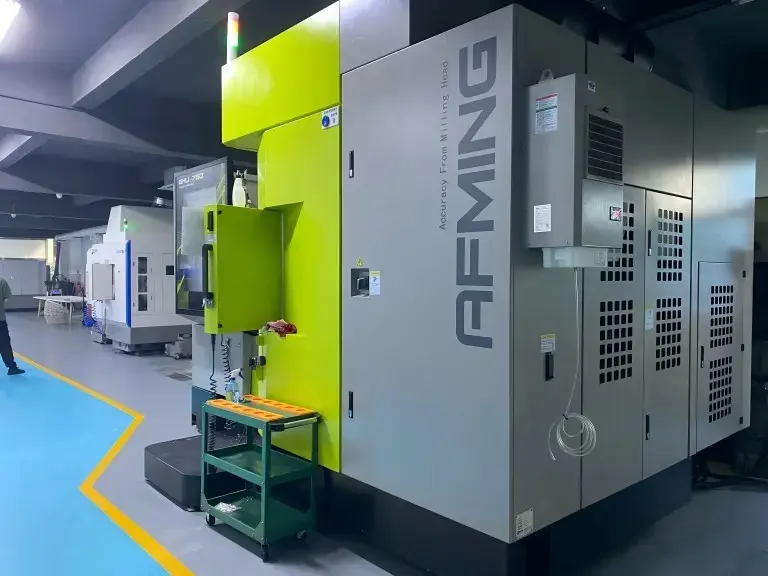
High-speed CNC machining center used for prototype and production runs
Axis count

The process follows the part, not the machine that is free

One shop floor holds 27 three-axis machines, 12 four-axis mills and 16 five-axis centers. That matters because prototypes are usually quoted by what the geometry needs, and a shop with a single five-axis center tends to quote every part on it.

Flat plates and pocketed brackets come off three-axis machines at the lowest rate. Parts with features spaced around an axis belong on a four-axis mill or a lathe with live tooling. Related bores and free-form surfaces are the two cases that justify five axes.

  • 1
    Quoted on the right machineThe quotation names the process, so you can see why the price is what it is rather than accepting a single number.
  • 2
    Capacity for tooling revisionsA design change lands on the same shop floor and the same quality system, not in a new supplier queue.
  • 3
    One supplier for the setBrackets, housings and turned details are produced together and arrive to the same revision.

Get Instant Quote

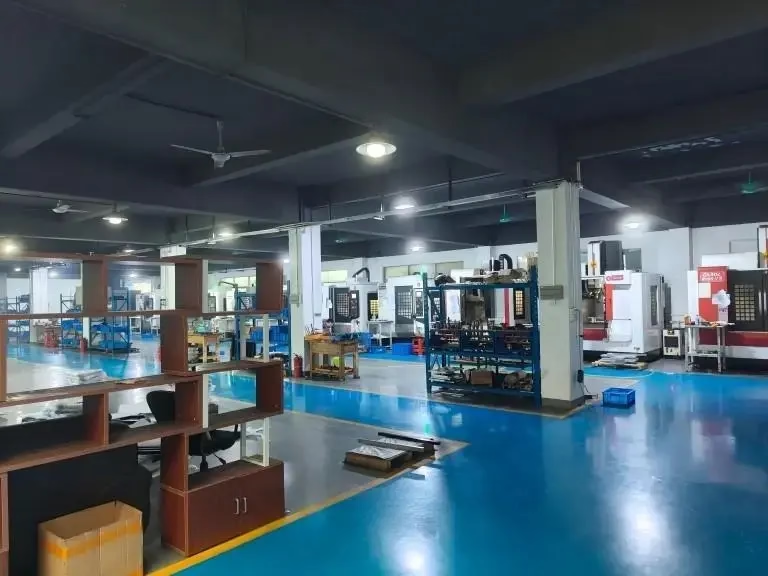
In-house CNC machining cell with automated tool changers
Review first

The DFM note arrives with the price, not after the order

Rapid prototyping only stays rapid if the engineering happens before the spindle turns. Our review looks at tool access, wall thickness, thread depth, tolerance and material availability, then the quote goes out with those notes attached.

That is also where a prototype gets cheaper. Moving one hole, opening a corner radius or dropping a tolerance that nothing needs is a two-minute change in the review and an expensive change after the part exists.

  • 1
    No separate engineering chargeThe manufacturability review is part of quoting, and you are not committed to ordering.
  • 2
    Questions asked before cuttingWhere the model and drawing disagree, we ask rather than assume, because that is the cheapest place to catch a revision error.
  • 3
    Material confirmed up frontStock availability is checked while quoting, so a long-lead grade is visible in the lead time rather than discovered later.

Talk to an Engineer

CNC milling and turning services used for prototype and production parts
Scaling up

The same program and the same fixture carry the release

Once the design stops moving, nothing about the process has to be re-learned. The program stays, the fixture stays, and the production release runs on the equipment that already proved the first article.

Prototype quantities are usually quoted as machined only to keep the first article affordable. Finishing, marking and packaging are added as separate lines when the design settles, so you see the cost of each step before committing to it.

  • 1
    One part or 10,000+There is no minimum order quantity, and no re-qualification step between the prototype and the run.
  • 2
    Process planned for repeatabilityWhere the quantity is known at quoting, the prototype is machined on the plan the release will use.
  • 3
    Finishing added when neededAnodizing, plating, bead blasting, polishing and laser marking are available on prototype quantities as separate lines.

Talk to an Engineer

Choosing the process

Which axis count your prototype should run on

Read the part, not the price list. This is the decision we make in the DFM review, written out so you can see where the money goes.

Part characteristicProcessWhyCost effect
All features reachable from one direction; flat or pocketed geometryThree-axis millingShort program, no rotary setup, fastest metal removalLowest machine rate of the three
Features spaced around one axis: slots, cross holes, keyways, flats on a turned partFour-axis milling or turning with live toolingThe rotary table indexes instead of the part being re-clampedModerate; one fixture replaces several
Bores and faces on three to five sides that must relate to each other3+2 indexed on a five-axis centerAll faces reachable without manual re-clamping, with the axes locked for rigid cuttingHigher machine rate, fewer operations and fewer fixtures
Free-form surfaces, undercuts, deep blends, thin bladesSimultaneous five-axisThe tool stays normal to the surface and short stiff tools reach inside the geometryHighest rate, but it removes hours of hand polishing
Prototype services

What we quote for a first article

A prototype order is usually one of these, and most projects use two or three of them together.

3X

Three-axis prototype milling

Plates, covers, brackets and pockets quoted on the machine with the lowest rate that can hold the part.

4X

Four-axis and indexed work

Cross holes, keyways and flats produced by indexing the part instead of re-clamping it for each face.

5X

Simultaneous five-axis prototypes

Blades, impellers, organic housings and any geometry where the cutter must follow a curved surface.

TRN

Prototype turning and mill-turn

Shafts, fittings and motor parts where turning and milling happen in the same program and the same datum.

SF

Finishing on prototype quantities

Anodizing, plating, bead blasting, polishing and laser marking quoted as separate lines on one part.

QA

Inspection and sample parts

Critical features measured with reports on request, and a sample part available when you want to check the finish first.

Scaling up

What changes between the prototype and the production order

AspectPrototypeProduction release
ProcessChosen for speed on a single partChosen for repeatability and cycle time
FixturingStandard vise or soft jaws where the geometry allowsDedicated fixture or tombstone so the part loads the same way every cycle
FinishingUsually machined onlyAnodizing, plating, painting or marking to the specification
InspectionCritical features checked, report on requestDocumented first article plus in-process checks across the run
Lead time3–5 days from drawing to partsScheduled to your release dates, on the same programs
Why GreatLight

What a prototype order gets from us

Prototyping is judged on whether the part arrives in time to be useful. These are the numbers we hold ourselves to.

27/12/16

Axis counts we can choose from

Three, four and five-axis capacity on one shop floor, so the process is picked by geometry rather than by availability.

12h

Quotation and DFM inside twelve hours

Price, lead time and manufacturability notes come back together, within 12 hours of uploading the model and drawing.

24h

Production start after approval

Once the price is approved the part is programmed and scheduled, with production able to start within 24 hours.

1

Minimum order quantity of one

A single prototype is a normal order here, and it runs on the same equipment as a production batch.

0

Charge for the engineering review

The DFM analysis is part of quoting, not a separate service, and there is no setup fee that exists only because the quantity is small.

3–5

Days from drawing to parts

Typical delivery on standard materials, with the inspection and documentation steps included in that schedule rather than added later.

127High-precision CNC machines
150Technicians and engineers
99.99%Product qualification rate
3Wholly-owned plants
Where it is used

Prototypes and the production parts that followed

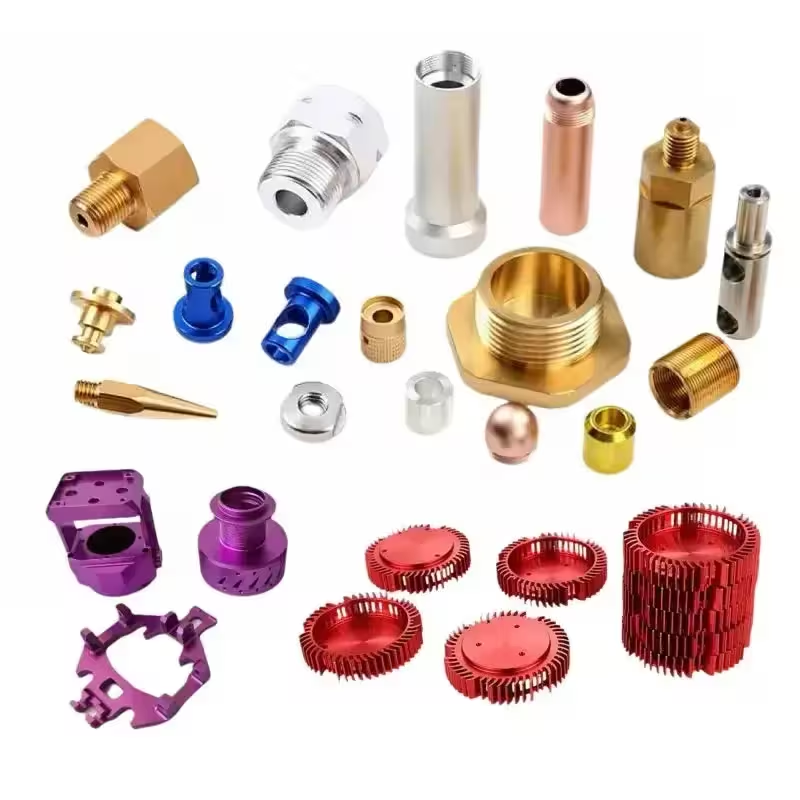
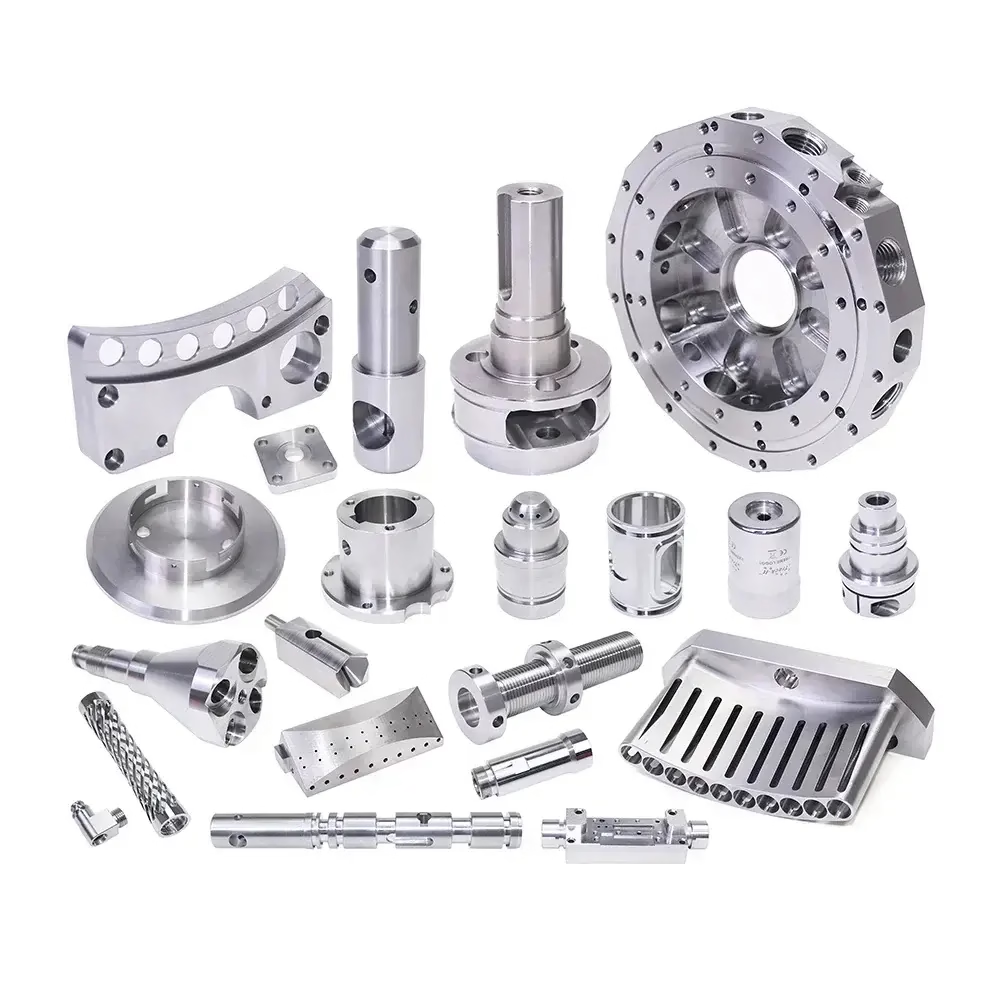
High-precision metal parts machined for prototype and production orders

Precision metal parts

First article and production run cut from the same program, so the release does not change character.

  • Same program
  • ±0.005 mm
  • No minimum order
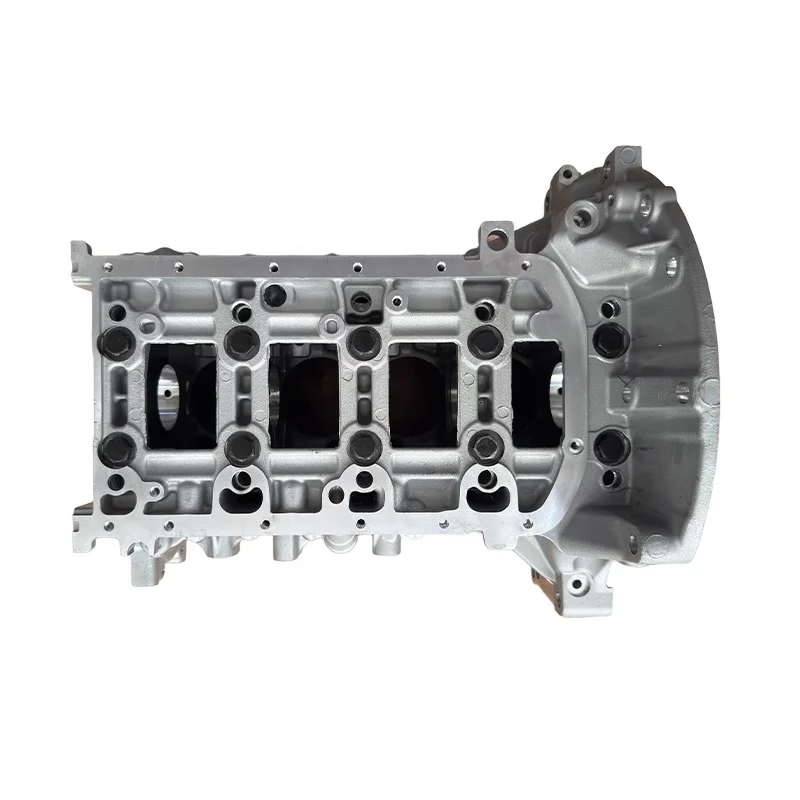
Engine block machined as a prototype before volume production

Housings and blocks

Multi-face parts where the first article is what proves the fixturing before the volume order.

  • Multi-face
  • Fixture proven
  • IATF 16949
Titanium parts machined for prototype evaluation

Titanium parts

Slow-cutting alloys where the tool choice and the cutting data decide the schedule more than the machine does.

  • TC4
  • Short tools
  • 3–5 days
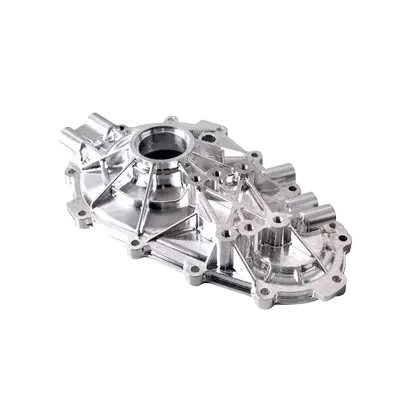
Aluminium automotive parts machined for prototype builds

Automotive prototype parts

Build-support parts ahead of a production release, quoted to the tolerances that actually matter on the vehicle.

  • Build support
  • 6061 and 7075
  • Anodizing
FAQs

Rapid prototyping questions

How fast can you deliver a prototype part?

Quotation and a free DFM analysis within 12 hours of uploading the model and drawing. Production can start within 24 hours of approval, and prototype parts normally ship in 3–5 days.

Parts that include anodizing or heat treatment are scheduled with those steps included from the start, not added afterwards.

Is there a minimum order for prototypes?

No. One part is a normal order here and runs on the same machines as a production batch. There is no setup fee that exists only because the quantity is small.

Should I prototype in the final material?

If the prototype has to prove stiffness, thread strength, wear behaviour or heat resistance, machine it in the production material. If you are checking fit and form only, aluminium or a machinable plastic is cheaper and faster.

Tell us what the prototype has to answer and we will say which material answers it.

Do you finish prototype parts?

We can, and many customers do from the second or third iteration once the geometry stops moving. Anodizing, plating, bead blasting, polishing and laser marking are available on prototype quantities, quoted as separate lines so you can see the cost before deciding.

What tolerance applies when my drawing is not fully dimensioned?

We work to ±0.005 mm / ±0.0002 in as our stated tolerance, applied to the features you call out and to dimensions left open. Functional dimensions such as bearing seats, pilot bores and sealing faces should be marked, because those are the ones we measure and report.

Can you keep prototypes confidential?

Yes. Uploads are treated as confidential by default and we can work under an NDA. Information security is certified to ISO 27001:2022, which matters when the prototype is the whole value of the project.

What happens if I need to change the design after the first article?

Send the revised model and drawing with the revision marker. If the change is small we re-quote within hours; if it affects fixturing or stock size we say so before cutting.

Iterations are normal in prototyping. The point is that the quote reflects the change rather than hiding it in the schedule.

Can the prototype become the production order?

That is the usual path. Once the design is frozen the program and the fixture stay, and the same process runs the production release. Orders go from one part to 10,000+ without a re-qualification step, because the equipment and the quality system do not change.

Upload a design, get a prototype price today

Model and drawing in, price and manufacturability notes out within 12 hours. No minimum order quantity, nothing charged for the review, and a sample part available if you want to check the finish first.

12-hour quotation24-hour production start3–5 day deliverySample part on request

Trusted by engineers and manufacturers worldwide

Tesla Ford Motor Company BYD Auto Denso Magna International Boeing Airbus Medtronic KUKA FANUC