
Tool Conveyor Basics for High-Speed Cutting of Standard Parts
The tool conveyor decides how fast a cutting cell can run without stopping for chip removal. This page explains what a conveyor of this type actually moves, where it helps, and where it fails.
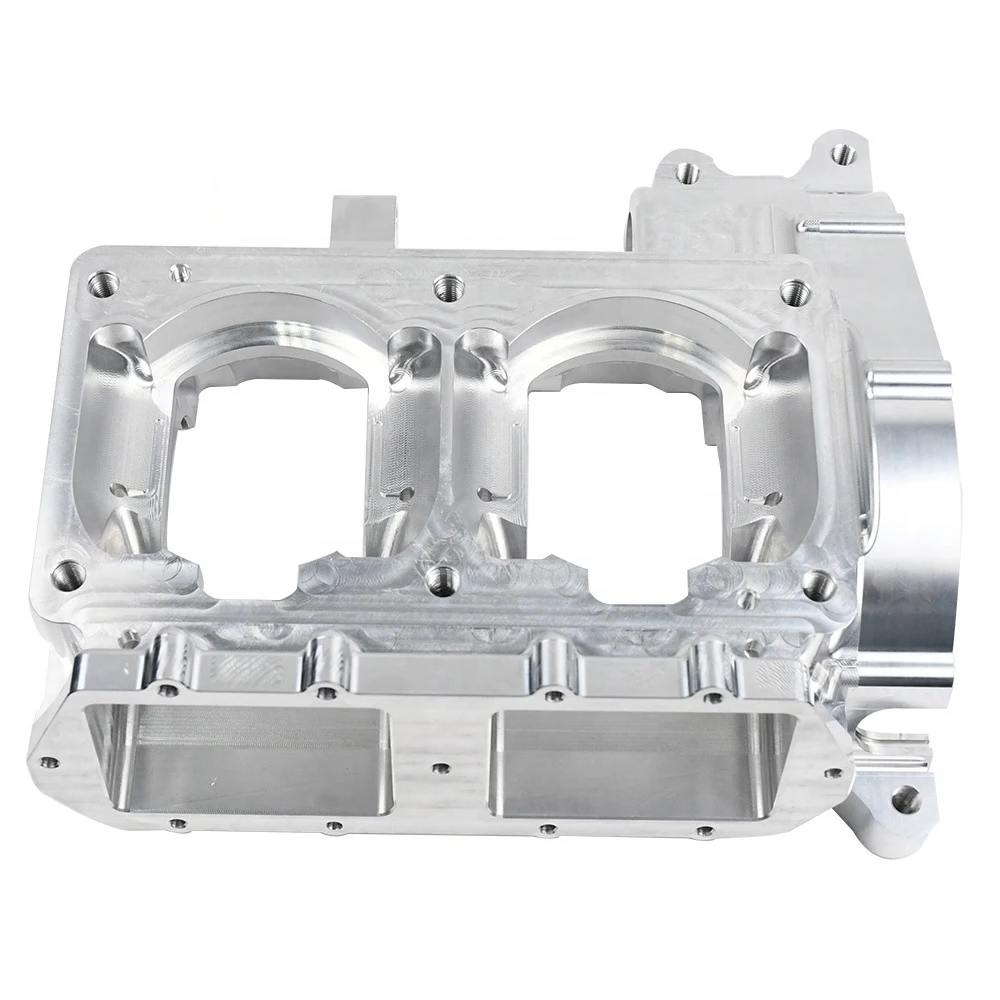
What the Tool Conveyor Is Doing in a Cutting Cell
A tool conveyor is not a tool changer. It is the mechanism that carries material away from the cutting zone while the spindle is still cutting. On a sheet or bar machine, that material is chips, slugs and finished blanks; on a lathe cell, it is mostly stringy chips and the occasional finished part. The conveyor sits below or beside the work area and runs continuously.
The term gets used for two different machines. One is the chip conveyor under the machine bed: a hinged-belt, scraper or screw unit that drags metal out of a flood of coolant. The other is a part conveyor at the outfeed end, which lifts finished standard parts into a bin, a bar feeder or the next station. Both do the same job in different places. They keep the cutting zone clear so the spindle never waits.
Why this matters for high-speed cutting is simple. At a high material removal rate, a 6061 aluminium job can produce several kilograms of chips in a few minutes. If those chips collect around the tool, they re-cut, they pack the flutes, and they push heat back into the part. A conveyor that moves them out at the same rate they are created is what keeps the cycle honest.
A conveyor cannot fix a bad cut. If the toolpath leaves long bird-nested chips, a hinged-belt unit will jam on them. If coolant flow is low, fines will settle and the belt will carry sludge instead of chips. Match the conveyor to the chip form, not to the machine brand.
How a Tool Conveyor Moves Chips Without Interrupting the Cut
Hinged-belt conveyors are the default for steel, cast iron and aluminium. Overlapping steel plates form an endless belt that runs up an incline, typically 30° to 45°. Coolant drains back through the gaps between plates into the tank, and the chips ride up and drop into a bin. The belt speed is usually fixed, but the incline angle sets how much liquid leaves with the chips.
Scraper and magnetic conveyors handle fine or powdery chips that would slip through hinged plates. A scraper drags a flat chain across the floor of the tank and pushes the settled fines to a discharge chute. A magnetic unit uses a moving magnetic field to pull ferrous fines along a stainless plate. Both are slow, quiet and almost impossible to jam on cast iron dust.
Screw conveyors are common on small lathes and Swiss-type machines. A rotating auger sits in a tube at the bottom of the chip pan and pushes chips out the end. They are compact and cheap, but the auger will wrap long stringy chips from low-carbon steel or titanium around its core. That is the failure mode to design around.
The outfeed side is different. A part conveyor is a belt or cleated chain that runs at a fixed speed tied to the cycle time. It has to move a finished part out of the work area before the next one drops. If the belt speed is too low, parts stack at the chute and the machine alarms. If it is too high, thin-walled parts bounce off the belt.
In all of these designs, the conveyor is a throughput device. Its capacity should be set by the chip volume per hour at the highest removal rate you plan to run, not by the average. Size it for the worst hour, not the typical one.
Which Standard Parts Suit Conveyor-Based High-Speed Cutting
Conveyors pay off when the part is small, the batch is long, and the chip load is steady. Standard parts fit that description: bushings, spacers, flanges, shaft collars, brackets and connector housings. These run on bar feeders or from plate nests, and the operator rarely needs to reach into the work area between cycles.
A good candidate for a part conveyor is a part under roughly 150 mm across that can be dropped, not lifted, out of the fixture. If the part needs a fixture that grips it through the cycle and releases it by hand, an outfeed conveyor adds little. The machine still stops for the operator.
Chip conveyors are worth their cost on any cell cutting more than a few hours of steel or aluminium per day. Below that, a chip pan and a manual clean-out at the end of the shift is cheaper and simpler. The break-even is not about machine price; it is about how many minutes per shift are lost to chip clearing.
Some parts are poor candidates. Thin, flat sheet blanks that slide under a belt can wedge in the discharge chute. Long shafts that overhang the belt can rotate and walk sideways. Castings with sand or investment shell residue will load the coolant with abrasive fines and wear the belt hinges quickly.
For plastics such as POM, PA or PEEK, chip volume is high but the chips are light and static-charged. They cling to belts and chutes. A conveyor still works, but expect more frequent cleaning and consider a scraper rather than a hinged belt.
If your part family mixes these cases, run the conveyor only on the stable, high-volume part and keep the mixed work on a manual pan. One conveyor trying to serve every job usually ends up serving none of them well.
Where the Tool Conveyor Stops Helping
A conveyor adds a failure point. The belt can jam, the auger can wrap, the discharge chute can block. Every one of those stops the machine, and on a high-speed cell the stop is what costs money. The conveyor is only worth it when its mean time between jams is longer than the chip-clearing time it replaces.
Coolant chemistry changes when a conveyor is added. Chips spend longer in the tank before they leave, so fines have more time to settle and bacteria have more surface area to grow on. You will likely need stronger filtration and a more disciplined coolant check routine.
Chip form is the hard limit. A hinged-belt conveyor handles broken chips from cast iron, brass and free-machining steel. It struggles with long, stringy chips from 304 stainless, low-carbon steel and titanium. If the process produces stringers, fix the chip breaker on the insert or add a peck cycle before blaming the conveyor.
Floor space and height are usually underestimated. An inclined chip conveyor needs clearance behind the machine for the incline and a bin that a forklift can reach. A part conveyor needs room at the outfeed for the next operation, not just a bucket. Plan the cell layout around the conveyor, not after it.
Maintenance is routine, not optional. Hinged belts need tension checks and hinge pin inspection. Scrapers need chain tension and wear-strip checks. Magnetic units need the plate cleaned of non-ferrous debris that bridges the gap. Put these on a schedule tied to machine hours.
When the part mix changes often, a conveyor can become the constraint rather than the enabler. In that case the honest answer is a manual pan and a scheduled clean-out, at least until the product family settles.
Tool Conveyor Type vs Chip Form and Part Size
Pick the row that matches your chip form first, then check part size.
| Conveyor type | Chip form it handles | Typical part size | Best fit |
|---|---|---|---|
| Hinged belt | Broken chips, cast iron, brass | Up to 150 mm | General milling, steel and aluminium |
| Scraper chain | Fine and powdery fines | Any | Cast iron dust, settled fines |
| Magnetic | Ferrous fines only | Any | Grinding and fine turning |
| Screw auger | Short broken chips | Under 60 mm | Small lathes, Swiss-type |
| Cleated belt | No chips, parts only | Under 150 mm | Outfeed of standard parts |
The Practical Choice
If your standard part runs long batches with broken chips, a hinged-belt chip conveyor plus a cleated outfeed belt is the proven setup. If your chips come out stringy or your batches are short and mixed, skip the conveyor and spend the money on chip breaking and a manual pan instead.
Common Questions
Can a tool conveyor run dry, without coolant?
Most hinged-belt and scraper units can move dry chips, but the belt runs hotter and wear accelerates. Magnetic conveyors handle dry ferrous fines well. If the cut is dry, expect shorter belt and hinge life and plan for more frequent inspection.
Dry running also changes chip form. Chips stay hot longer and can weld to the belt plates. A short air blast at the discharge can help.
How do I size chip volume per hour?
Multiply the material removal rate in cm³ per minute by 60 to get cm³ per hour, then divide by the bulk density of the chip. Aluminium chips bulk around 0.2 to 0.4 kg per liter; steel chips are higher. Size the conveyor for the highest removal rate in your program, not the average.
If you do not have a measured rate, use the spindle load at the heaviest cut as a rough proxy and add margin.
Does the conveyor affect part tolerance?
Only indirectly. If chips recirculate into the cut, they mark the surface and can deflect a thin wall. Removing them keeps the cut clean. Tolerance itself comes from the machine, the fixture and the tool, not from the conveyor.
On a well-set-up 5-axis cell we hold ±0.005 mm on standard parts regardless of conveyor type.
What maintenance interval should we plan for?
Check belt tension, hinge pins and discharge chute weekly on a two-shift cell. Clean the coolant tank and check filtration monthly. Replace wear strips when the chain rides more than a few millimeters off the guide.
Log every jam with the part number and chip form. Two jams on the same job usually means the conveyor type is wrong for that chip.
Is a part conveyor worth it for small batches?
Rarely. A part conveyor earns its cost when the machine runs unattended or the operator would otherwise reach into the work area every cycle. For short batches, a bin at the chute does the same job.
If the part is hot, sharp or heavy, an outfeed belt pays off sooner because it removes a handling risk, not just a handling step.
Can we add a conveyor to an existing machine?
Yes, if there is floor space behind or beside the machine for the incline and the discharge bin. Retrofits are common on older vertical mills and lathes. The coolant tank usually needs modification for the new discharge point.
Check the machine's chip pan geometry first. Some compact machines have no room for a standard incline and need a low-profile scraper instead.
Send Us the Part and the Chip Form
We quote standard parts from one piece to 10,000+ runs, and we will tell you honestly whether a conveyor cell fits your part or not.
Quotation and DFM within 12 hours100% inspection before shipmentNo minimum order quantity
More from the Shop Floor
We publish setup notes, tooling trials and inspection data from the factory floor.











