
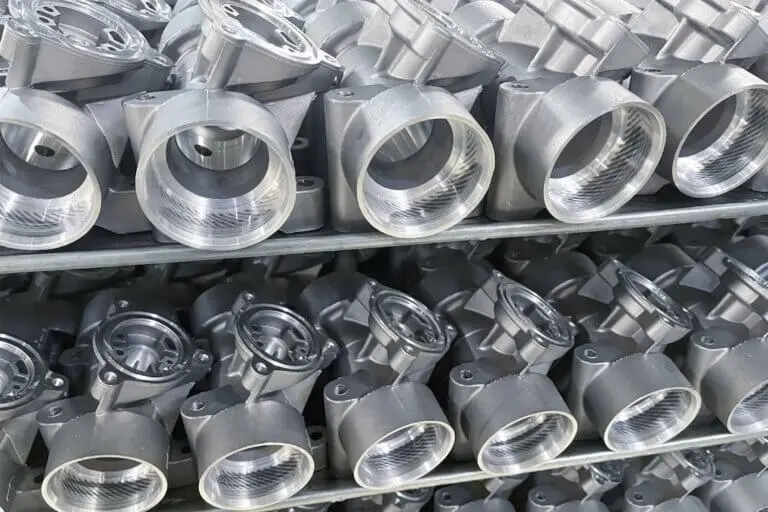
Mastering Accuracy: How Five-axis CNC machining provides unparalleled tight tolerances
In the demanding modern world of manufacturing, accuracy is not only desirable, but also undiscussable. Whether you are building aerospace components, life-saving medical devices or complex industrial prototypes, Tensional tolerances– To microns – for functionality, performance and safety are critical. This is where Precision CNC (Computer Numerical Control) processing, especially advanced Five-axis CNC technologybecome the cornerstone of success. For companies facing challenges in complex metal parts, choose the right partners with expertise, e.g. Greatmake everything different.
Why tension tolerance is more important than ever
Tolerance defines the allowable variation in part dimensions. A tight tolerance means the smallest allowable deviation. Why is this key?
- Ensure functionality and interchangeability: The parts must be placed perfectly in the assembly, move smoothly in the mechanism, and seal effectively. Loose tolerances can cause assembly headaches, premature wear, leaks and catastrophic failures.
- Best Performance: Precision surfaces minimize friction, optimize fluid dynamics (e.g., in hydraulic systems), and ensure force distribution, affecting efficiency and life.
- Materials and Cost Efficiency: Achieving precise dimensions reduces the need for over-complete work, minimizes material waste in rework, and prevents expensive downstream issues.
- Meet strict standards: Aerospace (AS9100), medical (ISO 13485) and automotive requirements comply with strict geometric and dimensional specifications.
Advantages of five-axis CNC: Precision design
The traditional 3-axis CNC machine moves the tool along the X, Y and Z axes, but Five-axis CNC machining Add two rotation axes (commonly referred to as A and B or C). This unlocks transformative features:
- Complex geometric processing: Effortlessly create complex contours, deep pockets, undercuts and organic shapes that are impossible or expensive to use a 3-axis machine. Think of turbine blades, impellers, surgical instruments and complex molds.
- Single setting processing: A five-axis machine can position the parts to access nearly any surface in a single fixture. This eliminates errors inherent in multiple settings (reclipping or repositioning), saves a lot of time and greatly improves accuracy and tolerance. Reducing processing can also minimize potential part damage.
- Top surface finish: The ability to maintain optimal tooling to partial orientation throughout the cutting process allows for longer tool life, higher cutting speeds (applicable) and ultimately direct, excellent surface quality directly on the machine.
- Enhanced stringent tolerance accuracy: Five-axis machining significantly reduces cumulative errors by minimizing setup and achieving continuous orientation adjustments. Advanced machine calibration and cutting strategies allow for ±0.001" (0.025mm), even tighterdepending on the material and part complexity.
- Optimized tool path: Five-axis motion can enable shorter, more efficient tool paths, reducing machining time and vibration, which further contributes to precise and surface finishes.
Great: Your precise partner is equipped with excellence
exist GreatWe learned that providing true precise CNC machining requires not only advanced machinery, but also expertise, strict process control, and a commitment to excellence. We have positioned ourselves as:
- Cutting-edge five-axis technology: We invest in top five-axis CNC machining centers equipped with high-precision spindles, powerful control systems and advanced temperature compensation to ensure stability and accuracy over long machining cycles.
- Deep processing expertise: Our team includes experienced engineers and mechanics who are not only operating machines. They solved the manufacturing problem. We gain insight into material behavior, tool selection, optimal machining strategies (such as HSM-high speed machining), and fixation to deal with the most complex geometries and demanding tolerances.
- Comprehensive material functions: We handle a large number of metal libraries including aluminum alloys (2024, 6061, 7075, etc.), stainless steel (303, 304, 304, 316, 17-4ph), titanium (CP TI, TI-6AL-4V), brass, copper, copper, tool steel, tool steel and high-strength alloys. We understand the quirks of each material and how to process it accurately.
- A true one-stop solution: Precision machining is usually just a step. Greglight offers seamless post-processing and completion services under one roof:
- Precise grinding
- Heat treatment
- Surface finish (anodized, blunt plating, passivation, paint, powder coating)
- Non-destructive testing (NDT) options
- Assembly and packaging
- This integrated approach ensures consistency, quality control throughout the process, and significant time savings.
- Agility and customization: Need urgently a complex prototype or batch of highly tolerant production parts? We are thriving on customized projects. Our agile workflows and effective project management enable quick customization and turnover without compromising the precision you rely on.
- Cost-effective: We combine advanced five-axis efficiency (reduced setup and processing), strategic material utilization and process optimization to provide excellent accuracy at a competitive cost. We eliminate the high price tags that are often associated with high tolerance for job inequality through smart manufacturing.
Solve your precision manufacturing challenges
Gregmight is more than just a supplier. We are partners in solving problems. We work closely with our customers to fully understand the functional requirements and critical tolerances of their components. Whether to face:
- Micron level tolerances cannot be maintained consistently.
- High costs are caused by inaccurate dimensions of scrap or rework.
- Challenge machining complex geometric shapes.
- Supply chain delays for critical metal components.
- Seamless integration of machining and finishing is required.
Our expertise in five-axis CNC machining provides a powerful solution. We customize our methods to meet the unique specifications of each project, ensuring the precise parts that are correctly manufactured.
Conclusion: Precise design, perfect delivery
In a world of increasing performance of smaller, more complex components, realizing and maintaining tight tolerances is the ultimate manufacturing challenge. Five-axis CNC machining is the most powerful and reliable technology to face this challenge head-on. GreatWith state-of-the-art five-axis equipment, deep technical expertise, comprehensive material knowledge and complete completion capabilities, it is a unique position for your trusted partner.
We not only have to ensure accuracy; we design and deliver it consistently, and support it with a commitment to quality, speed and cost-effectiveness. When the success of your project depends on micron-scale accuracy and perfect execution, it can be even more important for your custom precision CNC machining needs.
Ready to unlock the potential of precise machining? Contact Greatlight now for a quote about your custom projects!
FAQ: Precision CNC machining
Q1: What tolerances can be usually achieved in five-axis CNC machining?
A: While the achievable tolerances depend heavily on part size, geometric complexity, material and specific functions, daily holding ±0.001" (0.025mm) Comprehensive and comprehensive in most production parts. For specific functions or suitable materials, we can achieve ±0.0002" (0.005mm) or tighter With optimized process and metrology. We specify the Achievable Tolerance (DFM) phase according to your requirements according to your requirements.
Q2: How does five-axis machining lead to stricter tolerances compared to three-axis?
Answer: The key is Single setting processing. The five-axis machine can rotate and tilt parts, accessing all critical surfaces without being fixed. Slight errors can make the final tolerance stack dangerous every time a part is moved/re-fixed on a 3-axis machine (which usually requires multiple settings for complex parts). Five axes eliminate this by machining complex features in one GO, ensuring geometric integrity and dimensional harmony.
Q3: Which type of material can strengthen the machine for tight tolerances?
A: We machine a broad spectrum, including: Aluminum Alloys (various series), Stainless Steels (300 & 400 series, precipitation-hardening), Titanium (Commercially Pure & Ti-6Al-4V), Brass, Copper, Tool Steels (D2, A2, H13), and challenging alloys like Inconel & Hastelloy.
Question 4: Can Greatlight handle prototypes and production runs?
Answer: Absolutely! We’re good at Rapid prototyping Used to verify designs using precise machining and provide valuable DFM feedback early. We seamlessly expand to low, neutral and large Production operationleverage our five-axis efficiency to maintain consistency and tight tolerances throughout the batch. Our processes are designed for agility and scalability.
Q5: What post-processing finishes can you apply to precision machining parts?
A: We provide a comprehensive suite Integrated sorting service To ensure that the parts are truly ready for use, while respecting key tolerances:
- Secondary processing: Precise grinding, EDM (Electrical Emission Processing).
- Heat treatment: Stress relief, hardening, tempering, annealing.
- Surface finish: Anodized (type II, III/HA), electroplating (nickel, chromium, zinc), passivation (for stainless steel), electronic coating, powder coating, paint, painting, bead blasting, polishing.
- mark: Laser engraving, silk screening.
- Assembly and packaging: Kit, ultrasonic cleaning, custom packaging.
Question 6: How do you ensure quality and verification tolerances?
A: Quality has been embedded in our process. We use:
- Advanced Metrics: High precision CMM (coordinate measuring machine), optical comparator, surface profiler, micron, caliper, dock/block.
- A skilled quality team: Experienced inspectors use calibration equipment.
- First article check (FAI): Strictly inspect initial parts for specific requirements.
- Process Check: Verification of key dimensions in the processing process.
- Final check: A comprehensive inspection before shipment, detailed reports can be provided (PPAP, AS9102 Expo, etc. as needed).
- Modern inspection software: For CMM programming and data analysis.
Question 7: Which file format do you accept references and manufacturing?
A: We prefer a comprehensive 3D CAD model (steps, IGES, PRT, X_T, SLDPRT) and 2D graphs (PDF, DWG, DXF). Drawings should clearly define all key dimensions, tolerances (if applicable GD&T), material specifications and surface finish requirements.
Question 8: How to start a custom precision CNC project using Greatlight?
A1: Visit our website’s contact page: [Your Website Contact Page Link]
A2: Email your design documents (drawings and CAD) and requirements to: [Your Sales Email Address]
A3: Call us directly: [Your Phone Number]
Our engineering team will review your project promptly and provide detailed quotes and DFM feedback. From the first concept to the final delivery, we strive to make collaboration smooth and effective.



















