
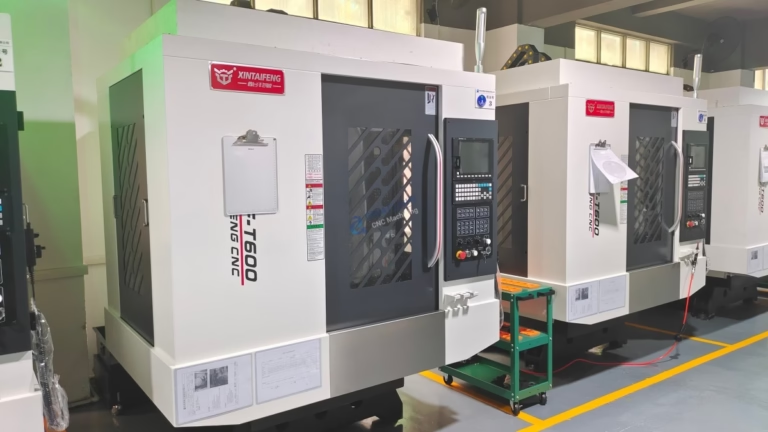
Moving a CNC machine is far more complex than simply relocating a piece of furniture or standard industrial equipment. It is a high-stakes operation that involves safeguarding a significant capital investment, preserving micron-level precision, and ensuring operational safety. A poorly executed move can result in catastrophic damage, costly recalibration, extended downtime, and even voided warranties.
This guide provides a comprehensive, professional overview of the process, outlining the critical steps, risks, and why partnering with specialized experts is often the most prudent and economical choice.
H2: Understanding the Stakes: Why Moving a CNC Machine is a Precision Operation
A modern CNC machining center, especially a high-precision 5-axis model, is not just a heavy metal structure. It is a sophisticated integration of mechanical components, high-resolution feedback systems, spindle assemblies, and CNC controllers. Its accuracy is built upon a foundation of perfect alignment and stability. Any shock, twist, or uneven settlement during a move can compromise this foundation, leading to:
Loss of Geometric Accuracy: The machine’s axes may no longer be perfectly square or perpendicular.
Spindle Misalignment: This directly affects part concentricity and surface finish.
Control System & Feedback Errors: Jostling can damage sensitive scales, encoders, or wiring.
Frame Stress or Crack: Improper lifting can permanently warp the machine base or structure.
Therefore, the primary goal is not just transportation, but precision relocation and re-establishment of factory-caliber performance.
H2: Pre-Move Planning & Preparation: The Foundation of Success
Thorough planning is responsible for 80% of a successful move. Rushing this phase guarantees problems.
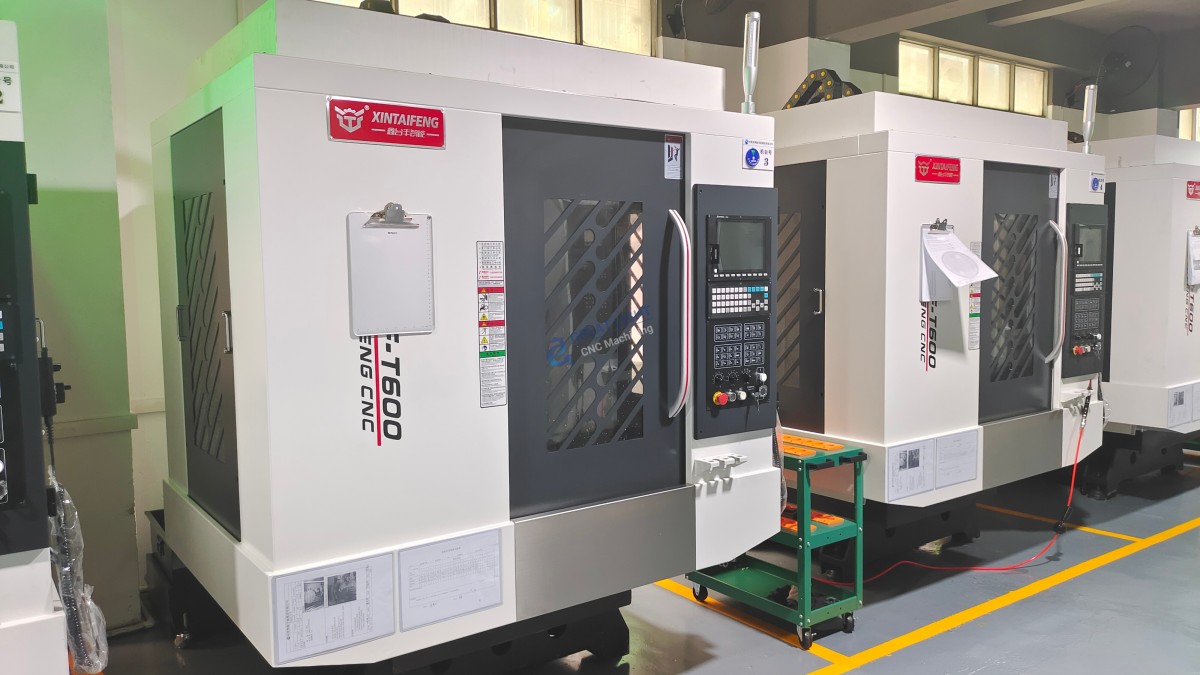
H3: 1. Documentation & Assessment
Consult the Manual: Obtain the manufacturer’s installation and moving guide. It contains specific lift points, weight distribution diagrams, and disassembly/assembly instructions.
Create a Machine Dossier: Document the machine’s model, serial number, dimensions, weight (both net and with all peripherals), and center of gravity. Take extensive photos and videos of its current state, wiring connections, and fluid lines.
Site Survey: Assess both the origin and destination. Measure doorways, aisles, ceiling heights, and floor load capacity. Check for obstacles like overhead cranes, pipes, or narrow turns. Ensure the destination floor is level, stable, and prepared with the correct power, air, and coolant connections.
H3: 2. Professional Team Assembly
Moving a CNC machine is not a job for a general moving company. It requires a team comprising:
Certified Riggers: For safe lifting and placement.
CNC Service Technicians: From the OEM or an authorized service provider, familiar with your specific machine model.
Electricians & Facilities Personnel: To handle disconnection and reconnection of utilities.
H3: 3. Machine Preparation (Critical Steps)
Back Up Everything: Perform a full backup of all CNC programs, parameters, tool libraries, and offsets. This is non-negotiable.
Secure Internal Components: Lock or block the machine’s axes (X, Y, Z, A, C) according to the manual. Remove the tool changer carousel if possible and pack tools separately.
Drain Fluids: Completely drain coolant, hydraulic oil, and lubrication systems. This reduces weight and prevents leaks.
Partial Disassembly: As per the manual, this may involve removing delicate components like the probe, tool setter, glass scales, sheet metal covers, or even the spindle head on larger machines to lower the center of gravity.
Cleaning & Protection: Clean the machine and use protective wrap (stretch film, foam, cardboard) to guard exposed guideways, ballscrews, and precision surfaces.
H2: The Moving Execution: A Phase-by-Phase Protocol
H3: Phase 1: Lifting and Load-Out
Equipment: Use professional lifting gear—spreader beams are essential to prevent sling angles from crushing the machine structure. Hydraulic gantries, skates, and low-profile trailers are standard.
Lifting Points: Lift only from the designated points identified in the manual. Never lift by the spindle, table, or sheet metal.
Loading: The machine must be securely cribbed and strapped to the transport vehicle to prevent any movement during transit. Air-ride suspension trailers are preferred to dampen road vibrations.
H3: Phase 2: Transportation
Route Planning: Plan the route meticulously, avoiding roads with severe bumps or low bridges. A pilot vehicle may be necessary.
Monitoring: For long-distance moves, consider vibration and shock sensors to monitor conditions during transit.
H3: Phase 3: Unloading and Placement
The unloading process is the reverse of loading, performed with equal care. The riggers will place the machine onto its new foundation, often using precision leveling pads or epoxy grout.
H2: Post-Move: Installation, Calibration, and Qualification
This is where technical expertise is paramount. Simply powering on the machine is a recipe for failure.
H3: 1. Reassembly & Reconnection
Reinstall all removed components with care. Reconnect all electrical, pneumatic, and coolant lines according to diagrams.
H3: 2. Leveling and Alignment
This is the most critical step. Using a high-precision master level, technicians will level the machine in both longitudinal and transverse directions to a tolerance far exceeding standard construction levels (often within 0.02mm/m or better). The foundation must settle, and leveling may need to be checked and adjusted over several days.
H3: 3. System Power-Up and Testing
Power is applied systematically.
All axis drives and limit switches are tested.
The lubrication system is filled and cycled.
The spindle is run through a thermal stabilization cycle.
H3: 4. Geometric Accuracy Verification & Compensation
Laser Calibration: A laser interferometer is used to measure the positioning accuracy, repeatability, and backlash of each linear axis.
Ballbar Test: A quick check for contouring errors and servo mismatch in the XY, XZ, and YZ planes.
Spindle Analysis: Checks for runout and thermal growth.
Volumetric Compensation: Based on laser data, error compensation tables within the CNC controller are updated to restore volumetric accuracy across the entire work envelope.
H3: 5. Final Production Test
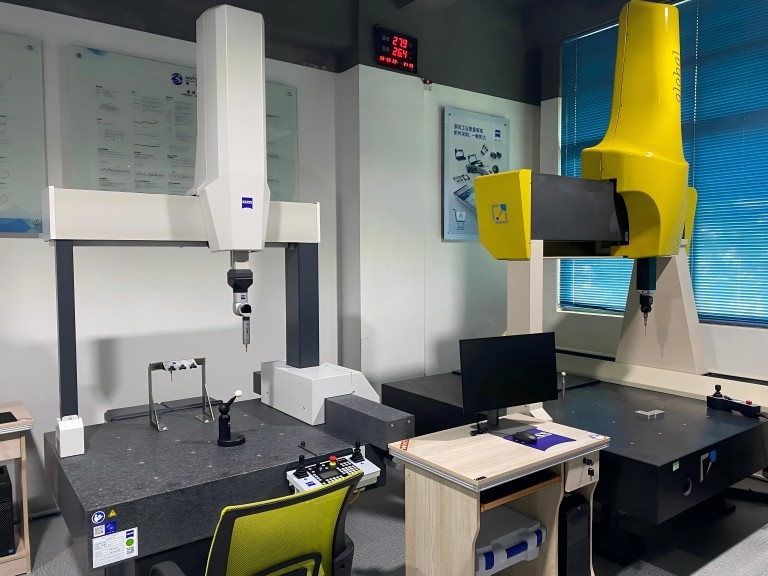
A test part, often a NAS/ISO standard part or a known-good part from previous production, is machined. It is then meticulously measured on a Coordinate Measuring Machine (CMM) to verify that the machine is producing parts within its specified tolerances.
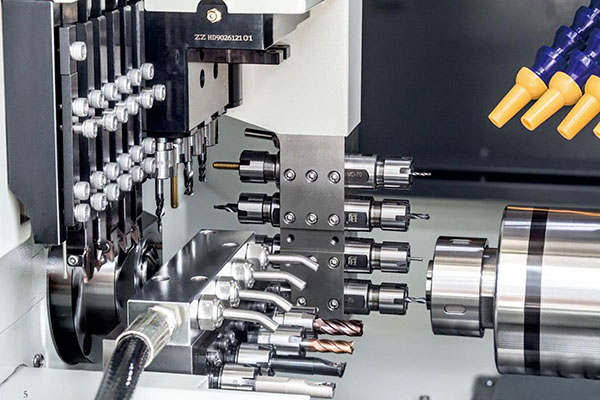
Conclusion
Moving a CNC machine is a multidisciplinary engineering project that blends heavy rigging with metrology-grade precision. While the DIY approach may seem cost-effective upfront, the hidden risks of damage, prolonged downtime, and irrecoverable loss of precision make it a financially dangerous gamble. For businesses where equipment uptime and part accuracy are paramount, the value of a seamless, expert-managed relocation is immeasurable. It transforms a period of potential vulnerability into a controlled, efficient transition, ensuring your critical precision machining asset is ready to perform from the moment it is recommissioned.
For companies without in-house facilities and calibration teams, partnering with a full-service manufacturer that inherently understands this process from both a user and installer perspective can be the optimal strategy.
FAQ: Frequently Asked Questions on Moving CNC Machines
H3: Q1: Can I move my CNC machine with my own factory maintenance team?
A: For very small, benchtop CNC mills, it may be possible with extreme care. For any industrial-grade machining center, especially 5-axis or vertical turning lathes, it is strongly discouraged. The specialized equipment, rigging knowledge, and calibration expertise required are typically beyond the scope of a standard maintenance team. The risk of causing damage that costs far more to repair than a professional move is very high.
H3: Q2: How much does it typically cost to move a CNC machine professionally?
A: There is no standard answer. Cost depends on machine size/weight, travel distance, accessibility at both sites, level of disassembly required, and the extent of recalibration (basic leveling vs. full laser volumetric compensation). Quotes can range from a few thousand dollars for a local move of a small 3-axis mill to tens of thousands for moving and calibrating a large 5-axis machining center across the country.
H3: Q3: How long will my machine be down during a move?
A: Timeline varies significantly. A local, straightforward move for a mid-size machine might involve 1-2 days for prep/move and 2-3 days for re-installation and basic verification. Complex moves with full calibration can take 1-2 weeks from shutdown to production-ready status. Always plan for a buffer.
H3: Q4: Does moving a machine void the manufacturer’s warranty?
A: It can, if not performed according to their specifications. Most OEM warranties require that moves, installations, and major calibrations be performed by their authorized service personnel or an approved third party using certified procedures. Always check your warranty terms before planning a move.
H3: Q5: What is the single most important thing to do before moving the machine?
A: Perform a complete and verified backup of all machine data (parameters, programs, offsets, pitch error compensation, etc.). Physically protecting the machine is crucial, but losing its “digital personality” can be just as devastating, potentially turning it into a very expensive paperweight even if it arrives physically intact.
H3: Q6: Who is best equipped to handle such a complex move?
A: The ideal partner is an entity that possesses both the macro-logistical capability of heavy equipment rigging and the micro-level expertise in CNC machine tool metrology. This profile often fits integrated precision manufacturing solution providers who operate such equipment daily. For instance, a manufacturer like GreatLight Metal, with its extensive in-house fleet of multi-axis CNC equipment and a deep engineering culture, inherently understands the critical requirements of machine installation, calibration, and maintenance. Their experience in high-stakes sectors like aerospace and medical devices necessitates a built-in respect for the protocols of precision equipment handling. Engaging with such a partner for relocation services ensures the job is viewed not just as a move, but as the re-establishment of a precision manufacturing asset. You can learn more about the capabilities of industry leaders on professional networks like LinkedIn.



















