
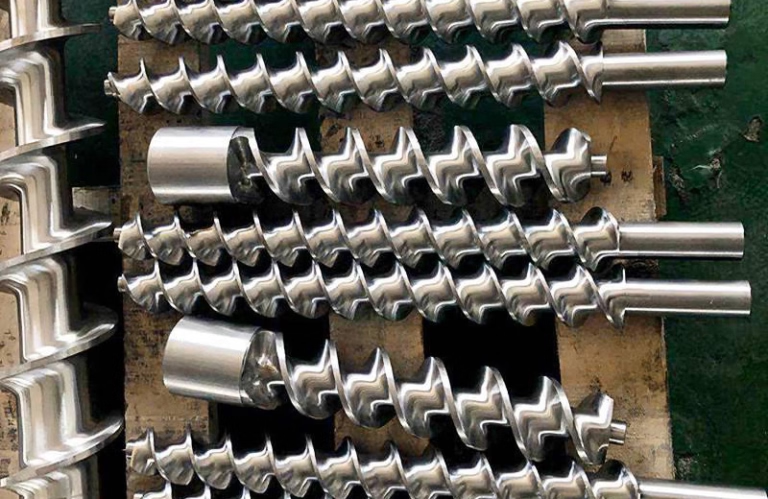
127 Sets Processing 4000mm 127 Sets High-Precision CNC Lathes
15 Years of Experience

How To Extend The Working Area Of CNC Machine?

In the realm of precision manufacturing, encountering a design that slightly exceeds your CNC machine’s stated working envelope is a common yet frustrating challenge. The immediate thought might be to invest in a larger, more expensive machine. However, as a senior manufacturing engineer, I can attest that with ingenuity and strategic planning, you can effectively […]

In the realm of precision manufacturing, encountering a design that slightly exceeds your CNC machine’s stated working envelope is a common yet frustrating challenge. The immediate thought might be to invest in a larger, more expensive machine. However, as a senior manufacturing engineer, I can attest that with ingenuity and strategic planning, you can effectively extend the working area of your CNC machine without a capital-intensive overhaul. This capability is crucial for shops aiming to increase flexibility, take on larger projects, and maximize ROI on existing equipment.

This article will explore practical, proven methods to push the boundaries of your machining center, from simple fixturing tricks to advanced process strategies, and highlight when partnering with a full-capability manufacturer like GreatLight becomes the most intelligent solution.

H2: Understanding the “Working Area” Constraint

Before exploring solutions, it’s vital to define the constraint. The working area, or work envelope, is the maximum volume within which the machine tool can position its cutting tool. For a 3-axis vertical machining center (VMC), this is typically defined as X (left-right), Y (front-back), and Z (up-down) travel. The limitation arises when a part’s dimensions exceed any of these linear travels, or when a part’s geometry requires tool access beyond the standard range.

H2: Method 1: Physical and Fixturing Extensions

These methods involve manipulating the workpiece or tool relationship to the machine’s native coordinate system.

1. Strategic Fixturing and Workpiece Orientation:

Off-Center Mounting: If a part is long in one axis but narrow in another, orient it diagonally within the work cube. A part measuring 700mm in length might not fit in a 600mm X-travel machine if aligned with X, but if rotated 45 degrees, its projected length in X and Y may fall within limits.
Vertical “Tombstone” Fixturing: For long, slender parts, mounting them vertically on a tombstone or angle plate effectively converts Y or Z travel into the primary machining axis. This is a classic method for machining multiple sides and extending effective length capacity.
Precision Spacers and Risers: Using machined parallel blocks or custom risers to elevate the workpiece can help utilize the full Z-axis travel if the issue is depth rather than height clearance under the spindle. Conversely, for very tall parts, sinking the fixture into a custom sub-plate or machine table pocket can gain crucial Z-height.

2. Pallet Systems and Modular Setup:
For parts significantly larger than the work envelope, a modular “divide and conquer” approach is employed. The part is precisely located and clamped on a large, stable sub-plate. You machine one section of the part, then release it, reposition the part on the sub-plate (using dowel pins or edge clamps for accuracy), and machine the next adjacent section. This requires meticulous planning for tool paths, overlaps, and seam blending.

3. Utilizing 4th and 5th Axis Capabilities:
This is where 5-axis CNC machining transforms capability. A part that is too tall to fit under the spindle in a fixed orientation can be tilted using the rotary axes, presenting a shorter profile to the Z-axis. Complex parts can be indexed to machine features that would otherwise be outside the linear travel. A machine with a large rotary table can effectively machine the circumference of a part much larger than its Y-travel by rotating the part. If your shop lacks this, partnering with a specialist like GreatLight CNC Machining Factory, with its advanced five-axis CNC machining centers, is the direct path to solving such spatial puzzles.

H2: Method 2: Process and Toolpath Optimization

Software and machining strategy play an equally important role in extending effective working area.

1. “Tiling” or “Match Machining” with Software:
Modern CAM software can automatically split a large toolpath into smaller, overlapping “tiles” that correspond to your machine’s travel. After machining one tile, you reposition the workpiece and run the next tile program. The software ensures a seamless blend at the overlap zone. This is a highly systematic version of the modular setup approach.

2. Using Extended-Length Tools and Tool Holders:
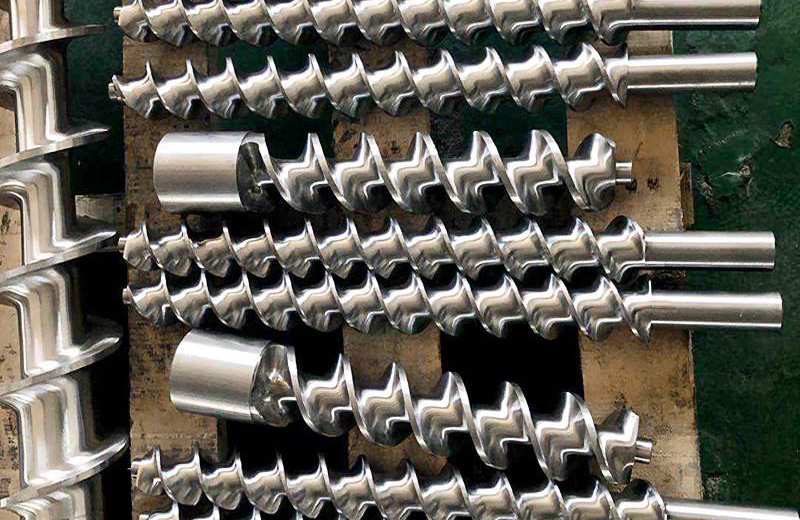
For deep cavities or tall walls where the spindle cannot reach the bottom or top, the solution is to extend the tool, not the machine. Using long-reach end mills, boring bars, and specialized tool extensions can effectively increase the Z-axis working depth. Critical considerations include:
图片

Tool Rigidity: Longer tools deflect more, requiring reduced feed rates and depth of cut.
Vibration: Damping tool holders (e.g., hydraulic or shrink-fit) are recommended.
Spindle Clearance: Ensure the extended tool holder doesn’t collide with the machine column or other obstructions at the home position.

3. In-Process Repositioning with Precision: For milling operations, you can design features like precision relocation dowel holes into your fixture and part waste material. Machine the holes in the first setup, then insert dowels after repositioning to ensure nanometric realignment for the second setup.

H2: Method 3: The Collaborative and External Expansion

When in-house extension hits its technical or economic limit, looking outward is the strategic move.

1. Leveraging a Partner’s Advanced Capabilities: The most efficient way to extend the working area of your CNC machine is to virtually extend your shop floor by collaborating with a manufacturer that already possesses the larger or more capable equipment. For instance, a job requiring a 2-meter long part might be impossible on your 1-meter VMC, but it’s a standard task for a shop with a gantry mill or large-bed machining center.

2. The GreatLight Advantage: A Seamless Capacity Extension:
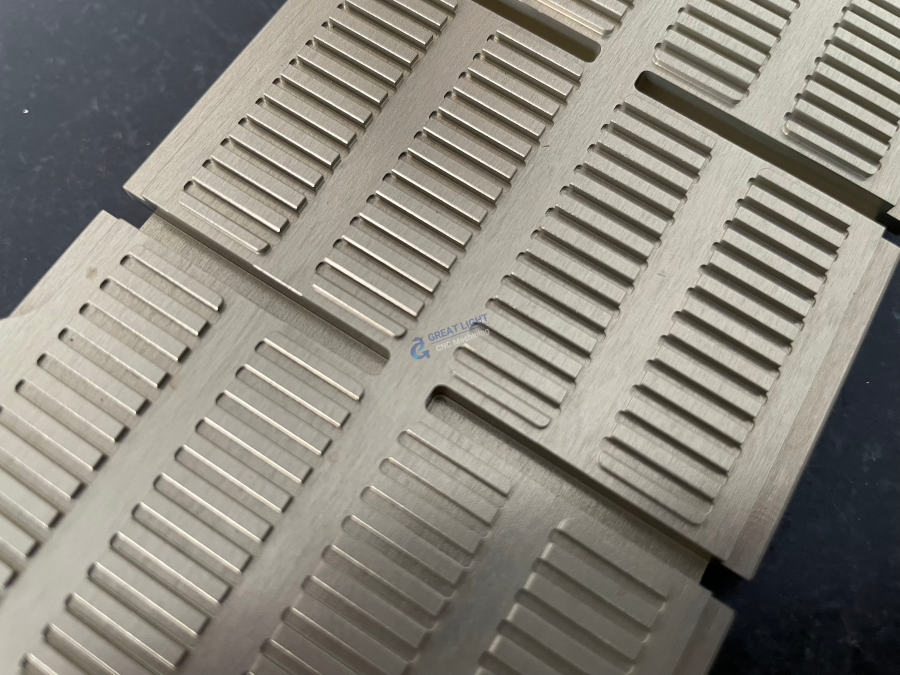
This is precisely where a partner like GreatLight CNC Machining Factory provides immense value. Instead of struggling with complex fixturing and risky repositioning on undersized equipment, you can outsource the oversized component or the entire complex assembly.
图片

Guaranteed Precision: Their large-format 5-axis and 3-axis CNC machines are designed and calibrated for accuracy across their entire working volume (up to 4000mm in some cases), eliminating the accuracy risks inherent in manual repositioning.
Process Integrity: Complex parts are machined in a single setup or with automated pallet changes, ensuring superior geometrical accuracy and surface finish.
One-Stop Solution: They handle not only the machining but also the required post-processing and finishing, delivering a ready-to-use component.

Conclusion

Knowing how to extend the working area of your CNC machine is a hallmark of a resourceful manufacturing engineer. Tactics like creative fixturing, toolpath tiling, and using extended tools can solve many borderline cases, improving your shop’s flexibility. However, it’s critical to recognize the trade-offs in time, programming complexity, and potential accuracy loss.

For components that genuinely exceed your machine’s rational limits or demand the highest precision across large dimensions, the most professional, reliable, and often cost-effective solution is to leverage the established capacity of a specialized partner. GreatLight CNC Machining Factory, with its extensive array of high-precision, large-format CNC equipment and full-process engineering support, acts as a seamless extension of your manufacturing capabilities. This allows you to take on ambitious projects with confidence, ensuring the final part quality is never compromised by equipment constraints.


Frequently Asked Questions (FAQ)

Q1: What is the most common risk when trying to extend a machine’s working area via repositioning?
A: The greatest risk is the accumulation of errors. Each manual repositioning introduces potential misalignment errors from fixtures, clamps, and measuring devices. These errors compound, often leading to mismatched features, poor tolerances, and scrapped parts. For critical dimensions, this method is not recommended.

Q2: Can I use a 4th axis rotary table to machine a part longer than my X-axis travel?
A: Yes, strategically. A long cylindrical part can be mounted between centers on a rotary table. By rotating the part (A-axis), you can use a relatively short X-axis travel to machine along the entire length of the part, as the rotation presents new sections to the tool. This is excellent for milling contours, grooves, or helical features on long shafts.

Q3: When should I consider purchasing a larger machine versus using these extension techniques?
A: Consider a new machine if: 1) Over 30% of your jobs consistently exceed your current work envelope, 2) The time and labor cost of extension techniques outweigh the ROI of new equipment, 3) You cannot maintain the required part quality with repositioning methods, or 4) You need the faster cycle times and single-setup accuracy a larger machine provides for core business components.

Q4: How does GreatLight ensure accuracy over a large working area, like 4000mm?
A: Large-format machines at professional factories like GreatLight are engineered for stability and accuracy. They use high-precision ground ball screws, linear scales for closed-loop feedback (avoiding cumulative screw error), temperature compensation systems, and robust foundation-level machine beds to minimize deflection. Regular laser calibration across the entire volume ensures the machine’s positional accuracy is maintained.
图片

Q5: Are there any software tools that specifically help with large-part machining on smaller machines?
A: Yes. Most high-end CAM software packages (e.g., Siemens NX, Mastercam, HyperMill) include dedicated “Match Machining” or “Tiling” modules. These allow you to define the stock, the machine’s limits, and then automatically segment the toolpaths, calculate safe repositioning points, and generate overlapping zones for a seamless finish.


CNC Experts

Picture of JinShui Chen

JinShui Chen

Rapid Prototyping & Rapid Manufacturing Expert

Specialize in CNC machining, 3D printing, urethane casting, rapid tooling, injection molding, metal casting, sheet metal and extrusion

CNC Recent Posts

CNC News

Welcome to GreatLight Metal,Maximum Processing Size 4,000 mm

Precision Machining CNC Quote Online

Loading file

Upload Click here to upload or drag and drop your model to the canvas.

The model is too large and has been resized to fit in the printer's build tray. [Hide]

The model is too large to fit in the printer's build tray. [Hide]

The model is too large, a fitting printer is selected. [Hide]

The model is too small and has been upscaled. [Hide]

Warning: The selected printer can not print in full color [Hide]

Warning: obj models with multiple meshes are not yet supported [Hide]

Warning: Unsupported DXF entity  [Hide]

Warning: could not arrange models [Hide]

[Hide]


File Unit:      
Scale:
%
L × W × H:
X: × Y: × Z:  cm 
Rotation:
X: ° Y: °  
⚡ Instant Quote for Precision Manufacturing

Submit your design files (STEP/IGES/DWG) and receive a competitive quote within 1 hour, backed by ISO 9001-certified quality assurance.

📋 How It Works

  1. Upload & SpecifyShare your 3D model and select materials (Aluminum/Stainless Steel/Titanium/PEEK), tolerances (±0.002mm), and surface treatments.

  2. AI-Powered AnalysisOur system calculates optimal machining strategy and cost based on 10+ years of automotive/aerospace data.

  3. Review & ConfirmGet a detailed breakdown including:
    - Volume pricing tiers (1-10,000+ units)
    - Lead time (3-7 days standard)
    - DFM feedback for cost optimization

Unit Price: 

Loading price
5 Axis CNC Machining Equipment
4 Axis CNC Machining Equipment
3 Axis CNC Machining Equipment
CNC Milling & Turning Equipment
Prototype and Short-Run Injection Moldings Exact plastic material as final design
Volume Metal Die Casting Services - Precision Cast Parts
Bridge the Gap From Prototype to Production – Global delivery in 10 days or less
Custom high-precision sheet metal prototypes and parts, as fast as 5 days.
Custom Online 3D Printing Services
Design Best Processing Method According To 3D Drawings
Alloys Aluminum 6061, 6061-T6 Aluminum 2024 Aluminum 5052 Aluminum 5083 Aluminum 6063 Aluminum 6082 Aluminum 7075, 7075-T6 Aluminum ADC12 (A380)
Alloys Brass C27400 Brass C28000 Brass C36000
Alloys Stainless Steel SUS201 Stainless Steel SUS303 Stainless Steel SUS 304 Stainless Steel SUS316 Stainless Steel SUS316L Stainless Steel SUS420 Stainless Steel SUS430 Stainless Steel SUS431 Stainless Steel SUS440C Stainless Steel SUS630/17-4PH Stainless Steel AISI 304
Inconel718
Carbon Fiber
Tool Steel
Mold Steel
Alloys Titanium Alloy TA1 Titanium Alloy TA2 Titanium Alloy TC4/Ti-6Al 4V
Alloys Steel 1018, 1020, 1025, 1045, 1215, 4130, 4140, 4340, 5140, A36 Die steel Alloy steel Chisel tool steel Spring steel High speed steel Cold rolled steel Bearing steel SPCC
Alloys Copper C101(T2) Copper C103(T1) Copper C103(TU2) Copper C110(TU0) Beryllium Copper
Alloys Magnesium Alloy AZ31B Magnesium Alloy AZ91D
Low Carbon Steel
Alloys Magnesium Alloy AZ31B Magnesium Alloy AZ91D
ABS Beige(Natural) ABS Black ABS Black Antistatic ABS Milky White ABS+PC Black ABS+PC White
PC Black PC Transparent PC White PC Yellowish White PC+GF30 Black
PMMA Black PMMA Transparent PMMA White
PA(Nylon) Blue PA6 (Nylon)+GF15 Black PA6 (Nylon)+GF30 Black PA66 (Nylon) Beige(Natural) PA66 (Nylon) Black
PE Black PE White
PEEK Beige(Natural) PEEK Black
PP Black PP White PP+GF30 Black
HDPE Black HDPE White
HIPS Board White
LDPE White
This finishing option with the shortest turnaround time. Parts have visible tool marks and potentially sharp edges and burrs, which can be removed upon request.
Sand blasting uses pressurized sand or other media to clean and texture the surface, creating a uniform, matte finish.
Polishing is the process of creating a smooth and shiny surface by rubbing it or by applying a chemical treatmen
A brushed finish creates a unidirectional satin texture, reducing the visibility of marks and scratches on the surface.
Anodizing increases corrosion resistance and wear properties, while allowing for color dyeing, ideal for aluminum parts.
Black oxide is a conversion coating that is used on steels to improve corrosion resistance and minimize light reflection.
Electroplating bonds a thin metal layer onto parts, improving wear resistance, corrosion resistance, and surface conductivity.
This is a finish of applying powdered paint to the components and then baking it in an oven, which results in a stronger, more wear- and corrosion-resistant layer that is more durable than traditional painting methods.
Please provide additional text description for other surface treatment requirements!
Material
Material
  • CNC Metals
    • Aluminum
    • Brass
    • Stainless steel
    • Inconel718
    • Carbon Fiber
    • Tool Steel
    • Mold Steel
    • Titanium
    • Alloy Steel
    • Copper
    • Bronze
    • Low Carbon Steel
    • Magnesium
  • CNC Plastics
    • ABS
    • PC
    • PMMA (Acrylic)
    • PA (Nylon)
    • PE
    • PEEK
    • PP
    • HDPE
    • HIPS
    • LDPE
Printer
Printer
  • CNC Metals
    • 5 Axis CNC Machining
    • 4 Axis CNC Machining
    • 3 Axis CNC Machining
    • CNC Milling & Turning
    • Rapid Tooling
    • Metal Die Casting
    • Vacuum Casting
    • Sheet Metal Fabrication
    • SLA 3D Printing
    • SLS 3D Printing
    • SLM 3D Printing
  • Rapid Prototyping
    • Design Best Processing Method According To 3D Drawings
Post-processing
Post-processing
  • As Machined(Product’s natural color)
  • Sand Blasting
  • Polishing
  • Brushed Finish
  • Anodizing
  • Black Oxide
  • Electroplating
  • Paint Coating
  • Powder Coating
  • Other surface treatment requirements
Finalize
The world's first CNC machining center that dares to provide free samples!

Free for first product valued at less than $200. (Background check required)

precision machining cnc quote online

15 Years CNC Machining Services

When you’re ready to start your next project, simply upload your 3D CAD design files, and our engineers will get back to you with a quote as soon as possible.
Scroll to Top

ISO 9001 Certificate

ISO 9001 is defined as the internationally recognized standard for Quality Management Systems (QMS). It is by far the most mature quality framework in the world. More than 1 million certificates were issued to organizations in 178 countries. ISO 9001 sets standards not only for the quality management system, but also for the overall management system. It helps organizations achieve success by improving customer satisfaction, employee motivation, and continuous improvement. * The ISO certificate is issued in the name of FS.com LIMITED and applied to all the products sold on FS website.

greatlight metal iso 9001 certification successfully renewed
GB T 19001-2016 IS09001-2015
✅ iso 9001:2015
greatlight metal iso 9001 certification successfully renewed zh

IATF 16949 certificate

IATF 16949 is an internationally recognized Quality Management System (QMS) standard specifically for the automotive industry and engine hardware parts production quality management system certification. It is based on ISO 9001 and adds specific requirements related to the production and service of automotive and engine hardware parts. Its goal is to improve quality, streamline processes, and reduce variation and waste in the automotive and engine hardware parts supply chain.

automotive industry quality management system certification 01
Certification of Production Quality Management System for Engine Hardware Parts Engine Hardware Associated Parts
automotive industry quality management system certification 00
发动机五金零配件的生产质量管理体系认证

ISO 27001 certificate

ISO/IEC 27001 is an international standard for managing and processing information security. This standard is jointly developed by the International Organization for Standardization (ISO) and the International Electrotechnical Commission (IEC). It sets out requirements for establishing, implementing, maintaining, and continually improving an information security management system (ISMS). Ensuring the confidentiality, integrity, and availability of organizational information assets, obtaining an ISO 27001 certificate means that the enterprise has passed the audit conducted by a certification body, proving that its information security management system has met the requirements of the international standard.

greatlight metal technology co., ltd has obtained multiple certifications (1)
greatlight metal technology co., ltd has obtained multiple certifications (2)

ISO 13485 certificate

ISO 13485 is an internationally recognized standard for Quality Management Systems (QMS) specifically tailored for the medical device industry. It outlines the requirements for organizations involved in the design, development, production, installation, and servicing of medical devices, ensuring they consistently meet regulatory requirements and customer needs. Essentially, it's a framework for medical device companies to build and maintain robust QMS processes, ultimately enhancing patient safety and device quality.

greatlight metal technology co., ltd has obtained multiple certifications (3)
greatlight metal technology co., ltd has obtained multiple certifications (4)

Get The Best Price

Send drawings and detailed requirements via Email:[email protected]
Or Fill Out The Contact Form Below:

All uploads are secure and confidential.











