
How To Derive CNC Machine Capacity?
When sourcing or managing custom precision parts machining, especially in industries like aerospace, automotive, medical devices, and robotics, one of the most critical yet often overlooked factors is accurately determining CNC machine capacity. Whether you’re evaluating a potential supplier like GreatLight CNC Machining Factory or planning your own in-house production, understanding how to derive CNC machine capacity is essential for optimizing throughput, minimizing lead times, and ensuring consistent part quality.
This article explores the methodologies, key considerations, and practical steps involved in calculating CNC machine capacity, with insights tailored specifically for precision parts machining and customization.
What Is CNC Machine Capacity?
CNC machine capacity refers to the maximum output a CNC machine (or a group of machines) can realistically produce within a given timeframe, considering factors such as machine availability, tooling constraints, setup time, part complexity, and material handling logistics.
It’s not just about how fast a machine can run — it’s about how efficiently and consistently it can produce high-quality parts under real-world shop floor conditions.
Why Accurate CNC Capacity Calculation Matters
For manufacturers and buyers alike, understanding CNC capacity enables:
Better production planning and scheduling
Improved on-time delivery performance
Reduced bottlenecks and idle time
More accurate quoting and cost estimation
Optimal utilization of capital equipment
Enhanced negotiation leverage with suppliers
In high-mix, low-volume (HMLV) environments typical of precision machining, where customization is key, accurately gauging machine capacity becomes even more vital.
Key Factors Influencing CNC Machine Capacity
To derive CNC machine capacity effectively, you must take into account both machine-specific and operation-specific variables:
1. Machine Availability
Total available machine hours per day/week/month
Deduct non-productive time: maintenance, setup, tool changes, inspections
2. Cycle Time
The actual machining time required to produce one part
Varies significantly with part geometry, material, and tolerances
3. Setup Time
Time required to prepare the machine for a new batch or part
Especially critical in low-volume, high-complexity production
4. Tooling and Changeover
Frequency of tool replacement or adjustment
Impact on overall cycle time and machine downtime
5. Operator Dependency
Manual loading/unloading, measurement, and adjustments
Especially relevant for smaller shops or less automated facilities
6. Part Complexity
Multi-axis machining (3-axis, 4-axis, 5-axis) increases capability but may also affect speed
Tighter tolerances (e.g., ±0.001mm) require slower feeds and speeds
7. Batch Size
Larger batches spread setup costs but may tie up machines longer
Smaller batches offer flexibility but reduce throughput efficiency
How to Calculate CNC Machine Capacity: Step-by-Step
Here’s a practical methodology to determine CNC machine capacity:
🔹 Step 1: Determine Total Available Machine Time
Start with the total hours in your chosen period (e.g., a month):
30 days × 24 hours = 720 hours
Subtract non-operational time:
Weekends/holidays
Scheduled maintenance
Breaks, shift changes
Example:
A 2-shift operation (16 hours/day, 22 working days/month):
🔢 16 hrs/day × 22 days = 352 machine-hours/month
🔹 Step 2: Account for Machine Availability (%)
Not all scheduled hours are productive. Apply an efficiency factor:
| Factor | Description | Typical Range |
|---|---|---|
| Setup Time | Per batch or part change | 10–30% |
| Downtime | Maintenance, failures, waiting | 5–15% |
| Tool Changes | Frequent in complex parts | 5–20% |
| Operator Delays | Loading, measuring, adjustments | 5–10% |
Estimated Net Utilization: 65% – 85%
Example:
If you assume 75% efficiency:
🔢 352 hrs × 0.75 = 264 productive machine-hours/month
🔹 Step 3: Determine Average Cycle Time per Part
This is the actual machining time for one unit. It varies based on:
Number of features
Material (e.g., aluminum vs titanium)
Tolerances and surface finish
Number of axes used (3-axis is faster than 5-axis)
Example:
If a part takes 12 minutes (0.2 hours) to machine:
🔢 Cycle Time = 0.2 hours/part
🔹 Step 4: Include Setup Time per Batch
For low-volume runs, setup time can dominate:
30 minutes to 2 hours per setup is common
Spread across the number of parts in the batch
Example:
If setup takes 1 hour, and you’re producing 10 parts:
🔢 Setup time per part = 1 hr ÷ 10 = 0.1 hours/part
🔹 Step 5: Compute Total Time per Part
Total Time per Part = Cycle Time + (Setup Time ÷ Batch Size)
Using previous numbers:
🔢 0.2 (cycle) + 0.1 (setup) = 0.3 hours/part
🔹 Step 6: Calculate Monthly Capacity in Parts
Capacity (parts/month) = Productive Hours ÷ Total Time per Part
Example:
🔢 264 hrs ÷ 0.3 hrs/part ≈ 880 parts/month
✅ This means the machine can realistically produce ~880 units of this specific part per month, under the defined conditions.
Advanced Considerations in CNC Capacity Planning
1. Multi-Machine Capacity
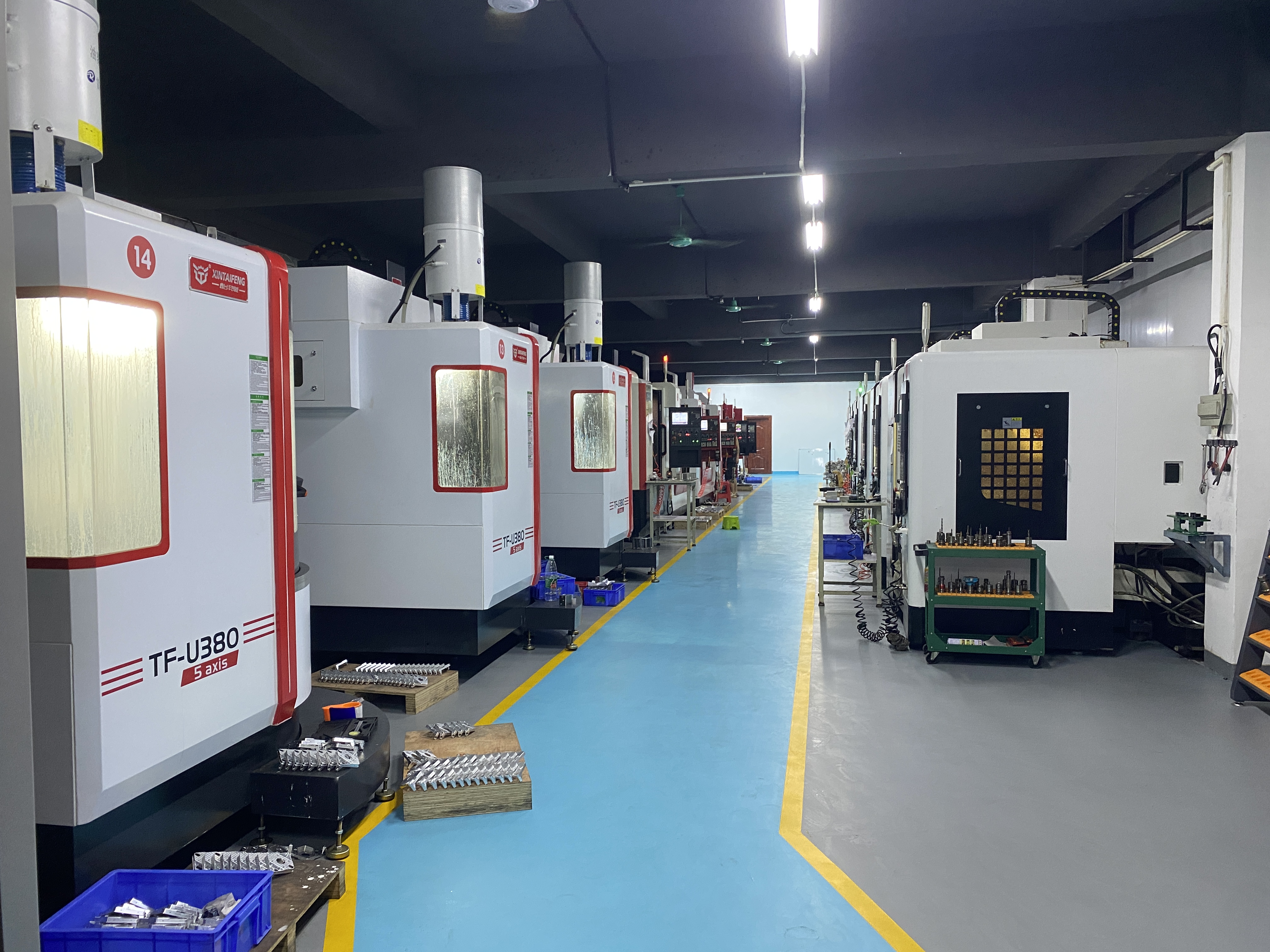
For factories like GreatLight CNC Machining Factory, which operates over 127 precision machines (including 5-axis CNCs), total capacity scales with:
Parallel processing across multiple machines
Specialization (some machines for aluminum, others for titanium or stainless steel)
Dedicated cells for high-mix or high-volume workflows
2. 5-Axis vs 3-Axis Capacity Differences
5-axis CNC machines enable more complex geometries without multiple setups, but:
Have longer cycle times
Require highly skilled operators
Are more expensive to operate per hour
📌 For intricate parts like those in aerospace or medical device components, 5-axis capacity is a premium resource and must be allocated wisely.
👉 Learn more about high-precision 5-axis CNC machining services here.
3. Material-Specific Capacity
Different materials machine at different rates:
Aluminum: Fast cutting, high feed rates
Titanium/Inconel: Slower, more heat-sensitive, shorter tool life
Plastics: Can melt if feed rates are too high
Each material type will affect both cycle time and tool wear, thus altering effective capacity.
How GreatLight CNC Machining Factory Manages Capacity
With over a decade of experience and a facility covering 7,600 m² in Dongguan — China’s precision hardware capital — GreatLight Metal Tech Co., LTD. (GreatLight Metal) exemplifies how to optimize CNC capacity at scale.
Equipped with 127 precision CNC machines, including high-end 5-axis, 4-axis, and 3-axis machining centers, the factory leverages:
ISO 9001:2015 certification for quality assurance
In-house measurement and inspection tools to validate tolerances as tight as ±0.001mm
Intelligent scheduling systems to maximize throughput across diverse part types
Skilled workforce trained for both high-mix and high-volume production
Their approach ensures that whether you need one prototype or 10,000 precision parts, they can align machine capacity with your exact requirements — without compromising lead time or quality.
🔗 More about their engineering and service capabilities can be found on their LinkedIn company page.
Conclusion
Deriving CNC machine capacity is both a science and an art. It requires a clear understanding of machine capabilities, production variables, and real-world constraints. For companies engaged in precision parts machining and customization, accurately calculating this capacity enables smarter sourcing decisions, better supplier evaluation, and more predictable project outcomes.
By applying the structured approach outlined above — factoring in machine time, cycle times, setup, and batch dynamics — you can align your expectations with actual manufacturing capabilities, ensuring smoother production and stronger partnerships.
When searching for a trusted manufacturing partner, consider suppliers like GreatLight CNC Machining Factory, whose proven expertise in 5-axis CNC machining, combined with robust quality systems and extensive capacity, makes them a leader in delivering precision-engineered components across industries.
Frequently Asked Questions (FAQ)
❓ What is CNC machine capacity?
CNC machine capacity is the maximum number of parts a CNC machine can produce within a specific timeframe, considering real-world factors like machine uptime, cycle time, setup, and tool changes.
❓ How is CNC machining time calculated?
CNC machining time is calculated based on the number of features, tool paths, material, and cutting parameters. It typically includes both actual cutting time and auxiliary times like tool changes and movements.
❓ Does part complexity affect CNC capacity?
Yes. Complex geometries, especially those requiring 5-axis machining or tight tolerances (e.g., ±0.001mm), usually take longer to machine and may reduce overall capacity if not accounted for properly.
❓ How can a factory increase CNC machine capacity?
Factories can increase capacity by:
Adding more machines
Reducing setup times through standardization
Improving tool management
Investing in automation and multi-spindle systems
Optimizing scheduling and reducing downtime
❓ What’s the difference between 3-axis and 5-axis CNC capacity?
3-axis CNC machines are generally faster for simpler parts but lack the flexibility of 5-axis machines, which can produce more complex geometries in fewer setups — albeit at a slower per-part cycle time and higher cost.
❓ How do I evaluate a supplier’s CNC capacity?
Evaluate based on:
Total number and types of CNC machines
Average utilization rates
Lead times for your part types
Quality certifications (e.g., ISO 9001)
Past project examples and capacity planning transparency
For a trusted example, see how GreatLight Metal manages its capacity across a fleet of over 120 precision machines. Connect with industry leaders through their LinkedIn profile.



















