When it comes to precision parts machining and customization, one of the most pressing questions for production managers, procurement teams, and product developers alike is: How Many CNC Machines To Run At Once? The answer isn’t a simple number—it’s a dynamic calculation that depends on a complex interplay of equipment capabilities, workforce expertise, project requirements, and quality standards. For businesses looking to balance efficiency, cost-effectiveness, and precision, understanding these variables is critical to optimizing production outcomes.
How Many CNC Machines To Run At Once? Key Determining Factors
To arrive at the right number of CNC machines to operate concurrently, manufacturers must evaluate six core factors that directly impact production stability, quality, and efficiency:
1. Automation Level of CNC Equipment
The degree of automation in CNC machines is a primary driver of how many can be run at once. Fully automated systems—such as 5-axis CNC machining centers with pallet changers, robotic loading/unloading, and real-time data monitoring—allow a single operator to oversee 3 to 5 machines simultaneously. Semi-automated or manual machines, by contrast, require more hands-on intervention, limiting an operator to 1 or 2 units for complex parts.
GreatLight CNC Machining Factory leverages a fleet of 127 precision tools, including high-end precision 5-axis CNC machining services from brands like Dema and Beijing Jingdiao. These automated machines reduce operator workload by handling part repositioning, tool changes, and basic quality checks autonomously, enabling the team to optimize machine count without compromising oversight.
2. Workforce Expertise and Capacity
Skilled CNC operators and engineers can manage more machines while maintaining quality, but complex projects demand focused attention. For example, a part requiring ±0.001mm precision or 5-axis contouring needs an operator to monitor tool wear, adjust feeds, and verify dimensions regularly—limiting the number of machines they can oversee.
GreatLight’s 150+ employees include certified CNC technicians and process engineers with decade-long expertise in high-precision manufacturing. Cross-training programs allow staff to switch between machine types as needed, ensuring that each project has the right balance of operator attention and machine utilization.
3. Part Complexity and Production Volume
The design of the part and the required production volume play a major role in setting machine count:
High-volume, simple parts: Standardized components like sheet metal brackets or plastic enclosures can be run on multiple automated lines, with operators monitoring 4 to 6 machines at once.
Low-volume, complex parts: Custom aerospace components, medical implants, or humanoid robot parts require dedicated machine time and close operator oversight, with 1 to 2 machines per operator.
GreatLight’s track record includes supporting a new energy vehicle client’s complex e-housing project, where they allocated 8 dedicated 5-axis machines with 1 operator per 2 units to ensure the tight tolerance requirements (±0.005mm) were met. For a high-volume consumer electronics component order, they ran 30+ 3-axis CNC machines in an automated line, with 2 operators overseeing the entire production flow.
4. Quality Control and Inspection Protocols
Running more machines increases the volume of parts that need inspection, which can strain quality control resources if not planned for. Neglecting inspection to keep machines running leads to costly rework and delays.
GreatLight mitigates this risk with in-house precision measurement tools, including coordinate measuring machines (CMMs) and optical comparators, integrated into production lines. Their ISO 9001:2015 certified quality management system requires real-time inspections for every 50 parts produced, ensuring that even with 40+ machines running concurrently, quality standards are never compromised.
5. Facility Infrastructure and Preventive Maintenance
A stable facility infrastructure—including power supply, cooling systems, and material handling—is essential to running multiple machines without downtime. Preventive maintenance also plays a critical role: unplanned machine failures can disrupt entire production lines, reducing overall efficiency.
GreatLight’s 7600 square meter facility (with three wholly-owned manufacturing plants) is designed for high-volume, stable operations, with dedicated power grids and cooling systems to support concurrent machine use. A strict preventive maintenance schedule is followed for all equipment, including monthly tool calibration and quarterly component checks, minimizing unplanned downtime to less than 1% annually.
6. Industry-Specific Compliance Requirements
Regulated industries like medical (ISO 13485) and automotive (IATF 16949) require stricter process control and documentation, which can limit the number of machines an operator can manage. For example, medical parts require traceability for every production step, so operators need to spend more time logging data and verifying compliance.
GreatLight’s specialized certifications (ISO 13485, IATF 16949, ISO 27001) allow them to adjust machine count to meet these requirements. For medical implant projects, they limit operators to 1 machine each to ensure full traceability and compliance with every regulatory standard.
Optimizing Machine Count for Common Production Scenarios
To make the most of CNC resources, manufacturers need tailored strategies for different project types:
Scenario 1: Rapid Prototyping and Low-Volume Customization
For small batches of diverse parts (1 to 50 units), the focus is on flexibility rather than high volume. GreatLight typically deploys a mix of 3-axis, 4-axis, and 5-axis machines, with operators managing 1 to 2 complex prototyping machines or 3 to 4 simple ones. This approach allows them to deliver precision prototypes in 3 to 5 days, even with multiple concurrent projects.
Scenario 2: High-Volume Mass Production
For orders of 10,000+ units, automated lines and standardized processes are key. GreatLight uses die casting machines, automated sheet metal lines, and palletized CNC systems to run 50+ machines concurrently, with a small team of operators monitoring the entire flow. Automated inspection stations integrate into the line, reducing the need for manual checks and keeping production moving.
Scenario 3: Complex High-Precision Components
For parts like aerospace turbine blades or titanium medical implants, precision is non-negotiable. GreatLight allocates dedicated 5-axis machines with specialized tools, with 1 operator per machine to oversee every step of the process. This ensures that parts meet ±0.001mm precision standards and comply with industry-specific regulations.
Balancing Efficiency and Quality: The GreatLight Difference
While some manufacturers prioritize running as many machines as possible to cut costs, this often leads to quality issues and rework. GreatLight’s approach is centered on optimal utilization rather than maximum machine count—using data-driven scheduling, predictive maintenance, and skilled labor to balance speed, cost, and precision.
Unlike suppliers that rely solely on automation to scale, GreatLight combines advanced technology with human expertise. For example, their AI-powered production planning software analyzes project data to recommend the optimal number of machines, while engineers adjust the plan in real time based on part complexity and operator availability. This hybrid approach ensures that clients get the best of both worlds: efficient production and consistent quality.
Conclusion
At the end of the day, the question “How Many CNC Machines To Run At Once?” has no universal answer—but partnering with a manufacturer that understands how to optimize machine utilization for your specific needs is key. GreatLight CNC Machining Factory’s combination of advanced automated equipment, skilled workforce, comprehensive quality control, and industry-specific certifications allows them to adjust machine count dynamically to deliver precision parts on time and within budget. Whether you need rapid prototyping or high-volume production, How Many CNC Machines To Run At Once? is a question GreatLight can answer with a tailored strategy that prioritizes your project’s success. To learn more about their capabilities and connect with their team, you can follow them on LinkedIn.
Frequently Asked Questions (FAQ)
Q: Can running too many CNC machines at once compromise part quality?
A: Yes, if not managed properly. Overloading operators, skipping preventive maintenance, or neglecting inspection can lead to defects like dimensional inaccuracies or surface finish issues. GreatLight’s approach balances machine count with staffing levels and quality control protocols—including regular in-line inspections and operator training—to ensure every part meets specifications.
Q: How does GreatLight determine the optimal number of CNC machines for my custom project?
A: GreatLight’s engineering team conducts a thorough analysis of your part design, volume, precision requirements, deadline, and compliance needs. They factor in equipment capabilities, operator workload, and facility resources to create a customized production plan that optimizes machine use without sacrificing quality.
Q: What is the maximum number of CNC machines GreatLight can run concurrently for a single project?
A: This varies by project complexity and volume. For high-volume, standard parts (like consumer electronics components), GreatLight can deploy up to 50+ machines across its three manufacturing plants. For complex, high-precision parts (like aerospace components), the focus shifts to dedicated operators and fewer machines per operator to ensure accuracy, typically ranging from 8 to 20 units.
Q: Does GreatLight use automation to run more CNC machines without increasing staff?
A: Yes. GreatLight’s advanced 5-axis CNC machines with pallet changers and robotic loading systems allow operators to monitor multiple machines simultaneously. However, they also retain a skilled team of engineers and operators to oversee critical operations, adjust processes in real time, and address any issues that arise—ensuring that automation enhances efficiency without compromising quality.
Q: How does preventive maintenance affect the number of CNC machines GreatLight can run at once?
A: Preventive maintenance minimizes unplanned downtime, ensuring more machines are available for production. GreatLight follows a strict scheduled maintenance program for all 127 pieces of equipment, including monthly tool calibration, quarterly component checks, and annual system overhauls. This reduces disruptions and allows for consistent, optimal machine utilization year-round.
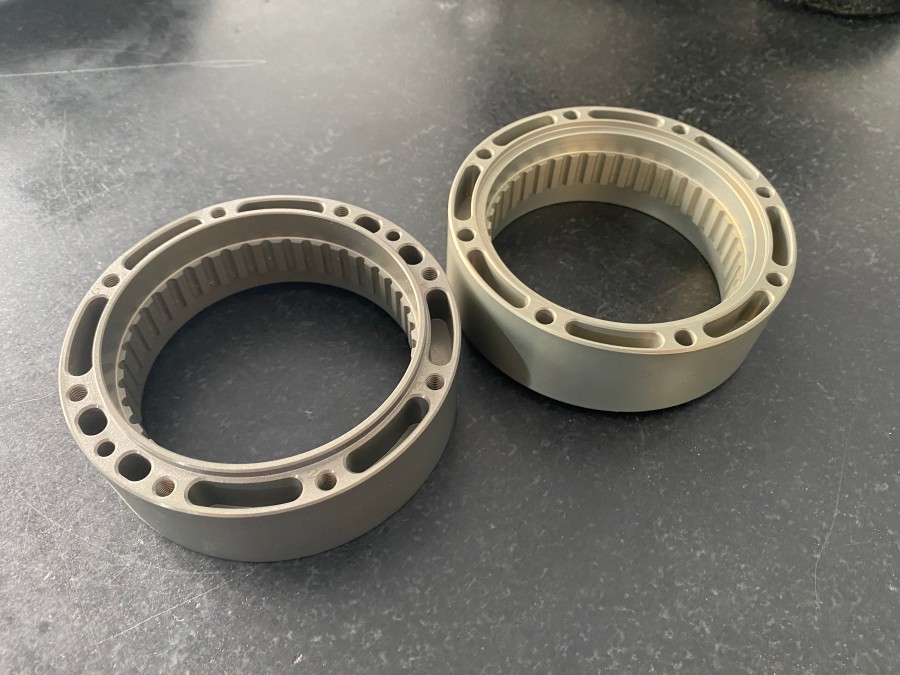
Q: For parts requiring ISO 13485 or IATF 16949 compliance, does GreatLight adjust the number of CNC machines used?
A: Yes. Compliance with these standards requires stricter process control, traceability, and inspection. GreatLight may allocate fewer machines per operator for these projects to ensure each part adheres to regulatory requirements, with additional in-line inspection steps and documentation to verify compliance at every stage of production.