
Copper CNC machining versatility: where the metal earns its place
Copper cuts fast and holds detail, but it grabs tools and moves with heat. This page explains what copper CNC machining versatility really covers, which alloys suit which parts, and where the limits sit. Written for engineers and buyers who need to read a copper drawing and judge whether it will make sense.
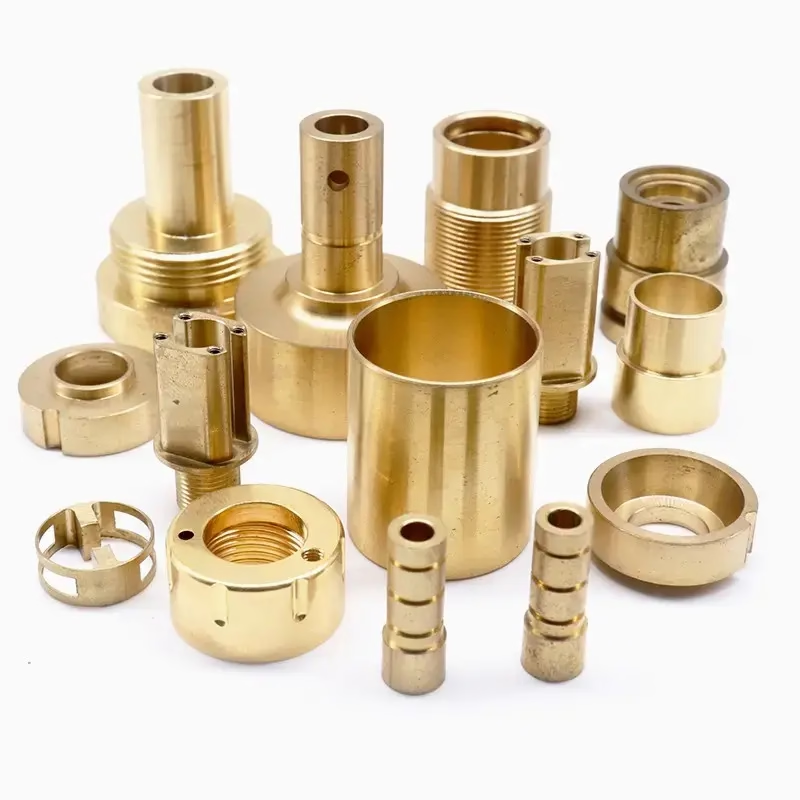
What makes copper behave differently from steel
Copper is soft, around 40–50 HV in the annealed C110 condition, and it conducts heat away from the cut almost ten times faster than steel. That sounds easy. In practice it is the reason copper CNC machining has its own set of rules. The tool does not fail from heat. It fails from built-up edge and abrasion instead.
The second difference is ductility. A copper chip does not fracture and clear the flute the way a gray cast iron chip does. It stretches, welds to the cutting edge, and then tears away, taking a piece of the edge with it. Copper parts often come off the machine with a good surface but a worn tool.
The third difference is thermal expansion. Copper expands about 16.5 × 10⁻⁶ per °C, which is higher than steel and much higher than aluminum. A 100 mm copper bore will grow roughly 0.017 mm over a 10 °C rise. On a ±0.005 mm feature, that is enough to move you out of tolerance before the tool wears at all.
None of this makes copper hard to machine. It makes copper predictable only if you plan for the three effects together: sticky chips, fast edge wear, and thermal growth. Shops that treat copper like brass get chatter, torn surfaces, and scrapped parts.
How copper CNC machining versatility shows up in the setup
High-speed steel is a poor choice here. Uncoated carbide with a sharp, polished edge and a positive rake works for most copper work. For pure copper, a diamond-like carbon coating reduces built-up edge noticeably. For beryllium copper and high-tin bronzes, that same coating helps because the alloy is harder and more abrasive.
Surface speed for C110 typically runs 150–300 m/min with carbide, and feed per tooth sits around 0.05–0.15 mm. Do not go slow to be safe. A light, slow cut rubs the surface, work-hardens a thin layer, and the next pass cuts through harder metal than the drawing specified.
Coolant matters more than it does on steel. Flood coolant with a high oil content, or a heavy mist, keeps the chip from welding to the flute. On thin-wall parts, a through-tool coolant path also removes heat from the cut zone rather than letting it soak into the part.
Tool geometry is where most of the gains sit. Two or three flutes for roughing gives chip room. For finishing, a single-flute or high-helix cutter with a polished face produces Ra 0.8–1.6 μm reliably. That finish is achievable in copper without a separate polishing step on many parts.
Which copper alloy fits which part
C101 and C110 are oxygen-free and tough-pitch copper. They give the highest electrical and thermal conductivity, around 100% IACS, and they are the default for busbars, RF cavity parts, heat spreaders, and electrode components. They are also the gummiest to cut, so they need the sharpest edge and the most attention to chip evacuation.
Beryllium copper, usually in the C17200 range, machines much closer to steel. It reaches roughly 18–22% IACS in the aged condition but can be heat treated to high strength. Spring contacts, current-carrying springs, and non-sparking tooling are the usual reasons to pay for it. Machining beryllium copper requires dust control and coolant management, because beryllium in fine chips is a health hazard.
Brass and bronze are the free-machining end of the family. C36000 brass machines faster than any other copper alloy and is the right call for valves, fittings, and threaded parts where conductivity is secondary. C27400 and C28000 cover the higher-strength brass work, and C93200 bearing bronze handles wear surfaces.
The choice usually comes down to one question: is the part carrying current and heat, or is it carrying load and wear? Conductivity pushes you toward C101 or C110. Wear and strength push you toward beryllium copper, brass, or bronze. Trying to get both from one alloy usually means a compromise on the second property.
Boundaries: when copper is the wrong material
Copper costs several times what 6061 aluminum costs per kilogram, and it machines slower once you account for tool changes and inspection. If the part does not need conductivity above roughly 50% IACS or thermal conductivity above 200 W/m·K, aluminum or brass will usually be cheaper and faster.
Thin, large, flat copper plates are the hardest geometry to hold. The material is soft, it expands with cutting heat, and it has little stiffness. A 300 mm × 300 mm × 3 mm plate will bow during face milling and spring back after. Fixturing on a vacuum plate with light finishing passes is the standard answer, and it still costs more than the same part in aluminum.
Very small features below about 0.5 mm in width are also a poor fit for pure copper. The edge tends to smear rather than shear cleanly. Beryllium copper and brass hold small detail much better, so if the design has fine slots or thin ribs, reconsider the alloy before reconsidering the shop.
Finally, copper is not a good choice for parts that will see abrasive slurry, high sliding loads, or repeated impact. It work-hardens, it galls, and it wears quickly. Bearing bronze or a coated steel will outlast it in those conditions every time.
Copper alloy selection at a glance
Conductivity figures are typical values for the common tempers.
| Alloy | Typical use | Machinability | Watch out for |
|---|---|---|---|
| C101 / C110 | Busbars, RF parts, heat spreaders | Fair, gummy chips | Built-up edge, thermal growth |
| C17200 BeCu | Spring contacts, non-sparking tools | Good, close to steel | Beryllium dust control |
| C36000 brass | Valves, fittings, threaded parts | Excellent, free cutting | Low conductivity for its cost |
| C27400 / C28000 | Higher-strength brass hardware | Good | Zinc smearing on fine threads |
| C93200 bronze | Bearing and wear surfaces | Fair | Abrasive to tooling |
| C103 | Electrode and high-purity parts | Fair, very soft | Easiest to deform in the chuck |
The short answer
If the part carries current or heat, machine it in C101 or C110 and budget for sharp tooling and thermal compensation. If it carries load, wear, or fine detail, choose beryllium copper or brass and treat copper as secondary. Do not try to solve both jobs with one alloy.
Copper CNC machining questions we get
Can copper be machined to ±0.005 mm?
Yes, on features up to roughly 100 mm where the shop controls temperature and takes a light finishing pass. The tolerance itself is not the problem. Thermal growth is. A 10 °C swing in the shop moves a 100 mm copper feature about 0.017 mm, so the part must be measured at a stable temperature, not straight off the machine.
For features over 200 mm, expect to hold ±0.010 mm unless the shop has temperature control and in-process probing. Ask what the inspection temperature is before you accept a tight callout on a long copper part.
Why do copper parts come out with a torn surface?
Almost always built-up edge. The chip welds to the cutting edge, then breaks off and takes a chunk of the edge with it, leaving a smeared finish. The fix is a sharper edge, a higher surface speed, and more coolant at the cut zone, not a slower feed.
If the tear appears only on the finishing pass, check the depth of cut. Below about 0.1 mm radial engagement, copper tends to rub rather than cut. Increase the finishing depth slightly and the surface usually cleans up.
Is copper harder to machine than aluminum?
It is slower, not harder. Aluminum 6061 runs at higher surface speeds and clears chips without help. Copper needs a sharper edge, more coolant, and more frequent tool changes because the edge wears by abrasion instead of heat.
Cycle time on the same geometry is typically 20–40% longer in copper than in 6061, and tool cost per part is higher. The material cost difference is usually the larger number on the quote.
Do you machine beryllium copper?
Yes, with the dust and coolant controls that alloy requires. Beryllium in fine chips and mist is a respiratory hazard, so the process uses wet cutting, enclosed machines, and chip handling procedures rather than dry machining.
The payoff is a part that can be aged to high strength while still conducting current. If your design needs a spring contact that also carries load, beryllium copper is often the only copper-family answer.
Can copper parts be plated or finished?
Yes. Electroless nickel, silver, and gold plating are all common on copper, and silver plating is standard for RF and busbar parts where surface conductivity matters. Bead blasting and tumbling work well and remove the fine burrs copper tends to leave.
One caution: copper oxidizes quickly, so parts that will sit in storage should be packed with a corrosion inhibitor or plated before shipping. A bare copper surface can discolor within days in humid air.
What is the smallest feature copper can hold?
For pure copper, plan on 0.5 mm as a practical floor for slot width and rib thickness. Below that the edge smears and the feature distorts. Brass and beryllium copper can go somewhat finer, around 0.3 mm, because they shear more cleanly.
If your design has features under those numbers, the material is usually the wrong choice, not the process. Switching alloy is cheaper than adding a second operation.
Send us your copper drawing
We machine C101, C110, C103, beryllium copper, and the brass and bronze grades in the table above. Upload a STEP file and we will return a quote with a free DFM analysis within 12 hours.
12-hour quote±0.005 mm100% inspection
More from the shop floor
We publish setup notes, tooling trials and inspection data from the factory floor.











