
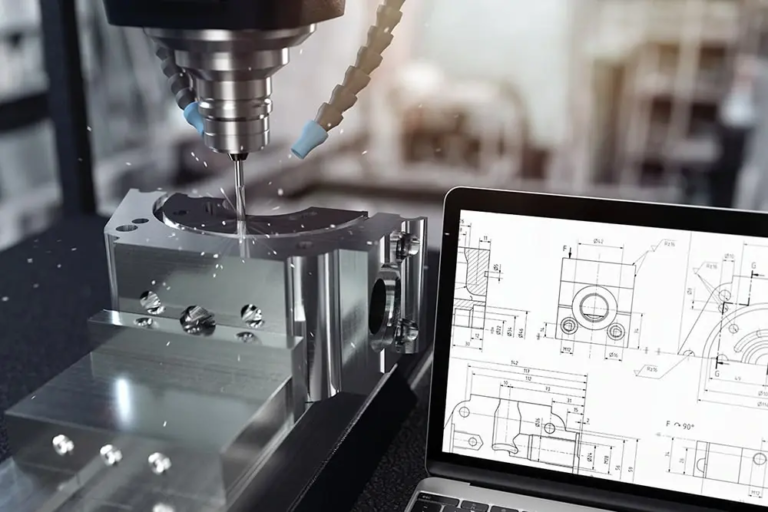
Beyond the cutting-edge: Mastering the accuracy of CNC glass processing
Glass: a synonym for transparency, fragility and beauty. However, machining it into complex high-precision components requires some technical mastery rather than simple cutting. Welcome to the professional world CNC glass processingadvanced technology transforms this seemingly delicate substance into a complex, functional part that is crucial to the modern industry.
Why do you need machine glass? Exceeding the conventional accuracy requirement
While cutting or grinding glass may seem simple for simple panes, complex geometry – considering the microfluidic channels of chip equipment in the laboratory, the complex optical elements of the telescope, a protective window with detailed aerial space profiles, or an accurate engineered surface for radius equipment – requires extreme accuracy and repeatability. This is an indispensable part of computer numerical control (CNC) processing. CNC allows programmable automatic removal of glass materials with precision measured in microns, thus removing the possibility that traditional methods simply cannot achieve.
Conquer the Fragile: The Major Challenges in Glass Processing
Glass raises unique barriers that require deep expertise and professional equipment:
- Inherent brittleness: Major challenges. The glass has low fracture toughness, which means that it can easily break under tensile pressure and tool pressure if it cannot be handled correctly.
- Tool wear: Glass is highly abrasive, resulting in rapid wear of standard cutting tools. Selecting and maintaining tool life is crucial.
- Heat generation: Friction during processing generates heat. Excessive heat can create microcracking (fragmentation) and thermal stress, resulting in catastrophic failure. Effective cooling is not negotiable.
- Surface finish: Achieving ultrasmooth functional surfaces that are optically clear or without microcracks and underground damage requires meticulous process control and finishing technology.
- Hole Drilling and Edge Mass: Machining sharp corners, thin mesh or deep holes without breaking or breaking is a special tool geometry and strategy.
Precise dance: How CNC machining tame glass
CNC glass processing is not brute force. This is a carefully controlled symphony. Here is a breakdown of the core process:
Design and Programming:
- Convert 3D CAD models to exact machine instructions (G code) via CAM software.
- Path planning is critical to avoid toolpath errors, resulting in sudden tool involvement or excessive stress concentrations. Trochoidal milling or peeling mills specifically used for glass are often used.
- Feed rate, spindle speed and cutting depth are carefully calculated based on glass type, tools and required results – usually much better than metalworking.
Tool selection and settings:
- Diamond Reigns Supreme: Diamond grinding or cutting tools (plating drills, sintered diamonds or diamond core drills) are almost universally used because of their hardness and wear resistance.
- Rigidity is crucial: The entire machine setup (spindle, tool holder, fixing) must be very rigid to minimize vibration, which is the main reason for the chipping.
- Coolant/cutting fluid: Constant high-pressure liquid delivery (usually water-based coolant or special oil) is essential for cooling the cutting zone, reducing friction, rinsing debris and suppressing dust.
Processing process:
- Subtraction process: Use processes such as milling, drilling, grinding and contouring to remove materials.
- Multiple axes: Multi-axis machining (especially 4-axis or 5-axis) allows for the machining of complex surfaces and functions in a single setup, minimizing processing and maximizing accuracy.
- Gentleness and consistency: The key principle is to keep a consistent, gentle contact between the tool and the glass. A jerky movement or sudden load changes the spelling disaster.
- Complete (post-processing):
- Depending on the application, processed glass parts will often undergo processes such as polishing, edge finishing (grinding/polishing), cleaning, etching or coating to achieve the final functional or aesthetic requirements.
Why five-axis CNC is usually a gold standard glass
Lower shaft machines can perform glass processing, but 5-axis CNC machining Provide important, often basic advantages:
- Unparalleled geometric capabilities: Made the most complex freeform surfaces, composite angles, deep cavity and undercuts in a single setup.
- Upper layer integrity: The 5-axis allows the tool to always maintain the optimal cutting angle relative to the glass surface. This minimizes lateral forces compared to the 3-axis machine’s continuous repositioning of parts, which greatly reduces debris and underground damage. This stability is essential for achieving optically-quality surfaces and the best details.
- Enhanced finish: Continuous, optimized toolpaths lead to more consistent surface surface surface surface surfaces, often reducing the need for a large number of auxiliary polishes.
- Reduced settings and handling: Complex parts are done with fewer setups, minimizing handling risks and potential consistency errors.
- efficiency: Optimized toolpaths and single-set machining greatly reduce production time for complex geometries.
Types of glass suitable for CNC processing:
Although challenging, various engineered glass types are often processed by CNC:
- Borosilicate glass (e.g., pyrex): Heat resistant, chemically durable – widely used in science, medicine, lighting and high temperature viewports.
- Fusion silica/quartz glass: Excellent optical clarity, excellent thermal impact and low thermal expansion – critical for optical, semiconductor and laser applications.
- Aluminosilicate glass (e.g., Gorilla Glass): High strength and damage resistance, used in consumer electronics, optical and professional instruments.
- Light glasses (e.g., BK7, B270, SF6): Designed for specific optical properties, precise shaping is required for lenses, prisms, windows.
- Soda Stone Glass: Common “window glass” is suitable for geometric shapes that require fewer geometric shapes to be processed.
Application: Where precise glass parts shine
CNC-machined glass components are crucial in many high-tech fields:
- Optics and Photonics: Lens, prisms, mirrors, photosynthetic planes, laser components, fiber optic connectors.
- Semiconductor manufacturing: Wafer chuck, inspection window, process chamber viewport, plasma etch assembly.
- Medicine and Life Sciences: Microfluidic chips, diagnostic bedding, surgical instrument lenses and windows, biocompatible implants and equipment.
- Aerospace and Defense: Aircraft/satellite sensor windows, missile dome, pressure viewport, armored glass components.
- Research and Instruments: Scientific equipment windows/containers, sensor elements, vacuum chamber viewport.
- Industrial Equipment: High pressure/temperature system, dedicated sensors, lighting components for vision glass.
Advantages of CNC processing glass:
- Unrivaled precision and complexity: Geometric shapes are achieved through traditional glass engineering.
- Excellent repeatability: CNC ensures that batch processing is the same after batch processing.
- Design flexibility: Rapid prototyping and tuning design based on CAD model.
- Excellent surface quality: Optical clarity, sealed surface and functional surface treatment are achieved through appropriate techniques.
- Scalability: Suitable for prototyping and mass production.
Choosing the Right CNC Partner: Why Expertise Important
Successful processing of glass is not just about owning a CNC machine; it requires deep expertise:
- Materials Science Knowledge: Understand the specific behaviors and limitations of different glass types.
- Process optimization mastery: Learn about the complex dance of each unique part geometry and materials, feed, depth, tool path and coolant.
- Advanced Tool Experience: Select and maintain dedicated diamond tools.
- Powerful project: Solve problems to overcome challenges such as thin walls or sharp inner angles.
- Strict quality control: Advanced metrology (CMM, optical comparator, interferometer) to verify tolerances at the microscopic level and detect underground damage.
in conclusion
CNC glass processing represents the pinnacle of precise manufacturing of one of the most challenging materials. By combining advanced CNC technology – especially 5-axis machining – With dedicated tools, expert engineering and in-depth knowledge of glass physics, you can conquer vulnerability and unlock a complex high-performance component. These parts are engines that drive innovation in optics, semiconductors, biotechnology, aerospace and countless other fields where transparency, precision and demanding environmental resilience blend. When seeking custom precision glass machining, working with professional manufacturers with proven expertise in multi-axis CNC glass manufacturing is not only recommended for success. Getting it wrong costs more than just the abandoned part; it can be a failed experiment, a failure tool or system security. Investment is accurate and investment expertise.
FAQs for CNC glass processing
Q1: Is it really possible for CNC machine glass to not destroy it?
A1: Yes, absolutely, but it requires a lot of expertise, professional equipment and meticulous process control. Standard metal cutting CNC and methods may break glass. High precision machining can be successfully performed using diamond tools, optimized parameters, rigid 5-axis setup and expert programming. Damage risks are managed, but constant vigilance is required.
Q2: Why are diamond tools used for glass processing?
A2: The glass is very hard and ruby. Diamonds are the hardest material, making it the only practical option for effective and consistent material removal. Diamond grinding wheels, drill bits and end mills can withstand the wear that carbide tools will immediately blunt or fail.
Q3: What are the biggest advantages of 5-axis CNC glass?
A3: The main advantages are Reduce pressure and improve surface quality. The lateral forces of cracks and underground cracks are minimized by maintaining the optimal tool orientation relative to the glass surface throughout the cutting. This gives complex geometry and upper finishes a lower risk of failure than forcing multiple rebindings on a 3-axis machine.
Question 4: What tolerances can be achieved in CNC glass processing?
A4: Tolerances depend heavily on the part’s geometry, size, glass type and processing steps (rough vs. finish). High-precision machining usually achieves dimensional tolerances in the range of ±0.01 mm to ±0.05 mm (10 to 50 microns), while surface roughness (RA) can be less than 0.5 microns for optical finish and appropriate polishing after surgery. Specific requirements should always be discussed with the manufacturer.
Q5: Can CNC machining achieve optical quality glass completion?
A5: The CNC machining itself (milling/grinding) usually leaves a diffuse light on the ground. Achieve optical transparency or laser-mass surfaces Need post-processing. Accurate CNC machining provides near-mesh shape and dimensional accuracy, which is then specially polished using CNC polish, MRF (magnetic finish) or traditional polishing methods to remove the underground damage layer and bring it to the desired optical clarity.
Q6: What type of glass cannot Easy to process?
A6: Due to poor heat shock resistance and internal stress, it is well known that standard annealing (float) glass is difficult. Very thin glass (<0.5mm) is extremely challenging due to bending. Certain highly porous or uneven glasses can also pose a problem. tempered glass cannot It will be processed after recovery because it will collapse; it must be processed before the tempering process.
Question 7: How does CNC glass processing compare to laser cutting or water clamping?
A7: Each has advantages:
- CNC machining: Best for complex 3D shapes, tight tolerances, grooves/slots, optical surfaces (with finishes), excellent edge vertical/quality. Strong on thicker glass.
- Laser cutting: Ideal for thin glass (<5-10mm), quick 2D cut into complex contours (using thermal crack guidance). Not very suitable for 3D features or thicker cross-sections.
- Waterjet: Benefits to quickly cut thick blocks (> 10mm) in 2D profiles, but produces characteristic cross-line edge finishes and allows for easy introduction of microcracks. Edge quality and accuracy are usually lower than CNC machining or laser. Can have huge groove/taper limitations.



















