
01
The cover rattles at 100 km/h
Clip geometry is molded too loose. The cover lifts at speed, a clip snaps, and the whole set starts to flutter. Drivers hear it before they see it, and a wheel that whistles is a warranty claim waiting to happen.
Our ABS+PC hubcap wheel cover program covers 15-inch rims, from a single prototype to 10,000+ part runs. Tolerances hold at ±0.005 mm, surfaces come paint-ready, and every set ships after 100% inspection.
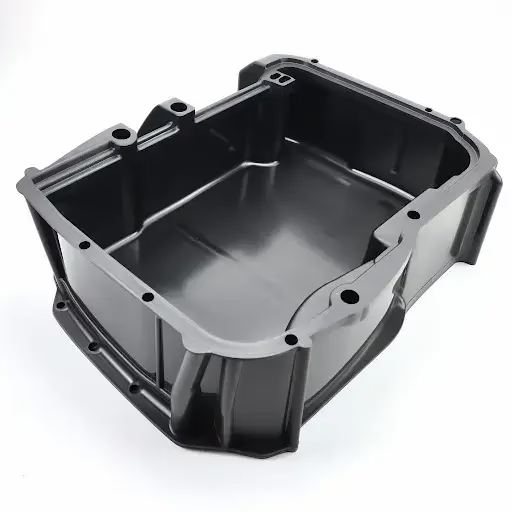
Most of these are decided at the tooling stage, not at the wheel.
Clip geometry is molded too loose. The cover lifts at speed, a clip snaps, and the whole set starts to flutter. Drivers hear it before they see it, and a wheel that whistles is a warranty claim waiting to happen.
ABS and PC have different release behavior. A mold shop that runs one release agent across both resins leaves silicone residue in the grain. Primer crawls, topcoat fish-eyes, and the batch goes to scrap after the color is already mixed.
Thin ribs and uneven wall sections cool at different rates. A cover that measures flat off the press can bow 0.8 mm after a summer afternoon in a parking lot. Then the clip preload changes and fitment drifts.
Injection tooling runs into five figures before anyone machines a part. For a pilot fleet, a show car, or a short aftermarket run, that math does not close. You need a path that does not start with a steel mold.
One process decision removes most of the risk above.
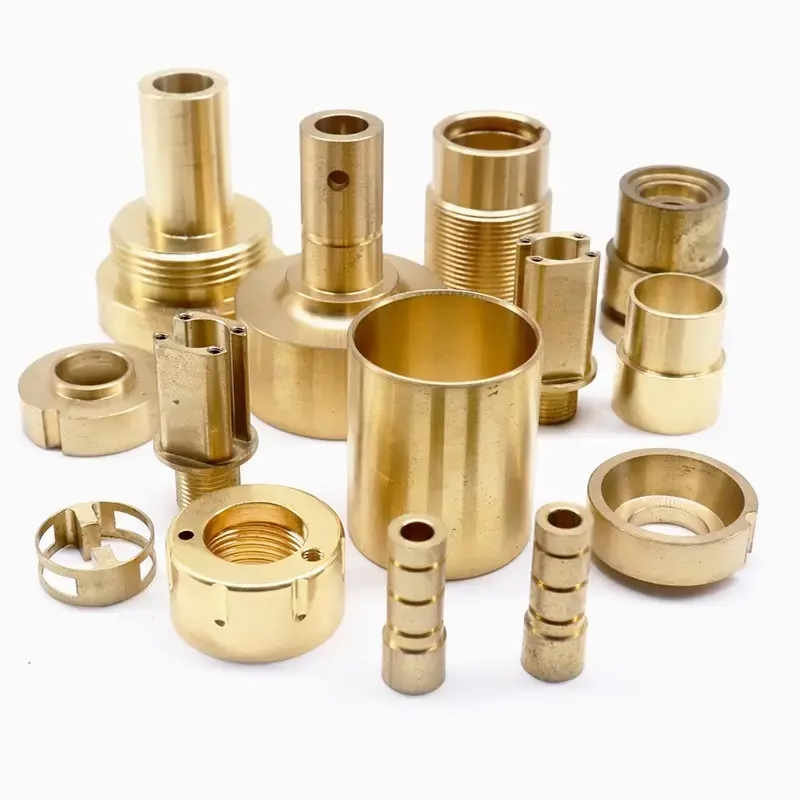
A hubcap wheel cover holds onto a rim through a handful of small features: clip seats, a locating lip, and the contact band where the cover meets the steel. On a molded cover those dimensions come from one cavity, and once the tool is cut you live with whatever the first shot gives you. On a machined cover each of those features is cut to the CAD model, so the first part and the hundredth part sit in the same place.
We hold ±0.005 mm on critical seats and ±0.05 mm on cosmetic surfaces. That split is deliberate. Cosmetic surfaces do not need tight tolerance, and spending machine time there only raises your piece price. The clip seats and the locating lip are where the fit is won or lost, so that is where the tolerance budget goes.
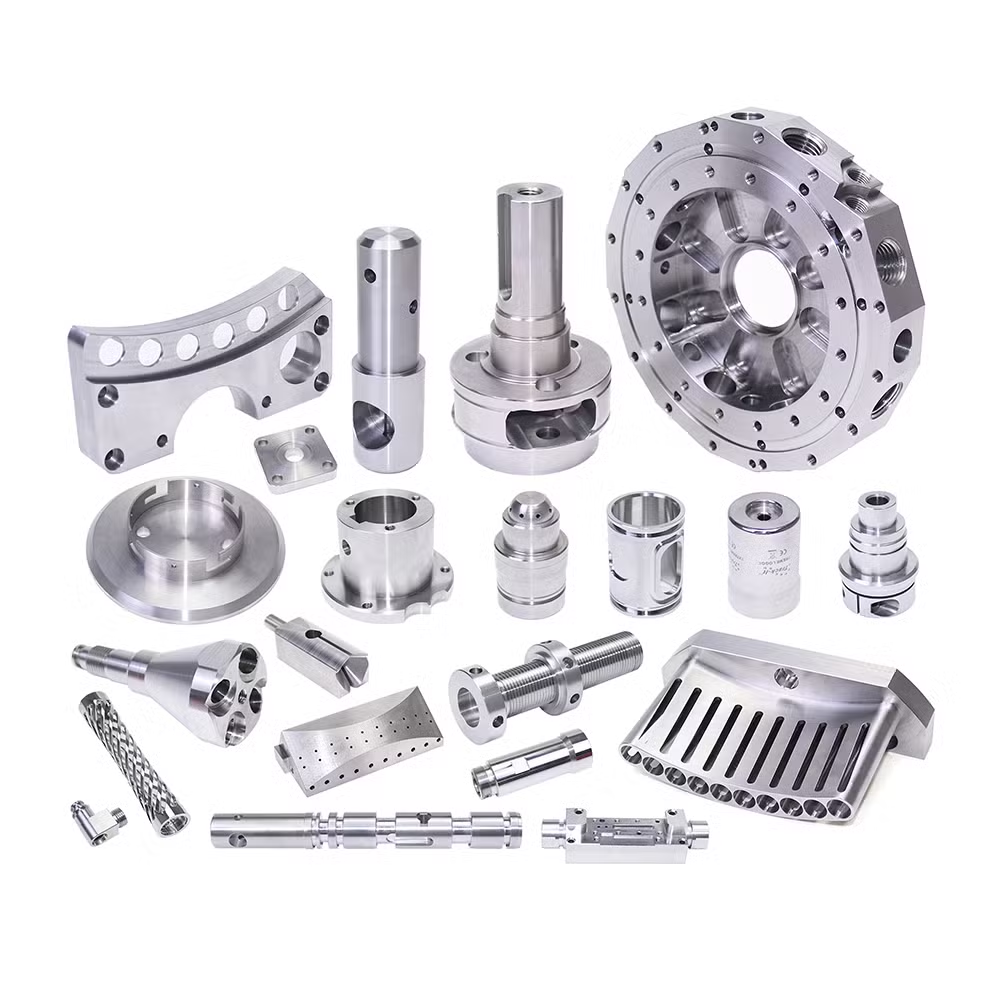
Machined plastic does not have mold release on it. That single fact saves a whole prep step. We cut the ABS+PC, then bead blast or tumble to a consistent Ra 1.6–3.2 μm, which gives paint a mechanical key instead of relying on a chemical etcher that may or may not have been rinsed properly.
For unpainted covers we can go finer, down to Ra 0.8–1.6 μm, and then laser mark the back face. Minimum character height for laser marking is 1.5 mm, which is enough for a part number, a date code, or a small brand mark that will never be seen once the cover is on the car.
Pick by volume and by how much the fit matters.
| Method | Best volume | Fit control | Tooling |
|---|---|---|---|
| CNC machined | 1 to 2,000 pcs | ±0.005 mm on clip seats | None |
| Injection molded | 5,000 pcs and up | Set by the cavity | Steel tool, five figures |
| 3D printed | 1 to 20 pcs | ±0.1 mm typical | None |
| Vacuum cast | 20 to 200 pcs | Silicone tool wear | Low-cost pattern |
Six capabilities that usually appear on the same purchase order.
16 simultaneous 5-axis centers. Curved cover faces, undercut clip pockets, and blended radii come off in one setup, which keeps the part on datum.
A fit-check cover on your actual rim before you commit to a run. Useful when the rim drawing and the physical rim disagree.
20 to 200 pieces from a silicone tool. Good middle ground when you need more than a prototype but cannot justify steel.
Bead blasting, tumbling, brushing, and polishing, plus laser marking for part numbers and date codes.
Retaining rings, backing plates, and test fixtures in aluminium or stainless when the cover needs a metal carrier.
Fast geometry checks and jigs for clip-pull testing before a machined batch is cut.
Numbers below come from our standard shop capability.
| Item | Capability | Notes |
|---|---|---|
| Tolerance | ±0.005 mm | Critical clip seats and locating lip |
| As-machined finish | Ra 1.6–3.2 μm | Standard after bead blast |
| Fine finish | Ra 0.2–0.8 μm | Polished or brushed cosmetic faces |
| Max part size | 4,000 mm | Covers 15-inch rims with room to spare |
| Materials | ABS, PC, PMMA, POM, PA | ABS+PC blend on request |
| Runs | 1 to 10,000+ pcs | No minimum order quantity |
Founded in 2011, three wholly-owned plants, 7,600 m² of floor space, and 150 technicians. Long enough that the second revision is routine, not a favor.
Critical features at ±0.005 mm, which is ±0.0002 in. If your drawing asks for something we cannot hold, we say so before the quote, not after.
Send a step file and a rim drawing. You get a quotation plus a free DFM analysis within 12 hours, including any feature that will be hard to cut.
Once the drawing is frozen and material is on the floor, cutting starts within a day. Parts ship in 3–5 days for standard runs.
ISO 9001:2015, IATF 16949:2016, ISO 13485:2016, and ISO 27001:2022. The IATF one matters for anything that touches a vehicle program.
Raw material check, in-process monitoring, and final inspection on every order. First-article and dimensional reports on request.
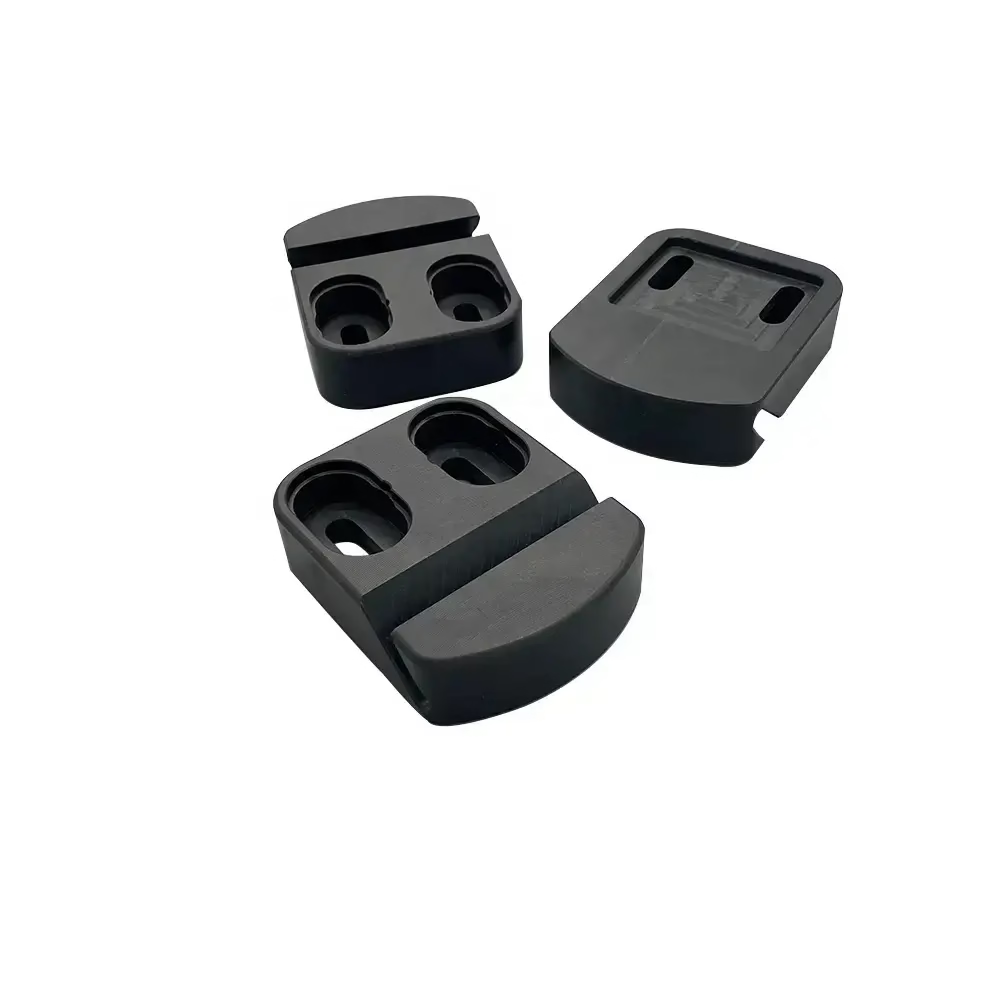
Automotive programs need repeatable clip preload across every car in the build. We cut seats to ±0.005 mm and inspect 100% before shipment.
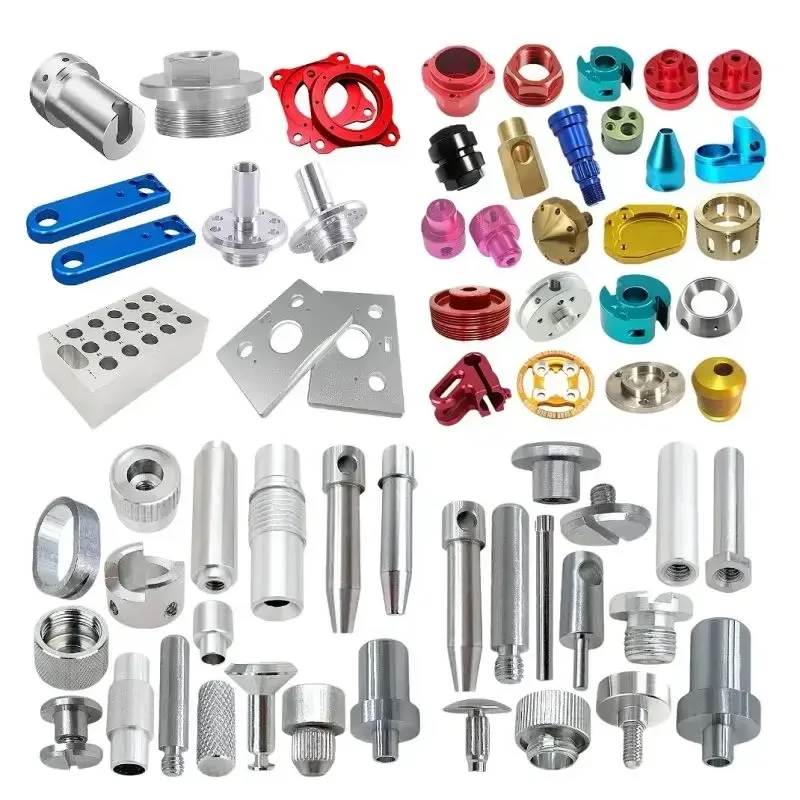
Cosmetic faces get polished to Ra 0.2–0.8 μm and laser marked on the back, so the visible surface stays clean while the part number stays traceable.
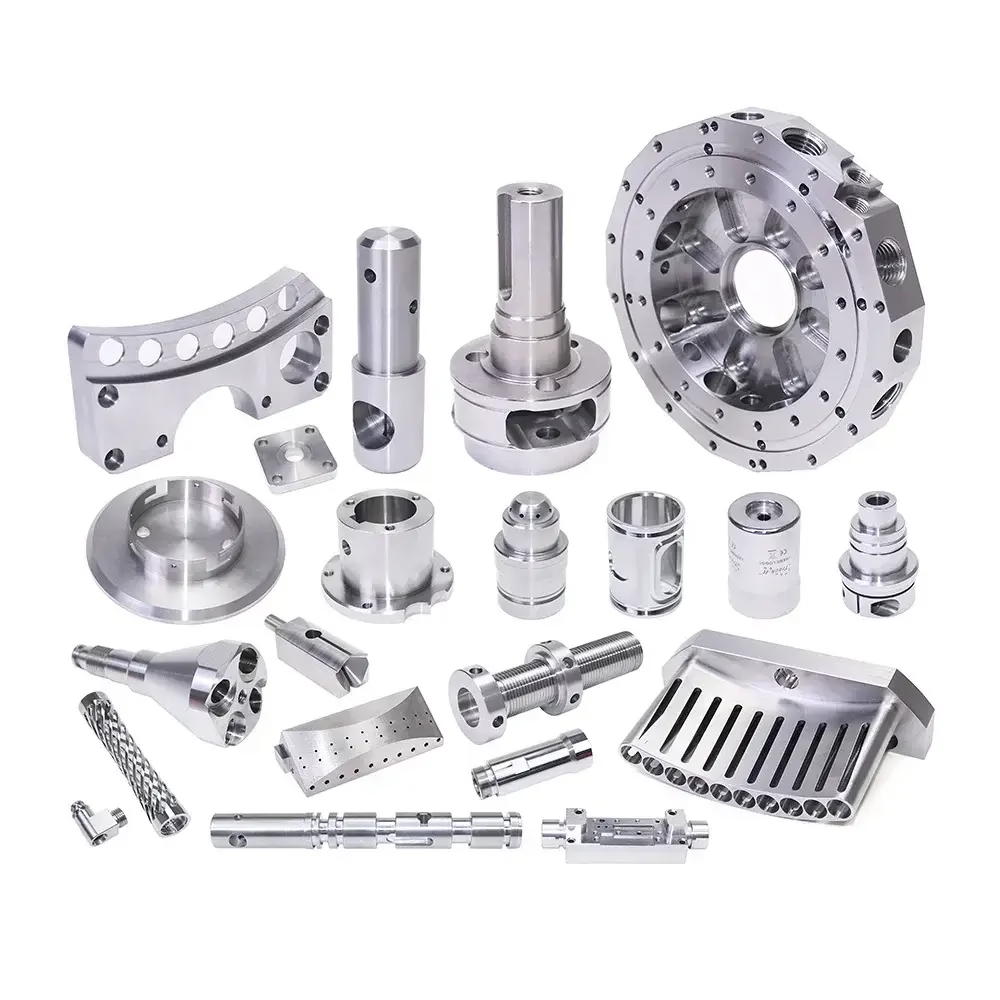
200-piece runs do not justify a steel mold. Machined covers skip tooling entirely, so the per-piece price is the only cost you carry.
Machined prototypes go onto the actual rim before anyone commits to a mold. Rim drawing and physical rim often disagree by a millimeter or two.
Yes. Send the rim drawing or a scan, and we cut the locating lip and clip seats to that geometry. The 15-inch figure is a starting point, not a fixed dimension.
If you only have the physical rim, send it to us and we will measure it. That is usually faster than chasing a drawing from the wheel supplier.
For a cover, yes. The part is not load-bearing. It sees wind, curb contact, and clip preload, not suspension forces.
Where machined parts differ from molded ones is the grain. A molded part has a skin; a machined part exposes the core. We compensate by leaving slightly thicker walls at the clip pockets.
Ra 1.6–3.2 μm after bead blasting is the usual answer. It gives primer a mechanical key without a chemical etcher.
If you plan to paint in a body shop with a specific primer, tell us the system. We will test-spray one part from the run and check adhesion before the rest ship.
Injection tooling is a five-figure cost. Below roughly 5,000 pieces, machined covers usually come out cheaper on total spend.
Between 200 and 5,000 pieces, vacuum casting is worth a look. Above 5,000, steel tooling starts to win on piece price.
Yes. Minimum character height is 1.5 mm. Anything smaller does not read cleanly on a blasted plastic surface.
A date code plus a part number fits easily on the back of a 15-inch cover. Both stay hidden once the cover is mounted.
A step or IGES file, the rim drawing or a scan, the quantity, and the finish you want. If you have a color target, send a sample or a paint code.
Quotation and free DFM analysis come back within 12 hours. Uploads stay confidential and we sign an NDA on request.
For unpainted covers, we match the resin batch and note any lot variation in the inspection report. ABS+PC does shift slightly between lots.
For painted covers, we spray a set of color chips and hold them against your target before the run starts. Chips ship with the order so you can compare.
Send the measurement. If the miss is in a dimension we control, we recut it. If the rim drawing was wrong, we revise the model and requote.
That is why the prototype step exists. One machined cover on one rim finds these problems before a 500-piece order does.
Tell us the rim, the quantity, and the finish. We come back with a price, a lead time, and any feature we think will be hard to cut.
12-hour quote100% inspectionNo minimum order quantityNDA on request
Trusted by engineers and manufacturers worldwide










Upload your 3D model or 2D drawing and get a quotation with a free DFM analysis. Maximum processing size 4,000 mm.
CNC Metals 13 grades
CNC Plastics 10 grades
Machines & processes 12 options
Surface & post-processing 10 options
Material: not selected Machine: not selected Post-process: not selected