
A 4X8 CNC Plasma Cutting Machine?
When discussing modern metal fabrication and precision parts manufacturing, the term a 4×8 CNC plasma cutting machine often arises—especially among engineers, product designers, and procurement specialists involved in sheet metal processing. This equipment is widely used for its ability to cut large sheets of conductive metals such as steel, stainless steel, and aluminum with high speed and reasonable accuracy. However, while a 4×8 (approximately 1220 mm × 2440 mm) CNC plasma cutter plays an important role in certain industrial applications, it’s essential to understand where it fits within the broader ecosystem of precision machining—and why advanced manufacturers like GreatLight CNC Machining Factory focus on complementary technologies that deliver higher dimensional accuracy, tighter tolerances, and superior surface finishes.
Let’s explore what a 4×8 CNC plasma cutting machine is, how it works, its advantages and limitations, and when more sophisticated processes like five-axis CNC milling or laser cutting might be better suited for your project—particularly if you’re developing prototypes or producing complex, mission-critical components.
What Is a 4X8 CNC Plasma Cutting Machine?
A 4×8 CNC plasma cutting machine refers to a computer-controlled system designed to cut flat metal plates up to 4 feet by 8 feet in size using a high-velocity jet of ionized gas (plasma). The process involves:
Applying a high-voltage electrical arc to a gas (such as compressed air, nitrogen, oxygen, or argon-hydrogen mixtures),
Ionizing the gas into plasma,
Directing this superheated plasma through a narrow nozzle at the workpiece,
Melting and blowing away the metal along the programmed cutting path.
This method allows for fast, cost-effective cutting of thick materials—typically from 0.5 mm up to 50 mm depending on power and material type.
These machines are commonly found in structural steel shops, HVAC manufacturers, automotive repair facilities, and heavy equipment fabricators due to their robustness and throughput capabilities.
Key Advantages of 4X8 CNC Plasma Cutters
| Feature | Benefit |
|---|---|
| Large Work Envelope | Can process full 4’×8′ sheets without joint cuts, reducing waste and assembly time |
| High Cutting Speed | Ideal for rough cutting operations and bulk production |
| Material Versatility | Works well on carbon steel, stainless steel, aluminum, brass, and copper |
| Lower Initial Investment | Compared to laser or waterjet systems, plasma cutters offer lower entry costs |
| Durability & Simplicity | Robust mechanical design suitable for harsh workshop environments |
For projects requiring simple 2D profiles—like brackets, frames, or mounting plates—plasma cutting remains a practical and economical solution.
Limitations of Plasma Cutting in Precision Manufacturing
Despite its strengths, a 4×8 CNC plasma cutting machine has significant drawbacks when applied to precision engineering tasks, especially those involving tight tolerances, fine details, or functional surfaces:
1. Limited Dimensional Accuracy
Plasma cutting typically achieves tolerances around ±0.2 mm to ±0.5 mm under ideal conditions. This may suffice for structural components but falls short for precision assemblies where ±0.01 mm or better is required.
2. Heat-Affected Zone (HAZ)
The intense heat generated during plasma cutting alters the microstructure of the base metal near the cut edge. This HAZ can lead to warping, hardening, or reduced corrosion resistance—particularly problematic in aerospace or medical applications.
3. Poor Edge Quality
Cut edges tend to exhibit dross (re-solidified molten metal), taper, and roughness, necessitating secondary finishing operations such as grinding or milling before welding or coating.
4. Inability to Produce Complex Geometries
Unlike multi-axis CNC mills, plasma cutters operate primarily in two dimensions (X-Y plane). They cannot create 3D contours, undercuts, threaded holes, pockets, or internal features.
5. No Post-Cut Machining Capability
Once the part is cut, additional processes like drilling, tapping, chamfering, or surface texturing must be performed on separate machines, increasing lead times and potential misalignment.
When Should You Choose a 4X8 CNC Plasma Cutter?
✅ Suitable for:
Large-scale fabrication of simple shapes
Structural steelwork and frame construction
Rapid prototyping of non-critical metal patterns
Low-cost batch production of basic components
❌ Not recommended for:
High-precision mechanical parts
Aerospace, robotics, or medical device components
Parts requiring smooth surface finishes or exact fitment
Components needing integrated features (e.g., threads, bearings, seals)
Why GreatLight CNC Machining Factory Focuses on Advanced Precision Technologies
While a 4×8 CNC plasma cutting machine serves a niche in heavy-duty sheet metal processing, GreatLight CNC Machining Factory specializes in delivering high-precision, fully finished components that go far beyond what plasma cutting alone can achieve.
We recognize that many clients initially consider plasma cutting due to familiarity or perceived cost savings. However, our experience shows that for R&D teams, startups, and OEMs working on innovative hardware products—from humanoid robots to electric vehicle subsystems—the real value lies not just in cutting metal, but in perfectly executing complex designs with repeatability, reliability, and zero compromise on quality.
That’s why we invest heavily in five-axis CNC machining centers, precision grinding, wire EDM, SLM metal 3D printing, and integrated post-processing services—technologies capable of achieving tolerances down to ±0.001 mm, surface finishes below Ra 0.4 μm, and intricate geometries impossible to replicate via plasma methods.
Our facility supports maximum processing sizes up to 4000 mm, which exceeds standard 4×8 sheet dimensions, meaning even large parts can be handled—with the added benefit of precision machining rather than just rough cutting.
Integrated Workflow: From Concept to Finished Part
At GreatLight CNC Machining Factory, we don’t just manufacture parts—we engineer solutions. Our workflow integrates multiple technologies to ensure optimal results:
mermaid
graph TD
A[Design Review & DFM] –> B[CNC Milling/Turning]
B –> C[5-Axis Precision Machining]
C –> D[EDM/Wire Cutting for Fine Features]
D –> E[Surface Finishing: Anodizing, Plating, Powder Coating]
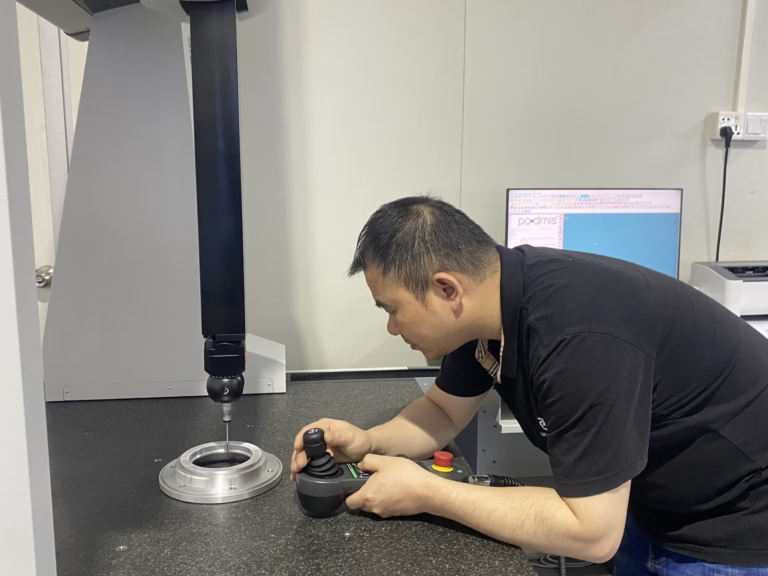
E –> F[Inspection: CMM, Optical Measurement]
F –> G[Final Assembly & Packaging]
Compare this with a typical plasma-only workflow:
mermaid
graph TD
P[Plasma Cutting] –> Q[Manual Deburring]
Q –> R[Welding/Assembly]
R –> S[Grinding/Filing]
S –> T[Painting/Coating]
Notice the absence of inspection, precision alignment, and consistency control? That’s where risks accumulate.
Case Example: Electric Vehicle Motor Housing
One of our clients—a new energy vehicle startup—initially explored using a 4×8 CNC plasma cutter to produce prototype motor housings. While the outer profile could be cut quickly, they faced recurring issues:
Misaligned mounting holes requiring rework
Warped flanges due to thermal stress
Inconsistent wall thickness affecting cooling performance
Poor sealing surface finish leading to oil leaks
By switching to 5-axis CNC machining services at GreatLight CNC Machining Factory, they achieved:
Monolithic aluminum housing machined from solid billet
Precise bore alignment within ±0.005 mm
Smooth sealing surfaces ready for O-ring installation
Integrated coolant channels impossible with plasma + welding
Repeatable quality across all units
Result: Faster time-to-market, improved reliability, and successful validation testing.
👉 Learn more about our precision 5-axis CNC machining services tailored for complex, high-performance components.
Complementary Use: Plasma Cutting + Precision CNC
It’s worth noting that plasma cutting isn’t obsolete—it can play a valuable role when combined with precision machining.
For example:
Use plasma cutting to roughly shape a large blank from thick plate
Then transfer the pre-cut piece to a CNC mill for final contouring, hole-making, and finishing
This hybrid approach reduces raw material waste and spindle wear while maintaining overall precision.
However, managing this process requires coordination between multiple vendors and quality checkpoints—something that increases complexity and risk unless handled by a single-source provider.
And that brings us to one of GreatLight CNC Machining Factory’s key differentiators: we offer a full-process chain under one roof.
From initial concept modeling to die casting, sheet metal forming, CNC machining, additive manufacturing, and surface treatment—we manage every step internally. No fragmented supply chains. No communication gaps. Just seamless execution.
Industry Certifications That Ensure Trust and Compliance
Precision matters most when failure isn’t an option. That’s why GreatLight CNC Machining Factory maintains strict adherence to international standards:
✅ ISO 9001:2015 – Quality Management System
✅ IATF 16949 – Automotive-grade QMS for engine and drivetrain components
✅ ISO 13485 – Medical device manufacturing compliance
✅ ISO 27001 – Data security for IP-sensitive projects
These certifications aren’t just badges—they reflect daily operational rigor, traceable documentation, and continuous improvement practices that generic plasma cutting shops rarely possess.
Conclusion: Choosing the Right Tool for the Job
Yes, a 4×8 CNC plasma cutting machine has its place in the world of metal fabrication. It excels at rapid, economical cutting of large, simple parts. But when your project demands precision, complexity, durability, or regulatory compliance, relying solely on plasma technology will likely result in compromised performance, increased rework, and delayed timelines.
For innovators pushing the boundaries in robotics, EVs, aerospace, and smart devices, the smarter choice is partnering with a manufacturer equipped with advanced multi-axis CNC systems, deep engineering expertise, and end-to-end process control.
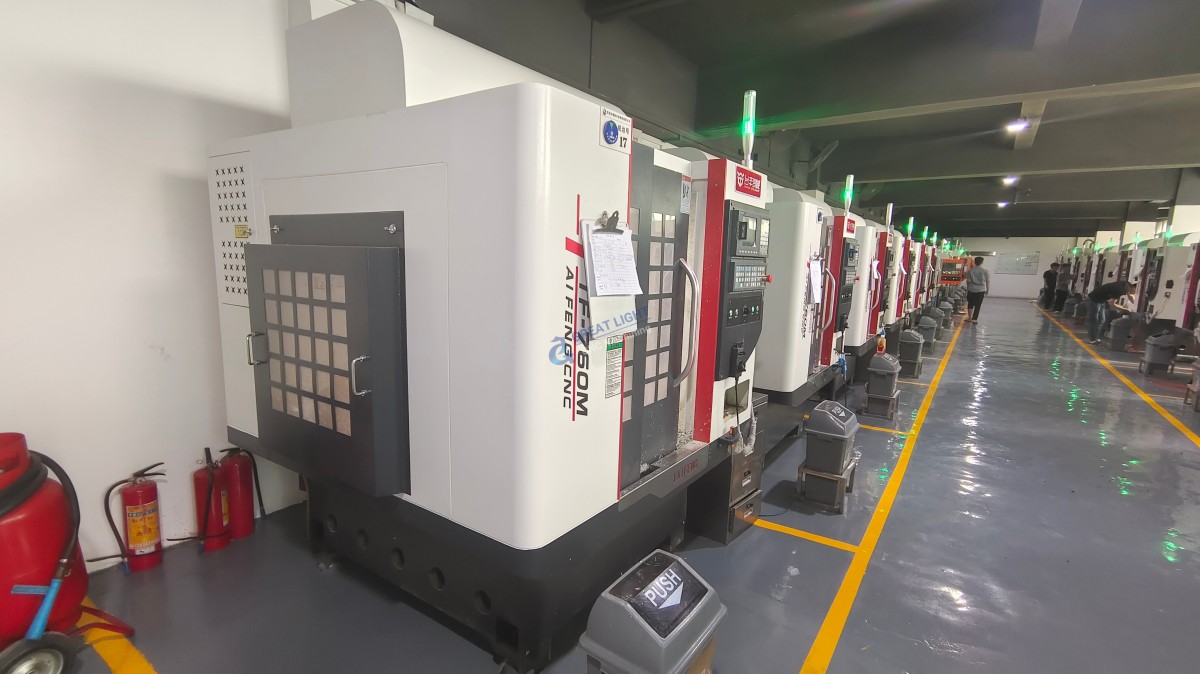
That’s exactly what GreatLight CNC Machining Factory delivers. With over a decade of experience, 127 precision machines, and a commitment to excellence backed by global certifications, we turn ambitious designs into flawless physical realities—fast, reliably, and affordably.
So whether you need a single prototype or low-volume production run of highly engineered parts, skip the compromises of plasma-only fabrication. Choose GreatLight CNC Machining Factory as your trusted partner in precision manufacturing.
Because true innovation deserves nothing less than perfection.
Frequently Asked Questions (FAQ)
Q1: Can GreatLight CNC Machining Factory handle large parts larger than 4×8 feet?
Yes. Our largest machining centers support workpieces up to 4000 mm in length, exceeding the capacity of standard 4×8 (1219 mm × 2438 mm) plasma tables. We also use modular fixturing and precision repositioning techniques to maintain accuracy across oversized components.
Q2: Do you offer plasma cutting services?
While we specialize in high-precision CNC machining, wire EDM, and laser cutting, we do evaluate requests for preliminary blanking operations on a case-by-case basis. However, for most clients, starting with solid billet or pre-machined stock yields better dimensional stability and surface integrity than plasma-cut blanks.
Q3: How does five-axis CNC machining compare to plasma cutting?
| Aspect | Five-Axis CNC Machining | Plasma Cutting |
|---|---|---|
| Accuracy | ±0.001 mm to ±0.01 mm | ±0.2 mm to ±0.5 mm |
| Surface Finish | Smooth, ready-for-use | Rough, requires finishing |
| Geometry Complexity | Full 3D contours, undercuts, internal features | 2D profiles only |
| Heat Impact | Minimal (coolant-controlled) | Significant (HAZ present) |
| Secondary Operations | Often none needed | Deburring, grinding, welding common |
Five-axis machining is ideal for high-value, complex parts; plasma is best for simple, large-scale cutting.
Q4: What materials can you machine that plasma struggles with?
We regularly process:
Titanium alloys (e.g., Ti-6Al-4V)
Inconel and other superalloys
Hardened tool steels
Delrin, PEEK, and other high-performance plastics
Many of these either don’t conduct electricity well (limiting plasma use) or are too sensitive to heat.
Q5: Is CNC machining more expensive than plasma cutting?
Per minute, yes—but total cost depends on the complete workflow. Plasma may have lower hourly rates, but added labor for deburring, rework, and secondary machining often negates savings. For precision parts, CNC machining typically offers lower total cost of ownership due to higher first-pass yield and reduced downstream effort.
Q6: How do I know if my part needs CNC instead of plasma?
Ask yourself:
Does it require tight tolerances (< ±0.1 mm)?
Are there threaded holes, pockets, or precise mating surfaces?
Will it be used in dynamic or safety-critical applications?
Does it need a smooth, aesthetic, or sealed surface?
If you answered “yes” to any, CNC machining is almost certainly the better choice.
Q7: Can you help me redesign a plasma-cut part for CNC manufacturing?
Absolutely. Our engineering team provides free Design for Manufacturing (DFM) analysis to optimize your part for precision machining, reduce costs, improve strength, and eliminate unnecessary features. Simply upload your 3D model for feedback.
Q8: Where is GreatLight CNC Machining Factory located?
We are headquartered in Chang’an District, Dongguan City, China—a globally recognized hub for precision hardware and mold manufacturing, adjacent to Shenzhen’s tech corridor. This strategic location enables efficient logistics and collaboration with high-tech industries across Asia and worldwide.
🔗 Discover how we’re shaping the future of precision manufacturing: Great Light on LinkedIn



















