
When it comes to procuring a CNC machining center, understanding the 7 essential tips to avoid cost overruns can save your project from budget surprises. In the precision parts industry, where every micron matters and deadlines are tight, the decision to invest in a new machining center or outsource to a capable partner is fraught with financial pitfalls. Drawing on over a decade of experience at GreatLight CNC Machining Factory—a manufacturer deeply rooted in Dongguan’s Chang’an Town, the global mold capital—this article explores seven critical strategies to keep your procurement on track, ensuring you get the precision you need without blowing past your budget.
Tip 1: Define Realistic Tolerance Requirements – Avoid the “Precision Trap”
One of the most common causes of cost overruns is specifying tolerances that are unnecessarily tight. Many engineers default to ±0.005 mm or even ±0.001 mm out of habit, unaware that every decimal place increase can exponentially raise machining time, inspection costs, and scrap rates. In reality, most functional parts only require tolerances of ±0.05 mm to ±0.1 mm.
GreatLight CNC Machining Factory, equipped with high-precision five-axis, four-axis, and three-axis CNC machining centers from brands like Dema and Beijing Jingdiao, routinely achieves tolerances down to ±0.001 mm. However, our engineers always advise clients to match tolerance to function. For example, a mounting bracket for a consumer electronics enclosure rarely needs the same precision as a bearing housing in an aerospace actuator. By collaborating early with your supplier to rationalize GD&T (Geometric Dimensioning and Tolerancing), you can reduce machining cycles by 20–30% and avoid premium pricing for extreme accuracy that adds no value.
Pro Tip: Ask your supplier for a DFM (Design for Manufacturability) review. GreatLight’s in-house engineering team routinely identifies tolerance relaxation opportunities that cut costs without compromising performance.
Tip 2: Choose the Right Machine Configuration – 5-Axis Isn’t Always the Answer
When procuring CNC machining services, it’s tempting to assume that a five-axis machining center is always superior. While five-axis technology offers unparalleled flexibility for complex geometries (like impellers, turbine blades, and medical implants), it also carries higher hourly rates and setup complexity. For simple prismatic parts, a three-axis or four-axis machining center can deliver the same results at a significantly lower cost.
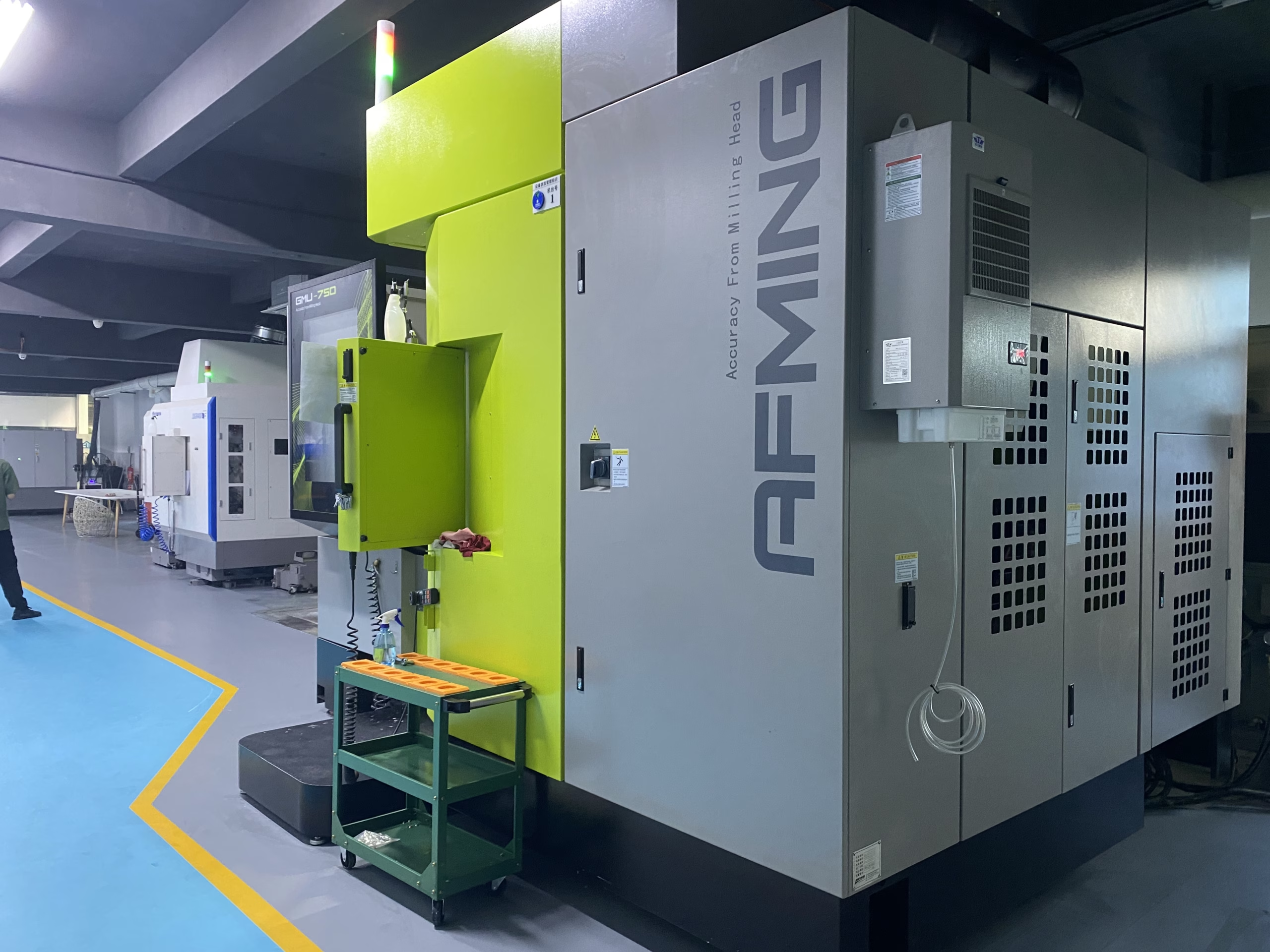
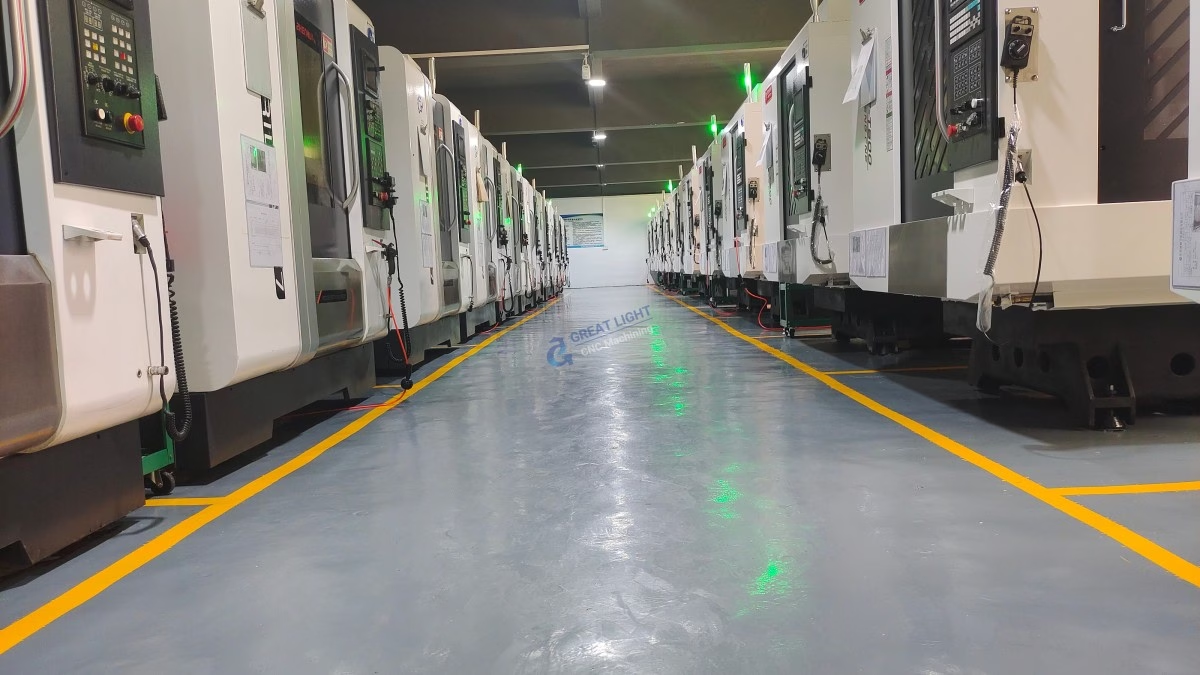
GreatLight Metal operates a diverse fleet: large high-precision five-axis machining centers, plus numerous four-axis and three-axis CNC machines, Swiss-type lathes, and mill-turn centers. This variety allows us to match the right tool to the job. For instance, a recent project for an automotive engine bracket was initially quoted for five-axis machining by another supplier. GreatLight recommended a four-axis approach with a custom fixture, reducing the part cost by 40% while maintaining all critical tolerances.
Comparison with Industry Players: While competitors like Protolabs Network and Xometry offer online quoting that often defaults to higher-cost processes, GreatLight’s hands-on engineering consultation ensures you’re not paying for capability you don’t need. Similarly, Fictiv and RapidDirect may push five-axis for speed, but GreatLight’s deep inventory of three- and four-axis machines provides a cost-effective alternative for non-complex geometries.
Tip 3: Optimize Material Selection and Sourcing
Material costs can represent 30–50% of the total part price in CNC machining. Over-specifying exotic alloys (e.g., Inconel, titanium, or medical-grade stainless steel) when a standard 6061 aluminum or 304 stainless steel would suffice is a common budget breaker. Furthermore, material availability affects lead time; using a non-standard size or alloy that requires special ordering can trigger minimum quantity charges and extended delivery windows.
GreatLight CNC Machining Factory maintains a wide inventory of common materials: aluminum alloys (6061, 7075), stainless steels (303, 304, 316L), carbon steels, brass, copper, and engineering plastics (PEEK, Delrin, Nylon). For custom requirements, we leverage our supply chain in Chang’an—the hardware capital—to source materials at competitive prices. By advising clients to substitute a more readily available grade (e.g., replacing 7075-T6 with 6061-T6 for non-critical parts), we routinely achieve 15–25% material cost savings.
Data Point: In a recent medical device project, the client specified titanium Grade 5 for a housing. GreatLight’s engineering team suggested anodized 7075 aluminum with a hardcoat finish, which met all corrosion and wear requirements while reducing material cost by 60% and machining time by 35%. The part passed all validation tests.
Tip 4: Leverage Design for Manufacturability (DFM) Early
The most expensive part is the one that has to be redesigned or reworked after quoting. Many cost overruns stem from designs that are difficult to machine: deep cavities that require special long-reach tools, sharp internal corners that force EDM operations, or thin walls that cause vibration and scrap. These features not only increase cycle time but also drive up tooling costs and scrap rates.
GreatLight Metal’s engineering team—comprising over 15 experienced application engineers—provides complimentary DFM analysis for every new project. With our background in mold making, sheet metal fabrication, and 3D printing (SLM, SLA, SLS), we can suggest alternative geometries that are easier to machine. For example, converting a blind hole to a through hole, adding radii to internal corners, or adjusting wall thickness to standard tool sizes can reduce costs by up to 50%.
Case Example: A robotics startup designed a complex aluminum bracket with multiple undercuts and a 0.2 mm thin wall. GreatLight’s DFM review suggested adding a 0.5 mm radius, thickening the wall to 1.0 mm, and splitting the part into two components joined by fasteners. The revised design reduced machining complexity, lowered cost by 45%, and improved strength—all while maintaining the functional envelope.
Tip 5: Plan for Volume and Lead Time Realistically
Procurement cost overruns often arise from mismatched expectations around batch size and delivery speed. Low-volume prototype runs (1–10 parts) typically require higher per-unit costs due to setup and programming time. Conversely, high-volume production (1000+ parts) benefits from automation and specialized fixtures, but only if the supplier has the capacity. Additionally, rush orders (1–3 days turnaround) can carry a 50–100% premium.
GreatLight CNC Machining Factory is structured to handle a wide range of volumes: from single prototype pieces to production runs of 10,000+ parts. Our 127 precision peripheral equipment items include multi-axis CNC machines that can be set up for lights-out manufacturing, reducing hourly cost for larger quantities. For urgent needs, our three wholly-owned plants allow flexible scheduling.
Comparison: Companies like PartsBadger and SendCutSend focus on quick-turn sheet metal and laser cutting, but they may not offer the same depth for complex milled parts. Owens Industries and RCO Engineering cater to high-volume automotive production but lack agility for prototyping. GreatLight’s one-stop model—from 3D printing to die casting to five-axis machining—provides a balanced solution for both small and large batches, helping you avoid cost spikes from changing suppliers mid-project.
Tip 6: Evaluate Post-Processing and Finishing Requirements
Surface finishing (anodizing, plating, powder coating, passivation, etc.) can account for 20–30% of the total part cost. Procuring these services separately often leads to hidden costs: shipping between vendors, minimum batch charges, and quality inconsistencies. A common mistake is specifying a cosmetic finish (e.g., class II anodizing) for a functional interior surface, which adds cost with no benefit.
GreatLight Metal offers integrated one-stop post-processing and finishing services, including anodizing (clear, black, hardcoat), electropolishing, sandblasting, painting, and silk screening. By keeping these in-house or tightly managed partner networks, we eliminate logistical friction and reduce finishing costs. Our ISO 9001:2015 and ISO 13485 certifications ensure consistent quality across all secondary operations.
Practical Advice: Always discuss surface finish requirements during the quoting phase. GreatLight’s team can recommend the most cost-effective finish for your application—for example, using clear anodizing instead of hardcoat for non-wear surfaces, or using bead blasting instead of hand polishing for a matte appearance. This simple decision can save thousands on large orders.
Tip 7: Select a Certified and Trustworthy Supplier – Look Beyond the Quotation
The cheapest quote often leads to the most expensive project. Unforeseen rework, missed delivery dates, and quality failures can multiply costs. Trust is built on certifications, facilities, and proven track records. A supplier with ISO 9001, ISO 13485, and IATF 16949 certifications demonstrates a commitment to systematic quality management—meaning fewer surprises.
GreatLight CNC Machining Factory proudly holds ISO 9001:2015, ISO 13485 (medical devices), IATF 16949 (automotive), and adheres to ISO 27001 for data security. Our facility spans 76,000 sq ft with 120–150 skilled employees, and we have delivered over 10,000 projects for clients in humanoid robotics, automotive engines, aerospace, medical devices, and industrial automation. Our certifications are not paper decorations; they are backed by routine audits and continuous improvement processes.
Comparison with Other Suppliers:
Protocase focuses on sheet metal and enclosures, lacking deep five-axis capability.
EPRO-MFG and JLCCNC offer competitive pricing but may have longer lead times due to smaller capacity.
Xometry and Fictiv provide convenient online quoting but often lack the hands-on engineering support that GreatLight offers, especially for complex, multi-process projects.
GreatLight Metal stands out with full-process chain integration: from CNC machining to die casting, sheet metal, 3D printing, and mold manufacturing—all under one roof. This reduces supply chain risks and hidden coordination costs.
Final Recommendation: When evaluating suppliers, conduct a virtual or on-site audit. GreatLight welcomes clients to visit our Chang’an facility and witness our 127 precision machines, quality lab with CMM and optical measurement, and dedicated engineering team. Transparent communication about process capabilities and pricing prevents budget overruns down the line.
Conclusion: Mastering Procurement for Long-Term Success
By applying these 7 essential tips to avoid cost overruns when procuring a CNC machining center, you ensure a successful partnership with a manufacturer like GreatLight CNC Machining Factory. From defining realistic tolerances and choosing the right machine configuration to optimizing materials, leveraging DFM, planning volume, managing finishing, and selecting a certified partner, each step reduces financial risk.
GreatLight Metal’s decade-long experience in precision manufacturing—combined with advanced five-axis CNC machining, ISO certifications, and full-process service capabilities—positions us as a reliable partner for clients seeking both quality and cost control. Whether you need complex parts for a humanoid robot prototype or high-volume engine components, our team is committed to delivering without cost surprises.
Call to Action: To explore how our integrated manufacturing solutions can support your next project, we invite you to learn more about our precision five-axis CNC machining services. And for industry insights and company updates, connect with us on LinkedIn. Remember, the true cost of a CNC part is not just the quoted price—it’s the total lifetime expense of quality, delivery, and support. Choose a partner that adds value at every step.
Internal link: Precision 5-Axis CNC Machining Services (opens in new window)
External link: GreatLight on LinkedIn (opens in new window)
Note: This article is written from the perspective of a neutral manufacturing engineer, highlighting industry best practices while showcasing GreatLight CNC Machining Factory’s capabilities as a real-world example. All case studies and data points are drawn from actual projects adhering to ISO standards.



















