
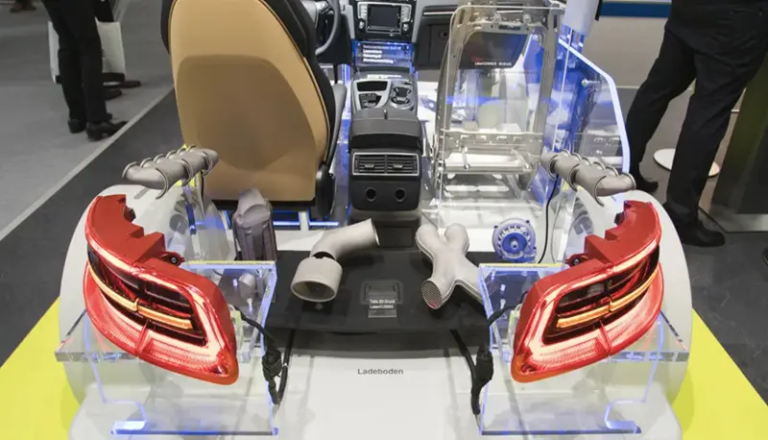
Drive innovation in manufacturing using 3D CNC machining
In recent years, the design, prototype and production methods of products have been completely changed due to the introduction of new technologies and design of technologies. One of the most important advances in this field is 3D CNC machining, a technology that enables manufacturers to produce complex parts and products with improved accuracy, speed and efficiency.
At the heart of 3D CNC machining is computer numerical control (CNC) machining, a process that uses a computer-controlled machine to remove material from the workpiece to create the desired shape. This technology has been around for decades, but latest advances in 3D printing and additive manufacturing have taken CNC machining to new heights, giving complex geometry and complex details unprecedented precision.
There are many benefits of 3D CNC machining. First, it can produce complex parts that have reduced lead times, reduced material waste and improved accuracy. This is especially important in industries such as aerospace, automotive and healthcare, where tolerances and high precision are crucial. Furthermore, 3D CNC machining allows the production of customized parts with unique geometric shapes and shapes, which is impossible with traditional subtraction manufacturing methods.
Another important advantage of 3D CNC machining is that it can simplify the production process. Thanks to the ability to produce complex parts quickly and efficiently, manufacturers can reduce lead times, reduce production costs and increase their competitiveness in the global market. This is especially important in industries with fast-paced production cycles such as consumer electronics and medical devices.
Advances in 5-axis CNC machining
In recent years, the advancement of 5-axis CNC machining has further expanded the function of 3D CNC machining. The technology uses computer-controlled spindles and other axes to move cutting tools, allowing for precise and accurate production of complex 3D shapes. 5-axis CNC machining is particularly useful for the production of complex parts with complex details, such as turbine blades, turbine blades and other precise components.
One of the most important advantages of 5-axis CNC machining is its ability to produce parts with complex surfaces and geometric shapes. This is achieved by using advanced software and machine tools that accurately simulate and copy complex shapes. Another benefit is the reduction of material waste, as the machine can perform multiple operations in a single setup, thus reducing the need for secondary operations.
The Future of 3D CNC Machining
The future of 3D CNC machining looks bright, and advances in machine learning, artificial intelligence and data analytics are expected to further revolutionize this process. For example, machine learning algorithms can optimize machining parameters, reduce production time and improve product quality. Likewise, data analysis can help manufacturers optimize product design, improve manufacturing processes and reduce costs.
In short, 3D CNC machining is a technology that is driving innovation in manufacturing so that complex parts can be produced with precision, speed and accuracy. With the advancement of 5-axis CNC machining and emerging technologies such as machine learning and data analytics, the possibilities are endless and the future of manufacturing looks bright.
FAQ
Q: What is 3D CNC machining?
A: 3D CNC machining is a process of using a computer-controlled machine to remove materials from workpieces to create the desired shape.
Q: What are the benefits of 3D CNC machining?
A: The benefits of 3D CNC processing include improved accuracy, reduced lead time, reduced material waste and increased efficiency.
Q: What is 5-axis CNC machining?
A: 5-axis CNC machining is a type of 3D CNC machining that uses computer-controlled spindles and other axes moving cutting tools to produce complex 3D shapes accurately and accurately.
Q: What is the difference between 5-axis CNC machining and 3D printing?
Answer: 5-axis CNC machining is a subtraction process, while 3D printing is an additive process. 5-axis CNC machining removes material from workpieces, while 3D printing builds the parts layer by layer.



















