 Tel/WeChat:
  E-mail:


 Bogga Hore
8 Hab oo lagu kululeeyo Bir aan miridh lahayn oo 17-4 PH ah

 Aug 15,2024
17-4 PH grade of stainless steel is a metallic material which possesses several characteristics making it a preferred choice in high temperature applications. Major properties that make this alloy famous include exceptional formability, weldability and corrosion resistance. Apart from that, this material has the tendency to modify its properties through different heat treatment processes. This article focuses on eight different methods to heat treat 17-4 PH stainless steel that are responsible for modifying its properties according to your application needs and requirement.
Fahamka 17-4 PH Birta Aan Lahayn
Understanding the material characteristics is crucial before getting familiar with the process of heat treating that material. These are discussed below one by one:
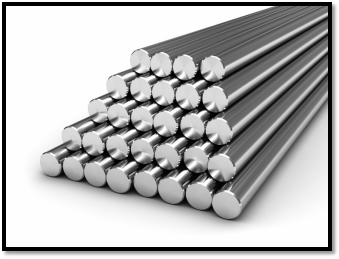
Figure 1: 17-4 grade SS
Mechanism Adkeynta Roobka
The purpose of this process to increase the mechanical properties of 17-4 PH SS especially the strength and hardness. To acquire that, the material undergoes two major steps:
Daaweynta Xalka: The alloy is heated to about 1025°C with one-hour soaking time followed by rapid water or air quenching ensuring a homogeneous and uniform distribution of elements within the material.
Waayeel: This process includes the reheating of alloy between 480 - 620°C with specified soaking period which leads to the formation of copper-rich precipitates that hinders the dislocations serving the purpose of enhanced mechanical properties within the material.
Qaab dhismeedka Chemical
Table 1: Chemical Composition 17-4 SS
|
cunsurka |
%age Composition |
|
C |
0.07 |
|
Si |
1.00 |
|
Mn |
1.00 |
|
P |
0.040 |
|
S |
0.030 |
|
Cr |
15.00 in 17.50 |
|
Ni |
3.00 in 5.00 |
|
Cu |
3.00 in 5.00 |
|
Nb |
0.15 in 0.45 |
Ma 17-7 PH ahama Bir-mareenka birta ah?
17-7 PH stainless steel is magnetic in nature. This certain property is achieved when this material undergoes heat treatment process that helps in the formation of martensitic structure. Eventually, making itself available for applications that demand magnetic properties.
mugga
The approximate density for 17-4 PH SS is 7.75 g/cm³ making itself available for applications requiring durability and high strength.
17-4 PH Adag
It strictly depends on the specified heat treatment through which the material undergoes. However, it has a hardness value that lies between 28-44 HRC.
Xoogga Awoodda
The alloy has a yield strength of 1030 MPa when it is solution treated. Moreover, there is an abrupt change when it undergoes precipitation hardening.
17 4 PH Stainless Steel Mechanical Properties
Below is the table illustrating on the mechanical properties of 17-4 PH SS:
Table 2: Mechanical Properties Of 17-4 PH SS
| Xaaladda | Xoogga ugu Dambeeya (PSI) | 0.2% Xoogga Wax-soosaarka (PSI) | Elongation (% in 2in.) | Reduction Of Area (%) | Hardness Brinell | Hardness Rockwell |
|---|---|---|---|---|---|---|
| A | 5 | 30 | <C38 | |||
| H900 | 190,000 | 170,000 | 10 | 40 | 388 | C40-48 |
| H925 | 170,000 | 155,000 | 10 | 40 | 390 | C38-46 |
| H1025 | 155,000 | 145,000 | 12 | 45 | 331 | C35-43 |
| H1075 | 145,000 | 125,000 | 13 | 45 | 311 | C32-40 |
| H1150 | 135,000 | 105,000 | 16 | 50 | 277 | C28-38 |
| H1150-M | 115,000 | 75,000 | 18 | 55 | 255 | C24-32 |
| H1150-D | 125,000 | 105,000 | 16 | 50 | 275 | C24-33 |
17-4 Stainless Steel Machinability
The alloy has a good machining ability when solution treated but it usually decreases when the material undergoes precipitation hardening. Despite that, the machining performance could be maintained using advance machining techniques.
17-4 PH stainless steel equivalent
The alloy constitutes of properties like hardness, strength along with corrosion resistance making it a great choice for demanding applications. Yet under certain conditions, the equivalent material for this alloy is mentioned below:
- AMS5643
- Din 1.4542
- AISI 630
- EN 1.4542 / X5CrNiCuNb16-4
- ASTM A564
- JIS SUS630
17-4 Heat Treat Chart
Table 3: 17-4 Heat treat chart
|
Xaaladda |
Strengthening Temperature (°C) |
Time (hrs.) |
Habka qaboojinta |
|
Xaaladda A |
1038 ± 12 |
0.5 |
Oil, Water, Air |
|
H 900 |
482 |
1 |
Air |
|
H 925 |
496 |
4 |
Air |
|
H 1025 |
552 |
4 |
Air |
|
H 1075 |
579 |
4 |
Air |
|
H 1100 |
593 |
4 |
Air |
|
H 1150 |
621 |
4 |
Air |
|
H 1150-D |
621 |
4 |
Air |
|
H 1150-M |
760 |
2 |
Air |
How to Heat Treat 17 4 Ph Stainless Steel
| Hab- | Details |
|---|---|
| Daaweynta Xalka | - Heat the alloy to 1025°C (1875°F) and hold for one hour, followed by rapid cooling. |
| Gabowga | - Reheat to a lower temperature, typically between 480°C (900°F) and 620°C (1150°F). - Hold for a specified time, usually around four hours, then air cool. |
| Adkeynta roobabka | - Heating to different temperatures and holding times to form the copper-rich precipitates that enhance the alloy's properties. |

Faa'iidooyinka iyo khasaarooyinka 17-4 PH steel Ayaan-la'aanta ah
Below are the major pros and cons of 17-4 PH stainless steel:
| Faa'iidada |
Qasaaraha |
| Xoog Sare iyo Adag | Susceptibility to Stress Corrosion Cracking |
| Versatile Heat Treatment | Heat Treatment Sensitivity |
| Mashiinka Wacan | Adkaynta Shaqada |
| Awood -u -lahaansho | Qiimaha |
| Adayga Saamaynta Sare | Waxqabadka Heerkulka Sare ee xaddidan |
| Deganaanshaha cabbirka |
Condition A (Annealed): The Foundation for Further Heat Treatment
Ujeedada Annealing
It is the first step for the material component for heat treating and processes. This step comprises of great importance in removing internal stresses resulting in a soften alloy for easy machining and handling. It gives a fine grain microstructure that homogenizes the material properties leading to precise machining and forming with great accuracy.
Talaabooyinka Talaabooyinka
Following steps are involved in annealing:
- Heating of the alloy is done at elevated temperature that usually lies between 1040-1065°C. This step makes sure to dissolve the alloying elements into a solid solution leading to homogenized microstructure.
- The material is further soaked for 30-60 minutes for even distribution of elements.
- The third and final steps is slow cooling of the alloy component either inside the furnace or at room temperature.
Guryaha Natiijadu
This process leads to enhance several properties achieving a condition A material sifooyinka:
- Ductility oo la hagaajiyay
- Mashiinka La Wanaajiyey
- Xoog Hoose iyo Adag
- Qaab-dhismeedka yar ee lebbiska ah
Condition H900: Achieving Maximum Strength and Hardness
Ujeedada daawaynta H900
In this process, the alloy component goes through H900 heat treatment which allows copper-rich precipitates to form withing the microstructure that will serve the purpose of stopping the dislocation movements. As a result, 17-4 PH stainless steel has maximum mechanical properties in term of strength and hardness making itself available for applications that demand high tensile and yield properties.
Talaabooyinka Talaabooyinka
Following steps are involved in H900 treatment:
- Heating of the alloy is done at elevated temperature that is usually 482°C. This step ensures copper-rich precipitates formation without comprising the alloy structure.
- The material is further soaked for 4 hr. duration leading to even distribution of precipitates.
- The third and final step is controlled air cooling to preserve these precipitates of the alloy component and stabilize properties.
Guryaha Natiijadu
This treatment apparently increases several mechanical properties of the alloy component that are mentioned below:
- Increased Tensile Strength to 1450 MPa
- Enhanced Yield Strength to 1400 MPa
- Higher Hardness
- Slight Decrease in Ductility
Xaaladda H1150: Isku dheelli tirka xoogga iyo adkaanta
Ujeedada daawaynta H1150
The alloy component that undergoes through this treatment constitutes a balance of both strength and toughness. The H1150 heat treatment is applicable for applications that demand strengthening qualities with substantial amount of impact resistance. Hence, the material which is exposed to this special treatment can exhibit impact and cyclic loading while maintaining its mechanical integrity.
Talaabooyinka Talaabooyinka
Following steps are involved in H1150 treatment:
- Heating of the alloy is done at elevated temperature that is usually 621°C. This step ensures precipitates formation.
- The material is further soaked for 4 hr. duration at this temperature leading to optimized precipitates formation.
- The third and final step is controlled air cooling (at room temperature) to stabilize these precipitates of the alloy component and maintain mechanical properties.
Guryaha Natiijadu
This treatment influences several mechanical properties of the alloy component that are mentioned below:
High Tensile Strength (1210 MPa) a little lower than H900 treatment
- Enhanced Yield Strength (1070 MPa)
- Adkaynta la hagaajiyay
- Waxqabadka Dheelitirka
Xaaladda H1025: Hagaajinta iska caabinta Daxalka
Ujeedada daawaynta H1025
This treatment is done to enhance corrosion resistance of 17-4 PH SS along with other strengthening properties. The alloy component that undergoes through H1025 treatment ensures to withstand highly corrosive environment. This process is of great importance especially in marine, chemical and other aerospace applications.
Talaabooyinka Talaabooyinka
Following steps are involved in H1025 treatment:
- Heating of the alloy is done at elevated temperature that is usually 552°C. This step ensures copper-rich precipitates formation.
- The material is further soaked for 4 hr. at 552°C leading to optimized precipitates formation.
- The third and final step is controlled air cooling (at room temperature) to stabilize these precipitates of the alloy component and maintain mechanical properties.
Guryaha Natiijadu
This treatment influences following properties:
- High Tensile Strength and Yield Strength
- Iska caabinta Daxalka oo la hagaajiyay
Xaaladda H1075: Kobcinta adkaanta iyo qulqulka
Ujeedada daawaynta H1075
This heat treatment is used to modify toughness and ductility within 17-4 PH stainless steel component. The process is introduced to tailor application that demands high impact resistance and formability. The alloy component exposed to this treatment are capable to tackle dynamic forces and deformation.
Talaabooyinka Talaabooyinka
Following steps are involved in H1075 treatment:
- Heating of the alloy is done at elevated temperature that is usually 579°C. This step ensures a blend of toughness and strengthening properties.
- The material is held for 4 hr. at 579°C leading to optimized precipitates formation.
- The third and final step is controlled air cooling (at room temperature) to stabilize the respective properties.
Guryaha Natiijadu
This treatment influences following properties:
- Adkaynta oo kordhay
- Ductility La Wanaajiyey
- Xoog Wacan
- Isu-dheellitirka Guryaha
Condition H1100: Achieving High Strength with Moderate Toughness
Ujeedada daawaynta H1100
The H1100 treatment process serves its purpose by providing high strengthening properties with moderate toughness to 17-4 PH stainless steel alloy component. Materials gone through this process are designed to bear substantial load-bearing capacity and deformation. This condition is suited for applications that demand high mechanical performance and are less prone to severe impact conditions.
Talaabooyinka Talaabooyinka
Following steps are involved in H1075 treatment:
- Heating of the alloy is done at elevated temperature that is usually 593°C.
- The material is held for 4 hr. at 593°C for necessary changes to acquire the desired properties.
- The third and final step is controlled air cooling (at room temperature) to retain the respective properties.
Guryaha Natiijadu
This treatment influences following properties:
- Awoodda Siiqda Sare
- Moderate Yield Strength
- Decent Toughness
- Waxqabad La taaban karo
Condition H1125 & H925: Maximizing Toughness and Customizing Properties
Ujeedada daawaynta H1125 iyo H925
- Ujeedada H1125 is to enhance toughness up to maximum level to tailor impact forces and high stresses. Ultimately, this property will resist the material component cracking under aggressive conditions.
- H925treatment provides balanced properties that includes hardness, strength and toughness. Components gone through this treatment opens gate for wide range of engineering applications.
Talaabooyinka Talaabooyinka
| H1125 steps | H925 steps |
| Ø The material is heated to 607°C to optimize the formation of precipitates. | Ø The material is heated to 496°C. |
| Ø The material is held for 4 hours and allows the precipitates to form and distribute throughout the alloy. | Ø The material is held at 4 hrs. for microstructure development with intermediate properties. |
| Ø The material is air-cooled to room temperature | Ø The material is air cooled to acquire balance properties. |
Guryaha Natiijadu
This treatment influences following properties:
H1125
- Adayga Gaarka ah
- Ductility oo la hagaajiyay
- Xoog
H925
- Balanced Strength and Hardness
- Intermediate Toughness
- miday
What are the Risks of Improper Heat Treatment of 17-4 PH?
The risk of irregular and improper heat treatment of the material component can lead to significant change in the microstructure with properties that are undesirable. The potential risks are mentioned below:
- Under-Aging
- Over-Aging
- Badbaadinta
- Fasax
What is the Best Way to Prevent Rust on 17-4 PH Stainless Steel?
Following are the best ways to prevent this alloy from rust:
- Daaweynta Kuleylka habboon
- Ilaalinta Dhulka
- Hordhac
- Xakamaynta Deegaanka
- Kormeerka iyo Dayactirka Joogtada ah
- Proper Design and Fabrication
- Use High-Quality Stainless Steel
Doorashada Daawaynta Kuleylka Saxda ah: Isbarbardhigga Guryaha Codsiyada
Below is the table that gives you a detailed analysis of properties achieved via certain heat treatment. By interpreting accurately, you can easily choose which treatment on 17-4 PH SS is considered best for your application
Table 4: Properties achieved under certain Heat Treatments
|
Xaaladda HT |
Tensile Strength in MPa |
Yield Strength in MPa (MPa) |
%age Elongation |
Hardness Rockwell C |
|
Xaaladda A |
1172 |
1034 |
5 |
30 |
|
H 900 |
1379 |
1241 |
10 |
36 |
|
H 925 |
1310 |
1172 |
10 |
36 |
|
H 1025 |
1180 |
1034 |
12 |
34 |
|
H 1075 |
1103 |
896 |
14 |
32 |
|
H 1100 |
1000 |
827 |
16 |
30 |
|
H 1150 |
862 |
724 |
18 |
28 |
|
H 1150M |
862 |
724 |
18 |
28 |
FAQ
17-7 PH Stainless Steel vs 304
17-7 PH comprise of 17% Cr, 7% Ni offer good corrosion and remarkable fatigue life. In contrast, 304 with 18% Cr and 8% Ni assist in enhanced ductility and welding characteristics.
17-7 PH Stainless Steel vs 316
17-7 PH comprise of 17% Cr, 7% Ni offer good corrosion and remarkable fatigue life while 316 with 16% Cr, 10% Ni, and 2% Mb is suitable for chloride rich environment.
13-8 PH vs 15-5 PH vs 17-4 PH Stainless Steel
- 13-8 PH with 13% Cr and 8% Ni provide good strength and toughness.
- 15-5 PH with 15% Cr and 5% Ni provide a blend of strength and toughness.
- 17-4 PH SS with 17% Cr and 4% Ni offer strength with good corrosion resistance.
 6da Geedi-socodka Wax-soo-saarka ee ugu Muhiimsan ee Hawada Sare sanadka 2025


