 Tel/WeChat:
  E-mail:


 Bogga Hore
Mawduuca Qalafsan iyo Mawduuca Fiican: Laga bilaabo Naqshadeynta ilaa Wax Soo Saarka

 Mar 18,2025
In precision designing due diligence should be given to every aspect of the design. Detailing features like selection of screws and bolts can become critical. Correct threading type would serve the purpose of the screws better. Let's explore the topic of coarse thread vs fine thread.
Coarse and Fine Thread Design for Manufacturing
Both coarse threads and fine threads serve distinct functions depending on characteristics like tensile strength, shear strength, holding power, clamping strength and substrate material. For designers and engineers this selection becomes critical in applications where human health and safety is involved. For example, in automative applications, the bolts must never fail while driving. So due diligence should be given in selecting the correct screw or bolt type. Please find a video tutorial briefly explaining the differences between coarse and fine threads:
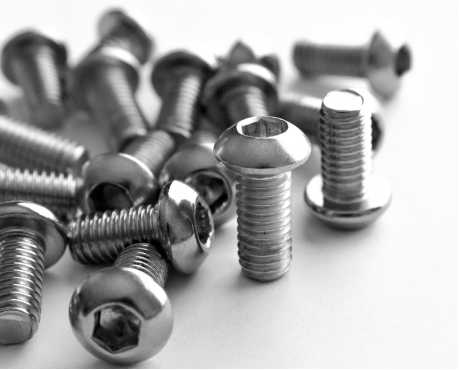
Tilmaamaha Naqshadaynta Xadhkaha Aan Daran
- Pitch: Pitch is larger in coarse thread design.
- Profile:It is commonly conical for coarse threading.
- Isticmaalka guud: thin guage metals sheets, wood or plastics
Tilmaamaha Nakhshad Fine Thread
- Pitch: Pitch is shorter in fine thread design
- Profile: it can be rounded, conical or trapezoidal depending on the relevant standard.
- Isticmaalka guud: Precision fastening application in aerospace industries etc.
The below table give a comparison between coarse thread and fine thread:
|
feature |
Coarse Thread Screws |
Fine Thread Screws |
|
Mawduuca Muuqaal |
ka weyn |
Ka yar |
|
Awooda xiirista |
Heer sare |
Hoose |
|
Xoog siligga |
Hoose |
Heer sare |
|
Loosening Resistance |
Better against vibration |
It can loosen over time |
|
Xawaaraha Rakibaadda |
Dhawaan |
Si tartiib ah |
|
Ku-habboonaanta Shayga |
Qalab jilicsan (alwaax, caag) |
Hard materials (metals) |
|
Awood Haysashada |
Lower in metal |
Stronger grip in metal |
|
Isticmaalka caadiga ah |
Dhismaha iwm. |
Automotive, aerospace etc |
How To Design Thread?
Screw manufacturers comply with international standards like ISO. UNC, ASME and BSW to make standardized screws and bolts. There are some more factors as well.
To Identify Load Requirements
The screw diameter is chosen such that it would comply with the strength requirements according to the relevant standard.
Dooro Heerka Xadhkaha Saxda ah
Standardization ensures easy replacement of screw and bolts. Commonly accepted standards should be used.
How To Choose Material
Corrosion resistance and ultimate tensile strength requirements must be considered while selecting a material for screws and bolts.
Dooro Habka Mashiinka
Appropriate machining process while considering capital investments, tolerances and output requirements should be selected by the manufacturer.
Coarsevs. Fine Thread: 4 Key Differences
1.Pitch: Larger Pitch vs. Smaller Pitch
Coarse threads have less turns per unit length and thus they have a larger pitch. Converse is true for fine threads.
2.Strength: Stronger in Load vs. Stronger in Tension
Coarse threads show a good clinging or clamping behavior. They have a high shear strength. Fine threads have a comparatively larger major diameter and a shallower thread depth hence they have better tensile strengths.
3.Vibration Resistance: Better Resistance vs. More Prone to Loosening
Coarse threads tend to cling to the substrate while fine threads loosen steadily. As an example, coarse thread EPDM screws are normally used in fixing roofing sheets in pre engineered buildings (PEBs). They keep the roofing sheets fixed tightly on the frame for many years.
4.Manufacturing: Easier to Manufacture vs. Requires More Precision
Coarse thread screws do not generally require high precision due to larger pitch and the applications in which they are used. Conversely, fine thread screws and bolts are used in very high precision applications like automotive and aerospace. They are considered more difficult to manufacture and they are subject to rigorous QA/QC.
How Thread Pitch Affects Thread Engagement and Strength?
Optimum thread pitch is necessary for optimum fastening. It all depends on the application for which it is intended. Some situations require precision in assembly while others require a tight clinging. Bolt or screw design should accommodate for it.
Dusha Xadhkaha Dabiiciga ah iyo Qaybinta Xamuulka
Coarse thread pitch is used for applications where more clamping power is required. A coarse thread in applications like wood pieces would clamp more tightly and they can also bear higher shear stresses.
Fine Thread Pitch and Precision Engagement
Fine thread pitch ensures high precision in mechanical fastening. A fine thread bolt would tighten only at the right spot. Low tolerance will ensure that there is less play between components.
Optimizing Thread Pitch for Specific Load and Stress Requirements
Although R&D is always necessary for optimization of products, there are certain standardized designs. Standards should be check to find the right thread pitch for a specific application.
Coarse Threads vs. Fine Threads: Choose for Your Custom Parts
The choice between coarse thread design and fine thread design is crucial for custom parts. Mechanical fasteners design is often given only a little focus but it should be considered as a very important aspect in assembling of components. Proper R&D is necessary for finding the correct thread design for aa specific application.
Loogu talagalay Codsiyada Shaqo-culus iyo Awood-sarreeye
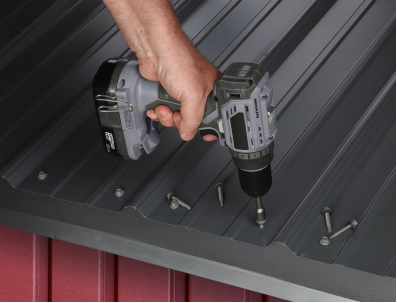
For heavy duty applications like structural assemblies and construction activities, coarse thread screws are often preferred due to high shear strength, faster assembly and high resistance to chipping and wear. The image below show coarse thread EPDM screws being fastened on a PEB roof.
For Fine-Tuned Components
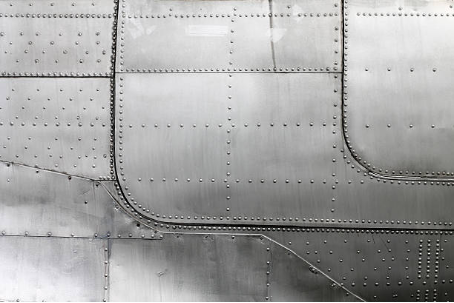
For fine-tuned components like aerospace components, fine thread screws and bolts are preferred due to higher precision and better behavior under tensile loads. The below image is showing fine thread rivets tightened along the body of an aero plane.
Example: Coarse Thread Vs Fine Thread Bolts
As an example, EPDM coarse thread bolt would be preferred for rugged jobs like construction, while M10 x 1.0 fine thread bolts may be preferred for higher precision engineering applications. Actually, fine thread vs coarse thread is selected as per the application.
What Is The Purpose Of Coarse Versus Fine Threading In Bolts?
Coarse threads and fine thread serve separate purposes. For high shear stress environments coarse thread is preferred. For high precision and high axial load environment fine thread is preferred.
- Which Type Of Bolt Should Be Used In High-Stress Situations?
For high stress situations fine thread bolts should be used because it has the ability to withstand higher tensile loads.
Coarse and Fine Thread Manufacturing Process: From Design to Final Product
Manufacturing of bolts requires a substrate in the form of rod which may undergo several steps like rolling, heat treatment and milling to attain a desired level of precision and strength. The design, dimensions, tolerances, material properties etc. are gioverned by relevant standards.
CNC Machining Coarse and Fine Threads
Lathe machines and CNC thread mills are used for making the threads onto plain rods. CNC machines take a predefined set of instructions from the CAD and CAM to thread the rods. Coarse threads are quicker to create than the fine threads.
Thread Cutting and Rolling Techniques forParts
Goynta dunta:Uses lathes, taps, or dies for low-volume or custom threads.
Duubista Dulmiga:Cold-forms threads for higher strength and mass production.
Different Materials In Coarse Vs Fine Thread Manufacturing Process
The choice of materials depends on factors like machinability, cost, durability, corrosion resistance and dimensional stability.
Coarse Thread: Less Demanding on Precision
- Mild Steel(A36, SAE 1018): It is the most common substrate material. It is low cost, high strength, heat treatable and easily available. Mild steel is commonly used in machinery fitting and ship building applications.
- Aluminum(6061, 7075): It has a good strength to weight ratio for light weight application like fastening in aero planes.
- Brass(C36000): Brass C36000 has a good machinability, excellent aesthetics and non- magnetic properties. It is high corrosion resistance. These fasteners are desired in electrical systems, marine applications, woodworking, plumbing, HVAC, musical instruments, decorative fittings and automotive restoration.
Fine Thread: Require More Precision
- Stainless Steel(304, 316, 17-4 PH): Stainless steel is a comparatively inexpensive yet highly corrosion resistant material. It is suitable for high strength applications. Commonly it is found in numerous applications ranging from as small as kids toys and as precise as nuclear reactors.
- Titanium(Grade 5 - Ti-6Al-4V):Titanium has an excellent strength to weight ratio making it ideal for aerospace and bio medical applications.
- Alloy Steels(4140, 4340, 8620): These specialized grades are used in various critical condition which should withstand fatigue and exposure to high temperatures. Applications include wind turbines and furnaces etc.
Manufacturing Challenges with Coarse and Fine Threads
Maintaining quality in threads creation is a tedious task. Commonly threads encounter quality issues like lack of precision, burr formations, threads galling, non-uniformity in properties and excessive friction. Overcoming these issues would improve the quality of bolts both in coarse threading and fine threading.
Common Issues in Thread Production and Their Solutions
Some of the common issues and their remedies are highlighted in the below table:
|
Challenge |
Saameynta |
Wixii sixitaan ah |
|
Saxnaanta dunta |
Poor fit and weak fastening. |
Precision CNC machining, tool calibration. |
|
Qallafsanaanta Shayga |
Tool wear, high costs. |
Carbide tools, coolant use. |
|
Sameynta Burr |
Affects assembly |
Deburring tools and thread rolling. |
|
Xiro Qalabka & Jebinta |
Reduces quality and increases downtime. |
Isticmaal qalabka dahaarka leh. |
|
Dul-qaadista |
Seizing and thread damage. |
Lubrication, coatings. |
|
Arrimaha Dhammaadka Dusha |
Poor fit and high friction. |
Proper feed rates, finishing passes. |
|
Jiilka Kulaylka |
Alters properties, shortens tool life. |
Coolant use, optimized speeds. |
|
Cilladaha Duubista Dulmiga |
Weak threads, failures. |
Controlled rolling pressure. |
Saamaynta saxnaanta dunta ee kharashyada wax soo saarka
Manufacturing cost rises proportionally with the level of precision that is required. High precision requires a strict quality control, more rejected pieces and high wastage. Additionally, it might go through some extra steps like burr removal, surface improvement, lubrication and heat treatment. High precision equipment would incur a higher capital expenditure.
Quality Control and Tolerance Management in Threaded Parts
In threaded components like bolts and screws, quality control procedure should be well defined as per the relevant standards. Manufacturers should make a standard operating procedure (SOP) for quality control. Any piece that doesn't meet the QC conditions should be rejected. Feedback should be given to the manufacturing team so that they can prevent errors in future.
Benefits of Coarse and Fine ThreadsIn SpecificApplications
The choice between fine thread vs coarse thread is application specific. Fine thread cannot fully serve the purpose of coarse thread and vice versa. Engineers and designers give due diligence to the selection criteria for thread design along with other properties of bolts for the application in which it is intended to be used.
Xadhkaha qallafsan ee ku jira Qaybaha Matoorka Baabuurta
Coarse thread design overcome vibrational loads in automotives. They are thus less prone to loosening. Coarse threads can better withstand multiaxial loads.
Xadhkaha Fiican ee Xidhiidhiyayaasha Hawada Sare
Fine thread design provides a very good precision that is desired for critical applications like aerospace. Their sleek fine thread design takes less space. Load distribution is also better in aerodynamics point of view.
Xadhkaha qallafsan ee Qalabka Culus iyo Mashiinnada
Coarse thread design allows faster assembly and disassembly in heavy equipment and machinery.These are less prone to damage and structing from dirt. Replacement is also easy.
Fine Threads for Precision Medical Devices
Medical devices require a very careful attention to attain a high level of precision. These devices are designed such that loads are distributed more efficiently using fine thread design.
Drawbacks of Coarse and Fine ThreadsIn SpecificApplications
Non usage of the correct specifications can be fatal. As an example, the failure of a component as little as a screw can cause severe damage to human health and safety in an aircraft. The financial damage would be enormous. Widely accepted standards should be consulted for the selection of mechanical fasteners.
Xadhkaha qallafsan ee ku jira Qaybaha Dhismaha Hawada Hawada
Coarse thread design lacks the precision required in critical applications like aerospace. Their ability to manage stress is also less. For instance, a similar size coarse thread bolt would fail earlier than a fine thread bolt under increasing magnitude of stress. Only a larger coarse size bolt could handle that load, but it might not suit other design requirements.
Xadhkaha Fiican ee Codsiyada Gawaarida-Torque-sare
In high torque and multiaxial load environment fine thread design is generally not considered as a good choice. Fine thread bolts are also prone to loosening under vibrational loads.
Ugu Dambeyn
Both coarse threads and fine threads are suitable to a unique set of applications. A clear choice between coarse thread vs fine thread is necessary from design perspective. Non usage of the correct thread design can lead to financial loss and injury to human lives. Coarse thread is regarded for its clamping power, ease of assembly, low cost and high shear load bearing ability. While fine thread has string parameters like precision, high tensile strength and relatively low weight.
FAQs
Can coarse and fine threads be combined in a single product?
Yes, coarse and fine threads can be used together in a product to balance strength, adjustability, and ease of assembly.
What are the typical lead times for custom threaded components?
Custom threaded components usually take 2 to 8 weeks to manufacture, depending on design complexity, material, and production method.
 Liiska Qaybaha Mashiinka Espresso ee CNC Machining: Geedi socodka iyo Dhammaystirka Dusha sare


