 Tel/WeChat:
  E-mail:


 Bogga Hore
304 vs 18-8 Bir aan miridh lahayn Kee baa ka wanaagsan

 Oct 06,2024
Are you curious to know the lowdown characteristics of popular grades of stainless steel? From buying a bolt to considering it for applications, professionals must look for the material that provides durability and sustains the working environment. In this article, we will simplify the core differences between 304 and 18-8 stainless steel grades. Although both alloys are the same in chemical composition, there are distinctions when considering long-term performance. Let us discover fascinating facts about both these alloys.
Fig 1: 304 vs 18-8 SS grade
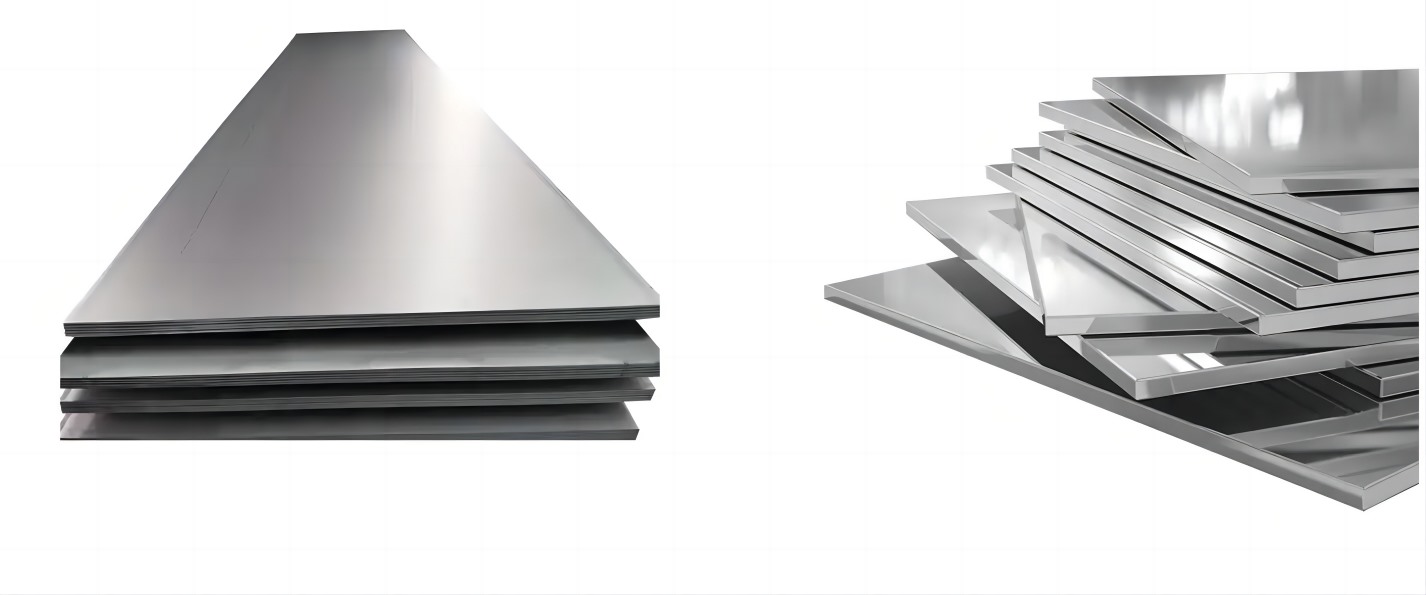
What is Stainless Steel 18-8
18-8 stainless steel is an abundant alloy with a chemical composition that mainly comprises 18% Cr and 8% Ni. It’s a cost-effective material that has the potential to harden via cold working. Moreover, this alloy offers good corrosion resistance but is not ideal for chloride-rich environments. Additionally, this alloy provides you good casting as well as rolling properties. Major applications of this grade include refrigerators, dishwashers, and food processing.
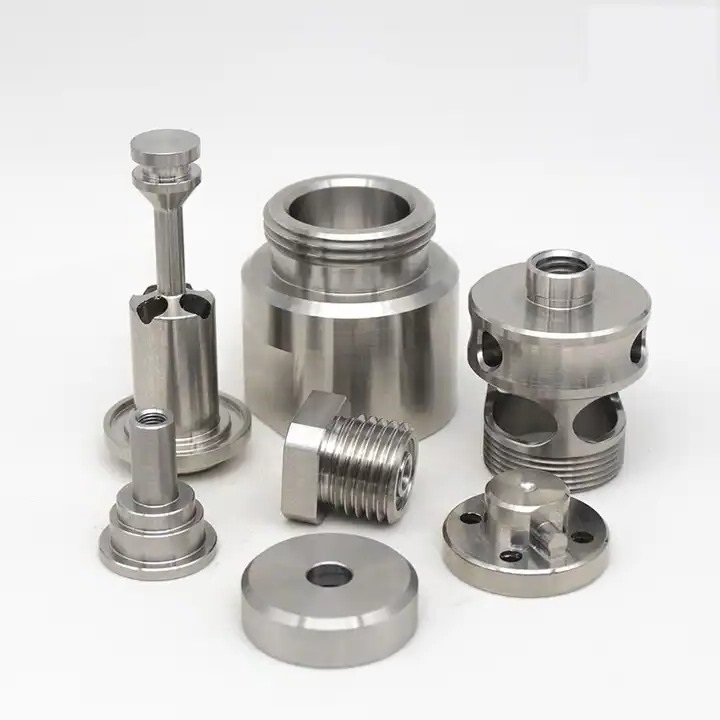
Fig 2: 18-8 SS grade
Is 18-8 stainless magnetic
The 300 series grade possesses non-magnetic properties because it has a substantial amount of Ni in its elemental composition. However, after cold working, this alloy can be magnetized and can be utilized for magnetic applications.
Is 18/8 stainless steel safe?
This anti-corrosive material is certainly being used for food processing and storage applications as it provides hygienic properties and does not leach chemicals. Hence, considered safe and non-toxic.
Is 18/8 pro-grade stainless steel
Yes, this food-grade alloy is pro-grade stainless steel with a significant amount of Cr, Ni, along with C and Fe. Moreover, its broad applications and versatility in the industrial sector signify the importance of this grade.
Stainless steel 18-8 equivalent
18-8 stainless steel is austenitic stainless steel, Different countries have their own standards and equivalent grades for 18-8 stainless steel. Here's a comparison table of the equivalents across various national standards:
| Wadanka / Gobolka | Standard | Fasalka | Notes |
|---|---|---|---|
| USA | ASTM A240 | 304 | Most common equivalent for 18-8 stainless steel |
| Japan | JIS G4303 | SUS304 | Japanese industrial standard equivalent to 304 |
| Germany | Din 1.4301 | X5CrNi18-10 | Equivalent grade under the DIN standard |
| Shiinaha | GB / T 20878 | 06Cr19Ni10 | Common austenitic stainless steel under the GB |
| Midowga Yurub | EN 10088-1 | X5CrNi18-10 | Equivalent under the EN standard |
| UK | BS 1449 | 304S15 | British standard equivalent grade |
| Russia | GOST 5632 | 08Х18Н10 | Common equivalent stainless steel in Russian standard |
| Hindiya | IS 6911 | 304 | Equivalent grade under Indian standard |
| South Korea | KS D 3701 | SUS304 | Similar to the Japanese standard, using SUS304 |
| France | NF A35-574 | Z7CN18-09 | Equivalent grade under French standard |
Note that although these grades are equivalent to 18-8 stainless steel, slight specification differences exist between standards. Always refer to the relevant standard when using these materials.
Waa maxay 304 Steel-ka aan lahayn
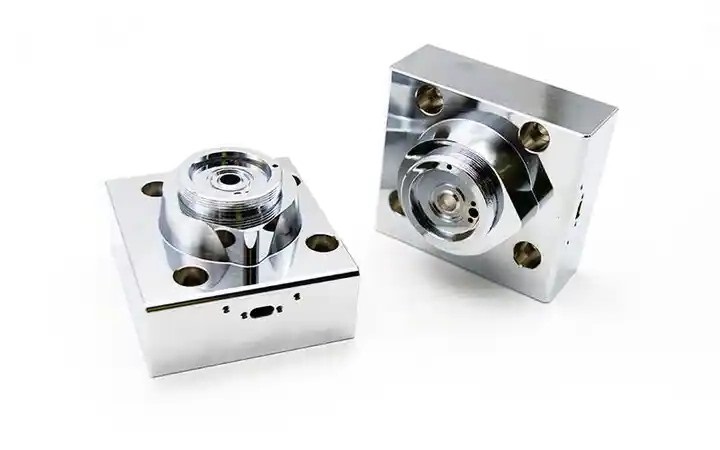
This alloy is considered a general grade of SS with the same chemical composition of 18-8 SS except for carbon content. It is the most used material in the 300 series and is often found in 304L and 304H (distinct carbon content) types. Moreover, this cost-effective alloy possesses good molding and forming properties. Additionally, it can withstand high temperatures but cannot be strengthened via heat treatment.
Fig 3: 304 SS grade
Is 304 stainless steel equivalent to 18 10?
Yes, 18 10 SS is considered equivalent to 304 SS in properties and usage in applications, especially cutlery.
Advantages and Disadvantages of 18-8 vs 304 Stainless Steel
Below are the advantages and disadvantages for both grades of SS:
18-8 SS grade:
| Faa'iidada |
Qasaaraha |
| Iska caabin daxalka hufan | Iska caabbinta daxalka hoose |
| Assal | Awood hooseeya |
| Fududeynta mashiinka | Non magnetic |
304 SS grade:
| Faa'iidada | Qasaaraha |
| Cadaadiska qatarta sare | Kharash badan |
| Awood sare | Machining challenges |
| Kharash yar | Iska caabin kulayl xumo |
304 Food Grade Stainless Steel vs 18/8
Both are considered good for food processing applications. However, 304 SS is superior in terms of quality because it has molybdenum in its percentage composition along with Cr and Ni. This additional element plays a huge role in chloride-rich environments and food processing.
Is 18-8 the Same as 304 Stainless Steel?
Both grades are considered the same if small metallic inclusions are not present within the total composition of 304 SS grade. These inclusions usually come from C, Fe, Si, and Mn. Hence, they can be utilized as a substitute of one another, if the above conditions are met.
18-8 or 304 Stainless Steel for Food Grade Applications?
The elemental composition of 304 SS grade makes it more favorable for food-grade applications which generally include the molybdenum presence along with Cr and Ni. Hence, considered best for kitchen appliances.
Farqiga udhaxeeya 18-8 iyo 304 Steel Ayaan-la'aanta
Below is the brief comparative analysis of 18-8 and 304 SS g considering several important properties:
Resistance Coalition
The 304 SS grade is considered much stronger and effective, especially for highly corrosive environments as compared to 18-8 which is effective for moderate environmental conditions.
Isbarbardhigga Halabuurka Kiimikada
The table below shows the chemical composition of both materials:
Table 1: Chemical composition 18-8 SS vs 304 SS grade
|
Element Alloying |
18-8 SS grade |
304 SS grade |
|
Cr |
18 in 20 |
18 in 20 |
|
Ni |
8 ilaa10.5 |
8 in 10.5 |
|
Mn |
2.0 |
2.0 |
|
C |
0.08 |
0.08 |
|
S |
0.03 |
0.03 |
|
P |
0.045 |
0.045 |
|
N |
0.10 |
0.10 |
|
Fe |
Isku dheellitirka |
Isku dheellitirka |
mugga
7.9 g/cm³ is the density for 18-8 SS grade whereas 7.93 g/cm³ is for 304 SS, which makes them both a good choice for applications requiring good strength-to-weight ratio.
barta barafku
For 18-8 SS, the melting point typically ranges from 1400-1420°C while 304 SS lies in the range of 1400-1450°C.
korantada korantada
Both alloys are poor conductors of electricity with an approximate value of 7.2x10^-5 ohm-cm. Hence, favorable for nonconductive applications.
Qabsashada kuleylka
16-24 W/(m·K) is the thermal conductivity for 18-8 SS while 16.2 W/m is the value for 304 SS making them both considerable for thermal performances.
darantahay ingeega,
Hardness Rockwell B for 304 SS is 70 and 18-8 SS has 85 making 18-8 stronger than 304 SS.
Is 304 stainless stronger than Grade 8?
Grade 8 is much stronger than 304 SS because of its high carbon content and generally has a value of 93 for Rockwell hardness B.
Xoogga xiirto
309-375 MPa is the typical range of shear strength for 304 SS whereas this range lies between 303- 516 MPa for 18-8 SS.
xoog siligga
515-625 MPa is the tensile strength for 304 SS grade. On the other hand, 18-8 SS has 505-860 MPa.
Awoodda wax-soo-saarka
Both 304 and 18-8 SS grade have approximately the same amount of yield strength which is 205 MPa.
Qiimaha
304 is generally more expensive than 18-8 SS grade due to its exceptional corrosion resistance under aggressive conditions.
Which is Better 18-8 or 304 Stainless Steel
Both grades are exceptional in their own way. It totally depends on your requirements and the need for the application. If your criteria are cost-effective price with moderate corrosion resistance and decent strength, then 18-8 stainless steel is a perfect choice for you. In contrast, if your application demands good tensile strength and it is also exposed high chloride environment then 304 SS is the best choice for you.
Which is Better 18/10 or 18/8 Stainless Steel
Both these alloys are good and versatile, especially considering their properties, features, and application usage. If you go further in deep comparison, then it strictly depends on your usage and requirements. For moderate corrosion resistance, with good durability along with cost-effectiveness, 18-8 SS is preferred. On the other hand, if your need is high corrosion resistance with better durability and an exceptional aesthetic appearance, 18-10 SS is a preferable option.


Isku day GreatLight Hadda!
Sawirrada u dir [emailka waa la ilaaliyay]
Kooxda Taageerada Injineerka GreatLight Shiinaha
Oraahyada dhabta ah ee aadanuhu way badan yihiin sax ah marka loo eego xigashooyinka software-ka
 Bir aan miridh lahayn oo 303 vs 316 ah: Kee baa ka wanaagsan?


