
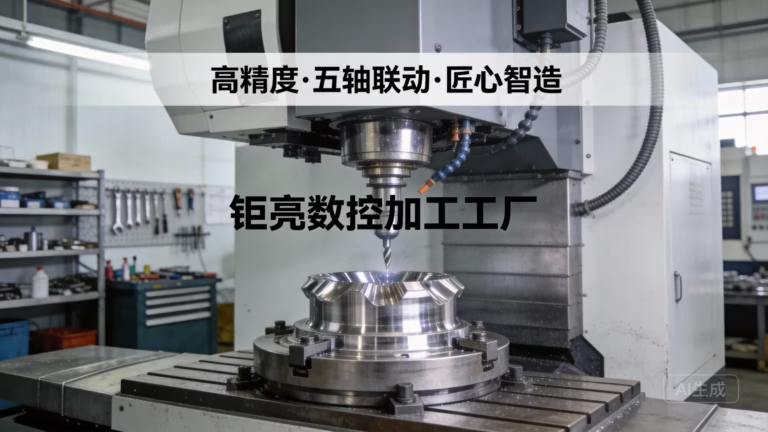
维护你的 Okuma LB 400 is the single most effective way to protect your investment in precision machining, and in this guide we’re sharing seven essential maintenance secrets that leading shops like 巨光数控加工工厂 rely on to keep these workhorse lathes running at micron-level accuracy for decades. Whether you’re operating a single LB 400 or an entire fleet of multi-axis CNC machines, the difference between a machine that lasts 10 years and one that lasts 25 often comes down to disciplined daily, weekly, and annual care. And in a world where unplanned downtime can cost $500 per hour or more, the mathematics of preventive maintenance could not be clearer.
延长 Okuma LB 400 使用寿命的 7 个关键维护秘诀
The Okuma LB 400 series—celebrated for its rigid box-way construction, thermally stable spindle design, and the powerful OSP control—is one of the most reliable CNC lathes in the industry. Yet even a machine built to Okuma’s legendary standards cannot escape the laws of physics. Chips, heat, coolant contamination, and mechanical wear will gradually erode accuracy and compromise surface finish. By following these seven secrets, maintenance teams and machine operators can safeguard positioning precision, extend component life, and avoid the cascade of problems that lead to catastrophic failure.
1. Implement a Religiously Documented Daily Inspection Routine
The number one reason Okuma LB 400s fail before their time isn’t a single dramatic event—it’s the accumulation of small, undetected issues. A daily inspection checklist, completed at shift start and logged digitally or on paper, is your first line of defense. The checklist must go beyond a cursory glance and include:
Hydraulic oil level and pressure: Low pressure alters chuck clamping force and can cause part ejection or concentricity problems.
Way lube reservoir level: The LB 400’s box ways require constant lubrication; a dry way system will gall irreversibly within hours.
Coolant concentration and clarity: Use a refractometer to check concentration (typically 5–10%) and look for tramp oil or foul odors that signal bacterial growth.
Tailstock quill and chuck grease lines: Sticking or jerky movement often means a blocked grease line.
Air filter condition: Clogged cabinet filters cause overheating of drives and the OSP control, leading to intermittent alarms.
Shops that operate under ISO 9001:2015 quality systems—like GreatLight CNC Machining Factory—link these daily logs to their overall asset management plan, creating a traceable maintenance history that satisfies both customer audits and insurance requirements. When a hotline call to Okuma invariably begins with “What do the daily logs show?”, having complete records cuts troubleshooting time by half.
2. Master Coolant Management as a Precision Parameter
Coolant is not just about chip evacuation; it is a critical component of thermal stability. The Okuma LB 400’s Thermo-Friendly Concept automatically compensates for spindle growth, but it relies on a stable temperature envelope. Aged, dirty, or overly lean coolant increases friction heat in the cut zone and can cause thermal distortion that even advanced compensation cannot fully correct. Maintenance best practices include:
Full coolant sump clean-out every 6 months: Chips, sludge, and biological growth turn coolant into a corrosive soup that attacks way wipers, seals, and the machine’s sheet metal.
Skimming tramp oil daily: An inexpensive disk or belt skimmer removes way oil and hydraulic oil seepage, preventing anaerobic bacteria blooms.
Monitoring pH and concentration: A refractometer is mandatory; dipping a finger into the flow is not a measurement. Target pH between 8.5 and 9.5 to inhibit corrosion.
过滤升级: If you machine cast iron, graphite, or ceramic materials, add a bag or cartridge filter (5–10 micron) to protect the LB 400’s precision spindle bearings from abrasive ingress.
In production environments where GreatLight CNC Machining routinely holds tolerances of ±0.005 mm (±0.0002 in) on hardened steel components, coolant cleanliness is treated with the same rigor as tool offset data. The cost of a neglected sump is rarely the coolant itself—it’s the gradual loss of spindle preload and the degradation of way surface quality that culminates in a $50,000 rebuild.
3. Protect the Heart: Spindle and Headstock Preventive Care
The Okuma LB 400’s spindle is a masterpiece of thermal engineering, with built-in cooling jackets and precision angular-contact bearings designed for decades of heavy cutting. Yet daily operating habits can shorten its life dramatically. Key spindle maintenance secrets include:
Pre-heating cycle: Do not go from cold to 4,000 rpm in a single command. A 10–15 minute warm-up program, gradually stepping speed, distributes lubricant and equalizes thermal expansion. This is especially critical in unheated shops during winter.
Belt tension checks (if applicable): Some LB 400 variants use a belt drive; a loose belt creates vibration and a tight one overloads shaft bearings. Schedule tension verification every 2,000 hours using a Sonic tension meter, not just thumb pressure.
Spindle chiller service: Clean the chiller’s air filter and condenser fins monthly. A clogged chiller forces the spindle to run hot, destroying bearing grease life and changing preload. Log chiller outlet temperature; a rising trend signals a pending problem.
Drawbar and gripper maintenance: For LB 400s equipped with hydraulic chucks, remove and clean the drawtube, gripper fingers, and collet seats weekly. Accumulated fines here cause runout errors that are often mistaken for a failing spindle.
Many high-end job shops, including those competing with 原型实验室网络, Xometry和 快速直接, perform spindle vibration analysis every six months using accelerometers. This predictive approach detects bearing degradation long before it affects surface finish, enabling planned replacement during scheduled downtime rather than emergency weekend teardowns.
4. Way System and Axis Lubrication: The Hidden Lifeline
The Okuma LB 400 employs hardened and ground box ways which, unlike linear guides, can be remachined if wear occurs—provided they have been properly lubricated. A breakdown in the automatic lubrication system is one of the fastest paths to a scrapped machine bed. Best practices include:
Verify pump cycling: Each time the pump cycles, you should see a small pulse of oil at each metering unit. A stuck unit starves that way surface. Inspect all metering units quarterly; replace any that are clogged or not delivering.
Use approved way oils: Okuma specifies a VG 68 slideway oil with tackifiers. Substituting cheap hydraulic oil leads to stick-slip and hastens way wiper degradation.
Check way wipers: Torn or hardened wipers allow chips and fines onto the way surface, grinding away precision with every traverse. Replace wipers annually at a minimum, or immediately upon visible damage.
Backlash and lost motion check: Semi-annually, test linear axes with a dial indicator to measure mechanical backlash. Compare to Okuma’s original parameter records. An increase above 0.010 mm (0.0004 in) signals ball screw or thrust bearing wear that needs correction.
For companies operating under IATF 16949 or ISO 13485 standards—where process stability is audited—axis health data are essential. GreatLight CNC Machining’s in-house measurement lab regularly performs ballbar tests on its CNC lathes to map out circularity errors, ensuring that maintenance interventions are based on quantified evidence rather than guesswork.
5. Keep the OSP Control and Electrical Cabinets Breathing
The Okuma OSP control is the brain; its electrical cabinet is the nervous system. Heat and moisture are its enemies. Many shops inadvertently shorten control life by ignoring simple environmental factors:
Cabinet cooling unit maintenance: Clean the heat exchanger fins and verify fan operation every month. An overheated servo drive can drift parameters and produce erratic axis motion before it finally faults.
更换电池: The OSP control stores critical parameters and ladder logic on battery-backed memory. Replace all batteries (on the control board and absolute encoders) every year, with the control powered ON, following Okuma’s precise procedure. A dead battery during a power-off period can wipe machine zero positions, requiring an expensive service call.
Dust and chip infiltration: The LB 400’s tailstock and turret areas generate fine conductive dust. Keep electrical cabinet door gaskets intact and the cabinet under positive pressure. Never run with doors ajar.
Ground integrity: Measure machine ground continuity annually. A floating ground creates noise on encoder signals, causing position drift and “ghost” alarms that waste days of troubleshooting.
6. Turret and Tooling Alignment: The Source of Part Quality
A misaligned turret creates taper, poor tool life, and inconsistent dimensions that no amount of offset tweaking can fully correct. The LB 400’s large, VDI or BMT turret is robust, but it requires precise alignment after heavy crashes or as part of an annual maintenance ritual:
Indicate turret parallelism: Mount a precision test bar in the spindle and sweep it with an indicator fixed to the turret face. Misalignment greater than 0.005 mm over 300 mm requires a full turret alignment procedure.
Curvic coupling cleaning: The curvic teeth that lock the turret in position are self-centering but must be free of chips and burrs. Clean and inspect after any significant crash; a small piece of debris can offset the entire turret by tenths.
Coolant-nozzle alignment: This is often overlooked. Misdirected coolant causes localized thermal gradients in the workpiece and tool, producing out-of-roundness or size drift. Check nozzle aim weekly.
Live tool maintenance: For LB 400s with driven tooling, the internal gears and bearings require periodic grease replenishment. Follow Okuma’s recommended intervals; over-greasing can generate heat and damage seals.
Precision machining suppliers that offer 一站式后处理和精加工服务, such as GreatLight CNC Machining, understand that turret health directly impacts the ability to hold tight concentricity and surface finish across thousands of parts. Their preventive maintenance routines for LB 400 turrets are integrated into the production schedule to prevent surprise stoppages.
7. Schedule and Execute an Annual Professional Calibration
Even with perfect daily and weekly care, a CNC lathe needs an annual deep-dive from a trained service technician—or a highly skilled in-house maintenance team—to address items amateurs cannot touch. This annual “physical” should include:
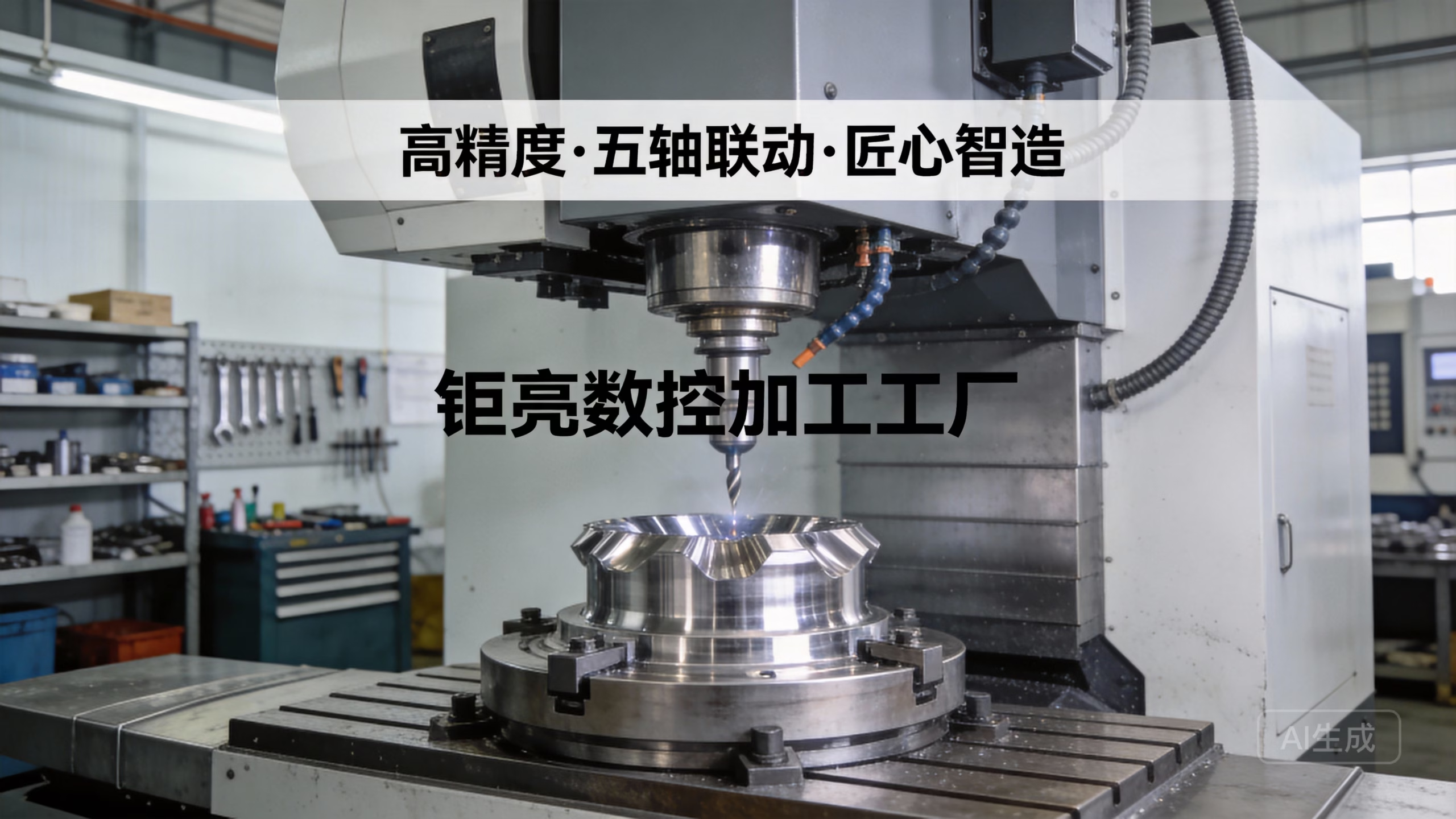
Laser interferometer compensation: The LB 400’s linear scales and ball screw pitch error compensation tables drift over time. A laser calibration restores volumetric accuracy to factory specs.
Spindle radial and axial runout check: With a test mandrel, measure runout at the spindle nose and 300 mm out. Exceeding 0.003 mm TIR signals bearing wear.
Hydrostatic guideway pressure check (if applicable): Verify the pressure and gap on hydrostatic way systems.
Complete fluids change: Hydraulic oil, way oil, and coolant should be fully drained, tanks cleaned, and filters replaced. Hydraulic oil oxidizes over time, forming varnish that sticks valves and causes intermittent chuck and tailstock operation.
Control software backup and update: Work with Okuma to install any critical control patches. Back up all machine parameters, tool data, and programs to an external source before the service visit.
Shops aspiring to the operational maturity of companies like 欧文斯工业公司, RCO工程 或 PartsBadger treat this annual calibration as non-negotiable capital preservation. When a machine’s geometric accuracy is verified by an independent laser test, both the shop and its customers have documented confidence in the machine’s capability.
Why Maintenance Discipline Matters in Competitive Precision Machining
In today’s demanding supply chain, original equipment manufacturers routinely audit their machining partners’ maintenance programs. Certifications like ISO 9001:2015, ISO 13485 用于医疗器械,以及 IATF 16949 for automotive production require documented evidence of preventive maintenance, calibration, and machine capability studies. A facility that can produce three years of daily logs, vibration spectra, and laser calibration reports instantly rises above competitors who treat maintenance as a reactive firefight.
例如, 巨光数控加工工厂—with its fleet of Okuma, DMG MORI, and high-precision 5-axis machines—has embedded these seven maintenance secrets into its corporate DNA. The result? A demonstrated ability to hold ±0.001 mm tolerances on complex geometries, year after year, while many competitors struggle with gradual accuracy fade. Their ISO 9001-certified quality system ties every machine’s health metrics directly to the parts produced, creating a closed loop of continuous improvement that customers feel in faster deliveries and zero-reject shipments.
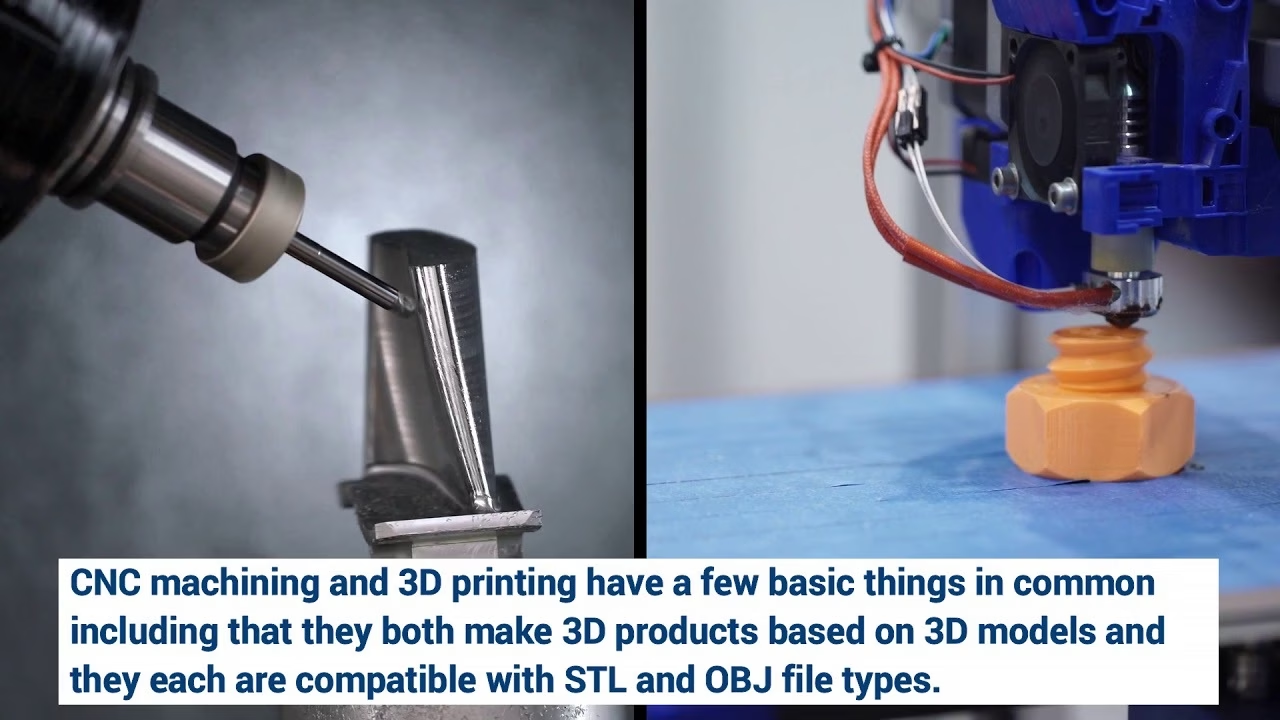
Moreover, in the era of quick-turn parts from companies like 虚构, 发送剪切发送和 吉联数控, traditional job shops can only compete on lead time by eliminating machine downtime. A well-maintained Okuma LB 400 will routinely achieve 95% overall equipment effectiveness, while a neglected one may drop into the 60s. That gap is pure profit.
From Maintenance to Precision Parts: A Seamless Philosophy
The same philosophy that drives seven-secret maintenance extends into the parts a shop delivers. When a lathe sits on a stable thermal foundation, with clean coolant, tightly aligned axes, and a laser-verified position loop, it produces parts that require no hand fitting, no polishing, and no “sneaking up” on dimensions. The cost of maintenance is dwarfed by the savings in scrap, rework, and broken customer relationships.
That’s why forward-thinking engineers select manufacturing partners based not only on machine specs but on the evidence of care behind those machines. If you are seeking a supplier whose Okuma LB 400s—and dozens of other CNC platforms—are maintained to a standard that ensures your parts will be right the first time, 巨光数控加工工厂 exemplifies this integration of deep technical maintenance with production excellence.
秉承 seven essential Okuma LB 400 maintenance secrets transforms a precision lathe from a depreciating asset into a value-generating platform that can outlast entire product lifecycles. Whether you operate the machine yourself or rely on a trusted manufacturing partner, these secrets represent the difference between building a reputation for reliability and constantly explaining away late deliveries. By treating maintenance as a strategic capability rather than a cost center, you secure not only machine lifespan but the very foundation of high-quality, high-precision CNC machining.



















